
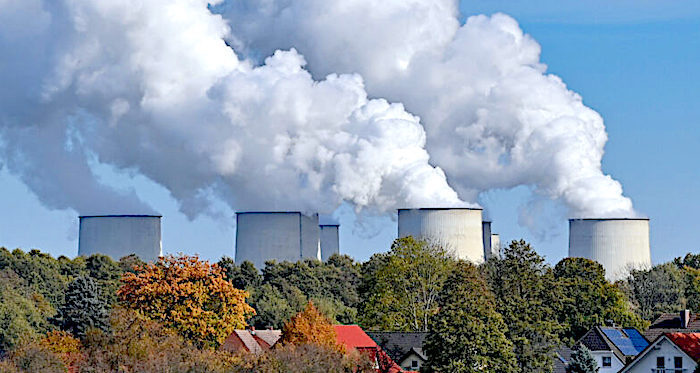
© Patrick Pleul/picture alliance/Getty Images25 October 2021, Brandenburg, Jänschwalde: Steam rises from the cooling towers of the Jänschwalde lignite-fired power plant operated by Lausitz Energie Bergbau AG (LEAG). The Jänschwalde lignite-fired power plant is to be taken off the grid and shut down by 2028 on the way to the coal phase-out.
The scientists propose that higher temperatures increase the natural processes of soil respiration and ocean outgassing, and hence boost natural CO2 emissions. If confirmed, the information destroys the so-called 'settled' science basis upon which the command-and-control Net Zero political agenda depends.
Demetris Koutsoyiannis and Zbigniew Kundzewicz sequenced the changes in temperatures and CO2 growth rates from 1980 to 2019 from widely available sources, and discovered that CO2 values lagged temperature by about six months. The obvious point is made that in attempting to prove causality - as climate alarmists do by arguing that increases in temperature are the result of increases in human-caused CO2 - cause cannot lag effect.


















Comment: See also: