
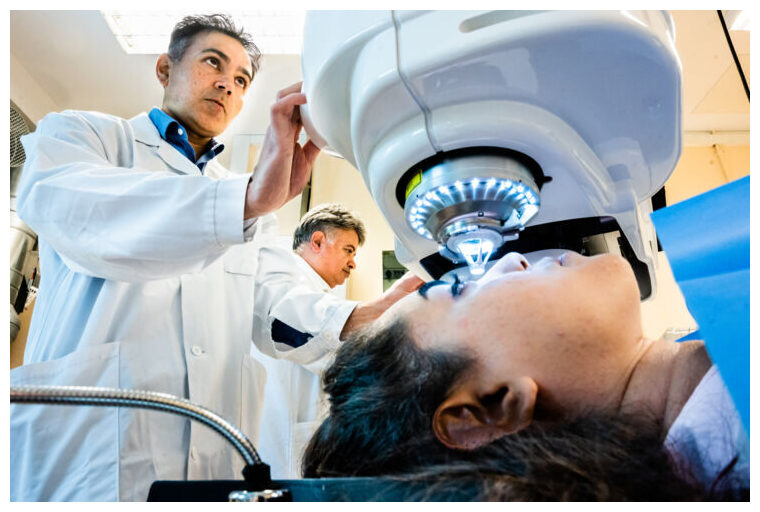
© Thor BalkhedThe researchers have developed a new, minimally invasive method. A small incision is made, through which the implant is inserted into the existing cornea. The incision can be made with an advanced laser (as in the photo), but also, when needed, by hand with simple surgical instruments.
"The results show that it is possible to develop a biomaterial that meets all the criteria for being used as human implants, which can be mass-produced and stored up to two years and thereby reach even more people with vision problems. This gets us around the problem of shortage of donated corneal tissue and access to other treatments for eye diseases", says Neil Lagali, professor at the Department of Biomedical and Clinical Sciences at LiU, one of the researchers behind the study.




















Comment: See also: