

Science & TechnologyS


Info

Secret messenger between fat and the brain discovered

Newly discovered sensory neurons send messages from fat tissue to the brain and could eventually be co-opted to treat obesity or metabolic disease.
Brain Signals

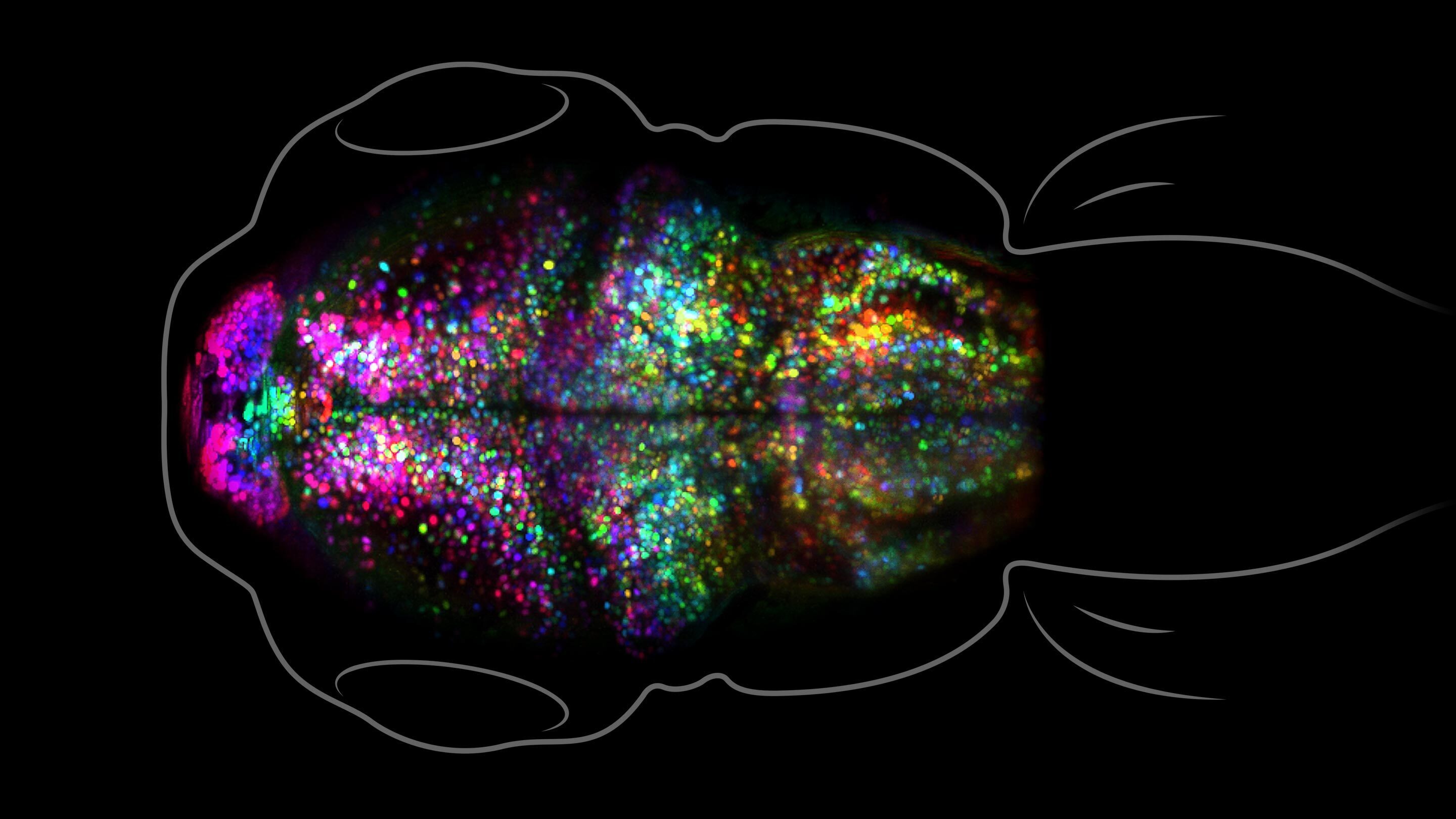
LA JOLLA, CA — What did the fat say to the brain? For years, it was assumed that hormones passively floating through the blood were the way that a person's fat — called adipose tissue — could send information related to stress and metabolism to the brain. Now, Scripps Research scientists report in Nature that newly identified sensory neurons carry a stream of messages from adipose tissue to the brain.

"The discovery of these neurons suggests for the first time that your brain is actively surveying your fat, rather than just passively receiving messages about it," says co-senior author Li Ye, PhD, the Abide-Vividion Chair in Chemistry and Chemical Biology and an associate professor of neuroscience at Scripps Research. "The implications of this finding are profound."

"This is yet another example of how important sensory neurons are to health and disease in the human body," says co-senior author and professor Ardem Patapoutian, PhD, who is also a Nobel laureate and a Howard Hughes Medical Institute investigator.

In mammals, adipose tissue stores energy in the form of fat cells and, when the body needs energy, releases those stores. It also controls a host of hormones and signaling molecules related to hunger and metabolism. In diseases including diabetes, fatty liver disease, atherosclerosis and obesity, that energy storage and signaling often goes awry.

Researchers have long known that nerves extend into adipose tissue, but suspected they weren't sensory neurons that carry data to the brain. Instead, most hypothesized that the nerves in fat belonged mostly to the sympathetic nervous system — the network responsible for our fight-or-flight response, which switches on fat-burning pathways during times of stress and physical activity. Attempts to clarify the types and functions of these neurons have been difficult; methods used to study neurons closer to the surface of the body or in the brain don't work well deep in adipose tissue, where nerves are hard to see or to stimulate.

Cloud Precipitation

How serious is the ARk storm (catastrophic flooding) threat along the west coast?

noah ark flood
© Wood engraving by Pannemaker after Gustav DoreNoah's Ark
The media was abuzz last week with stories about a greatly increased threat of a massive flooding event along the West Coast, termed an ARk Storm. The immediate stimulus of this apocalyptic vision was a recent paper by Xingying Huang and Daniel Swain in the journal Science Advances.

This article suggests that global warming has already substantially increased the probability of West Coast catastrophic flooding events and that the potential for such flooding will be profoundly enhanced by the end of the century.

In this blog, I will describe some serious problems with this study, which greatly overstates the threat. And I will show you the actual trends of heavy, prolonged precipitation.

Cassiopaea

New kind of Martian aurora discovered

mars aurora
© EMM/EMUSImages from the Hope Probe showing Mars with no aurora (left) and patchy proton aurora (middle and right).
We have new insight into a wonderful Martian phenomenon, thanks to a collaboration between two orbiting space probes.

NASA's Mars Atmosphere and Volatile Evolution (MAVEN) and the United Arab Emirates' Hope Probe have joined forces to study the ultraviolet proton auroras that dance and glow high up in Mars' atmosphere.

The new research reveals that these daytime events aren't always diffuse, featureless and evenly distributed, but highly dynamic and variable, containing fine-scale structures.

"EMM's (Emirates Mars Mission) observations suggested that the aurora was so widespread and disorganized that the plasma environment around Mars must have been truly disturbed, to the point that the solar wind was directly impacting the upper atmosphere wherever we observed auroral emission," says planetary scientist Mike Chaffin of the University of Colorado Boulder.

Comment: See also: Also check out SOTT radio's:


Info

Study reveals flaws in popular genetic method

SEA Map
© Unsplash
The most common analytical method within population genetics is deeply flawed, according to a new study from Lund University in Sweden. This may have led to incorrect results and misconceptions about ethnicity and genetic relationships. The method has been used in hundreds of thousands of studies, affecting results within medical genetics and even commercial ancestry tests. The study is published in Scientific Reports.

The rate at which scientific data can be collected is rising exponentially, leading to massive and highly complex datasets, dubbed the "Big Data revolution." To make these data more manageable, researchers use statistical methods that aim to compact and simplify the data while still retaining most of the key information. Perhaps the most widely used method is called PCA (principal component analysis). By analogy, think of PCA as an oven with flour, sugar and eggs as the data input. The oven may always do the same thing, but the outcome, a cake, critically depends on the ingredients' ratios and how they are combined.

"It is expected that this method will give correct results because it is so frequently used. But it is neither a guarantee of reliability nor produces statistically robust conclusions," says Dr. Eran Elhaik, Associate Professor in molecular cell biology at Lund University.

According to Elhaik, the method helped create old perceptions about race and ethnicity. It plays a role in manufacturing historical tales of who and where people come from, not only by the scientific community but also by commercial ancestry companies. A famous example is when a prominent American politician took an ancestry test before the 2020 presidential campaign to support their ancestral claims. Another example is the misconception of Ashkenazic Jews as a race or an isolated group driven by PCA results.

"This study demonstrates that those results were unreliable," says Eran Elhaik.

Syringe

UBC team developing oral insulin tablet sees breakthrough results

Oral Insulin
© University of British Columbia
A team of University of British Columbia researchers working on developing oral insulin tablets as a replacement for daily insulin injections have made a game-changing discovery.

Researchers have discovered that insulin from the latest version of their oral tablets is absorbed by rats in the same way that injected insulin is.

"These exciting results show that we are on the right track in developing an insulin formulation that will no longer need to be injected before every meal, improving the quality of life, as well as mental health, of more than nine million Type 1 diabetics around the world." says professor Dr. Anubhav Pratap-Singh (he/him), the principal investigator from the faculty of land and food systems.

He explains the inspiration behind the search for a non-injectable insulin comes from his diabetic father who has been injecting insulin 3-4 times a day for the past 15 years.

According to Dr. Alberto Baldelli (he/him), a senior fellow in Dr. Pratap-Singh's lab, they are now seeing nearly 100 per cent of the insulin from their tablets go straight into the liver. In previous attempts to develop a drinkable insulin, most of the insulin would accumulate in the stomach.

"Even after two hours of delivery, we did not find any insulin in the stomachs of the rats we tested. It was all in the liver and this is the ideal target for insulin — it's really what we wanted to see," says Yigong Guo (he/him), first author of the study and a PhD candidate working closely on the project.

Rose

Yes, plants may be conscious too, says researcher

TREES
© Getty
At one time, claims for animal consciousness and/or intelligence focused on, say, chimpanzees and dolphins, where the animals were enough like humans that what is meant by intelligence or consciousness was clear. Maybe not clear enough for a philosopher but clear enough for practical purposes. The octopus's intelligence came as a bit of a surprise because it is an invertebrate. But these comparisons with mammals and birds showed that we were still talking about the same thing.

We are now told in science publications that bees feel and think and that spiders dream. As science edges slowly toward panpsychism (all life forms participate in consciousness), we even learn — in science journals — that viruses are intelligent and cells are cognitive.

Comment:


Cassiopaea

Universe's oldest galaxies are massive and balanced not small and chaotic as scientists thought, Webb telescope reveals

galaxies galaxy webb telescope
© NASA/Getty ImagesThis enormous mosaic from July is the James Webb Space Telescope's largest image to date, covering about one-fifth of the moon's diameter. It contains over 150 million pixels and is constructed from almost 1,000 separate image files. The information from Webb provides new insights into how galactic interactions may have driven galaxy evolution in the early universe.
From the Dept. of Science Being Wrong About StuffScientists Puzzled Because James Webb Is Seeing Stuff That Shouldn't Be There"The models just don't predict this..."NASASnap Shot

Over the past several weeks, NASA's ultra-powerful James Webb Space Telescope (JWST) has allowed humankind some unprecedented glimpses into the farthest reaches of our universe. And unsurprisingly, some of these dazzling new observations have raised more questions than they've answered.

For a long time, for instance, scientists believed the universe's earliest, oldest galaxies to be small, slightly chaotic, and misshapen systems. But according to the Washington Post, JWST-captured imagery has revealed those galaxies to be shockingly massive, not to mention balanced and well-formed — a finding that challenges, and will likely rewrite, long-held understandings about the origins of our universe.

"The models just don't predict this," Garth Illingworth, an astronomer at the University of California at Santa Cruz, told WaPo. "How do you do this in the universe at such an early time? How do you form so many stars so quickly?"

Comment: See also:


Brain

Study: Dogs cry for joy as well as pain

Man and a dog
A recent study looked at dogs reuniting with their human friends:
When a person is overcome with emotion, their feelings stream down their cheeks. Even positive emotions can turn on the waterworks, as people bawl when they win awards, express love for their partners, or are reunited with a long-lost friend.

But these feelings-driven tears may not be a wholly human experience. Dogs can also cry happy tears, according to a study published today (August 22) in Current Biology. Although the animals' eyes don't overflow, they well up when they're reunited with their owners after spending even just hours apart, the researchers found. And they have hunch as to why: a sudden increase in oxytocin, the so-called love hormone, named for its predominant roles in social bonding.

Christine wilcox, "dogs cry tears of joy: study" at the scientist (august 22, 2022) the paper is open access
.

Comment: See also:


Info

Global financial system at risk from flawed climate models

A team of Australian scientists, financiers and economists have issued a stark warning over the use of "flawed" climate models to predict financial risk.
Global Atmospheric Temperature
© Univeristy of Alabama / John Christy
Writing in the journal Environmental Research they say building future strategies on information that is not understood and potentially misleading is likely to expose the global financial system to systemic risks of its own making.

Politicians and policy-makers are increasingly seeking to assess the potential risks to the financial system associated with climate change. They typically use a combination of databases for the global mean temperature in conjunction with so-called coupled climate models to determine regional and more local changes such as the effect on cities. According to this new study however this approach is flawed and ineffective. "We show that global mean temperature provides little insight on how acute risks likely material to the financial sector will change at a city-scale, say the researchers.

They investigate how good using estimates of global mean temperature are at predicting changes in the annual extremes of temperature and rainfall, as well as heatwaves and drought, and extreme rain and strong winds. They also ask whether such climate attribution studies can provide any insight into the changes in temperature and rainfall over the next 20-, 50- and 100-years. Their conclusion; "these approaches are likely to be flawed," they say because of the unappreciated uncertainties.

Blue Planet

Rare Earth: How vital minerals "evolve"

mars curiosity rover surface
© NASAMars Curiosity takes mineral samples from the planet's surface
Something else that is special about planet Earth has been noted: its mineral content, compared to other planets. Robert Hazen, an origin-of-life researcher at the Carnegie Institute, states in an article posted by NASA's Astrobiology Magazine that Earth's mineral abundances may be unique in the cosmos. There were only a dozen or so minerals present at the birth of our solar system, he argues, but there are about 5,000 types today. Most of these, he says, can be "linked directly or indirectly to biological activity."

That much Hazen and his team already knew. Now, they have taken the concept of "mineral evolution" further, determining the probability of mineral distributions: