
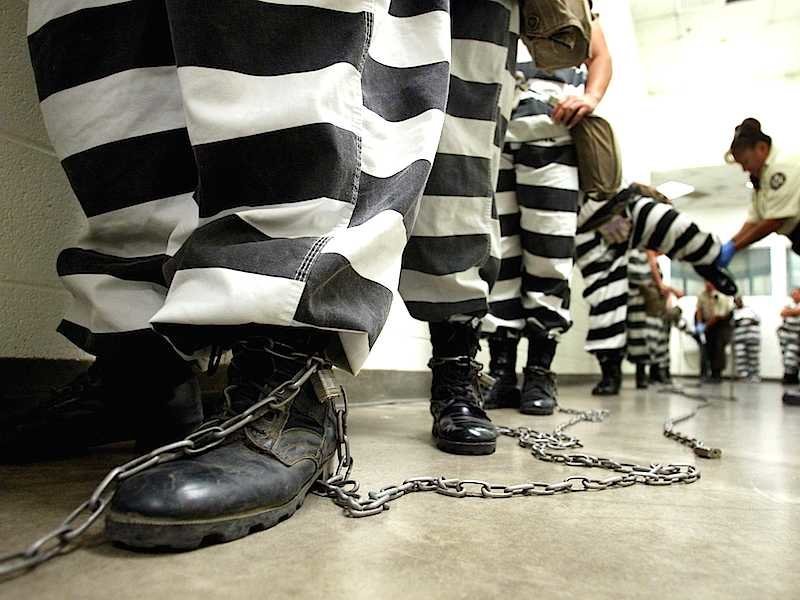
© www.businessinsider.comStates pay private prisons per inmate and, by contract, have to pay for empty beds.
In September, Sanders introduced a bill called the Justice Is Not for Sale Act to ban government contracts with private prison companies at the federal, state, and local level within three years. "[Sanders] talked about how we need to stop those contracts period, and not just for immigrant detention centers, but for prisons overall," Erika Andiola, a campaign strategist for the Sanders campaign, told The Nation. "He's just not okay having contracts with private prisons at all."
"And he's not afraid to say this, because he's never gotten money from private prisons in the past," Andiola said, in a jab at Hillary Clinton, who pledged to stop accepting money from private prison companies last October only after protests and criticism from immigration activists.
Clinton's campaign made that announcement at the same time that Clinton also pledged to end the practice of contracting with private companies to run both prisons and immigrant-detention centers. She "believes that we should not contract out this core responsibility of the federal government," Clinton campaign spokesperson Xochitl Hinojosa said last fall.
Privately run prisons and immigrant detention centers have attracted growing criticism and protest because they create a perverse financial incentive to keep people incarcerated. Indeed, the eleven privately run federal prisons that currently house almost 23,000 non-citizens are managed by the three largest corrections companies in the country, two of which are publicly traded. Privately run prisons ostensibly offer cost-cutting advantages, but Wessler's investigation raised questions about whether those savings have actually materialized and whether they come at the cost of inmate's lives.
In a review of the medical files of seventy-seven people who passed away while in custody between 1998 and the end of 2014, an independent panel of physicians found that inadequate medical care likely contributed to premature death in at least one-third of the cases.
These prisons, distinct from immigrant detention centers, are set aside specifically for deportable non-citizens who are serving criminal sentences, typically for the crime of illegally re-entering the United States after having been deported previously. They've grown in scope since the late 1990s, and despite closer public scrutiny over the private corrections landscape, this segment of the incarceration world remains largely hidden from public view.










Comment: Private prison...a place in which one of these candidates could become intimately acquainted? (Pssst...Hillary...they have your boot size!) Give the money back.