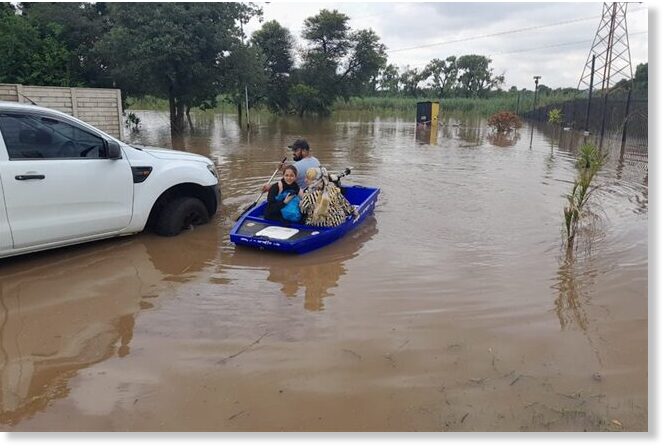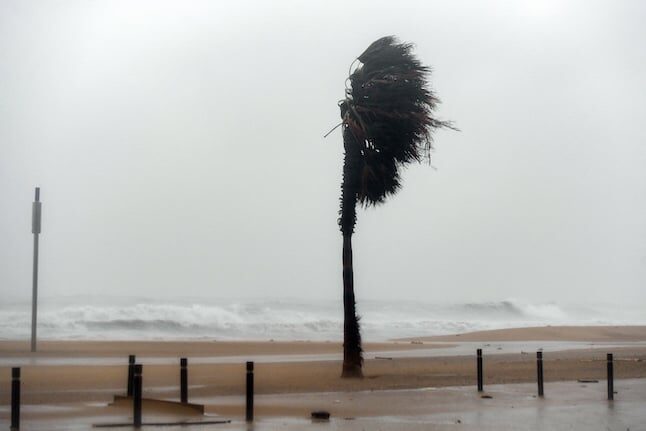
Floods
In a telephone call with the governors of the flood-hit regions, President Rouhani stressed the importance of public awareness prior to the start of the second wave of torrential rains.
Meanwhile, the international federation of Red Cross has called the deluge the largest disaster to hit Iran in more than fifteen years. The Iranian Red Crescent Society also says the natural disaster has killed nearly 80 people so far.
Severe floods have hit at least two dozen provinces since mid-March.
Lake Eyre in northern South Australia is Australia's biggest lake and the thirteenth largest in the world when full. It is also the lowest geographical point of the island nation at 15m below sea level.
The usually dry lake system in the state of South Australia - believed by early European settlers to be home to an enormous inland sea - is about 500km from the coast and only fills about four times a century.
The last time it was full was 1974 but water from tropical cyclone Trevor and wet season rains in outback Queensland are flowing to the lake through a network of rivers that drain into a basin covering a sixth of Australia - about the size of Spain.
Torrential rains followed by flash floods have claimed over 220 lives across India, Pakistan and Afghanistan, officials and local media said Wednesday.
The Met Office has forecast more rains in the next 24 to 48 hours as the region is under the grip of a westerly cycle of thunderstorms and gusty winds.
Thunderstorms in northern, central and western Indian states late on Tuesday have killed at least 50 people, local media reported.
The most affected state was Rajasthan from where 21 deaths were reported, said Ashutosh Pednekar, relief officer in the state, told Anadolu Agency.
Local media said that Ras Al Khaimah police announced on Monday that the total number of people rescued in the weekend's flooding reached 702, with 20 families provided hotel accommodation after their homes suffered flood damage.
Over 3,000 calls for assistance were made during the storm and hundreds of vehicles have been reportedly damaged. No fatalities have been reported however.
The National Disaster Management Organisation (NADMO) said four of the seven bodies were recovered from flood waters at Adjei-Kojo, a suburb of Accra.
NADMO sources explain that the four were part of a number of unidentified persons travelling in a military pick-up vehicle that veered off a bridge and plunged into rapid flood waters during the heavy downpour.
The truck was carrying several passengers in its bucket - all of whom were rescued.
According to Levies officials, the flood in Khanai Baba River hit the car of Abdul Noman and his family, all residents of Kuchlak and who were on their way to attend a wedding in Khanozai, and swept it away in its strong currents.
Abdul Noman, alongside his grandchildren Ubaid Khan, Saraun Khan, and Saffan Khan, were all in the car when the flood took it and declared dead later. A woman nearby was injured but saved by the rescue personnel.
The woman who was saved was transferred to a local hospital and was being tended to.
Pasorapa has already declared itself to be in an emergency situation due to the drought, while the municipalities of Omereque and Aiquile are preparing their declarations. The municipalities of Villa Tunari, Entre Ríos and Chimoré declared themselves a disaster area in January.
Severe weather has affected the departments of Antioquia, Nariño, Cauca, Cundinamarca and Huila, leaving 10 people dead, 13 people injured, 1 person missing, 549 families affected, 20 houses destroyed and 384 houses damaged.
Civil Defence in Colombia also reported a massive landslide in Neira, Caldas Department, on 05 April 2019, where at least 3 people died.
Extreme weather contributed to losses of up to £161m for Scotland's farmers during 2017 and 2018 amid fears such unpredictable weather will soon become the norm.
Last year's adverse weather had an impact on livestock and yields of key crops across Scotland according to a new report published this week.
Sheep farmers suffered the biggest losses of £45m as the Beast from the East hit during lambing season.
The largest impact on beef producers was the increased cost of feed, as cattle were kept inside for longer during the bad weather and grass growth was low during the dry summer. This cost farmers £28m.
Cereal crops were also significantly impacted, costing the sector £34m. Total production, area grown and yields were down in 2018 due to previous year due to the poor weather conditions at key points in the season.
At the UK level, wholesale prices of some staples like carrots, lettuce and onions rose by up to 80%.
Comment: Erratic seasons and extreme weather devastating crops around the world
Crop and cattle losses are on the rise everywhere, whether it is due to extensive drought, massive hail, epic flooding, huge dust storms, unexpected frosts, and even epidemics. See also:
- More than 1 million acres of U.S. cropland ravaged by floods
- Video: US grain bins collapse under catastrophic Iowa floods
- Blizzard kills thousands of Washington dairy cows
- Italy sees 57% drop in olive harvest - The worst in 25 years
- Huge crop losses expected as Hurricane Florence battered North Carolina just before harvest
- Extreme weather affecting crop harvests in Europe - North too dry, south hit by hail
- Preparing for crop losses? China successfully harvests saltwater rice that could feed another 80 million people
- 'This is a crisis' - Unusually brutal winter doubles farmers' costs and endangers cattle in Montana
- More than half of Nova Scotia blueberry crop wiped out by JUNE killer frost
- Unusual 'killer' spring frost damages crops across the Canadian Maritimes
- Flooded fields, frost and frozen corn affecting farmers across USA
- 70% crop losses due to extreme weather in Australia
- Potato crop in Jersey, UK hit by worst early season in 40 years due to severe frost


Comment: Just a week ago five died following flooding in the same city.