Animals
S


Bug

Legless Lizard And Tiny Woodpecker Among New Species Discovered In Brazil

Researchers discovered a legless lizard and a tiny woodpecker along with 12 other suspected new species in Brazil's Cerrado, one of the world's 34 biodiversity conservation hotspots.

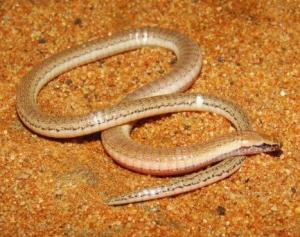
species of lizard of the genus Bachia
©CI/Cristiano Nogueira
This species of lizard of the genus Bachia is one of the new species discovered during the expedition. Although there are other species of the genus in the Cerrado (almost all discovered and described only recently), this new species has only been recorded in the Ecological Station. The absence of legs and the sharply pointed snout help in locomotion over the surface layer of sandy soil, predominating in all the Jalapao, formed by the natural erosion of the escarpments of the Serra Geral plateaus.

The Cerrado's wooded grassland once covered an area half the size of Europe, but is now being converted to cropland and ranchland at twice the rate of the neighboring Amazon rainforest, resulting in the loss of native vegetation and unique species.

Roses

"Extinct" Plants Discovered Blooming in Australia


Extinct plants
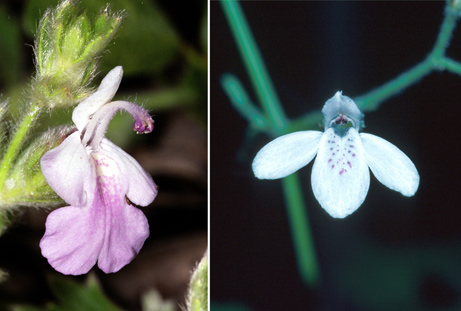
©Bruce Wannan (left) and Paul Forster (right), courtesy Queensland Herbarium, Environmental Protection Agency.
Two supposedly extinct plants - the pink-flowered mint Teucrium ajugaceum, (left) and Rhaphidospora cavernarum, (right) - have been rediscovered on a peninsula in northern Australia, scientists announced recently.

Two woodland plants long thought extinct have reappeared in far northern Australia, experts announced recently.

Teucrium ajugaceum, a pink-flowered mint that lives in eucalypt woodlands, had not been seen since 1891 and was listed as extinct in 1992.

Rhaphidospora cavernarum, not seen since 1873, also frequents eucalypt forests. Though it grows to almost 5 feet (1.5 meters) tall and boasts white and purple flowers, the plant had somehow evaded surveyors until now.

Bug

Pine beetles may affect climate change - study

Mountain pine beetles that are destroying forests along much of the Rocky Mountain range are doing so much damage that they may affect climate change, Canadian researchers reported on Wednesday.

The damage is nearly equivalent to the polluting effects of forest fires, they report in the journal Nature.

"In the worst year, the impacts resulting from the beetle outbreak in British Columbia were equivalent to 75 percent of the average annual direct forest fire emissions from all of Canada during 1959-1999," Werner Kurz of the Canadian Forest Service in Victoria, British Columbia and colleagues wrote.

Better Earth

Sudden oak death sleuthing pays off

The Sudden oak death epidemic that has killed more than a million trees throughout coastal California started in two sites: Scotts Valley and on Mount Tamalpais in Marin County, a new genetic analysis reveals.

Through genetic detective wok, scientists found that pathogens at both locations - separated by 62 miles - share identical DNA footprints, indicating that they are related, probably through the nursery trade, said lead investigator Matteo Garbelotto of the University of California Berkeley.

"Our study reconstructs the Sudden oak death epidemic," Garbelotto said."Having multiple introductions explains why it is so extensive."

Better Earth

Bikini Atoll's Nuked Coral Reef Bounces Back to Life - Sort of

Half a century after the atomic blasts that devastated Bikini Atoll, vast expanses of corals in the area seem to be flourishing once again, much to the surprise of scientists.

American government scientists detonated a hydrogen bomb on the tiny island (a part of the Marshall Islands in the western Pacific) on March 1, 1954, and about 20 other nuclear tests were carried out on the atoll between 1946 and 1958.

Many of the natives were moved to Kili Island and today are compensated by the United States government.

Life Preserver

The Great Migration Crisis

Many of the birds that migrate to Britain and Europe from Africa every spring, from the willow warbler to the cuckoo, are undergoing alarming declines, new research shows.

The falls in numbers are so sharp and widespread that ornithologists are waking up to a major new environmental problem - the possibility that the whole system of bird migration between Africa and Europe is running into trouble.

Snowman

Moose multiplying in Scandinavia

Oslo, Norway -- Biologists say there are now record numbers of moose in Scandinavia -- the greatest population since the Ice Age.

By the end of the 20th century, there were 30 times as many moose as there had been 100 years earlier, Aftenposten reports. The number of collisions between moose and trains, trucks and cars was also a record this winter.

Hourglass

Loggerhead turtles on decline in Florida

Tampa, Fla. -- The number of loggerhead sea turtle nests is on the decline throughout Florida, indicating a potential threat to the animals, wildlife experts say.

Florida Fish and Wildlife Conservation Commission official Anne Meylan said 4,692 of the 45,084 loggerhead nests counted last year in Florida are now gone, an alarming development for wildlife officials, The Tampa (Fla.) Tribune said Saturday.

Binoculars

Presumed Extinct Javan Elephants May Have Been Found Again - In Borneo

The Borneo pygmy elephant may not be native to Borneo after all. Instead, the population could be the last survivors of the Javan elephant race - accidentally saved from extinction by the Sultan of Sulu centuries ago, a new publication suggests.

The origins of the pygmy elephants, found in a range extending from the north-east of the island into the Heart of Borneo, have long been shrouded in mystery. Their looks and behaviour differ from other Asian elephants and scientists have questioned why they never dispersed to other parts of the island.

Pygmy elephant
©Jan Vertefeuille
Pygmy elephant with radio collar.

Bizarro Earth

Mercury In River Moves Into Terrestrial Food Chain Through Spiders Fed To Baby Birds

Songbirds feeding near the contaminated South River are showing high levels of mercury, even though they aren't eating food from the river itself, according to a paper published by William and Mary researchers in the journal Science.

somg birds
© iStockphoto/Ronnie Wilson
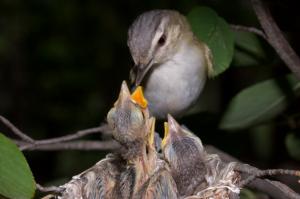
Pollutant - mercury-laden spiders are eaten by birds, and also fed by parent birds to their nestlings.