Animals
S


Stop

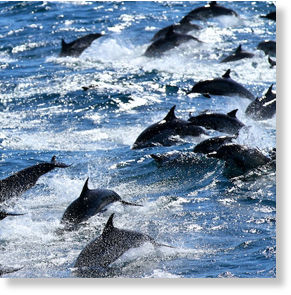
Mass Dolphin Deaths in Peru Blamed on Oil Seeking Sonar Blast

The deaths of thousands of dolphins washed up on beaches in Peru may have been caused by acoustic testing offshore by oil companies, conservationists have warned.

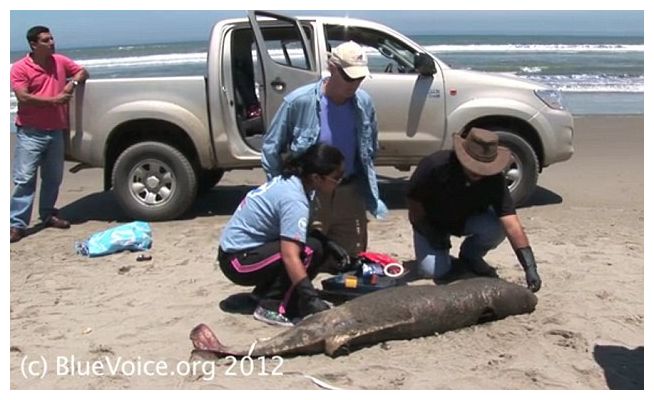
Nearly 3,000 of the mammals are thought to have died this year so far, with 615 counted by conservationists along a 90-mile stretch of beaches near the city of Lambayeque on Wednesday.

Scientists in Peru are exploring the possibility the deaths were caused by sonar blasts used by firms to find oil under the sea. The method can damage dolphins' ears and cause disorientation and internal bleeding, experts warn.

Dead Dolphin
© BlueVoice.orgConcerned: Conservationists in Peru counted 615 dead dolphins along a 90-mile stretch of beaches on Wednesday.

Orca Peru expert, veterinarian Carlos Yaipen Llanos said that while 'we have no definitive evidence', he suspects the cause of death is a 'marine bubble', which occurs during mining exploration.

The bubbles are not visible to the naked eye but they can have an effect on dolphins, sea lions, and whales.

Attention

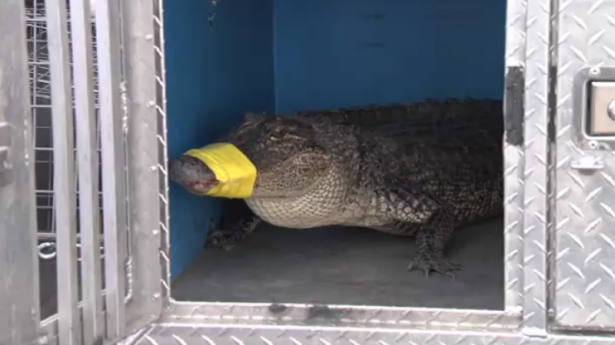
Alligator wanders up to Louisiana Motel 6 and bites guest

Port Allen Alligator
A Motel 6 in Port Allen, Louisiana had an unusual guest on Thursday, a 5-foot-plus alligator that wandered up to the building from a nearby canal. It was first spotted by a hotel employee, but it was a guest who attempted to subdue the animal before police and animal control personnel arrived on the scene. The man was bitten and later admitted to a nearby hospital.

Animal control personnel managed to trap the alligator and release it back into the wild. Spring is when alligators mate and seek out places for safe nesting. Reuters quotes parish animal control director Richard Summers as saying that sometimes alligators wander away from their normal habitats and "just get lost."

Question

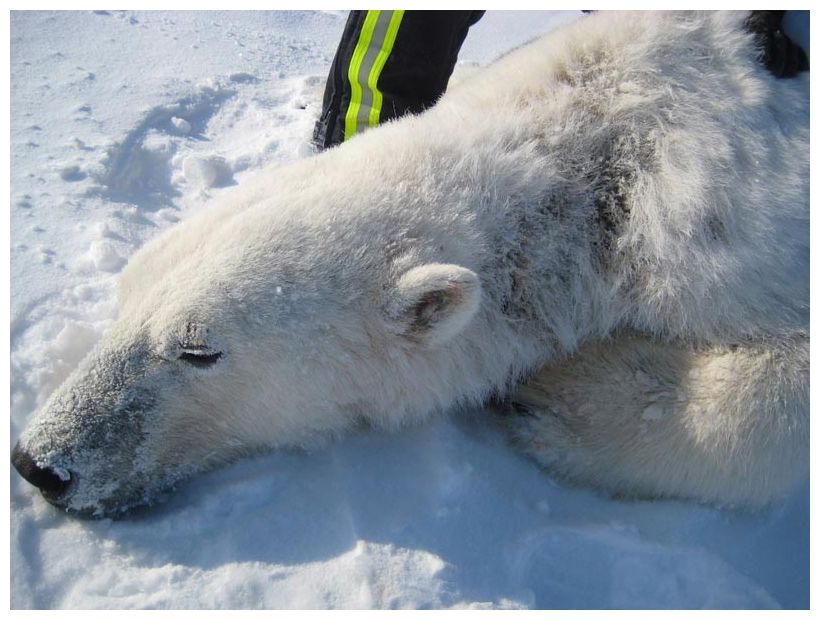
Patchy Polar Bears Puzzle Scientists

Sick Polar Bear
© USGSThis polar bear, captured and immobilized by USGS scientists, shows hair loss and oozing sores on the left side of its neck. The cause of the alopecia and lesions is still unknown.

Over the past two weeks, nine polar bears have shown up in the southern Beaufort Sea region near Barrow, Alaska, with patches of fur missing and skin lesions, say scientists with the U.S. Geological Survey who are perplexed by the cause of the odd symptoms.

The animals were otherwise healthy in appearance and behavior, according to the USGS, whose scientists first noticed the patchy polar bears during their annual monitoring of the animals in the Beaufort Sea region; this polar bear population stretches from Barrow, Alaska, east to the Tuktoyuktuk region of Canada.

The skin symptoms can be tricky to see unless the bear is observed up close, USGS scientists said. But in the polar bears they have observed to date, the most common areas affected include the muzzle and face, eyes, ears and neck.
The researchers aren't sure whether there is a link between the polar bears' skin symptoms - fur loss called alopecia, and other skin lesions - and those reported in other animals in the region.

Bizarro Earth

Disease outbreaks continue to plague shrimp, lobster crops in Vietnam

Lobster farmers are facing serious difficulties to avoid their crop mortality.
© seafoodfromvietnamLobster farmers are facing serious difficulties to avoid their crop mortality.
Farmers in Vietnam's central region are struggling with the mass mortalities of their lobster crops. Meanwhile, farmers in the Mekong Delta in the south are constantly fighting against heavy tiger and white-legged shrimp deaths.

The provincial Departments of Agriculture and Rural Development in the Mekong Delta report that many provinces have begun the newest shrimp crop this year -- but large amounts have succumbed to disease.

So far, 848.3 million breeder shrimp have been released on 12,412 ha by 11,563 farming households in coastal areas in Tra Vinh Province, of which over 40 million on more than 1,017 ha farmed by 800 households have die.

Attention

More Evidence Rises Of Role Pesticides Play In Bee Colony Collapse

Bees
© redOrbit
As bee populations continue to decline, researchers are scurrying to try and find an answer as to why.

A new study from Harvard School of Public Health has linked one of the most widely used pesticides, imidacloprid, as the bee's nemesis.

The authors wrote in a paper being published in the Bulletin of Insectology that they have found "convincing evidence" of the link between imidacloprid and Colony Collapse Disorder (CCD), in which adult bees abandon their hives.

"The significance of bees to agriculture cannot be underestimated," Alex Lu, associate professor of environmental exposure biology in the Department of Environmental Health, said in a press release. "And it apparently doesn't take much of the pesticide to affect the bees. Our experiment included pesticide amounts below what is normally present in the environment."

The team conducted a study in Worcester County, Massachusetts to try and replicate how imidacloprid may have caused the CCD outbreak.

They monitored bees in four different bee yards, each of which had four hives treated with different levels of imidacloprid and one control hive.

Igloo

Fur loss, open sores seen in polar bears

Image
© USGSThis polar bear was sedated to study its fur loss and oozing sores on the left side of its neck.
Wildlife experts are studying whether fur loss and open sores detected in nine polar bears in recent weeks is widespread and related to similar incidents among seals and walruses.

The bears were among 33 spotted near Barrow, Alaska, during routine survey work along the Arctic coastline. Tests showed they had "alopecia, or loss of fur, and other skin lesions," the U.S. Geological Survey said in a statement. "The animals were otherwise healthy in appearance and behavior."

Blood and tissue samples were collected from the sedated polar bears to see if the symptoms are related to those seen in ringed seals and walruses.

Patchy hair loss has been seen before in polar bears, but the high prevalence in those spotted recently and the earlier seal and walrus incidents raise a concern, Reuters quoted Tony DeGange, the chief biologist for the USGS in Alaska, as saying.

"There's a lot we don't know yet," he said, "whether we're dealing with something that's different or something that's the same."

Comment: Ruling out Fukushima, the following is in reference to Radiation on the skin, using Radiation Therapy in this instance.

Moist Reaction

"Peeling skin during radiation therapy can lead to the formation of sores and ulcers, as noted by the National Cancer Institute. This happens more commonly in areas where there are skin folds, such as under the breasts or buttocks, and may also occur where the skin is thinner, such as the neck. If a patient develops an ulcer or sore, he should let the physician or nurse know so antibiotics can be prescribed if necessary."

Of course Fukushima can be ruled out.


Stop

Massive Dolphin Die-Off in Peru May Remain a Mystery

Image
© flickr/lowjumpingfrog
Thousands of dead or dying dolphins have washed ashore in Peru since January, a marine mystery potentially caused by a combination of stress, pollution and disease.

When a retired fisherman called to report that about 1,500 dolphins had washed up dead on Peru's northern coast, veterinarian Carlos Yaipén's first reaction was, "That's impossible."

But when Yaipén traveled up the coast last week, he counted 615 dead dolphins along a 135-kilometer stretch of coastline.

Now, the death toll could be as high as 2,800, based on volunteers' counts. Peru's massive dolphin die-off is among the largest ever reported worldwide.

The strandings, which began in January, are a marine mystery that may never be unraveled. Experts say the causes could be acoustic impact from testing for oil or perhaps an unknown virus or other pathogen. Little marine research takes place in Peru, and even in the United States, of 55 marine mammal strandings since 1991, the National Oceanographic and Atmospheric Administration (NOAA) has classified 29 as "undetermined."

Attention

Fukushima's Radioactivity Found in California Kelp

Image
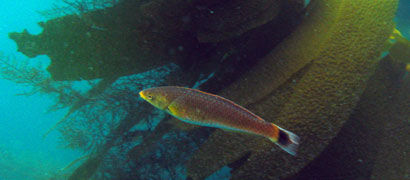
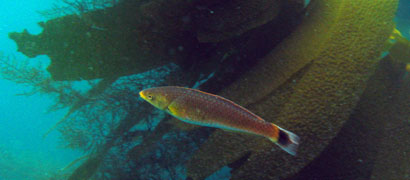
© Richard Ling/flickrSome radioactive material probably accumulated in fish that eat California's giant kelp – including señorita, pictured above. There is no data on what iodine 131, which has a half life of only eight days, might do to fish.
Kelp off Southern California was contaminated with short-lived radioisotopes a month after Japan's Fukushima accident, a sign that the spilled radiation reached the state's coastline, according to a new scientific study. Scientists tested giant kelp from the ocean off Orange County and other locations after the March, 2011 accident and detected radioactive iodine at peak concentrations 250-fold higher than levels found in West Coast kelp before the nuclear accident. "Basically we saw it in all the California kelp blades we sampled," said biology professor Steven Manley of California State University, Long Beach. The radioactivity had no known effects on the giant kelp, or on fish and other marine life, and it was undetectable when the kelp was tested again a month later. Iodine 131 "has an eight-day half life so it's pretty much all gone," Manley said. "But this shows what happens half a world away does effect what happens here. I don't think these levels are harmful but it's better if we don't have it at all."

Kelp off Southern California was contaminated with short-lived radioisotopes a month after Japan's Fukushima accident, a sign that the spilled radiation reached the state's urban coastline, according to a new scientific study.

Scientists from California State University, Long Beach tested giant kelp collected in the ocean off Orange County and other locations after the March, 2011 accident, and detected radioactive iodine, which was released from the damaged nuclear reactor.

The largest concentration was about 250-fold higher than levels found in kelp before the accident.

"Basically we saw it in all the California kelp blades we sampled," said Steven Manley, a Cal State Long Beach biology professor who specializes in kelp.

The radioactivity had no known effects on the giant kelp, or on fish and other marine life, and it was undetectable a month later.

Iodine 131 "has an eight-day half life so it's pretty much all gone," Manley said. "But this shows what happens half a world away does effect what happens here. I don't think these levels are harmful but it's better if we don't have it at all."

A year ago, Manley watched coverage of the tsunami and Fukushima accident and wondered what impact it might have on California's marine life, particularly his favorite subject matter - kelp.

Spread in large, dense, brown forests across the ocean off California, Macrocystis pyrifera, known as giant kelp, is the largest of all algae and grows faster than virtually any other life on Earth. It accumulates iodine so Manley realized it would be a useful dosimeter to check how far radioactive material spreads.

"Kelp forests are some of the most productive ecosystems on Earth," he said. "I thought this would be an opportunity because one thing about macrocystis is it has a large surface canopy," which means it is continually exposed to the air - and whatever contaminants are in it.

In addition, giant kelp concentrates radioactive iodine 10,000-fold - for every one molecule in the water there would be 10,000 in its tissues.

Kelp was collected at three sites off Orange County, as well as Palos Verdes Peninsula in Los Angeles County, Santa Barbara, Pacific Grove and Santa Cruz. The highest concentration of iodine 131 was found in the kelp off Corona del Mar, which receives runoff from a large portion of Orange County. Its kelp was collected on April 15 of last year and tested five days later.

Bizarro Earth

Dead Catfish at Boyne River Mouth

Dead Catfish
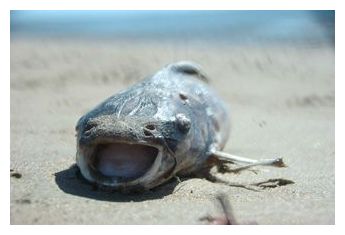
© David Sparkes / The ObserverMore than 100 dead catfish have been found at the Boyne River Mouth in recent days.

Mystery surrounds the appearance of more than a hundred dead catfish washed up at the Boyne River Mouth.

Residents have been finding the fish since Monday. Along the high tide line on Boyne Island, dead catfish were strewn every few metres along the high tide line from the morning before.

A spokesperson from the Department of Environment and Heritage Protection (DEHP) confirmed staff had inspected a section of the Boyne River on Monday and yesterday following reports of dead fish.

"Departmental staff have found over 100 dead catfish between the mouth of the Boyne River and the Bruce Highway bridge, approximately 20 kilometres south of Gladstone.

"The cause of death is currently unknown. Departmental staff are investigating and have conducted water quality monitoring and sampling.

"The water quality monitoring undertaken on 4 April 2012 identified reduced salinity levels due to freshwater inflow. All other monitoring results have found water quality is consistent with those of a healthy waterway."

Attention

Deadly Bacteria Lurk in Deepwater Horizon Tar Balls

Tarball
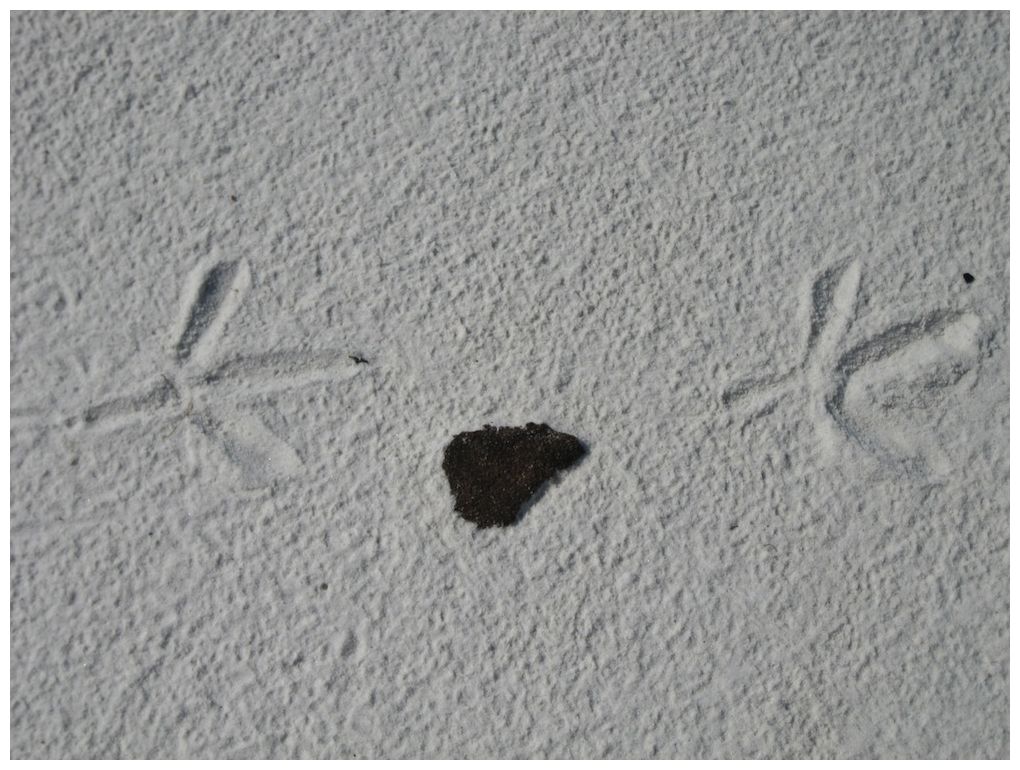
© Neal Parry, Regional Coordinator – Gulf of Mexico & Caribbean, Marine Debris Program, Office of Response and Restoration, National Ocean ServiceBird footprints over tarball, taken on 19 Aug 2010, Mississippi Sound (Petit Bois Island).
Nearly two years after the Deepwater Horizon disaster gushed millions of barrels of oil into the Gulf of Mexico, tar balls from the spill still turn up on Alabama's shores after storms. Now, one researcher is recommending that people steer clear of these tar balls after studies find them chock-full of potentially deadly bacteria.

In research published online November 2011 in the journal EcoHealth, Auburn University microbiologist Cova Arias and colleagues discovered that Deepwater Horizon tar balls found months after the spill contained high levels of bacteria, including 10 times the level of Vibrio vulnificus as found in the surrounding sand, a finding first reported by the Associated Press. V. vulnificus is the leading cause of seafood-borne disease fatalities nationwide, and it has a fatality rate of 20 to 30 percent when it infects skin wounds.

"We don't know what the real risk is at this point," Arias told LiveScience. But to be safe, beachgoers should avoid handling the tar balls, she said.

About 4.9 million barrels of oil, or 205 million gallons, spilled from a riser pipe in the seafloor after the Deepwater Horizon rig exploded and sank in late April 2010. Some of that oil persists in the Gulf in the form of tar balls.