Volcanoes
S


Arrow Up

Ecuador's Sangay Volcano blankets coast with ash

Sangay volcano eruption
© YouTube/Infotainment (screen capture)
The eruption of a volcano in Ecuador's Amazon region left several cities covered in ash on Tuesday, fueling concerns of a potential health impact as the South American nation slowly emerges from a brutal coronavirus outbreak.

The Sangay volcano has had moderate eruptions for over a year that have had little impact because of its remote location, but a recent change in wind patterns has pushed ash toward the coast and affected areas including the largest city, Guayaquil.

"The ash comes out of the Sangay volcano and spreads into the Guayas province, and we see a quantity of ash that is arriving near Guayaquil," Benjamin Bernard of the Geophysical Institute of Ecuador told reporters, referring to the province where Guayaquil is located.

The institute said it expects minor volcanic eruptions to continue in the coming days but does not expect a major eruption.


Info

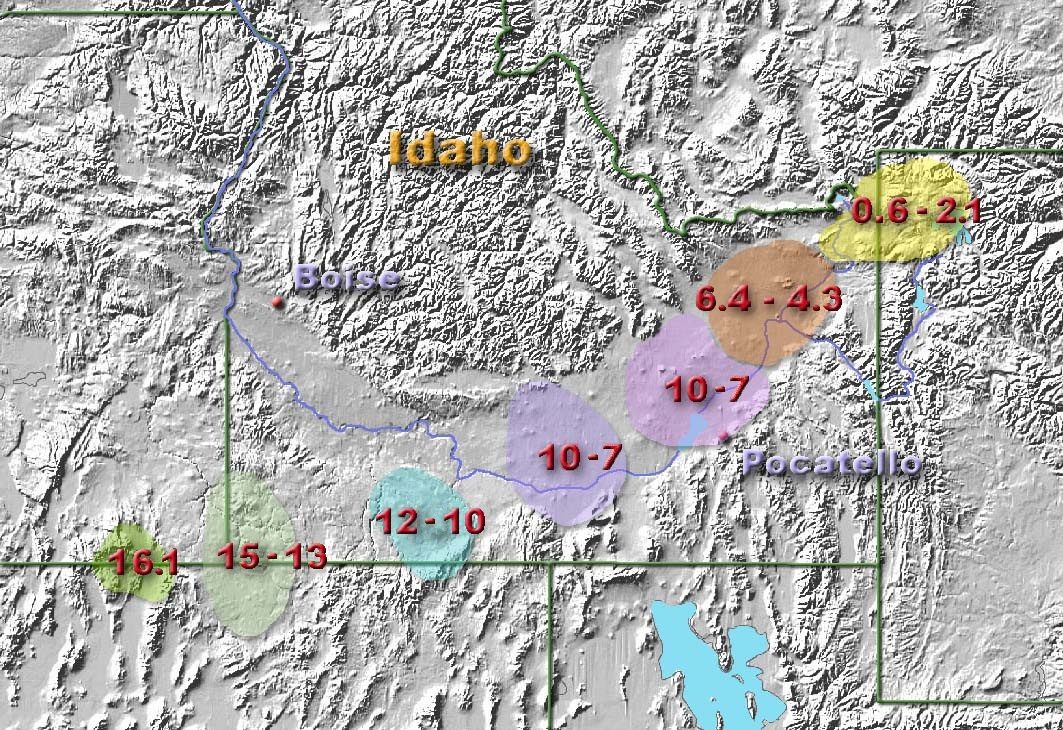
Discovery of ancient super-eruptions indicates the Yellowstone hotspot may be waning says new study

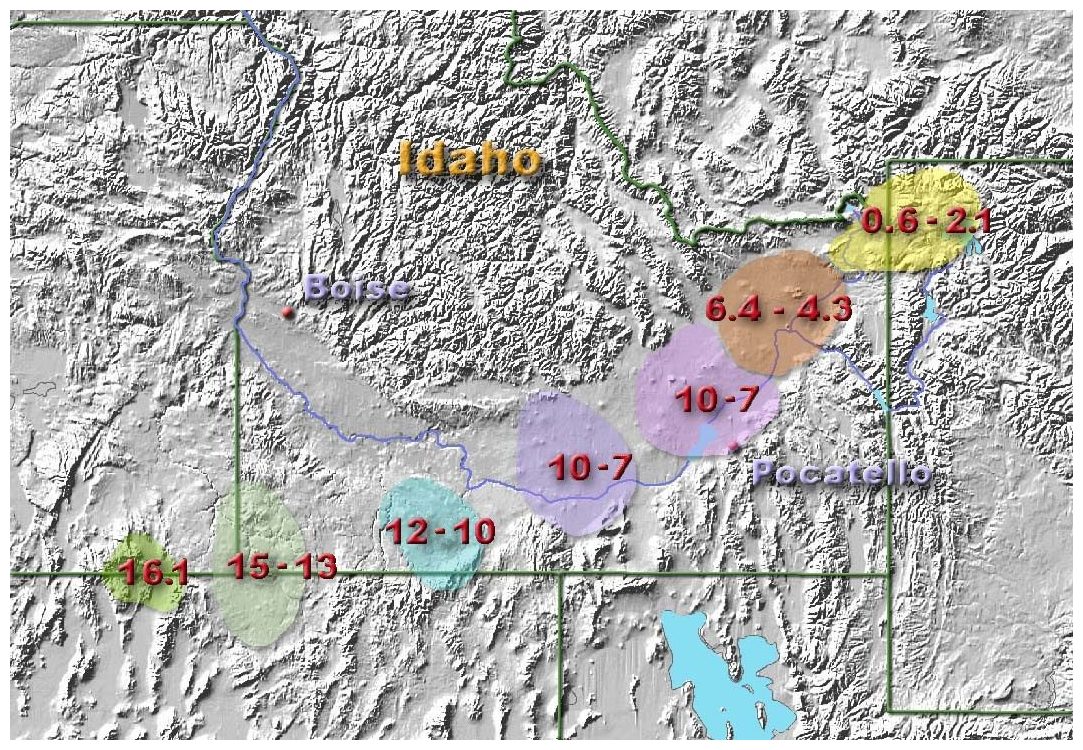
Hotspot track
© Kelvin Case via Wikimedia Commons, CC-BY-3.0.Hotspot track.
Boulder, Colo., USA: Throughout Earth's long history, volcanic super-eruptions have been some of the most extreme events ever to affect our planet's rugged surface. Surprisingly, even though these explosions eject enormous volumes of material — at least 1,000 times more than the 1980 eruption of Mount St. Helens — and have the potential to alter the planet's climate, relatively few have been documented in the geologic record.

Now, in a study published in Geology, researchers have announced the discovery of two newly identified super-eruptions associated with the Yellowstone hotspot track, including what they believe was the volcanic province's largest and most cataclysmic event. The results indicate the hotspot, which today fuels the famous geysers, mudpots, and fumaroles in Yellowstone National Park, may be waning in intensity.

The team used a combination of techniques, including bulk chemistry, magnetic data, and radio-isotopic dates, to correlate volcanic deposits scattered across tens of thousands of square kilometers. "We discovered that deposits previously believed to belong to multiple, smaller eruptions were in fact colossal sheets of volcanic material from two previously unknown super-eruptions at about 9.0 and 8.7 million years ago," says Thomas Knott, a volcanologist at the University of Leicester and the paper's lead author.

"The younger of the two, the Grey's Landing super-eruption, is now the largest recorded event of the entire Snake-River-Yellowstone volcanic province," says Knott. Based on the most recent collations of super-eruption sizes, he adds, "It is one of the top five eruptions of all time."


Attention

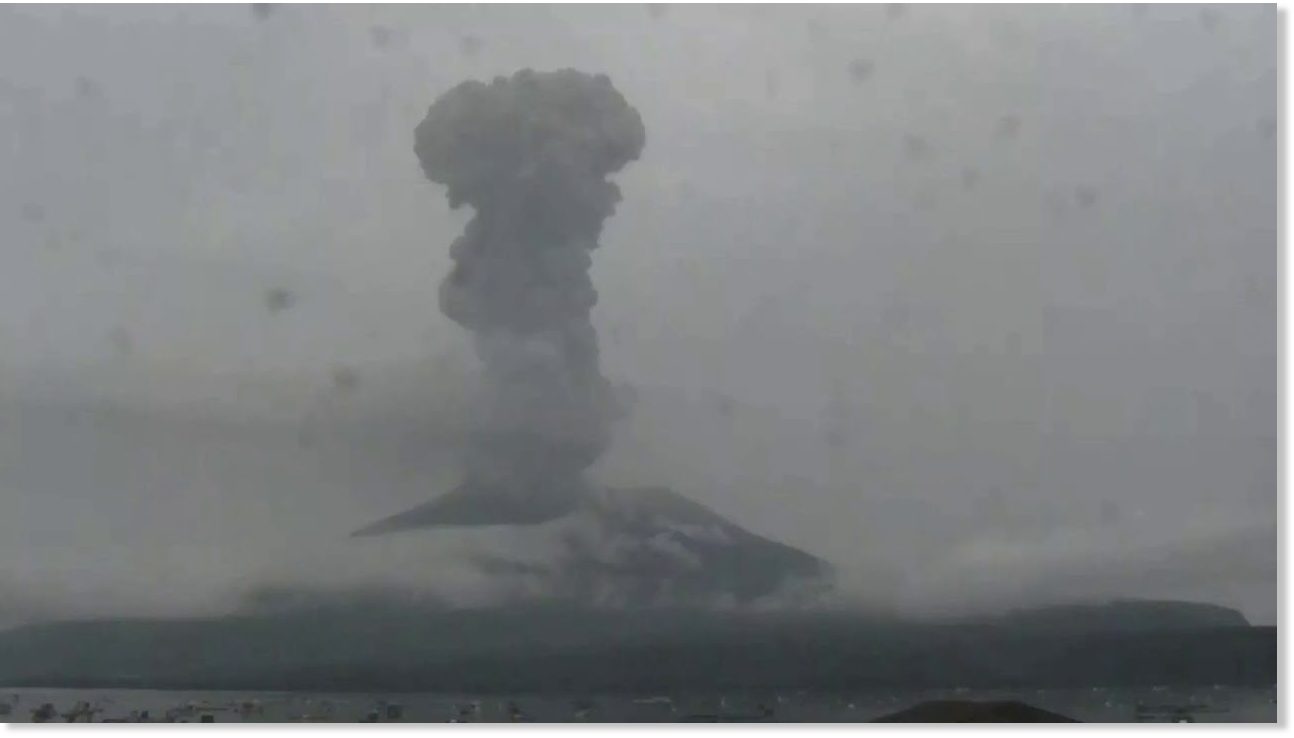
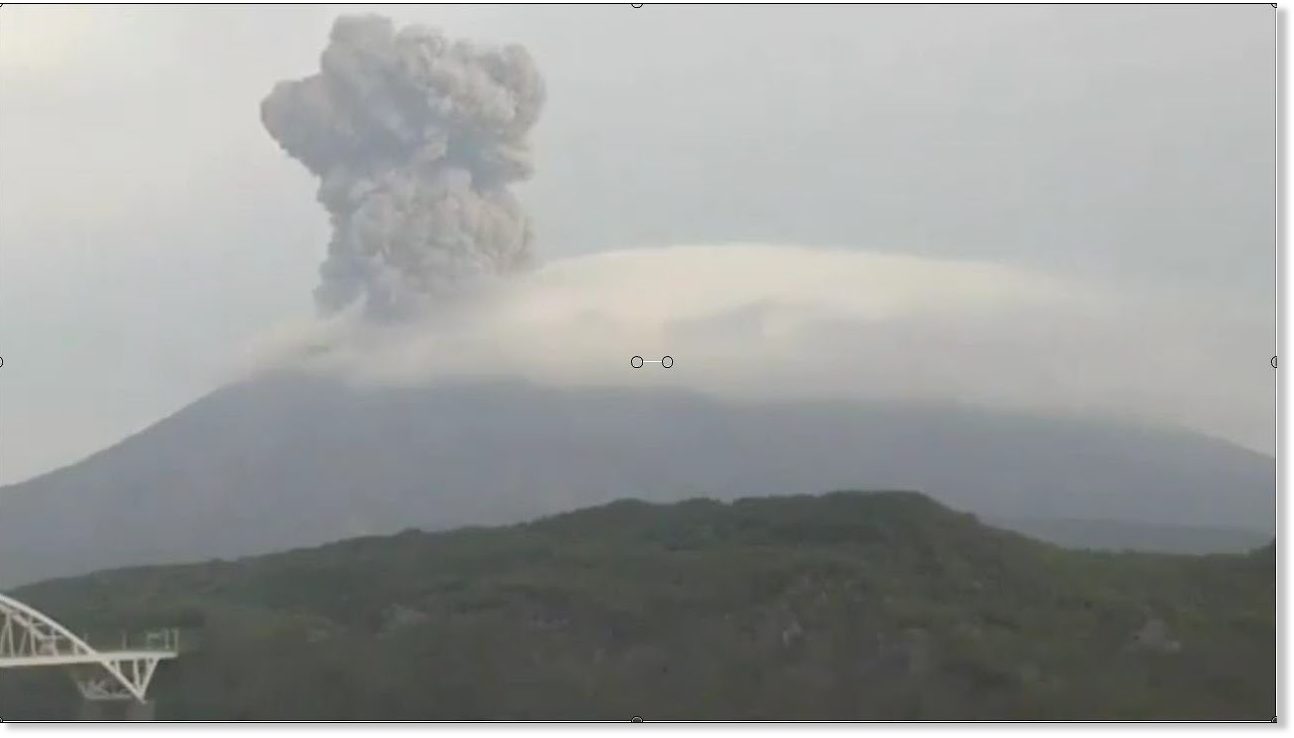
Eruption at Sakurajima volcano, Japan on June 4

Sakurajima volcano
At 16:38 JST an explosion was registered. Cloud obscured.


Attention

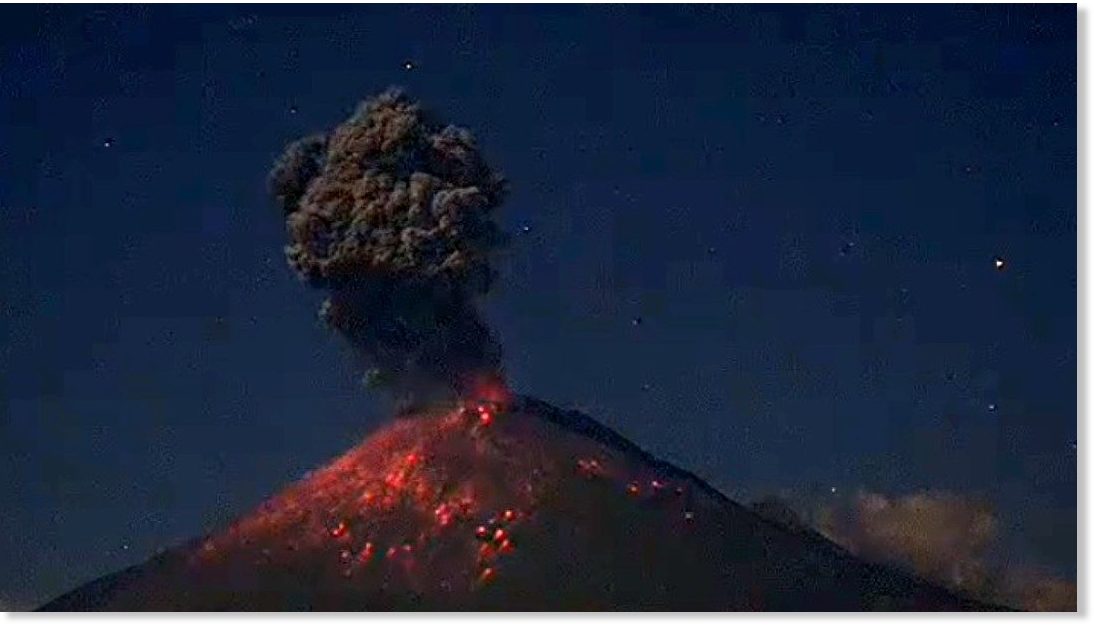
Eruption at Popocatepetl volcano, Mexico on June 4

Popocatépetl,
At 23:01 CDT an explosion was registered. Time-Lapsed, 3 cameras.


Attention

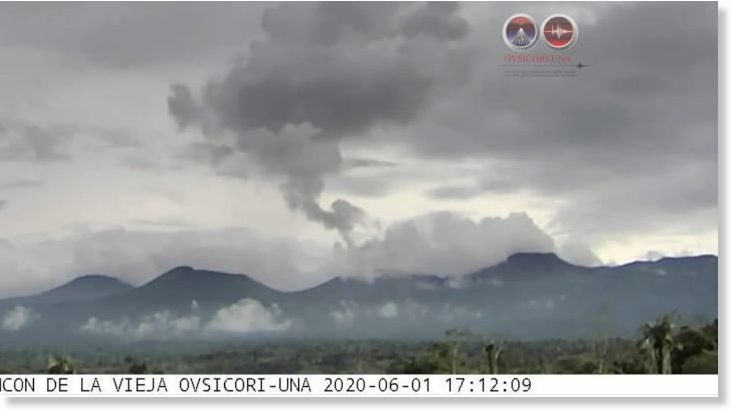
2 eruptions at Rincón De La Vieja volcano in Costa Rica rose up to 2,000 meters

eruption
The Rincón de la Vieja volcano, located between the cantons of Liberia and Upala, made two eruptions Monday, June 1, that reached 2,000 meters (2 km) above the height of the crater, reported the Vulcanological and Seismological Observatory of Costa Rica (Ovsicori).

The first eruption rose between 1,500 to 2,000 meters above the top of the volcano, while the second eruption reached 2,000 meters.

The entity detailed that the events were presented at 5 pm and 5:45 pm, respectively.


Info

Energy exchange between troposphere and ionosphere revealed in study

Atmospheric Wave
© Babalola OgunsuaAn illustration of the atmospheric wave dynamics from convective processes and ionospheric responses.
The Earth's ionosphere, extending about 80 to 1,000 km above the Earth's surface, connects outer space and the middle atmosphere. It's an important part and key layer in the whole Sun-Earth system.

However, the understanding of the equatorial ionospheric responses to thunderstorms remains a mystery due to the peculiarities in the dynamics of the ionosphere over this region.

A recently published study in Scientific Reports focuses on the Congo Basin, located in the equatorial region, where lightning and severe thunderstorms are considered to be the most active in the world.

Info

Geysers may be signalling magma intrusion under Yellowstone

Steamboat Geyser
© Jamie Farrell, USGSSteamboat Geyser erupts on 4 June 2018. Scientists examined how deformation and hydrothermal activity in the northern rim area of the Yellowstone caldera might be linked to magmatic intrusions kilometers beneath the surface.
Steamboat Geyser in Yellowstone National Park is an enigma. It is the tallest currently active geyser in the world, sometimes blasting superheated water over 90 meters (300 feet) into the air. Yet unlike the more famous Old Faithful, Steamboat Geyser runs on its own rhythm. Sometimes the geyser is quiet for decades and then suddenly bursts back to life. It is a mystery exactly why Steamboat has such behavior. After a new period of activity started in 2018, we might have more clues about what drives these steam-and-water explosions.

Yellowstone caldera is a geologic wonderland. It is the source of three of the largest explosive eruptions in the past 3 million years. The caldera itself covers over 1,500 square kilometers (580 square miles) in the northeast corner of Wyoming. As Charles Wicks from the U.S. Geological Survey (USGS) puts it, "Yellowstone's roots seem to extend all the way to the core-mantle boundary. In that dimension, it's a magmatic system of continental scale."

The Yellowstone caldera is packed with geothermal features like geysers, hot springs, mud pots, and geothermal pools. This hydrothermal activity is driven by the vast reservoirs of heat beneath the Yellowstone area, most of which comes from the magma found many kilometers underneath the caldera. All this heat and water mean the land surface at Yellowstone rises and falls frequently, meaning Yellowstone is best described as a "restless caldera."

Info

Ice Age Farmer Report: SOLAR LOCKDOWN: Plandemic & Grand Solar Minimum

solar
A "SOLAR LOCKDOWN" has been announced across media outlets, and Forbes even declares we should fear! But why? And what is a Grand Solar Minimum anyway? Christian breaks down how the script is now in play for food shortages and offers a refresher on the impact of solar cycles.


Sources

Attention

Sakurajima volcano erupts again in Japan

Sakurajima Volcano
Sakurajima Volcano
Eruption Sakurajima Volcano, Japan May 23, 2020


Info

Hawaii just got two new 'largest volcanoes'

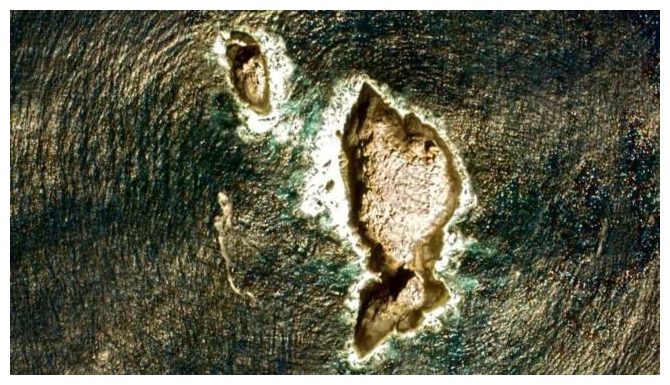
The Gardner Pinnacles
© Google MapsThe Gardner Pinnacles are all that's visible of what is now considered the world's largest, and hottest, volcano. It's called Pūhāhonu, and it lies northwest of Honolulu, Hawaii.
Poking out of the sea 590 miles (952 kilometers) northwest of Honolulu, Hawaii, two barren peaks rear their heads. The little pinnacles, which stand about 170 feet (52 meters) above sea level at their highest point, bely a monstrous mountain of ancient magma beneath them. Turns out, these two unassuming nubbins are actually the tips of Pūhāhonu — the single largest volcano on Earth, scientists have found.

Pūhāhonu — meaning "turtle rising for breath" in Hawaiian — is part of the long chain of undersea mountains and volcanoes that stretch from the Hawaiian Islands to the eastern edge of Russia. Many of the chain's 120-or-so volcanoes are long dead and buried beneath the waves, though the relatively young peaks that make up the Hawaiian Islands still tower over the land (and, occasionally, blow their tops).

Mauna Loa, the gently-sloping behemoth that bulges out of Hawaii's Big Island, has long been designated the world's largest volcano. From its base on the seafloor to its summit thousands of feet over the island, Mauna Loa rises more than 30,000 feet (9,170 m) — making it technically taller than Mount Everest — and encompasses more than 19,200 cubic miles (80,000 cubic km) in volume. There's no question it's gargantuan; however, researchers now claim that Pūhāhonu actually has Mauna Loa beat — thanks largely to tens of thousands of cubic miles of volcanic rock buried beneath the ocean floor.