
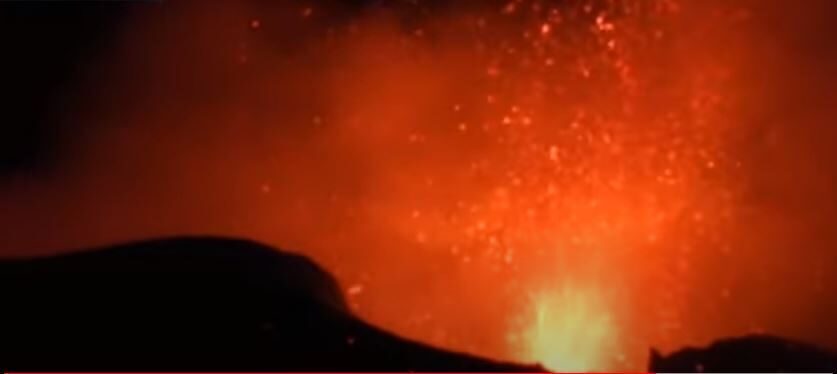
© YouTube/RT (screen capture)
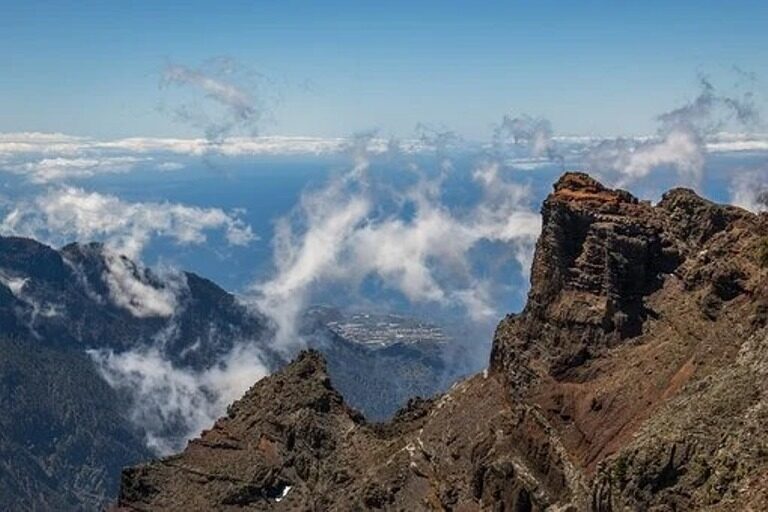
Cumbre Vieja Volcano -- Potential collapse and tsunami at La Palma, Canary IslandsSee also: Landslide induced mega-tsunami 'could happen at anytime' at Alaska's Barry Glacier
Abstract.
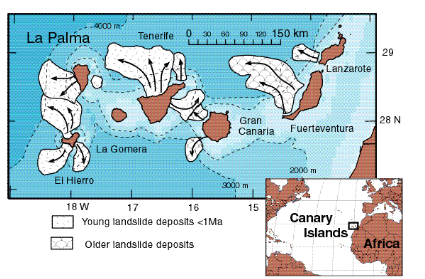
Geological evidence suggests that during a future eruption, Cumbre Vieja Volcano on the Island of La Palma may experience a catastrophic failure of its west flank, drop-ping 150 to 500 km3 of rock into the sea. Using a geologically reasonable estimate of landslide motion, we model tsunami waves produced by such a collapse. Waves generated by the run-out of a 500 km3 (150 km3) slide block at 100 m/s could transit the entire Atlantic Basin and arrive on the coasts of the Americas with 10-25 m (3-8 m) height.
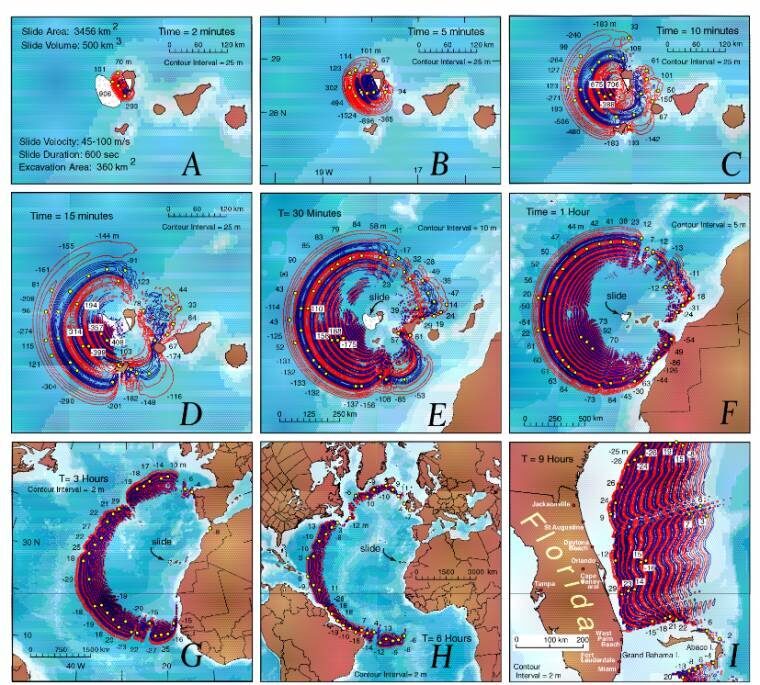
[...]Authors:Figure 4. Evolution of the La Palma landslide tsunami from 2 minutes (a, upper left) to 9 hours (i, lower right). Red and blue con-tours cover elevated and depressed regions of the ocean respectively and the yellow dots and numbers sample the wave height,positive or negative, in meters. Note the strong influence of dispersion in spreading out an original impulse into a long series of waves of decreasing wavelength. See also that the peak amplitudes generally do not coincide with the first wave. Even after cross-ing the Atlantic, a lateral collapse of Cumbre Vieja volcano could impose a great sequence of waves of 10-25 m height on the shores of the Americas.
Steven N. Ward Institute of Geophysics and Planetary Physics, University of California, Santa Cruz California, USA
Simon DayBenfield Greig Hazard Research Centre, Department of Geological Sciences, University College, London, UK
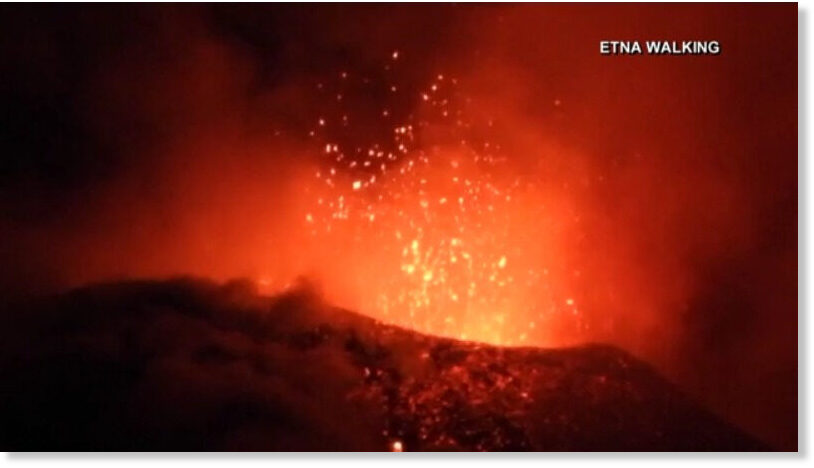

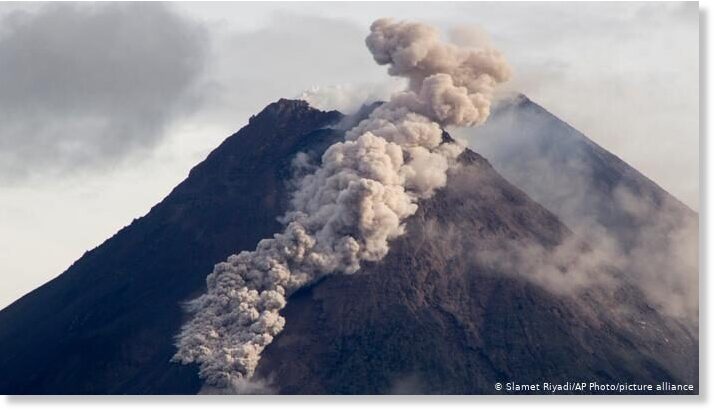
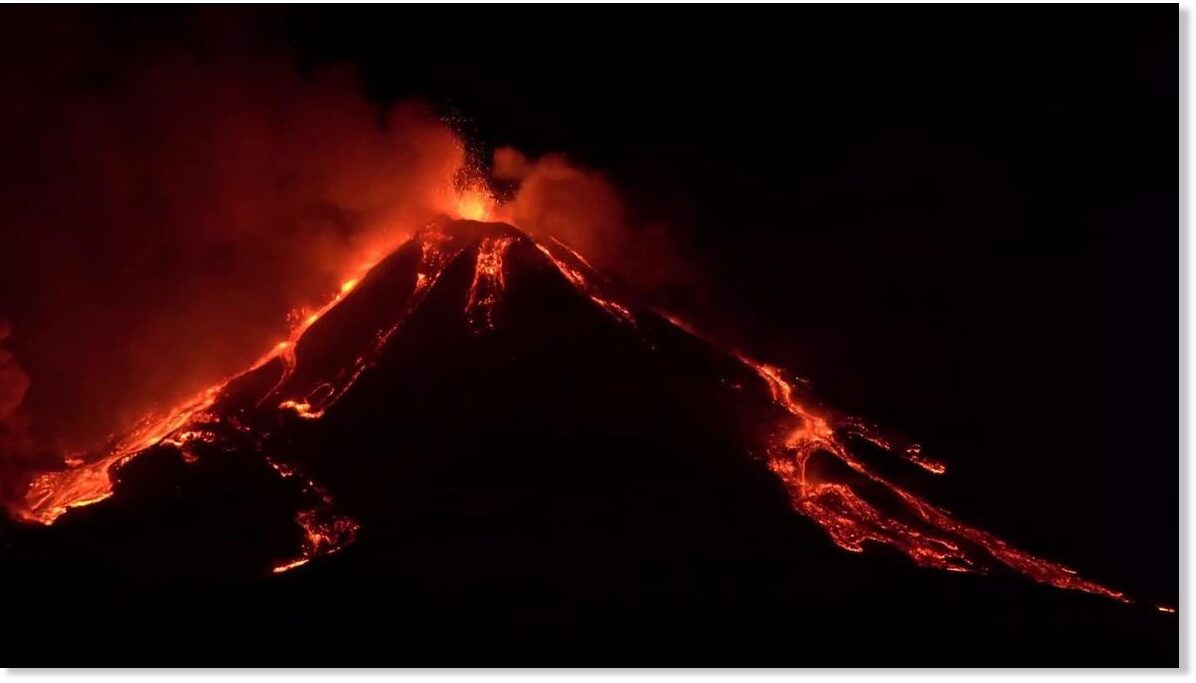





Comment: Lava spews from Italian volcano Mount Etna in series of explosions