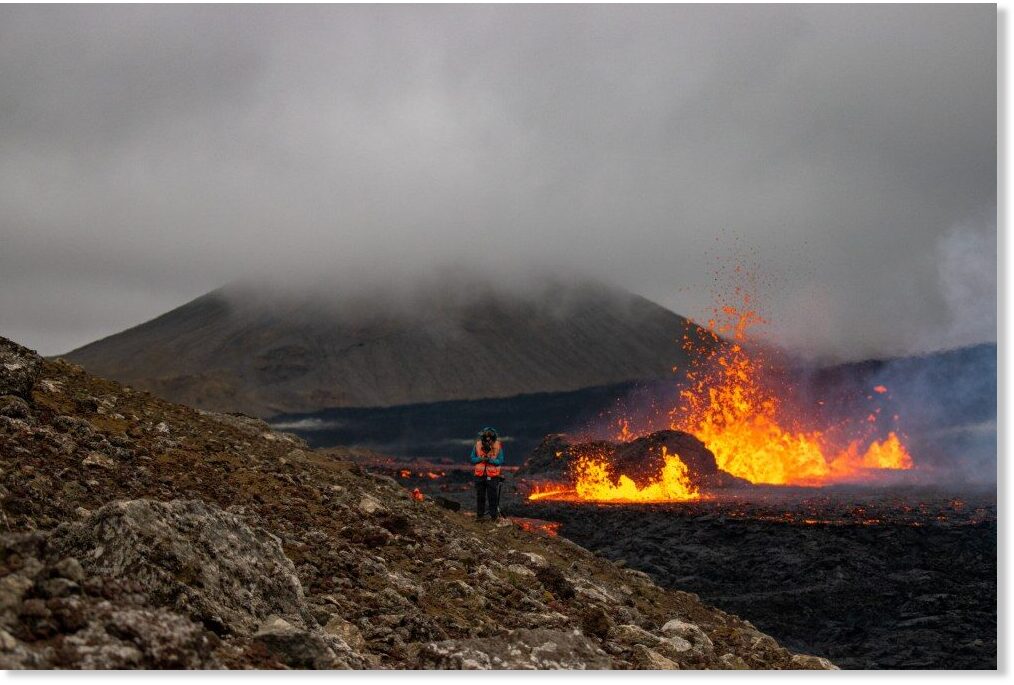
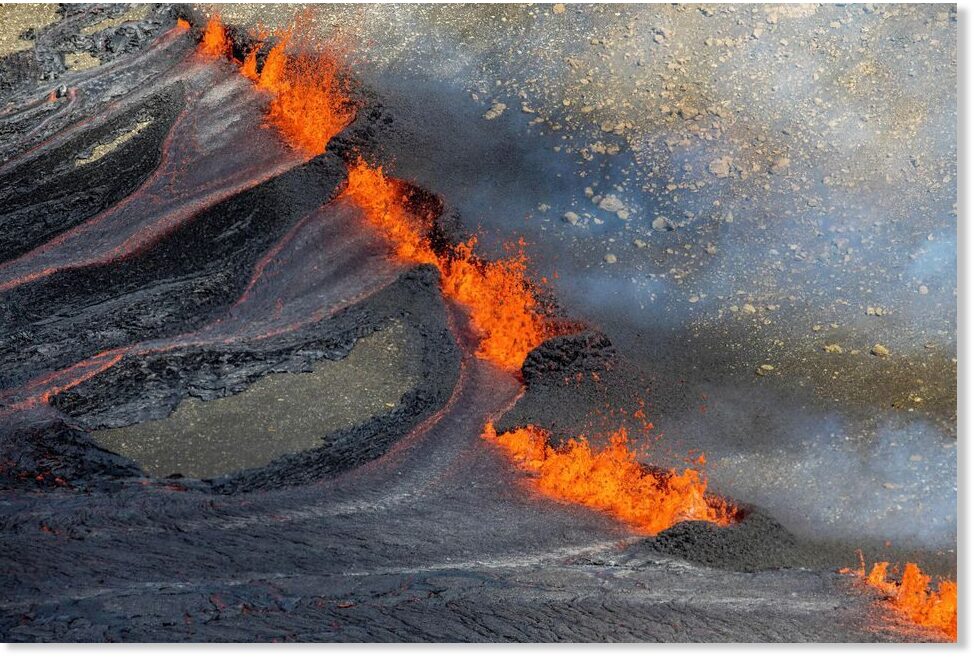
This week, a new volcanic eruption began in Iceland at Meradalir. The fissure eruption has already began to construct a cinder cone at a higher rate than witnessed in the 2021 eruption. Meanwhile, in Japan, the Iwo Jima volcano and caldera produced a new series of explosive and shallow submarine eruptions. And, also in Japan, another island volcano was placed on a heightened alert level due to seismic unrest. This video will discuss these volcano related news stories, as told and analyzed by a volcanologist.
Earlier today, a new volcanic eruption began in Iceland. Just northeast of where Geldingadalir famously erupted in 2021, the same volcanic system ejected lava out of a 100 meter long fissure. As a result, the alert level of this Iceland volcano was temporarily raised to red, and the eruption plume became visible across the peninsula. So, what will happen next? Where will the lava flow? This video will answer these two questions and the ongoing volcanic eruption.
The huge amount of water vapor hurled into the atmosphere, as detected by NASA's Microwave Limb Sounder, could end up temporarily warming Earth's surface.
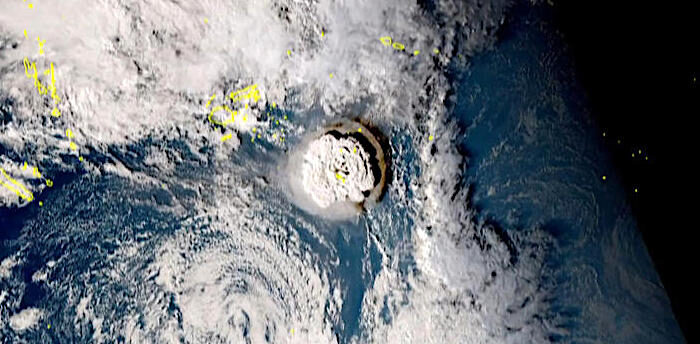
When the Hunga Tonga-Hunga Ha'apai volcano erupted on Jan. 15, it sent a tsunami racing around the world and set off a sonic boom that circled the globe twice. The underwater eruption in the South Pacific Ocean also blasted an enormous plume of water vapor into Earth's stratosphere - enough to fill more than 58,000 Olympic-size swimming pools. The sheer amount of water vapor could be enough to temporarily affect Earth's global average temperature.
Petir Garda Bhwana en.tempo.co Thu, 28 Jul 2022 09:43 UTC
Raung Volcano
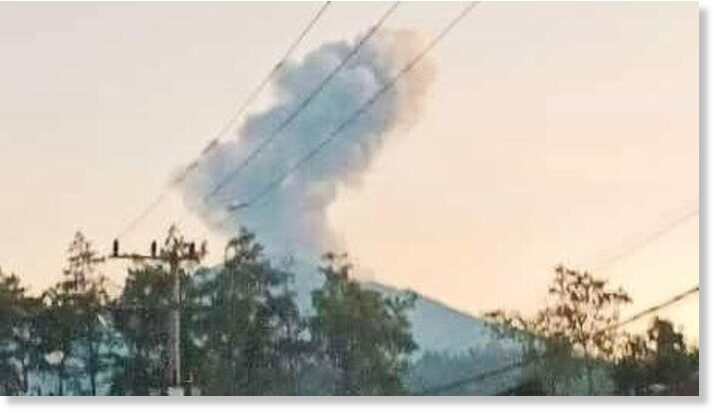
Mount Raung in East Java suddenly erupted on Wednesday, July 27, 2022, at 17:19 western Indonesian time or WIB, spewing ash clouds as high as 1,500 meters above the peak to the west and northwest direction.
The Center for Volcanology and Geological Hazard Mitigation (PVMBG) official Oktory Prambada said the eruption was not caused by magma movement activity. "It happened in 540 seconds," he said to Tempo on Thursday, July 28, 2022
According to him, the ash column was not dense which indicated that the eruption occurred only on the surface, and it was considered a small eruption. "It's just a release of energy or degassing," he added.
Aİ World Disasters YouTube Sun, 24 Jul 2022 13:38 UTC
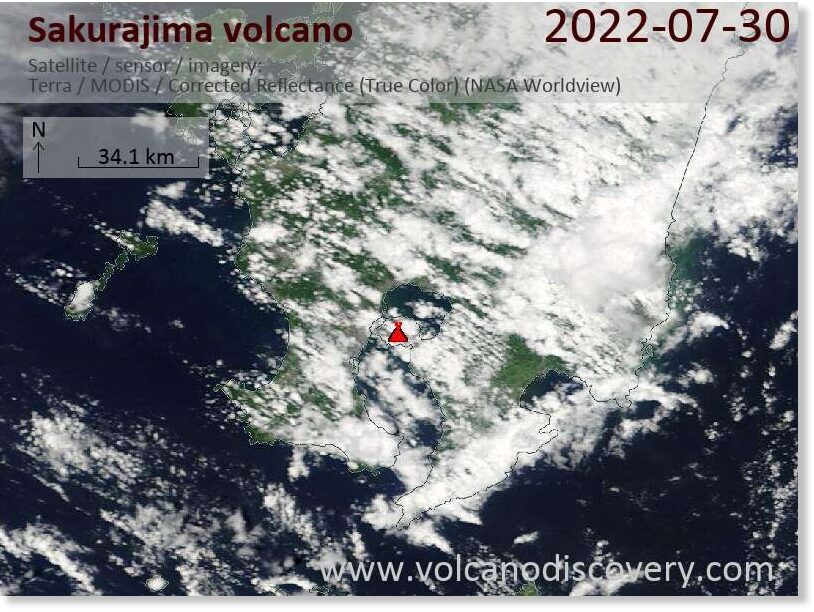
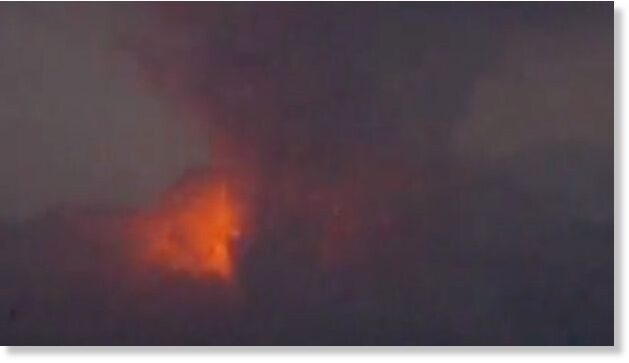
A volcano on Japan's major western island of Kyushu, called Sakurajima, erupted at about 8:05 p.m. (1105 GMT) on Sunday, the Japanese Meteorological Agency (JMA) said, but media said there were no immediate reports of damage.
There were reports of volanic stones raining down at a distance of 2.5 km (1.5 miles) from the volcano, NHK public television said. The eruption alert level has been raised to 5, the highest, with some areas advised to evacuate, it added.
Sakurajima is one of Japan's most active volcanoes and eruptions of varying levels take place on a regular basis. In 2019 it spewed ash 5.5 km (3.4 miles) high.
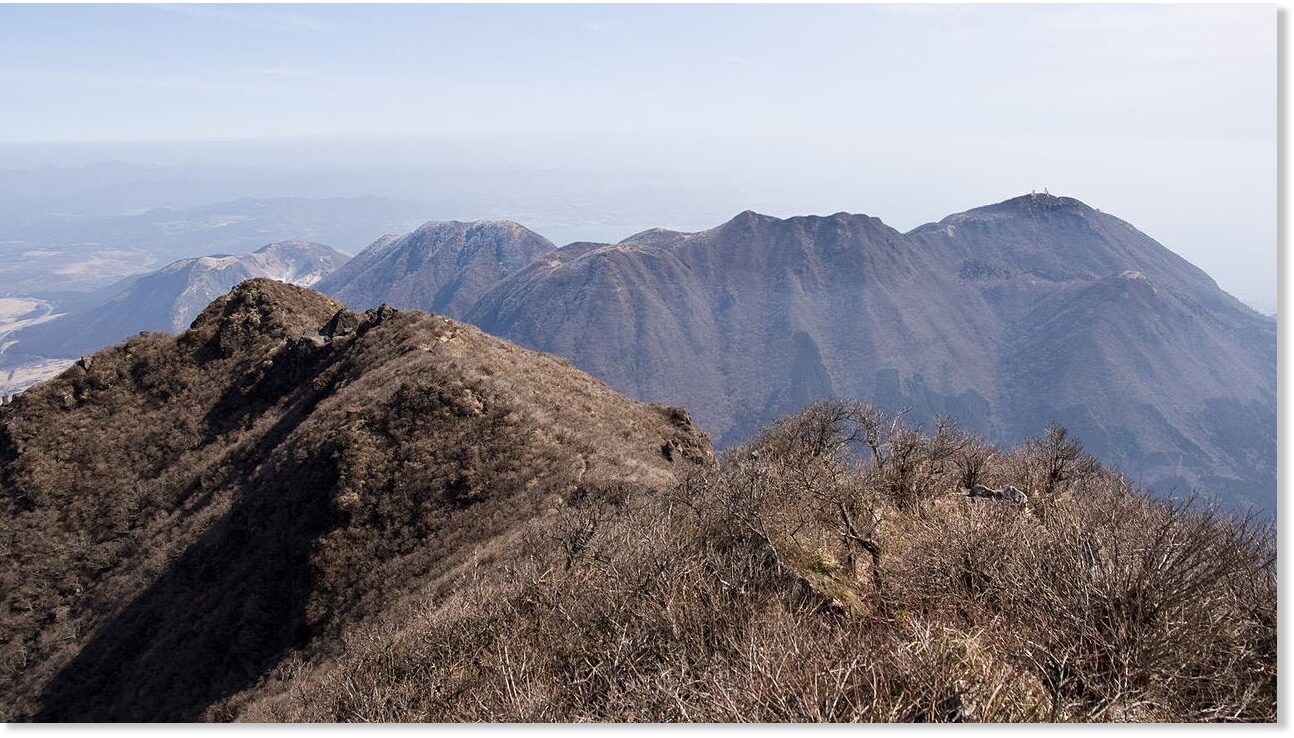
In the last week, the alert level was raised at the Tsurumidake volcano which more than 100,000 people live in close proximity to. Also, the Raung volcano produced an earthquake swarm which was associated with an increase in sulfur dioxide emissions. Clearly, magma is present at depth. And, also in Japan, the Tomachidake volcano is showing signs of unrest. This video will discuss these volcano related news stories, as told and analyzed by a volcanologist.
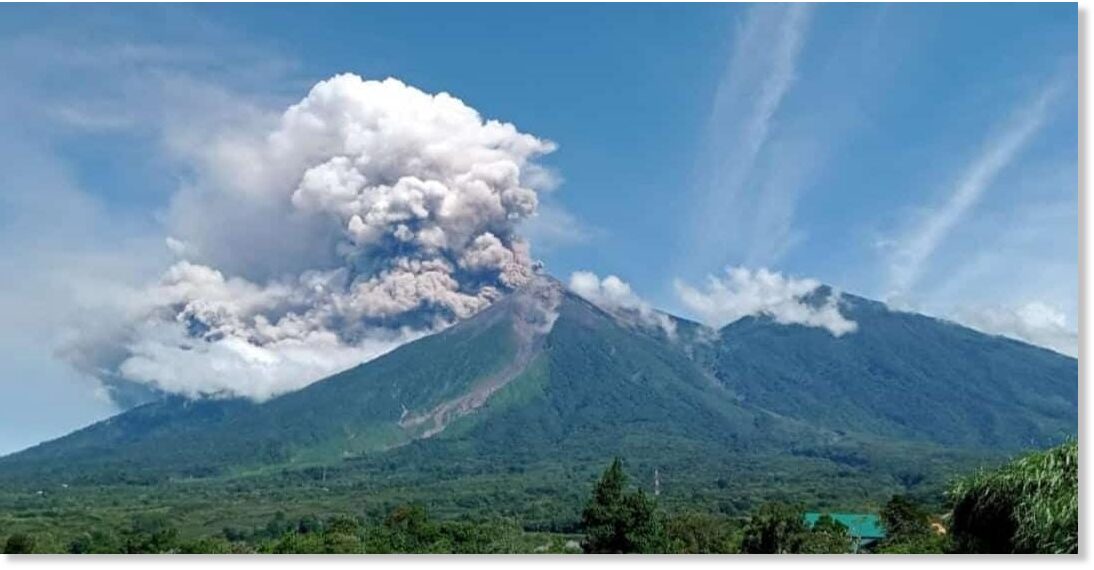
This week there were several major news stories related to volcanoes. In Guatemala, Volcan Fuego produced a long duration pyroclastic flow which travelled 6 kilometers away from its summit. It stopped only a short distance from a local town.
Meanwhile, in the Philippines, the Phivolcs disaster agency released a special warning regarding the Kanlaon volcano. And, in Alaska, two volcanoes which have each not erupted in about a century produced a several thousand foot tall plume of ash.
This video will discuss these volcano related news stories, as told and analyzed by a volcanologist.
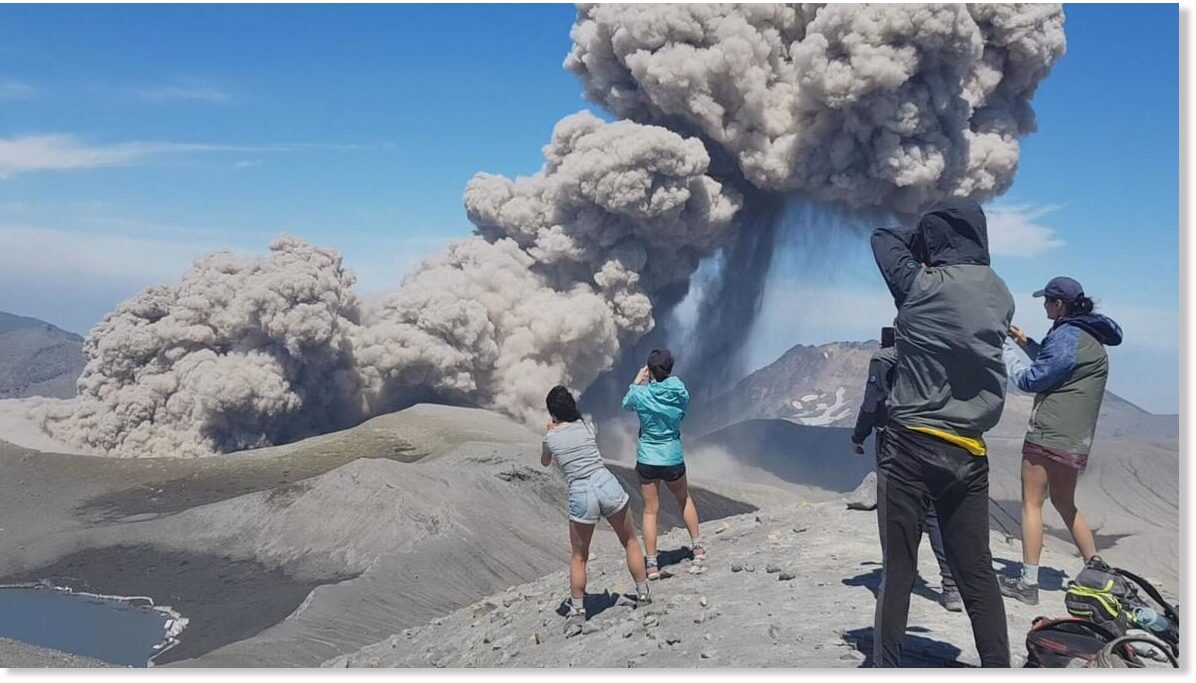
Ash is rising up to 2km into the sky over the Ebeko volcano on Paramushir Island. No threats to vital activities or citizens of nearby Severo-Kurilsk were reported, as no ash fall was detected in the area.

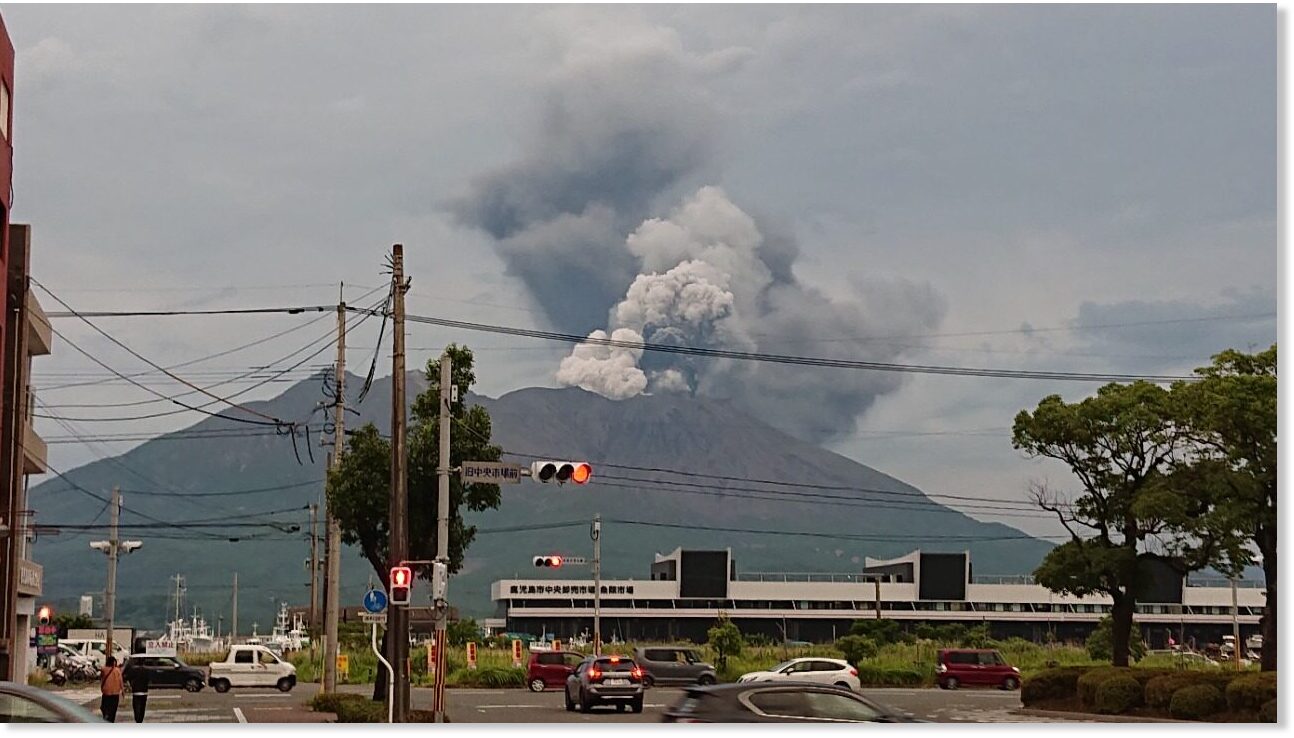




Comment: Details of the 2 other eruptions: Sakurajima volcano erupts on the island of Kyushu in western Japan on 24 July
Lava bombs as Sakurajima volcano erupts in Japan