Earthquakes
S


Seismograph

Shallow 2.3 magnitude earthquake hits Cornwall, UK

Cornwall earthquake
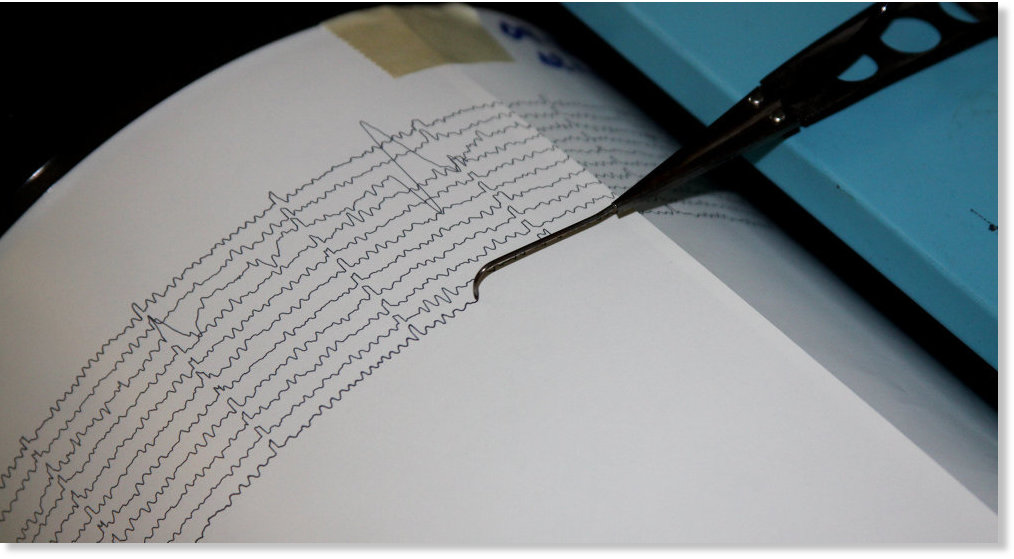
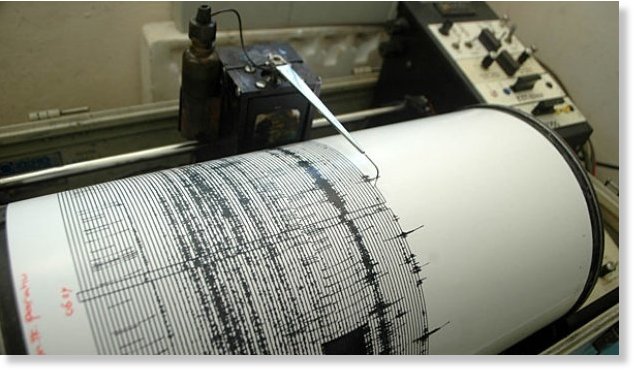
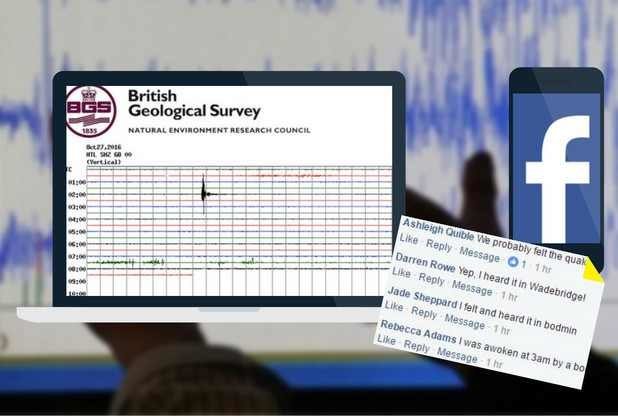
Here's how the quake looked to scientists.
Cornwall has been struck by a 2.3 magnitude earthquake, with the centre of the quake at Liskeard.

There are no reports of any damage this morning.

Kirstin Lemon, of the British Geological Survey, said the quake of this size was unusual for Cornwall adding that scientists hoped to have more details soon.

Dozens of people are now comparing their experience of the earthquake on our Facebook pages. Nanny Kay wrote: "Heard the rumble in Newquay but didn't feel any movement although things in the kitchen started making noises just after."

Sarah Pascoe of Wadebridge said there was "a rumbling sound like thunder and the ground was shaking for around 30 seconds".

Lisa Grainger added: "Definitely heard the rumble then the house vibrate here in Polperro."

Arrow Up

Series of powerful earthquakes including 6.0 magnitude strikes central Italy

Italy earthquake damage
© Sandro Perozzi/AP The Church of San Sebastiano stands amid rubble in Castelsantangelo sul Nera following an earthquake.
A 6.0 magnitude earthquake hit the Marche region in central Italy, just hours after a 5.4-magnitude tremor damaged buildings and cut power lines across the area. Buildings in the region have been damaged, but there have been no reports of fatalities.

A series of powerful aftershocks between magnitude 4 and 4.9 struck the area about five hours after the first tremor.

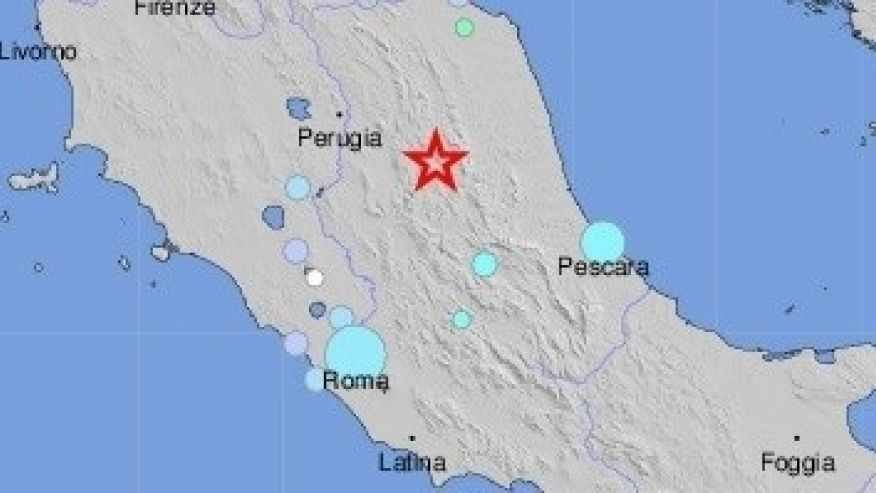
The strongest earthquake occurred 9.18 p.m. on Wednesday, 71 km (44 miles) east of Perugia. The United States Geological Survey reported it as a 6.0 magnitude temblor, while Italy's National Institute of Geophysics and Volcanology said it was a 5.9.

"It was a very strong, apocalyptic earthquake - people were screaming in the street, and now the lights are cut off," said Marco Rinaldi, the mayor of Ussita, a community of 400 that was also affected by the initial earthquake. "Many houses have collapsed. Our area is devastated."


Comment: Shallow 5.4 magnitude earthquake rattles central Italy; shakes buildings in Rome


Seismograph

Shallow 5.4 magnitude earthquake rattles central Italy; shakes buildings in Rome

Italy quake map
© USGSMap of the earthquake's epicenter
An earthquake with a preliminary magnitude of 5.4 rattled a broad swath of central Italy, including Rome, on Wednesday (Thursday NZT), just two months after a powerful temblor toppled villages, killing nearly 300 people.

There were no immediate reports of damage.

Italy's National Vulcanology Center said the epicenter was near Macerata, near Perugia. The US Geological Survey said it had a depth of some 10 kilometres, which is relatively shallow.

The quake was felt across a broad swath of central and southern Italy, shaking centuries-old palazzi in Rome's historic centre.

The Aug. 24 quake destroyed hilltop village of Amatrice and other nearby towns.

Seismograph

USGS: 5.6 magnitude earthquake strikes off Tonga

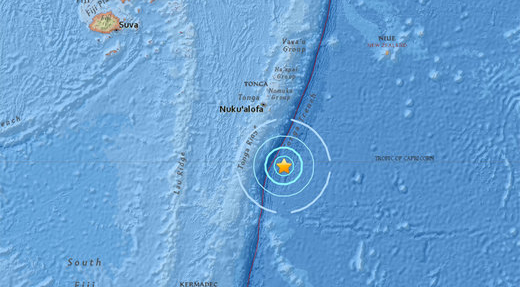
Earthquake hits Tonga
© earthquake.usgs.gov
A 5.6 magnitude undersea earthquake struck 130 kms (80 miles) northwest of the South Pacific island nation of Tonga on Wednesday, the U.S. Geological Survey (USGS) said.

The quake was originally reported as 6.1 magnitude but was later downgraded by the USGS.

There were no immediate reports of damage or injuries and there was no tsunami warning issued after the quake, which struck at a shallow depth of 42 kms (26 miles). Its location was also recorded as 392 km (243 miles) west southwest of Samoa.

Seismograph

Shallow 5.8 magnitude earthquake hits near the Kuril Islands, Russia

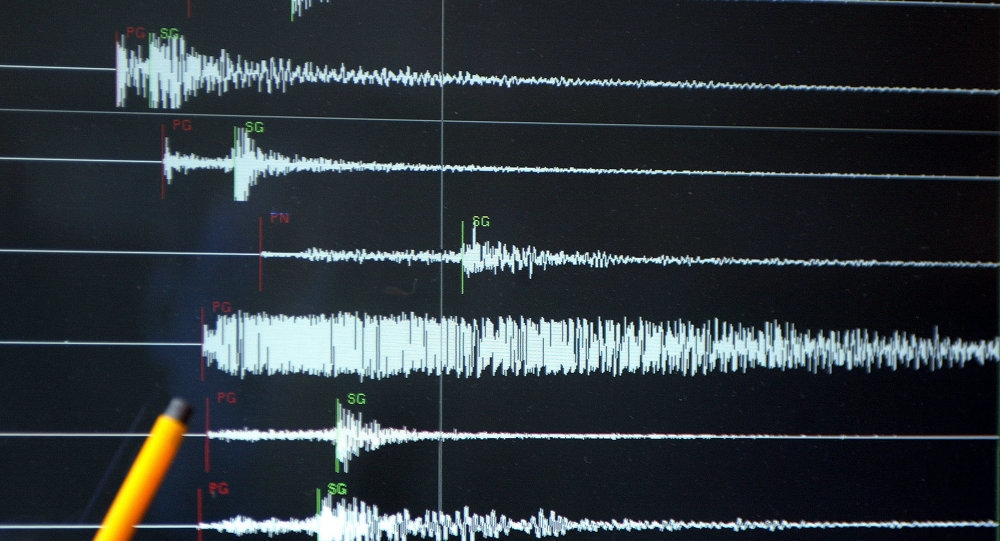
Earthquake graph
An earthquake measuring 5.8 on the Richter scale occurred on Sunday near the Kuril Islands, the US Geological Survey reported.

The earthquake occurred at 20:25 GMT on Sunday at a depth of 29,7 kilometers (about 18 miles) with the epicenter located in 117 kilometers to the east of the Shikotan island.

There appeared to be no tsunami threat following the earthquake and there were no immediate reports of any damages or casualties. The Geological Survey appointed the green level of the earthquake consequences, indicating low probability of casualties and economic damage.

The so-called Kuril-Kamchatka Arc, which extends some 2,100 km from Hokkaido, Japan along the Kuril Islands and the Pacific coast of Russia's Kamchatka Peninsula, is one of the most seismically active regions in the world.

Arrow Down

Earthquake causes large sinkhole outside Ioannina, Greece

Sinkhole
An investigator from the fire department takes photographs of a large sinkhole that swallowed up part of a dirt track and an olive grove in Kalpaki, a rural area outside Ioannina in northwestern Greece, on Saturday.

The sinkhole is estimated to have a depth of 20-30 meters at least, and an overall surface area of around 200 square meters, and is believed to have been caused by a series of earthquakes that struck the region a week ago.

On October 14, Ioannina was hit by a strong tremor measuring 5.4 on the Richter scale and followed by hundreds of aftershocks, some of them quite powerful.

Bizarro Earth

Magnitude 6.6 earthquake hits western Japan's Tottori

Richter magnitude scale
© AFP 2016Richter magnitude scale
An earthquake with a preliminary magnitude of 6.6 shook western Japan on Thursday, the Japan Meteorological Agency said, adding that a tsunami warning was not issued.

Bizarro Earth

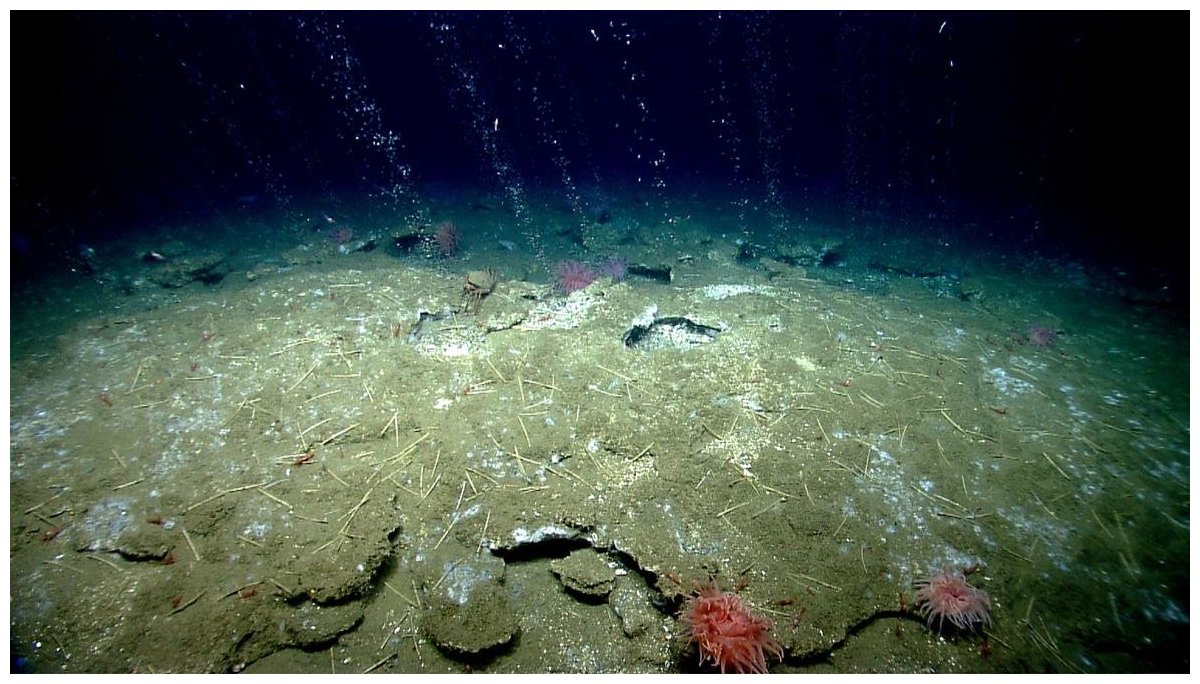
Methane gas seep discovered at the Cascadia Subduction Zone

Methane gas
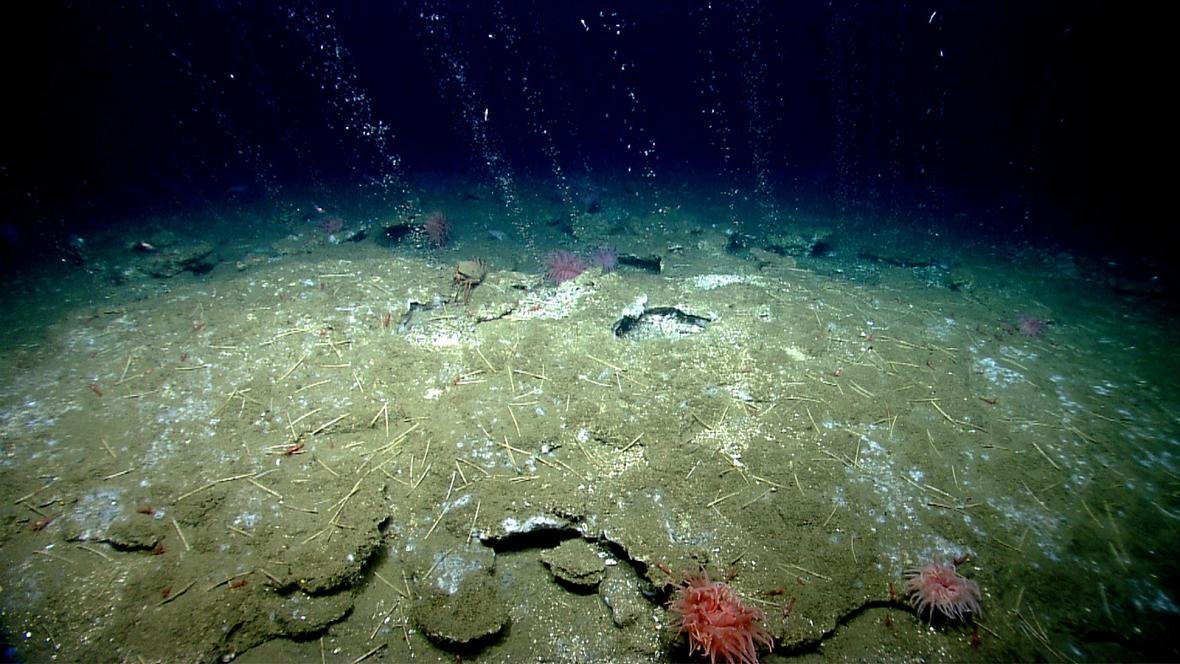
© NOAA Okeanos ExplorerMethane gas bubbling up out of cold seeps on the Atlantic Ocean floor offshore Virginia.
From British Columbia to Northern California, planet Earth's got a case of the toots. A recent deep ocean mapping survey has learned that a geologically-active strip of seafloor called the Cascadia Subduction Zone is bubbling methane like mad. It could be one of the most active methane seeps on the planet.

"It's like bottles of champagne all along the seafloor," said Jesse Ausubel, an organiser for the 2016 National Ocean Exploration Forum, where the gaseous discovery, along with other intriguing finds from recent deep ocean surveys, is being presented this week.

For years, scientists have been aware that methane, an odourless, colourless gas produced naturally during microbial digestion (and more famously, by farting cows) bubbles up from the seafloor where the conditions are right. Recent scientific surveys have discovered hundreds of methane seeps along the Atlantic continental margin, and it's believed there could be thousands more across the world.

Understanding these seeps — where and when they occur, and what controls their activity — is a hot topic in Earth science research today, given that methane is a potent greenhouse gas. In fact, many scientists worry that by warming the oceans, climate change is speeding up the very processes that produce methane, in addition to melting icy methane hydrates that accumulate on the seafloor. In theory, this could lead to an enormous release of heat-trapping gases to the atmosphere.

Bizarro Earth

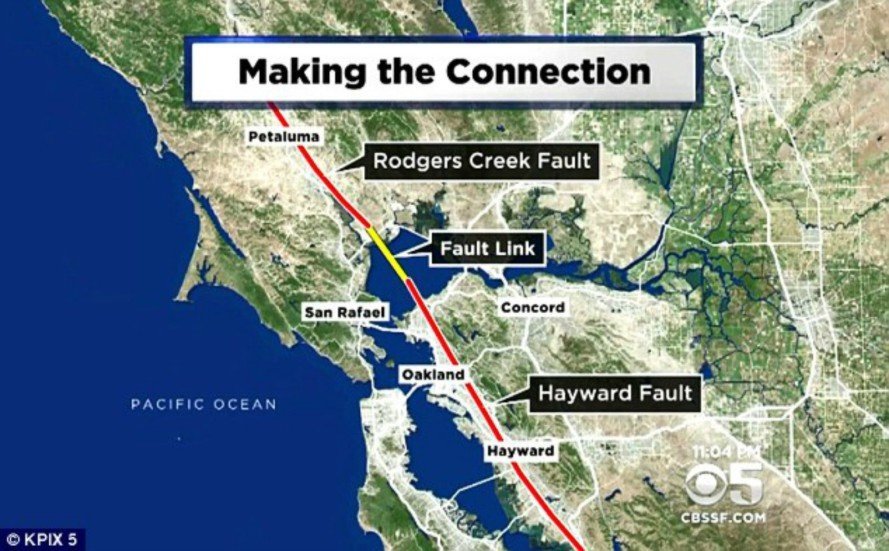
Study finds hidden connection between two dangerous fault zones in San Francisco

san francisco fault lines connected
The longer a fault stretches, the bigger the earthquake it can produce.
The most dangerous earthquake fault in the San Francisco Bay Area is connected to another, which means both could rupture simultaneously and unleash major devastation, a new study finds.

The Hayward Fault has long been considered a threat because it runs under densely populated neighborhoods east of San Francisco. The new work found that beneath San Pablo Bay, it joins with a second, less active underground fracture to the north.

Scientists had already considered the possibility of both faults rupturing at once, whether they are connected or not. So the discovery doesn't change the estimated earthquake hazard much, although it confirms suspicions that the stage is set for what could be a massive quake.

If the Hayward and Rodgers Creek faults broke simultaneously along their combined 118 miles, they could produce a magnitude 7.4 quake, said scientists from the U.S. Geological Survey.

Seismograph

6.5 magnitude earthquake rocks Subang, Java

Earthquake illustration
© TEMPO/Prima Mulia
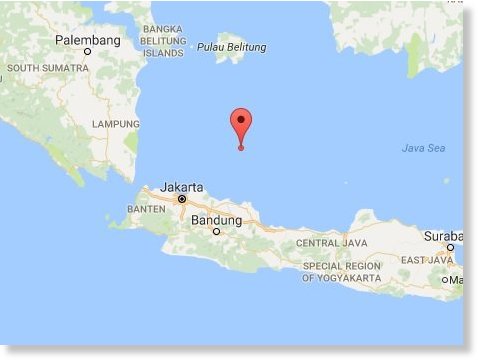
A 6.5-magnitude quake rocked Subang District, West Java, this morning. The Meteorology, Climatology and Geophysics Agency (BMKG) website says that the earthquake occurred at 7:25 am.

The same source says that the epicenter of the quake was at a latitude of 5.29 degrees south and a longitude of 108 degrees east, 120 kilometers northeast of Subang, 654 kilometers below the sea.

According to the head of Data, Information and Public Relations, the National Disaster Mitigation Agency (BNPB), no injuries nor casualties reported after earthquake. "As of now, there are no victims," he told Tempo via text message.

According to the data from the BNPB, the quake has no potential to cause a tsunami. However, it was felt in several regions in West Java, such as Cikarang, Indramayu, Cirebon, Cianjur, etc.

Map earthquake
© Google Epicentre of earthquake