Health & WellnessS


Fish

8 key benefits of swimming

swimming
© Dr. Axe
Swimming is a sport that we seem to do often when we're young and then slack off on as we age. According to the U.S. Census Bureau, in fact, 36 percent of children aged 7 - 17 years old swim at least six times a year, compared to only 15 percent of adults. (1)

But if you haven't hit the pool in some time or find yourself swimming only during warmer months, you're missing out. That's because swim workouts are one of the best activities you can do for your body year-round. Read on to discover why it might be time to grab your goggles and swim cap.

Attention

The 'Flab Jab' and other strange vaccines in the Big Pharma pipeline

baby
Last year, an article titled "Stranger and Stranger Vaccines: Are We Being Fleeced?" introduced a new series of articles for The Vaccine Reaction aimed at highlighting the "strangest vaccines in the pipeline." Vaccines proposed or already under development that may cause you to stop and wonder, "Are they serious?"1

The article pointed out that during the 1970s, U.S. Senator William Proxmire of Wisconsin came up with the brilliant idea of presenting an award to government officials who he believed deserved to be recognized for wasting public funds, a kind of "booby prize for public projects that just seemed to defy common sense" and a "clever way to help uncover wasteful government spending."1

The award was designated the "Order of the Golden Fleece" by Sen. Proxmire and he gave it a total of 168 times from 1975 to 1988.1

Megaphone

Erin Brockovich on the future of water - distilling toxins for truth

water
© Gage SkidmoreErin Brockovich speaks at the 2016 Arizona Ultimate Women's Expo at the Phoenix Convention Center in Phoenix, Arizona, October 9, 2016.
Come take a ride on America's toxic water slide: First stop: Flint, Michigan, where two years later, people are still contending with lead-laced water, which was finally detected by the EPA in February 2015 with the help of resident Lee Anne Walters. Next stop: California, where hundreds of wells have been contaminated with 1,2,3-TCP, a Big Oil-manufactured chemical present in pesticides. Travel to the East to see the significant amounts of 1,4-dioxane, an industry solvent stabilizer that continue to pollute the waters belonging to North Carolina's Cape Fear River Basin. In New York and Pennsylvania, residents are contending with outbreaks of waterborne Legionnaires' disease (the bacteria grow easily in water distribution systems and often hide in the biofilm of aging pipes). Meanwhile, in June 2016, kids in Hoosick Falls, New York, protested in the streets with placards around their necks that featured PFOA (Perfluorooctanoic acid, a man-made chemical used in Teflon) levels to denote how much has infiltrated their blood through tainted water. Drop to Houston, Texas, where high levels of hexavalent chromium, the cancer-causing chemical made infamous by Erin Brockovich, are turning up in tap water while thousands of fracking poisons overrun imperiled communities and Indigenous reservations. And, to add to the cesspit, just four days after Trump was sworn in, he sanctioned the $3.8 billion, 1,170-mile Dakota Access Pipeline (DAPL) that will create underground contamination.

Yes, indeed, the story of water in America is dirty and deep. The tale took a toxic turn in the 1930s, during the dawn of the chemical industry, when many horrifying toxins were first being introduced into our landscape. Quality reports on what flows out of American faucets today read like a description for liquid cancer.

And the water we do have isn't enough. Since 2008, nearly every region of the US has experienced a water shortage.

Health

Save the liver! The benefits of organ meats

organ meats
Organ meats were once a cherished and prized food source.

Nowadays, the tradition of eating organ meats has slightly fallen out of favor.

In fact, many people have never eaten these parts of an animal and might find the thought of doing so quite disconcerting.

However, organ meats are actually quite nutritious. This article takes a detailed look at organ meats and their health effects — both good and bad.

Organ meats, sometimes referred to as "offal," are the organs of animals that humans prepare and consume as food.

The most commonly consumed organs come from cows, pigs, lambs, goats, chickens and ducks.

Today, most animals are born and raised for their muscle tissues. Organ meats are often overlooked, with most meat typically consumed as steaks, drumsticks or ground into mince.

Bug

More than 200 students call out sick from a Houston, Texas elementary school because of mystery illness

Woodland Hills Elementary
© Jennifer Summer
More than 200 students at an Humble ISD elementary school didn't make it to campus Thursday, after a flu-like illness swept the school on Wednesday.

The school - Woodland Hills Elementary - has an enrollment of 581 students. Of those, 205 stayed home, plus five staff members.

Parents may be keeping their students off the campus as a precaution.

The half-empty campus comes after 78 students did not come to class and more were sent home on Wednesday, according to a letter from the school's principal. Their common symptoms were vomiting and diarrhea.

Magnify

Study reveals big marketing deceptions in organic beauty products

ORANIC BEAUTY PRODUCTS
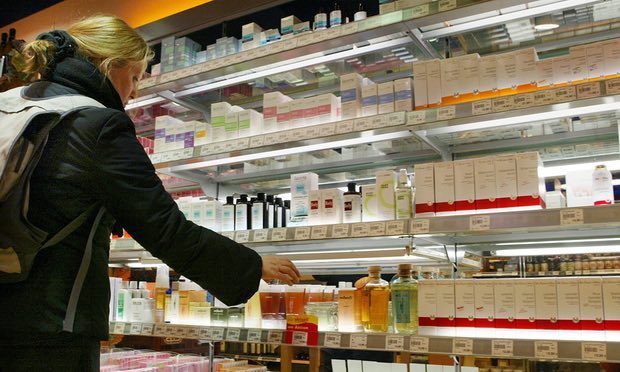
© DPA/AlamyA customer picks up a product from a shelf featuring organic cosmetic products at a supermarket in Frankfurt.
The makers of many "organic" beauty products have been accused of confusing and meaningless labelling, according to a new survey in which 76% of consumers admitted they felt misled.

According to the Soil Association's recent market report, sales of organic health and beauty products swelled by more than 20% in 2016, with the market now worth about £61.2m in the UK.

But the industry has put money into marketing products it claims are "green" rather than spending money on formulating environmentally friendly, toxin-free products that are not harmful to the skin, the Soil Association warns.

Unlike organic food, which must adhere to strict EU regulations, there are no legal standards for the use of the terms organic or natural on beauty products. In practice, any brand or beauty product can be labelled as natural or organic even if it contains virtually no organic or natural ingredients.

Comment: Beauty myths: The 'Certified Organic' deception


Health

The therapeutic qualities of oregano

oregano
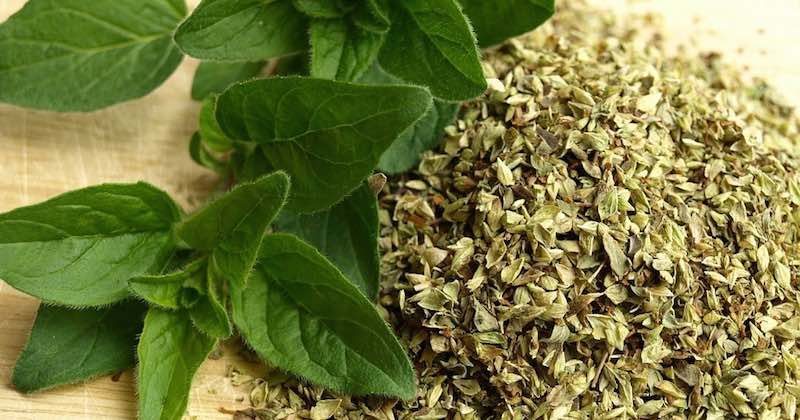
You may already know that oregano is the "secret" herb that takes tomato sauce to a new level of savory and can even put flavor in butter sauces and chicken dishes that have people begging you for your recipes.

Oregano is an ancient, perennial herb, being an integral cooking ingredient in what is now known as Eurasia for thousands of years. The entire Mediterranean is well acquainted with this food-enhancing spice, but it's probably no surprise that Greece and Italy are noted as the regions where it most likely originated.

Because it's related to mint, which is from the menthe family of plants, you may detect a similarly cool but distinctive essence when you crush a leaf from the oregano plant between your fingers. Oregano has many of the same therapeutic qualities as mint, and the scent may also remind you of thyme.

Strolling through a garden that includes oregano, you may not be overwhelmed by the scent and aroma nearly as much as when the herb is dried. Greek oregano, or Origanum heracleoticum, is the variety recommended for your culinary endeavors.

Heart

Russia developing new drugs to fight antibiotics resistant superbugs

drug development
© Stefan Wermuth / Reuters
Russia is currently developing new drugs that may provide an alternative to classic antibiotics, Health Minister Veronika Skvortsova told RT, while acknowledging that illnesses resistant to antimicrobial and antibiotic drugs are becoming a major problem. "The issue of antimicrobial resistance is really on the rise... It is very important for the whole world, and for Russia as well. Antimicrobial resistance has been evolving in recent decades. This has led to the fact that many of the familiar antibiotic drugs no longer work," Skvortsova said.

According to the health minister, antimicrobial resistance has developed because some products, including meat, contain antibiotics. Additionally, in Russia, people used to use antibiotics for "self-treatment," even when they didn't need them. "People bought them [antibiotics] and took them [without prescription]. As a result, the body and the microorganisms adapted to these antibiotics." Skvortsova said that Russia is currently developing a strategy for battling antimicrobial resistance, taking "leading positions in the world in this field." "Our leading research laboratories are developing a new class of drugs that is an alternative to classic antibiotics," she told RT. Such drugs work differently from antibiotics, so patients won't develop antimicrobial resistance, the health minister noted.

Comment: Until government agencies take action to ban antibiotic use in animal feed, opt for organic, grass-fed dairy and beef.
See also:


Magnify

'It's time to slaughter the sacred cow' - Retractions & errors driving loss of faith in the peer review process

peer review
Establishment medical professionals are quick to hold up peer-reviewed studies as the gold standard, argument-ending proof in an attempt to shut down valid discussions around 'alternative' health and healing.

Major medical and science journals have long-been considered the sacred cows from which information gets disseminated down through the roots of mainstream medicine with unquestioning adherence mirroring religious dogma. What if this peer-reviewed research was flawed? What if major medical journals acted as gatekeepers long-crafting a health paradigm that favored only limited and dangerous pharmaceutical interventions?

It was recently reported that the journal Tumor Biology is retracting 107 research papers after discovering that the authors faked the peer review process. The same journal pulled 25 research papers the previous year for the same reason. On April 20 Springer, who publishes Tumor Biology, released this statement:
"The current retractions are not a new case of integrity breach but are the result of a deeper manual investigation which became necessary after our previous retractions from Tumor Biology in 2016. The extent of the current retractions was not obvious from the earlier investigations in 2015. We are retracting these published papers because the peer review process required for publication in our journals had been deliberately compromised by fabricated peer reviewer reports."

Comment: Peer reviewed 'science' losing credibility due to fraudulent research


Attention

Is insulin resistance speeding up cognitive decline?

Cognitive Decline
We are facing a tsunami of Alzheimer's disease. It's often said that the underlying causes of Alzheimer's disease are unknown, but there are numerous theories. For example, research suggesting that an infectious component is at play is becoming increasingly difficult to ignore.

In addition to viruses, bacteria and fungi, an infectious protein called TDP-43, which behaves like infectious proteins known as prions — responsible for the brain destruction that occurs in Mad Cow and Chronic Wasting Diseases — has been linked to the disease.

Research presented at the 2014 Alzheimer's Association International Conference revealed Alzheimer's patients with TDP-43 were 10 times more likely to have been cognitively impaired at death than those without.1

Due to its similarities with Mad Cow Disease, investigators have raised the possibility that Alzheimer's disease may be linked to eating meat from animals raised in concentrated animal feeding operations (CAFOs).

Mounting research also suggests Alzheimer's disease is intricately connected to insulin resistance; even mild elevation of blood sugar is associated with an elevated risk for dementia.2 Diabetes and heart disease3 are also known to elevate your risk, and both are rooted in insulin resistance.