
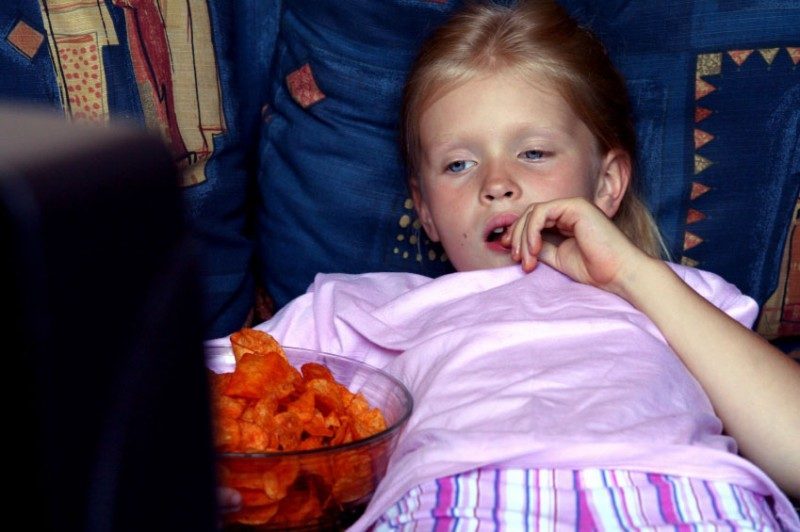
Young children whose parents offered them food for comfort at ages 4 and 6 had more emotional eating at ages 8 and 10. But the reverse was also true: Parents whose children were more easily comforted with food were more likely to offer them food to soothe them
The findings come from researchers at the Norwegian University of Science and Technology, King's College London, University College London, and the University of Leeds. They appear in the journal Child Development.
"Understanding where emotional eating comes from is important because such behavior can increase the risk for being overweight and developing eating disorders," according to the study's lead author, Silje Steinsbekk, associate professor of psychology at the Norwegian University of Science and Technology. "If we can find out what influences the development of emotional eating in young children, parents can be given helpful advice about how to prevent it."



















Comment: True hunger vs. emotional appetite