Health & WellnessS


Butterfly

Sleep as a natural antibiotic

sleep, sick bed
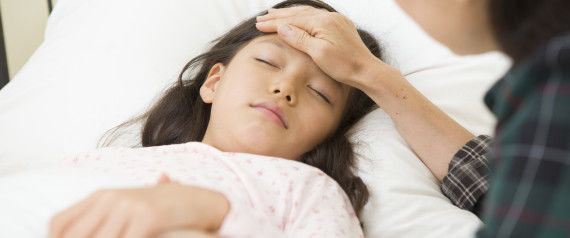
The precise role of sleep in animals, including humans, remains unknown. As children, our parents shout at us to get more sleep. As parents, we often find ourselves complaining we don't get enough sleep. And yet, the precise function of sleep remains undetermined, and much of our perception of the role of sleep stems from our understanding of the consequences of sleep deprivation or poor sleep quality on our well-being.

In a recent study by Prather and colleagues published in September's issue of SLEEP (1), investigators examined the effects of sleep deprivation on our immune system's ability to stave off infection. Cleverly, the investigators inoculated the common cold virus into the noses of adult volunteers using nasal drops and then examined the role of sleep duration in the susceptibility of developing a frank cold. Total sleep was defined objectively using actigraphy -- a device worn on the wrist that differentiates wake from sleep according to algorithms that measure body movement.

The investigators discovered that following inoculation of the cold virus, those who slept less than 5 hours had a 4.5 times greater chance of developing a frank cold. Those that slept 5-6 hours had a 4.24 times greater chance of developing a frank cold, compared to those volunteers who slept greater than 7 hours (the recommended duration of sleep by the National Sleep Foundation) . The effect of sleep duration remained significantly associated with developing a cold following control of many other relevant risk factors including season, smoking history, and stress levels.

Comment:


Info

Common habits that damage the kidneys

kidney
Kidneys are the most executable pair of organs of the body. The kidneys purify the blood of unnecessary substances which are then discharged through the urethra. Kidney disease is one of the costliest illnesses in the world and managing kidney disease is very expensive. Kidney failure is often due to the build-up of waste products in the body. Inability to remove potassium from the bloodstream may lead to abnormal heart rhythms and sudden death.

Pain-killer abuse
Too much use of pain-killers for simple pain is a bad habit. Most pain-killers have severe side effects and can damage different organs, such as kidneys. Studies show taking pain killers long term reduces blood flow and deteriorates the kidney's main function.

Alcohol consumption
Too much alcohol consumption damages our kidney and liver. Drinking on limit is not bad but most of us don't stop after just one drink. Alcohol is actually a legal toxin that puts a lot of stress on our kidneys and liver.

Comment: Kidney disease has become an epidemic, and researchers have linked it to the prevalence of Monsanto's Roundup in the food supply:


Smoking

Secret health benefits of Nicotine

Image
Forget what you think you know about nicotine. Most people see nicotine as a vile, fiercely addictive substance that takes a large share of the blame for the multitude of deaths occurring around the world as a result of smoking.

But there's another side to the story. As well as having medicinal benefits, nicotine has untapped potential as a cognitive enhancer, boosting attention, working memory and more. The problem - which you undoubtedly guessed - is that using nicotine by smoking cigarettes for its cognitive benefits is like mainlining heroin to treat your cough: it might work, but the negatives considerably outweigh the positives.

However, vaping is changing all of that.

Comment: Additional Nicotine Benefits:


Brick Wall

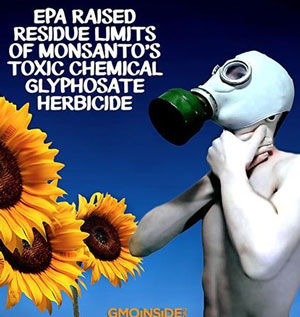
Don't let Monsanto deny, obscure and belittle the carcinogenicity of glyphosate!

Image
© seattleorganicrestaurants.com
Monsanto is stepping up its attack on the WHO's classification of glyphosate as a probable human carcinogen, writes Peter Saunders. Dismissing the finding as 'junk science' the company is convening its own industry friendly panel and pushing its secret studies at regulators. Don't let them get away with it!

In May 2015, the leading medical journal Lancet Oncology published a brief account of a review by the International Agency for Research on Cancer (IARC) [1].

The IARC working party had considered five organophosphate pesticides, tetrachlorvinphos, parathion, malathion, diazinon and glyphosate, and had classified the first two as possibly carcinogenic and the other three as probably carcinogenic.

Comment: Professor Peter Saunders is obviously angered and rightfully so! Monsanto's ongoing attempts to deny, obscure and belittle the carcinogenicity of Glyphosate is maddening! Also Industry and government agencies studiously ignore news that Monsanto's glyphosate is carcinogenic and continue to claim their product is safe!
Following the release of the report, the country of Sri Lanka decided to ban glyphosate completely, and other countries are considering a similar move. Is this information just too much to swallow for more immediate action to follow, or have governments been infiltrated so completely by biotech that the announcement that most of our food is covered in poison will simply be ignored?

The National Pesticide Information Center has done nothing to update its website to inform citizens that the IARC has declared that this herbicide is carcinogenic.

In fact, they instead post the following, word for word:
"Is glyphosate likely to contribute to the development of cancer?

Animal studies have not shown evidence that glyphosate exposure is linked to cancer. Studies with people have also shown little evidence that exposure to glyphosate products is linked with cancer."
This is an outrageous lie that should be removed immediately - but it won't be because we are dealing with an industry which regulates itself. Unless people around the world take massive, grass-roots action, instead of waiting on their governments to respond, Monsanto and the biotech industry will continue to sell known cancer-causing agents.


Smoking

Researchers find genetic marker for longevity and decreased risk of cancer in smokers

smoking man
Smoking cigarettes is universally regarded as bad for health, but not everybody who smokes develops cancer or other diseases linked to the habit. New research shows that a proportion of lifelong smokers live to extreme ages despite the long list of negative effects cigarettes have on the body.


Researchers found a set of genetic markers that promote longevity in cells and mitigate damage to them, which may be the explanation for preventing diseases tied to cell dysfunction.

"Many of these markers are in pathways that were discovered to be important for aging and lifespan in animal models," said Dr. Morgan Levine, a researcher at the University of California Los Angeles, in a press release. "There is evidence that these genes may facilitate lifespan extension by increasing cellular maintenance and repair. Therefore, even though some individuals are exposed to high levels of biological stressors, like those found in cigarette smoke, their bodies may be better set up to cope with and repair the damage."

Comment: For more on the benefits of smoking and the studies that don't show the link between smoking and cancer listen to this episode of the Health and Wellness Show.


Wolf

Three main reasons to use common sense when feeding your pets

Image
We all wish for our furry family members to reach their full developmental potential and to live in vibrant good health. Unfortunately common practice is not always based on common sense, instead large majority of widely accepted habits in our society is based primarily on economic interest and blatant disregard for some basic facts of nature. Here are three important reasons why you should never feed your pets highly processed commercial foods:

Megaphone

Plagued by a guilty conscience: Ex-Pharma employees speak out against the industry

Image
© healthmaven.blogspot.com
Turns out, that old adage is true - money does not buy everything. For some, money does not buy a clear conscience. Despite earning high incomes, these former pharmaceutical employees left their jobs and are now sharing the truth of what goes on behind the curtain. Many of them have written books, participated in documentaries, and shared their stories through online videos. Here are a few.

Info

Foods and herbs that help guard against infection

natural antibiotics
Over the last several decades, over-use of antibiotics has reached an all-time high. The result has been drug-resistant bacteria and "superbugs" that evolve faster than scientists can figure out how to fight them. A future where bacteria are at the top of the food chain is not unheard of.

Long before there were pharmaceutical antibiotics - developed in the 1940s, there were foods and herbs that helped guard against infection and disease on a daily basis. Many of these natural defenders are still in use today with holistic healers around the globe.

Our ancestors also had a solution for healing, using antibiotics from nature and it would be good to remind ourselves who these antibiotics are and possibly think about using them in case of an illness.

Comment: See also: Herbs and foods that kill superbugs


Blue Planet

The health benefits of camping

Camping fire under the night sky
© Unknown
I've always loved to camp. From my early days as a kid growing up in Maine (where it seemed like everyone camped), to my death-defying adventures with Outward Bound in the wilds of New England as a teen, to my current setup running a business in the Malibu hills, I've been a camper. Even when I'd dedicated my life to endurance training and had little time for anything else, I always made it a point to get away to the woods with the family for a few nights whenever I could. The reasoning was basic: it was relaxing, enjoyable, decompressing, and just plain fun. And that's why most people camp. It just feels right, doesn't it?

But as is always the case, there's more to it. Things that feel right (or taste right) often have distinctly positive physiological effects. So, why is camping so great? Why, even today, do campsites at Lake Tahoe or Yosemite disappear upon release faster than Taylor Swift concert seats? If you're a skeptic of camping, be sure to read on. I'm sure I'll win over some of you by the end.

It's a rapid departure from your regular life without costing a fortune.

It'd be great if everyone could travel the world every time they had a little PTO saved up. But for most folks, going abroad, or even to another city in their home country, is cost-prohibitive. There's the plane ticket. There's the passport. There's the lodging, the meals, the attractions, the ever-presence of locals whose entire livelihood depends on getting you to spend money. If you can swing it (and with smart planning, most people actually can), world travel is awesome and helpful and invigorating. But it can be just as world-changing to drive a few hours out of the city to a place where you can lay your tent down, start a campfire, and gaze up at the universe. And a whole lot less expensive.

Comment: Camping can be very rejuvenating and restorative. It can also help in preparing a mindset of living without the comforts of modern life.


Beaker

Colloidal silver choice antibiotic by NASA to treat potable water; out of FDA's reach

Image
© naturalnews.com
In the day-to-day happenings of world politics, the United States and Russia are presented on the global stage as arch-enemies. Up in space, however, it's a completely different story. Enter the International Space Station (ISS), which for years has housed astronauts from both countries along with life-support systems unique to each country's needs. The two sides have long remained separate from one another until recently.

For years, the U.S. side of the ISS utilized iodine as its water cleansing agent of choice, while the Russian side took advantage of antibacterial silver for water purification purposes. Both sides coexisted peacefully in their respective methods, with the U.S. picking up whatever extra water the Russian side had leftover. Russia's water purification process has always been much more efficient than that of the U.S.

Comment: Colloidal silver is one of those age-old remedies that ought to be in every home's medicine cabinet. Its uses are varied, medically documented, and proven to be highly effective for supporting the body's immune system.