

© RDNE Stock Project/Pexels
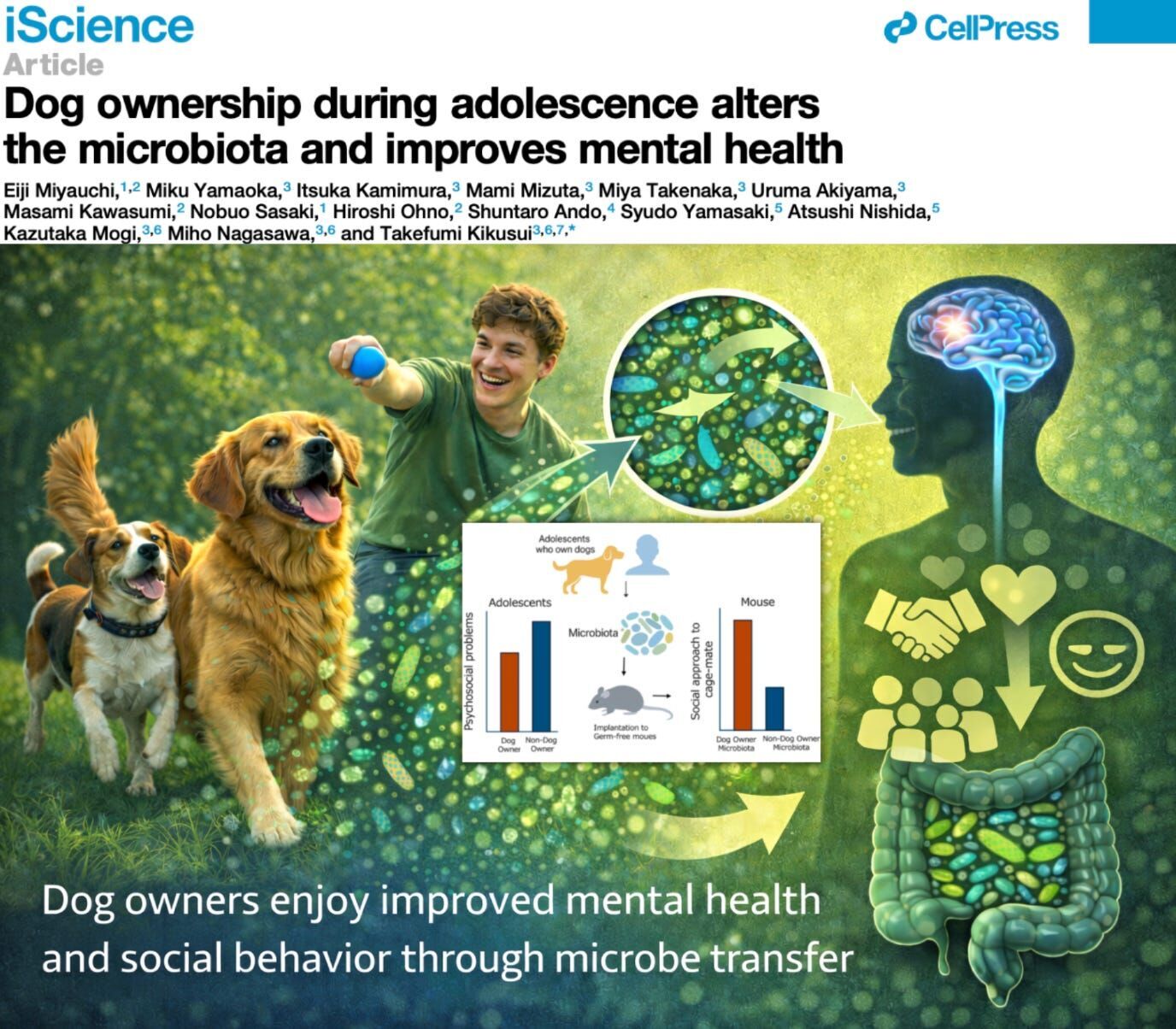
- Teenagers who live with dogs have better mental health and social behaviors.
- Microbes in dog owning teens differ from non-dog owners and are more similar to those found in dogs.
- When the dog-related microbiota from adolescents is transferred to mice, they show enhanced social behaviors.
A team of Japanese researchers, with lead researcher Eiji Miyauchi from Gunma University and senior researcher Takefumi Kikusui from Azabu University are associated with the Tokyo Teen Cohort Project, which is an ongoing longitudinal study of adolescents and their primary caregivers. They were intrigued by an earlier piece of research from this project, which demonstrated that dogs improved the mental health and social stability of teenagers. Specifically, that study found that adolescents with a dog at home reported fewer social problems than those without a dog. The data showed that teenagers who own dogs when they were 13 years of age had significantly lower scores for social problems, social withdrawal, thought problems and lower levels of delinquent and aggressive behaviors when measured later, then those who did not own dogs. The unanswered questions had to do with why this might be, and these investigators came up with the unexpected hypothesis that it might have to do, at least in part, with "symbiosis with microorganisms."














Comment: NOBIVAC NXT is a vaccine platform developed by Merck Animal Health that delivers an RNA sequence of a pathogen's specific gene to dendritic cells, where it self-amplifies and produces large amounts of antigen that will forever alter your pet's microbiome. Steer away!