Health & WellnessS


Shoe

Get moving! Sitting down for hours a day speeds up aging, according to new research

elderly woman wheelchair
© Media MogulPeople should aim to stand up every 20 minutes, according to Age UK
Elderly people who spend most of their time sitting down age significantly quicker than more active contemporaries, according to new research.

A study of 1,500 pensioners found those who kept to a sedentary position for ten hours or more a day and who did less than 40 minutes moderate physical activity had the bodies of people eight years older.

They were discovered to have shorter telomeres, the tiny caps found on the ends of strands of DNA which protect chromosomes and which are associated with faster ageing.

Experts have said the research represents a "wake-up call" for Britain's growing elderly population and that pensioners should aim to stand up and walk around every 20 minutes if they can.

"People don't realise that if you sit down all day it can undermine all the exercise you do," said Professor James Goodwin, head of research at Age UK.

Comment:


Sun

Sunlight energizes infection fighting T cells

sunlight
Sunlight allows us to make vitamin D, credited with healthier living, but a surprise research finding could reveal another powerful benefit of getting some sun.

Georgetown University Medical Center researchers have found that sunlight, through a mechanism separate than vitamin D production, energizes T cells that play a central role in human immunity.

Their findings, published today in Scientific Reports, suggest how the skin, the body's largest organ, stays alert to the many microbes that can nest there.

"We all know sunlight provides vitamin D, which is suggested to have an impact on immunity, among other things. But what we found is a completely separate role of sunlight on immunity," says the study's senior investigator, Gerard Ahern, PhD, associate professor in the Georgetown's Department of Pharmacology and Physiology. "Some of the roles attributed to vitamin D on immunity may be due to this new mechanism."

They specifically found that low levels of blue light, found in sun rays, makes T cells move faster - marking the first reported human cell responding to sunlight by speeding its pace.

Comment: The Health & Wellness Show: Seeing the Light with Dr. Alexander Wunsch


Top Secret

Federal court documents reveal how Monsanto & the EPA seek to keep talks about Glyphosate Cancer Review a secret

monsanto
© Dame Magazine
Monsanto and officials within the U.S. Environmental Protection Agency (EPA) are fighting legal efforts aimed at exploring Monsanto's level of influence over regulatory assessments of the key chemical in the company's Roundup herbicide, new federal court filings show.

The revelations are contained in a series of filings made within the last few days in the U.S. District Court for the Northern District of California as part of litigation brought by more than 50 people who are suing Monsanto. The plaintiffs claim they or their loved ones developed non-Hodgkin lymphoma after exposure to Roundup herbicide, and that Monsanto has spent decades covering up the chemical's cancer risks.

Lawyers for the plaintiffs want the court to lift a seal on documents that detail Monsanto's interactions and discussions with former top EPA brass Jess Rowland regarding the EPA's safety assessment of glyphosate, the active ingredient in Roundup. Monsanto turned the documents over in discovery but marked the documents "confidential," a designation plaintiffs' attorneys say is improper. They also want to depose Rowland. But Monsanto and the EPA are fighting both requests, the filings show.

Comment: Read more about The EPA & Monsanto - A love story
In June, the EPA found "no convincing evidence" glyphosate acts as an endocrine disruptor. How the agency reached this conclusion involved quite a bit of distortion and manipulation, as The Intercept points out in a recent report:
But the EPA's exoneration — which means that the agency will not require any further tests of the chemicals' effects on the hormonal system — is undercut by the fact that the decision was based almost entirely on pesticide industry studies. Only five independent studies were considered in the review of whether glyphosate interferes with the endocrine system. Twenty-seven out of 32 studies that looked at glyphosate's effect on hormones and were cited in the June review — much of which are not publicly available and were obtained by The Intercept through a Freedom of Information Act request — were either conducted or funded by the industry. Most of the studies were sponsored by Monsanto or an industry group called the Joint Glyphosate Task Force. One study was by Syngenta, which sells its own glyphosate-containing pesticide, Touchdown.


Syringe

Will Robert Kennedy Jr uncover what the CDC is trying to hide?

Robert F. Kennedy Jr.
President-elect Trump has wasted no time in filling his cabinet before inauguration day. He has appointed men and women from both sides of the aisle who have been criticized as "anti-establishment." Trump is someone who questions the status quo. And being so, he has appointed others who do the same. The time for questioning has arrived.


Comment: Trump has spoken out on the link between vaccines and autism and his choosing RFK Jr. for the Vaccine Safety Commission is fitting.


As the new chair of the Vaccine Safety Commission, Trump has chosen Robert Kennedy Jr.
President-elect Trump has some doubts about the current vaccine policies, and he has questions about it. His opinion doesn't matter, but the science does matter, and we ought to be reading the science, and we ought to be debating the science. - Robert F. Kennedy Jr.
The response has triggered inflammatory editorials from government-sanctioned mainstream news sources to send an orchestrated message that not only is "Fundamentalist Trumpism" dangerous for questioning vaccines, but his supporters are "anti-vaccine fanatics."

Comment: Trump appoints noted vaccine skeptic RFK Jr. to chair a commission to investigate vaccine safety


Health

Antibiotic resistant nightmare bacteria show worrisome ability to diversify and spread

bacteria
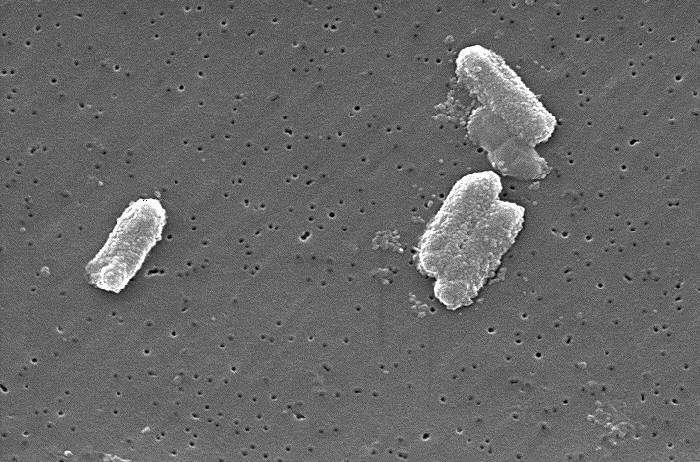
Enterobacteriaceae. Citrobacter freundii, one member of the family.
A family of highly drug-resistant and potentially deadly bacteria may be spreading more widely—and more stealthily—than previously thought, according to a new study from Harvard T.H. Chan School of Public Health and the Broad Institute of MIT and Harvard.

Researchers examined carbapenem resistant Enterobacteriaceae (CRE) causing disease in four U.S. hospitals. They found a wide variety of CRE species. They also found a wide variety of genetic traits enabling CRE to resist antibiotics, and found that these traits are transferring easily among various CRE species. The findings suggest that CRE is more widespread than previously thought, that it may well be transmitting from person to person asymptomatically, and that genomic surveillance of these dangerous bacteria should be increased.

The study will appear online January 16, 2017 in PNAS (Proceedings of the National Academy of Sciences).

"While the typical focus has been on treating sick patients with CRE-related infections, our new findings suggest that CRE is spreading beyond the obvious cases of disease. We need to look harder for this unobserved transmission within our communities and healthcare facilities if we want to stamp it out," said William Hanage, associate professor of epidemiology at Harvard Chan School and senior author of the study.

Comment: More on CREs:


Smoking

Man suffers severe burns and loses seven teeth after e-cigarette explodes in his face

broken sink
© Facebook/Andrew Hall
If you're someone who occasionally puffs on electronic cigarettes, you should stop right now. Because when shit goes awry, it turns into a disgusting scene of blood, charred skin, and broken bones.

An Idaho man claims he lost seven teeth and suffered second-degree burns to his cheek after his vaporizer pen exploded in his face. Andrew Hall, of Pocatello, says he was getting ready for work on the morning of January 14 when his vaporizer pen unexpectedly exploded. Hall later shared extremely graphicphotos of the incident on his Facebook page.

Comment: E-cigarettes are dangerous. If you're gonna smoke, go for a real cig with organic tobacco.


Health

Medical Interventions Are Overused Worldwide

Lack of "right care" causes physical, psychological and financial harm to patients.
Human pills
In a series of papers and comments published in The Lancet, Vikas Saini, and his colleagues provide a framework for thinking about how to address the inequities in the provision of affordable healthcare to people. The analysis addresses inequity in both high-income countries (HICs) as well as low and middle-income countries (LMICs). Their hope is to spark "serious discussions about what kind of health system we want for the 21st century as part of our commitment to universal health coverage." They believe that overuse (the provision of medical services that are more likely to cause harm than good and underuse (the failure to use effective and affordable medical interventions) of medical services takes away from "right care."
"In its simplest definition it (right care) is care that weighs up benefits and harms, is patient-centred (taking individual circumstances, values, and wishes into account), and is informed by evidence, including cost-effectiveness."
In the paper that focuses on evidence for overuse of medical services, the authors Brownlee and her colleagues make a distinction between services that are clearly and universally beneficial when used on the right patient and services that are definitely inappropriate. However, they point out, most services lie within a "grey zone" where the risk-benefit profile varies widely depending on the patient (e.g. antidepressants for adolescents). Moreover, decision making in providing these services is often based on physician assumptions and biases rather than being grounded in client preferences. They report on overuse measured in two ways - directly through registries and medical records and indirectly, through geographical variation in service utilization that is not linked to the populations serviced.

Comment: See also:

A closer look at the myth of cancer screening tests

When It's Time For a Health Check-up, Avoiding Your Doctor Can Save Your Life


Heart - Black

Study uncovers hidden epidemic of eating disorders in tens of thousands of middle-aged women

Woman's study
Tens of thousands of women could be silently suffering with eating disorders, a new study suggests
Tens of thousands of middle aged women are suffering from eating disorders in a hidden crisis brought on by divorce, financial problems and bereavement in mid-life, new figures suggest.

It was traditionally thought that eating disorders were most common among the young, but new research from University College London suggests around three per cent of women in their 40s and 50s have a recent eating problem.

In contrast, around one in 100 women between 15 and 30 have been diagnosed with an eating condition, such as anorexia, bulimia or binge eating, although many more may be suffering in silence.

The new study, which questioned 5,300 women in Britain in their 40s and 50s, found that 15 per cent had suffered an eating disorder at some point in their life, and three per cent within the past year. It is the first time that prevalence has been investigated in a population of women in the fifth and sixth decade of life.

"Our study shows that eating disorders are not just confined to earlier decades of life, and that both chronic and new onset disorders are apparent in mid-life," said lead author Dr Nadia Micali, from UCL and the Department of Psychiatry at Icahn School of Medicine at Mount Sinai, New York.

Comment: See also:


People 2

One in five young teenagers losing sleep over social media use

social media
© fresnel6 / FotoliaThe study findings support growing concerns about young people's night-time use of social media.
One in five young people regularly wake up in the night to send or check messages on social media, according to new research. This night-time activity is making teenagers three times more likely to feel constantly tired at school than their peers who do not log on at night, and could be affecting their happiness and wellbeing.

Comment: See also:


Syringe

Journal of American Physicians and Surgeons: Aluminum in vaccines is not safe

babies vaccines
The Association of American Physicians and Surgeons notes that, because of public concerns that mercury (as thimerosal) in childhood vaccines might be contributing to soaring rates of autism, this component was mostly phased out as a "precaution." Autism rates continued to rise, prompting authorities to assert that autism is not linked to mercury in vaccines and that vaccination policies are safe and appropriate, writes Neil Z. Miller in the winter issue of the Journal of American Physicians and Surgeons.

At the same time as mercury was being phased out, Miller noted that there was a 25 percent increase in the amount of aluminum in vaccines administered before age 18 months.


Comment: Makes no sense: Remove thimerosol to appease the masses while increasing the amount of an even more dangerous element in vaccines. New Vaccine Revelation - The Neurotoxin Far Worse than Mercury..Aluminum


Aluminum, also a neurotoxin, is used as an adjuvant in vaccines, Miller explains, to induce a stronger immune response. It is contained in hepatitis B, DTaP (diphtheria, tetanus and pertussis), pneumococcal (PCV), Haemophilus influenzae type b (Hib), and hepatitis A vaccines.

Miller recounts case reports of aluminum toxicity dating back to 1921. He cites concerns of the American Academy of Pediatrics that prolonged use of intravenous feedings that contain aluminum could impair neurological development. He quotes a 2011 article stating that "aluminum is a widely recognized neurotoxin that inhibits more than 200 biologically important functions and causes various adverse effects in plants, animals, and humans."

Comment: More on the neurotoxicity of aluminum: