Health & WellnessS


Smoking

New study claims e-cigarettes are linked to an increased risk of heart disease

man smoking e-cigarette
© Lucas Jackson / Reuters
Use of electronic cigarettes devices is linked to an increased risk of heart disease, according to a new study. Experts say the health effects of e-cigarettes have been underexplored.

Researchers at the University of California, Los Angeles (UCLA) found that "habitual e-cigarette use was associated with a shift in cardiac autonomic balance toward sympathetic predominance and increased oxidative stress, both associated with increased cardiovascular risk."

Their new study on the implications for cardiovascular risk among regular e-cigarette users was published this week in the Journal of the American Medical Association.

Working with the hypothesis that regular e-cigarette users would exhibit high oxidative stress, researchers included in the study 23 people considered habitual e-cigarette users between the ages of 21 and 45. The participants were not current tobacco cigarette smokers, and did not have known health issues or take prescription medications. The control group included 19 self-identified healthy non-smokers.

Comment: Best to stick with nature's natural nicotine delivery system, tobacco!


Life Preserver

Citizen Scientists are using mushrooms to cure their cluster headaches

mushrooms
"We can either just live in pain or we can try and fix it ourselves."

When Tyler Mann first started getting cluster headaches a little over a decade ago, he'd crawl into his bathroom, turn off the lights, shut the door, and scream as loud as he could for up to an hour until the pain went away. Sometimes he'd pass out before that happened. Other times he'd contemplate suicide.

"I've had headaches where I was literally considering hanging myself from the shower rod," Mann told me. "Literally, I wanted to just wrap a belt around my neck and make it stop, several times. That's why I don't own a gun."

In the beginning, he'd get the headaches as often as six times per day, for months at a time. His doctors offered no explanation. So, like many people with more symptoms than solutions, he turned to the internet for help. That's when he discovered a Facebook group where thousands of others said they suffered from the same condition—a little-known neurological disease called cluster headaches, for which there is very little research and no known cure. They referred to themselves as "cluster heads," and each was more desperate for relief than the next. Many of them, frustrated with the lack of clinical studies, had turned to extreme methods of treatment.

Comment: Read more about the use of 'magic mushrooms' as an alternative healing modality


Newspaper

Forbes leads media attack against turmeric's health benefits

Tumeric

Tired of turmeric latte sipping hipsters and health nuts lauding the anecdotal health benefits of this legendary golden spice, the Mainstream Media strikes back with the anvil of hard Science (capital "S")...


Forbes just published an op-ed titled, "Everybody Needs To Stop With This Turmeric Molecule," intended to warn consumers and scientists alike that curcumin (the primary polyphenol in turmeric), and presumably turmeric itself, is a "waste of time and money."

What is their seeming unequivocal conclusion based on? According to the assessment of Forbes writer Sam Leminick, a new paper published in the Journal of Medicinal Chemistry entitled, The Essential Medicinal Chemistry of Curcumin, reveals:
"...there's really no evidence that curcumin (and a couple related compounds lumped in for convenience) does anything for you health-wise."
What Mr. Leminick is referring here to as "evidence," or the lack thereof, is the randomized, double-blind, placebo-controlled, human clinical trial (RCT). The RCT has become the epistemiological holy grail of Scientism and the Medical Monotheism it informs. In this belief system, it doesn't matter if something has had cross-cultural validation as a healing agent, even after thousands of years of safe human use; nor does it matter if you personally have experienced (N-of-1) direct and measurable health benefits from consuming it. This is essentially a pyramidal control system: the RCT situated on top, and your first-hand experience and associated "anecdotal claims" on bottom, completely worthless. What's considered 'really real' is what has been externally validated through the RCT. Also worthless within this view are the thousands of cell (in vitro) and animal (in vivo) studies that exist indicating therapeutic properties may exist. This Scientism-based belief system is so powerful and all-consuming that sometimes I describe it as the 'Religion that devours all others.'

Pills

Disease mongering: Big Pharma's lust for profit turns their customers into guinea pigs

pill man
© NYU School of Medicine
There is a reason drug safety experts recommend waiting five years before taking a new prescription drug. Before new drugs are released to the public, they are tested on a shockingly small group of people for a shockingly short period of time. Risks and safety problems, therefore, often don't emerge until millions try the drug as we saw with the withdrawn drugs Vioxx, Bextra, Baycol, Trovan, Meridia, Seldane, Hismanal, Darvon, Raxar, Redux and at least 11 others.

Thanks to changes at the FDA, risks presented by new prescription drugs are heightening. Drugs that once would have been rejected by regulators due to their alarming safety profiles are now rushed through, like the blood thinner Pradaxa—already linked to more than 542 bleeding deaths. Drug approvals are also, increasingly, expedited or "fast-tracked"—like Vioxx, which "received a six-month priority review," admitted the FDA, and went on to cause 140,000 heart events. Merck's bone drug Fosamax was approved in just six months and was soon linked to esophageal cancer and deaths in medical journals.

Finally, the new FDA commissioner, Robert Califf, has received money from 23 drug companies including giants like Johnson & Johnson, Lilly, Merck, Schering Plough and GSK according to a disclosure statement on the website of Duke Clinical Research Institute, erasing any semblance of a government/industry firewall.

Question

Can the pesticide organophosphate cause diabetes?

insecticides
© garycycles8/Flickr, CC BY 2.0We thought in the 1940s that OPs, DDT, endosulfan, etc., were beneficial for large-scale agriculture, then we switched to OPs alone in the 1960s because they degraded faster, and then we found that DDT and its ilk were deadly for the environment, and now we’re finding that OPs cause diabetes.
They found that organophosphates, common in India, are broken down by microbes in the human gut into glucose - and ask us to reconsider their use.

In 2010, an American researcher found that when young rats were exposed to very small amounts of compounds that contained molecules of a substance called organophosphates (OPs), they developed early signs of diabetes. Specifically, he found that the onset of pre-diabetes happened as a result of a metabolic dysfunction. Now, a new study by researchers at the Madurai Kamaraj University has elucidated the precise mechanism of action - the chain of events that begins with exposure to OPs and results in diabetes.

An important aspect of their study is that, according to Ganesan Velmurugan, "All the previous toxicological reports with these insecticides are at acute and large doses. Ours is the first report to replicate the exposure level at day to day life." Velmurugan works at the department of microbiology in Madurai Kamaraj University, Madurai, and led the study.

Comment: More Proof for Diabetes, Pesticide Link


Hearts

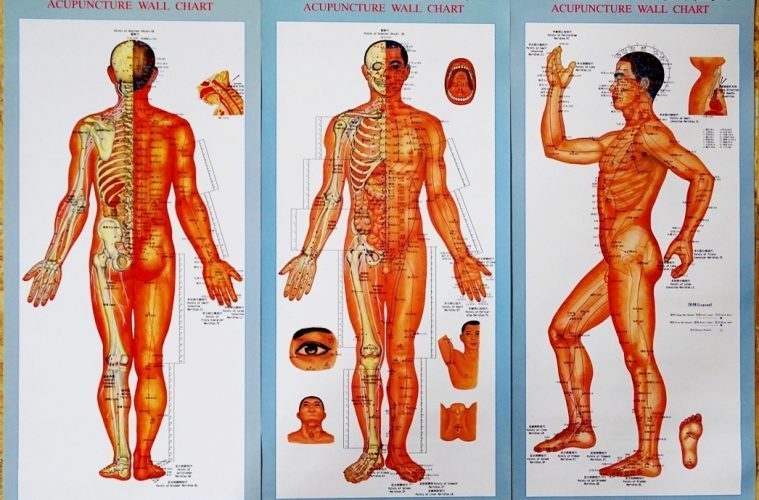
Chi energy and the 12 meridians in your body

meridians
It may seem counterintuitive, but there are many instances where science can actually hold us back from new discoveries and knowledge. Unfortunately, mainstream science is quick to discount anything which cannot be physically seen or felt, making notions like 'energy points' within the body seem like pure science fiction. But just because we can't physically see something, does not mean it doesn't exist. Nikola Tesla told us that "the day science begins to study non-physical phenomena, it will make more progress in one decade than in all the previous centuries of its existence," and hundreds of scientists around the world have been taking on this task for several years. Within the next few decades, the examination of non-material science is going to skyrocket, and we all stand to benefit. What we know as science is definitely changing.

One example where non-material science could benefit the human race is healthcare, as a number of publications have revealed the importance of mind-body connections, and how our thoughts, emotions, feelings, the perception of the environment around us and more are all connected to the health of our body and regulation of our immune system. A study published in the Journal of Acupuncture and Meridian Studies titled "The Primo Vascular System as a New Anatomical System" is one that has recognized the importance of these concepts.

Comment: Ancient healing traditions: Science finally proves meridians exist


Health

Antibiotic use during childhood implicated in obesity

obese kid
Last year, the American Gastroenterological Association published a study analyzing the effects of antibiotics taken before age 2 on obesity levels by age 4. They found that young children who had been exposed to antibiotics before age 2 had a 25 percent relative increase of being obese by age 4.

The risk is strongest with 3 or more repeated courses of antibiotics. Frank Irving Scott, MD, MSCE, assistant professor of medicine at University of Colorado Anschutz Medical Campus, Aurora, and adjunct scholar, Center for Clinical Epidemiology and Biostatistics at the University of Pennsylvania, Philadelphia, stated, "Antibiotics have been used to promote weight gain in livestock for several decades, and our research confirms that antibiotics have the same effect in humans. Our work supports the theory that antibiotics may progressively alter the composition and function of the gut microbiome, thereby predisposing children to obesity as is seen in livestock and animal models."

Since the 1970s, the percentage of American children who are obese has tripled. Currently, about 1 in 5 school-aged children is obese in the US. In Canada, WHO estimates one third of Canadian children are obese. The CDC lists several ways obesity impacts a child's well-being:

Comment: The lack of diversity in gut bacteria has long been implicated in obesity in both humans and animals.


SOTT Logo Radio

SOTT Focus: The Health & Wellness Show: Nasty Women

Love target
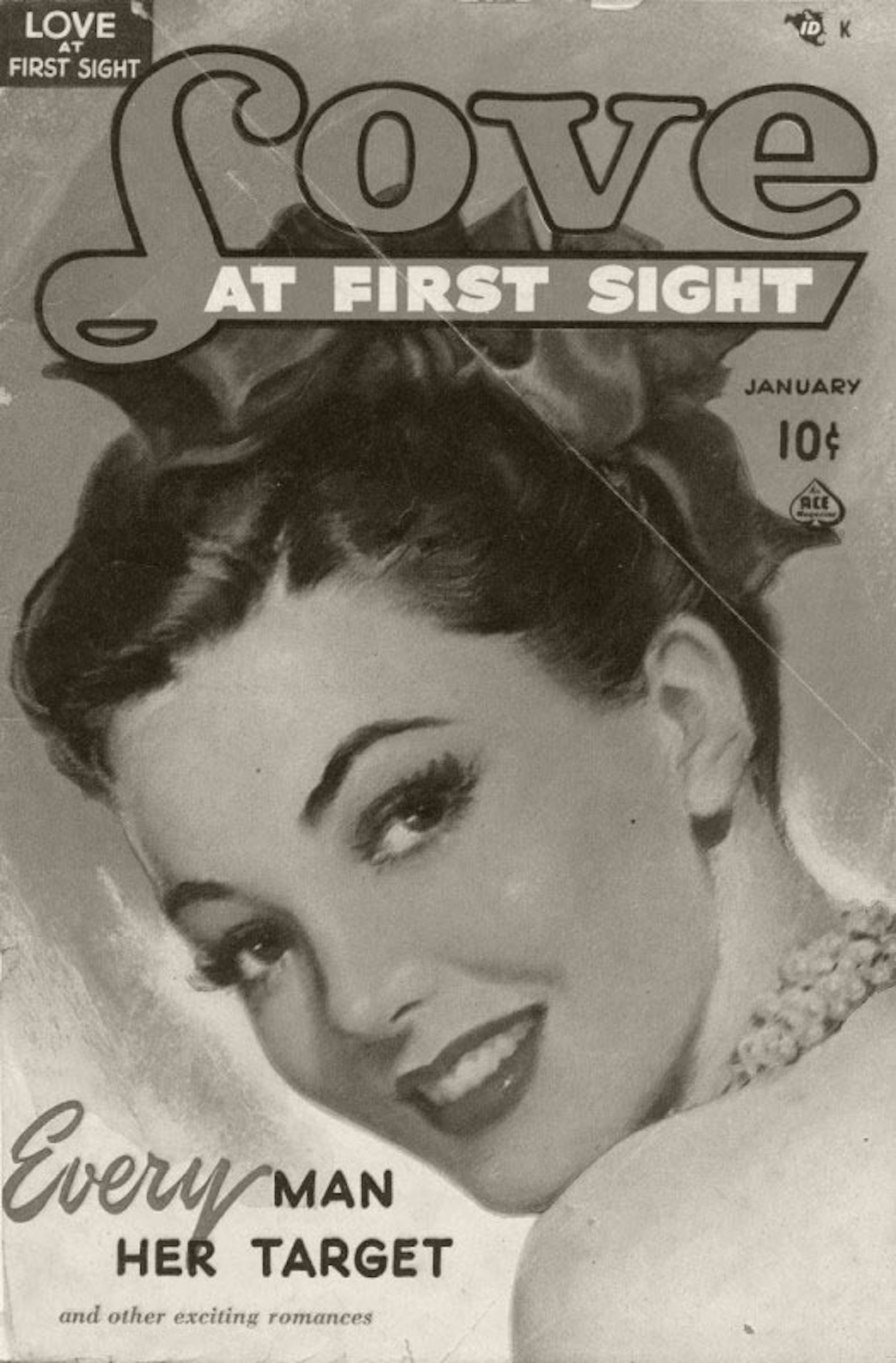
Sugar, spice and everything nice...that's what girls are made of. Society has played a role in promulgating the myth of the compassionate and tender female and people hold the belief that all women are pleasant and agreeable -- it's the males of the species who warrant suspicion. All women are kind and in touch with their emotions and the emotions of others. They're all nurturing caregivers with a strong mothering instinct. Right? Wrong! It's because of these false beliefs that people can be blindsided when a Nasty Woman crosses their path.

On this episode of the Health and Wellness Show we discuss Nasty Women -- the borderlines, the histrionics, the female psychopaths and the ones you can't quite label but you know something is off. What are their tactics, how do they differ from Nasty Men, who are their prey and how can we protect ourselves from these she-devils?

Stay tuned for Zoya's Pet Health Segment where the topic will be species appropriate nutrition.

Running Time: 01:49:22

Download: MP3


Attention

Are fragrance smells making you sick?

fragrance
© Health Impact News
I always get a headache from certain scents, and recently heard that people can develop all kinds of physical symptoms in response to odors. Can you tell me if it is the scents themselves that cause this or is it an allergy? - 1/31/2017
What you experience appears to be fairly common. A study published in October 2016 found that more than one-third of Americans react to artificially fragranced products with symptoms that include migraine headaches, asthma attacks and other breathing problems, dizziness, rashes, congestion, seizures, nausea and more. According to the study, in half of these cases, the effects are potentially disabling, as defined by the Americans with Disabilities Act.

The study author, Anne Steinemann, Ph.D., an engineering professor at Australia's University of Melbourne, drew her data from a nationally representative population survey in the U.S. using a random sample of 1,136 adults. She reported that the products that seemed to cause the most problems are air fresheners, cleaning supplies, laundry products, scented candles, cologne, and personal care products.

Comment: Read more about Hidden Chemicals in Perfume and Cologne and listen to The Health & Wellness Show: The Ugly Side of Beauty Products.


Display

Experts warn: Hours spent staring at screens will cause a 'global epidemic of blindness'

screen addiction
© Daily MailStaring at digital screens for several hours can cause irreversible damage to the retinas, potentially leading to central blindness, a new study claims.
Experts warn we face a global epidemic of blindness if we continue to spend hours you spend staring at a screen.

The high energy light emitted from digital screens is causing irreversible damage to our eyes by deteriorating the retinas.

Damage to the retinas - the light-sensitive layer at the back of the eye - is the biggest cause of central blindness.

And a new report warns 'it is now clearer than ever that we are facing a global epidemic' of sight loss - particularly for the millions of children who are exposed to digital screens earlier than ever.

Lead researcher Dr Celia Sanchez-Ramos said: 'It is paramount for adults and parents to act now and protect themselves from further damage.'