Health & WellnessS


Popcorn

SOTT Focus: Corruption of Science: Coca-Cola's Shady Record in Obesity Research - 'Dracula in Charge of the Blood Bank'

Coca cola
It was revealed back in 2015 that Coca Cola invested at least $4 million in founding the 'Global Energy Balance Network' (GEBN), a non-profit organization run by university scientists engaged in obesity research projects.

The group said that halting weight gain should be less about dieting and more about "maintaining an active lifestyle and eating more calories". They claimed that there was no compelling evidence to suggest that people should blame fast food and sugary drinks for the obesity epidemic. GEBN's message was that "obesity is not about the foods or beverages you're consuming, it's that you're not balancing those foods with exercise". Their main claim was that there was "strong evidence" that lack of exercise is mostly to blame for obesity, not poor diet. GEBN's website and social media pages are no longer available after their industry-sponsorship came to public awareness.

In the same year, the public learned that Coca-Cola spent £8.9 million over the past five years funding top British scientists carrying out research on healthy-eating, including the British Nutrition Foundation (£224,769), the National Obesity Forum (£67,300) and the Science Media Centre (£30,000), which promotes the "voices and views of the UK scientific community to the news media."


Brain

Phone addiction can cause mental disorders, study finds

Cell phone
© press.rsna.org
Being addicted to smartphones can create chemical changes in the brain, which may be linked to depression and anxiety in young people, a study suggests.

Scientists at Korea University found that teenagers who obsessively used their mobile devices scored higher on standardized tests that detect mental disorders. The test measured how much internet and smartphone use affected daily routines, social life, productivity, sleeping patterns and feelings.

The researchers have recently presented their findings at the annual meeting of the Radiological Society of North America.

The team documented the levels of gamma aminobutyric acid (Gaba), a chemical messenger in the brain that slows down brain signals, and of glutamate-glutamine (Glx) a neurotransmitter that causes the brain's nerve cells to become excited.

Comment: See also:


Cell Phone

Keep that thing away from your head! California public health department issues new guidelines for cell phone use

cell phone
The scientific community has not reached a consensus on the risks of cellular phone use, but the Califonia health department said research suggests long-term, extensive use may affect health.
Put your cellphone down - and keep it away from your pillow, the California Department of Public Health is advising.

Smartphone use continues to increase in the U.S., especially among children, and the health department said some people and health professionals have concerns about the radio frequency energy emitted from cell phones. The scientific community has not reached a consensus on the risks of cell phone use, but the health department said research suggests long-term, extensive use may affect health.


"We know that simple steps, such as not keeping your phone in your pocket and moving it away from your bed at night, can help reduce exposure for both children and adults," said Dr. Karen Smith, state public health officer. Smartphones emit radio frequency energy when they send signals to and receive them from cell towers.

Comment: The only reason there is no consensus within the scientific community is the pressure brought to bear by the wireless industry:


Muffin

SOTT Focus: The Tyranny of 'Experts': Cutting Carbs Will Make You Dead, Experts Say

MSM BS
Sometimes, when I'm cruising around social media, I'll take a look at what the MSM is saying in health and wellness news, just to get out of my bubble and take a look at what shape the mind-programming is taking lately. And even though I should know better, more often than not, I see something that just leaves me flabbergasted. And in this case, I'm not talking about yet another blunder from CNN.

Last week, this tasty piece of propaganda came out, courtesy of the Sydney Morning Herald in Australia. The headline:
Cutting carbs can increase risk of diabetes and other diseases, experts warn
Ah experts. Where would we be without their anonymous guidance dictating dietary advice well over three decades old.

So I guess it's time to find out from "experts" how exactly the actual mechanism for avoiding diabetes - by cutting carbs - is actually what causes it! I can't wait for the Sydney Morning Herald to set me straight!

Cell Phone

Cell phones and mitochondrial damage: Why long term usage is linked to brain tumors and cancer

cell phone use
Robert Romeo, a former telecommunications worker in Italy, told an Italian court that he used his cellphone three to four hours a day for 15 years as part of his job duties. He subsequently developed a brain tumor, which the court ruled was due to his constant cellphone use. As a result, he was awarded a state-funded pension of about $535 a month.1 In 2012, Italy's supreme court similarly upheld a ruling that heavy cellphone usage - five to six hours daily for 12 years - led to a brain tumor in Innocenzo Marcolini.

He, according to Tech Times, "normally held the device in his left hand while taking notes using his right hand." The tumor was on the left side of his head.2 In the U.S., where the safety, or lack thereof, of cellphones remains hotly debated, the issue has regained renewed attention after a statement from the office of Sen. John McCain announced he had been diagnosed with glioblastoma, an aggressive and fast-growing type of brain tumor.

The question being posed is whether McCain's tumor could be due to cellphone usage, as politicians certainly spend a good deal of time on the phone. It's a rhetorical question at the moment, not one being seriously investigated - but perhaps it should be. Sen. Ted Kennedy was also diagnosed with, and died from, a brain tumor nearly a decade ago. Could his brain tumor also have been cellphone-related?

Comment: See also:


Eggs Fried

Should we be eating eggshells?

eggshells
As you've cracked eggs over a skillet or mixing bowl over the years, it may never have occurred to you that the eggshell, and not just the egg, may offer considerable nutritional benefits. A study entitled "Eggshell Membrane: A Possible New Natural Therapeutic for Joint and Connective Tissue Disorders," was recently published in Clinical Interventions in Aging. The study tested the concept of using natural eggshell membranes in supplement form, or NEM, as a:
"Novel dietary supplement as it contains naturally occurring glycosaminoglycans and proteins essential for maintaining healthy joint and connective tissues ... 500 mg taken once daily, significantly reduced pain, both rapidly (seven days) and continuously (30 days)."1
It may interest you to know that the researchers involved in the study concluded that none of the participants exhibited any adverse effects in the course of the study. A significant percentage of the participants experienced considerable improvements, and the authors deemed the crushed eggshell treatment to be "well tolerated."2

Learning that not only were eggshells from hens "suitable for human consumption" but even nutritious, the blogger behind Healthy Food Tribe notes that for others interested in the science behind it, it's important to understand a few things, namely:
  • Crushed, powdered eggshells may be a good addition to your diet
  • How to prepare them
  • How to use and store them

Health

'Frozen shoulder' after vaccination is on the rise

shoulder pain
Many people experience temporary soreness in their shoulder after receiving a vaccination in the area, but for some the soreness turns into chronic pain and limited range of motion. Some people are so badly affected that they become unable to move their shoulder altogether, known as frozen shoulder, or suffer from nerve damage and rotator cuff tear. The condition, known as shoulder injury related to vaccine administration, or SIRVA, is on the rise, according to data from the Vaccine Adverse Event Reporting System (VAERS).1

In fact, the condition is occurring often enough that it was recently added to the federally operated vaccine injury compensation program's (VICP) Vaccine Injury Table, which lists some, but not all, serious side effects that are known to be caused by vaccines.

In order to win federal compensation for a vaccine injury, a person must prove he or she developed certain clinical symptoms and health conditions listed on the Table within a certain timeframe of receiving a certain vaccine, and demonstrate that there is no more biologically plausible explanation for the vaccine-related injury or death.

In the case of SIRVA, 202 people were awarded compensation for SIRVA in 2016.2 According to Dr. H. Cody Meissner, professor of pediatrics at Floating Hospital for Children, Tufts Medical Center in Boston, Massachusetts, "Many instances of SIRVA may be avoided by proper vaccination technique and positioning."

Health

'Man flu' is real? Study finds men have weaker immune response to respiratory viruses

man in hospital sick
© West Coast Surfer / www.globallookpress.com
Men can wheeze a sigh of relief today, after a scientific review claimed that the phenomenon known as 'man flu' may well exist. The study argues that men really do have weaker immune response to respiratory viruses.

After years of enduring the dual injustices of suffering through a bout of influenza while having the females in his life cast doubt on the severity of his illness, man may now retreat to the sofa at the first sign of a sneeze, in the knowledge that at least science believes them.

Dr Kyle Sue, a clinical assistant professor at Memorial University of Newfoundland, Canada, presented his study in the British Medical Journal (BMJ), writing: "Men may not be exaggerating symptoms but have weaker immune responses to viral respiratory viruses, leading to greater morbidity and mortality than seen in women.

"Since about half of the world's population is male, deeming male viral respiratory symptoms as 'exaggerated' without rigorous scientific evidence, could have important implications for men, including insufficient provision of care," the doctor added.

Bulb

The dark and light side of food as information - how dietary RNAs directly impact gene expression

RNA expression
New insights in biology show that food is informational and can directly impact and even control the expression of your genes. The implications of this discovery are profound, and have both a light and dark side in need of deeper exploration...

A new study published in the journal BMC Genetics entitled, "Plant miRNAs found in human circulating system provide evidence of cross kingdom RNAi," reveals that powerful little diet derived nucleic acids known as microRNAs (miRNAs), from commonly consumed plants, are present within the human circulatory system in what appear to be physiologically significant quantities. MiRNAs are comprised of ~ 22 nucleotide single strand non-coding RNAs, which regulate protein coding gene expression by interfering with messenger RNA's ability to transcribe DNA into protein. This is why miRNAs are sometimes called RNA interference molecules.

Comment: The future of healing with food? MicroRNAs from plants
MicroRNAs are used by cells to modify many processes, including how cells grow and die, as well as restore balance in cell function. Many researchers feel that delivering the right microRNAs offer tremendous potential in the treatment of virtually every human disease.

Until recently scientists thought microRNAs were only made by our own cells, but new research shows that microRNAs from plants are absorbed from the diet and affect cell function just like the microRNAs transcribed from our own DNA. In other words, the microRNAs that we ingest from plants can influence the expression of our genetic code and cell function. Since microRNAs affect the expression of up to 30% of our genes, these results are extremely thought-provoking and provide another avenue that plant foods may be influencing our health and reducing our risk for certain diseases.


Pills

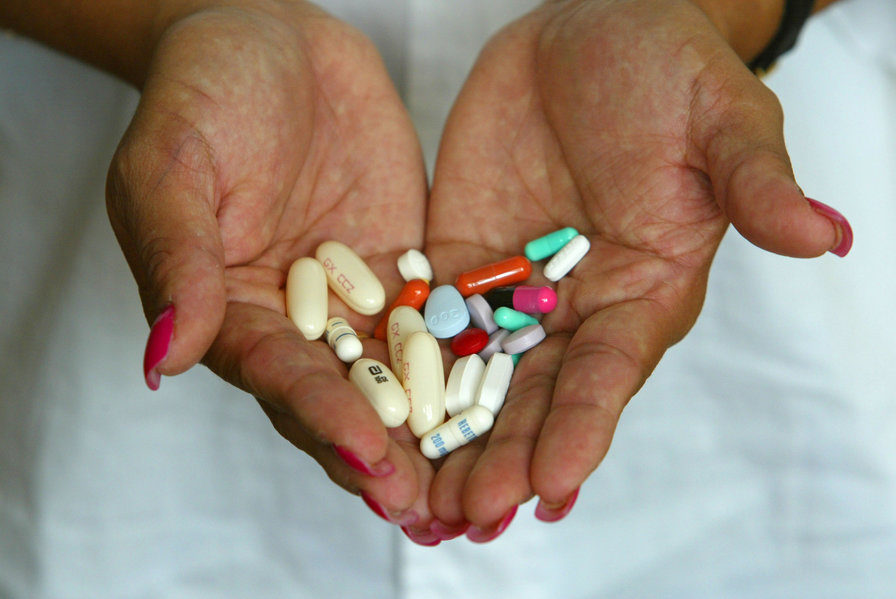
Study examines the difficulty of withdrawing from antidepressant drugs

drugs
© Joe Raedle
Researchers in the Netherlands, led by Dr. Rhona Eveleigh, investigated a tailored approach to withdrawing from longterm antidepressants prescribed inconsistently with clinical guidelines. Their results suggest that antidepressants are overprescribed and that once they are started it is difficult to discontinue their use.
"This study concludes that overtreatment with antidepressants is very prevalent and that a considerable proportion of long-term use has no clinical justification," the authors write. "As such, this study aims to reduce inappropriate long-term antidepressant use in general practice."
Research has demonstrated that antidepressant drugs are not significantly superior to placebo at reducing depressive symptoms except in cases of severe depression. However, clinical practice has failed to reflect this research and antidepressants continue to be prescribed as a first-line treatment for mild to moderate depression. The question of how to withdraw from antidepressants when they have been prescribed inappropriately has become central to remediating overtreatment.

Comment: Most people don't have severe depression that would merit anti-depressants. But once they start anti-depressants for a mild or moderate depression, they're stuck with the treatment and its side effects: Anti-depressants are often prescribed without clinical criteria when doctors and patients are unable to think of alternative options: