Health & WellnessS


Health

Men with big muscles cut cancer risk by 40%

weight lifter
© Getty Hungarian weightlifter Janos Baranyai begins his attempt to snatch 148kg in his third lift in the men's 77-kg division
Men with stronger muscles from regular weight training are up to 40 percent less likely to die from cancer than men who do not pump iron, according to new research.

The findings, by an international team of researchers, suggest muscular strength is as important as staying slim and eating healthily when it comes to protecting the body against deadly tumours.

The scientists who came up with the findings are recommending men weight train at least twice a week, exercising muscle groups in both the upper and lower body.

MIB

Serial Killers and Politicians Share Traits

Psychopathy is a personality disorder manifested in people who use a mixture of charm, manipulation, intimidation, and occasionally violence to control others, in order to satisfy their own selfish needs. Although the concept of psychopathy has been known for centuries, the FBI leads the world in the research effort to develop a series of assessment tools, to evaluate the personality traits and behaviors attributable to psychopaths.

Interpersonal traits include glibness, superficial charm, a grandiose sense of self-worth, pathological lying, and the manipulation of others. The affective traits include a lack of remorse and/or guilt, shallow affect, a lack of empathy, and failure to accept responsibility. The lifestyle behaviors include stimulation-seeking behavior, impulsivity, irresponsibility, parasitic orientation, and a lack of realistic life goals.

Video

Food, Inc.: How factory farming affects you

Joe Salatin - Independent farmer
© unknownJoe Salatin - Independent farmer
The sobering new documentary Food, Inc. which opens in Chicago on June 19, shows the enormous hidden costs we all pay for eating cheap, factory-farmed food.

Most of us don't think much about how the food on grocery store shelves is produced, what's in it, or the impact it has on our bodies, the planet or the laborers. And that's exactly how big agribusiness likes it, according to director Robert Kenner, who set out to "lift the veil" on the industrial food process.

Though the film is admittedly one-sided--Monsanto, Tyson, Perdue and Smithfield all declined the filmmakers access and prevented some of their growers from talking on camera--there's enough shocking undercover camera footage to make viewers start asking some important questions, such as "where does our food come from?"

Alarm Clock

Researchers uncover how nanoparticles may damage lungs

Hong Kong - Researchers in China appear to have uncovered how nanoparticles which are used in medicine for diagnosis and delivering drugs may cause lung damage.

Nanotechnology, or the science of the extremely tiny, is an important industry. One nanometer is one-billionth of a meter.

Apart from medicine, it is used in products like sporting goods, cosmetics, tires and electronics and has a projected annual market of around US$1 trillion by 2015.

Health

Venezuela: Why We Banned Coke Zero

Caracas - Venezuela's Health Ministry said Friday it banned sales of Coca-Cola Zero because the company failed to declare that the no-calorie soft drink uses an artificial sweetener allegedly harmful to health.

Health officials said tests show the cola contains sodium cyclamate. Coca-Cola Co. disputes that, saying the product sold in Venezuela uses different artificial sweeteners, Acesulfame-K and Aspartame.

Magnify

Vitamin D Reduces Back Pain and Osteoporosis

Vitamin D is known to build strong bones. Research has now shown its effectiveness in reducing back pain as well as in preventing osteoporosis. Vitamin D is important in maintaining the healthy calcium and phosphorus levels that are needed to build healthy bones and teeth. Known as "the sunshine vitamin" because it is produced in the body when exposed to sun, new evidence shows that vitamin D has an analgesic effect on chronic musculoskeletal pain, functioning as a hormone in various tissues.

Vitamin D is a fat-soluble micronutrient. It is available in some foods, but one of the best ways to obtain vitamin D is via exposure to ultraviolet rays (UVB) in sunlight, absorbed through the skin. Many people are deficient in this nutrient. Sun exposure north of New York and San Francisco, even in the summer months, is not effective in producing vitamin D in the skin because the rays are not strong enough, so supplementation is required.

Though it is called a vitamin, its function is actually a prohormone. Food sources of vitamin D are small boned fish and grains. Deficiency of vitamin D causes rickets.

Magnify

Basic anatomy 'baffles Britons'

Many people in the UK are unable to identify the location of their major organs, a study suggests.

A team at King's College London found public understanding of basic anatomy has not improved since a similar survey was conducted 40 years ago.

Less than 50% of the more than 700 people surveyed could correctly place the heart, BMC Family Practice says.

Under one-third could place the lungs in their correct location, but more than 85% got the intestines right.

There are concerns that a poor grasp of anatomy could potentially compromise patient care.

Eye 2

Lilly Sold Drug for Dementia Knowing It Didn't Help, Files Show

Eli Lilly & Co. urged doctors to prescribe Zyprexa for elderly patients with dementia, an unapproved use for the antipsychotic, even though the drugmaker had evidence the medicine didn't work for such patients, according to unsealed internal company documents.

In 1999, four years after Lilly sent study results to the U.S. Food and Drug Administration showing Zyprexa didn't alleviate dementia symptoms in older patients, it began marketing the drug to those very people, according to documents unsealed in insurer suits against the company for overpayment.

Regulators required Lilly and other antipsychotic drug- makers in April 2005 to warn that the products posed an increased risk to elderly patients with dementia. The documents show the health dangers in marketing a drug for an unapproved use, called off-label promotion, said Sidney Wolfe, head of the health research group at Public Citizen in Washington.

"By definition, off-label means there is no clear evidence that the benefits of a drug outweigh the risks," Wolfe said. "The reason why off-label promotion is illegal is that you can greatly magnify the number of people who will be harmed."

Magnify

Teen Diagnoses Her Own Disease in Science Class

Image
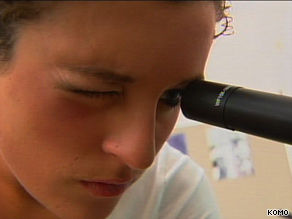
During a science class, Jessica Terry, 18, discovered a tell-tale granuloma in her own pathology slide.
For eight years, Jessica Terry suffered from stomach pain so horrible, it brought her to her knees. The pain, along with diarrhea, vomiting and fever, made her so sick, she lost weight and often had to miss school.

Her doctors, no matter how hard they tried, couldn't figure out the cause of Jessica's abdominal distress.

Then one day in January, Terry, 18, figured it out on her own.

In her Advanced Placement high school science class, she was looking under the microscope at slides of her own intestinal tissue -- slides her pathologist had said were completely normal -- and spotted an area of inflamed tissue called a granuloma, a clear indication that she had Crohn's disease.

Attention

Pesticides and Parkinson's

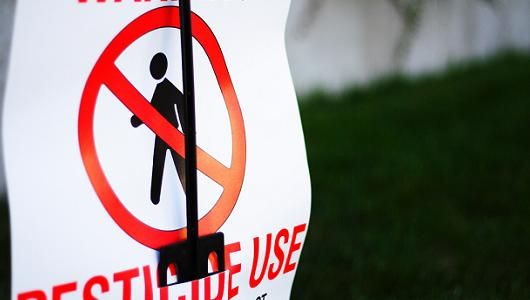
More scientific studies point to a link between Parkinson's disease and popular pesticides.

Image
© Greencolander
Why are farm residents more likely to get Parkinson's disease? That question, writes Robin Marantz Henig in the National Resources Defense Council's magazine On Earth, is one epidemiologists started asking in the 1970s.