Health & WellnessS


Ambulance

Study Suggests Processed Meat a Real Health Risk

Image
© Getty ImagesEating hot dogs, bacon, sausage or deli meats increases the chance of heart disease by 42 percent.
Eating bacon, sausage, hot dogs and other processed meats can raise the risk of heart disease and diabetes, U.S. researchers said on Monday in a study that identifies the real bad boys of the meat counter.

Eating unprocessed beef, pork or lamb appeared not to raise risks of heart attacks and diabetes, they said, suggesting that salt and chemical preservatives may be the real cause of these two health problems associated with eating meat.

The study, an analysis of other research called a meta-analysis, did not look at high blood pressure or cancer, which are also linked with high meat consumption.

"To lower risk of heart attacks and diabetes, people should consider which types of meats they are eating," said Renata Micha of the Harvard School of Public Health, whose study appears in the journal Circulation.

Magnify

"Fountain of Youth" Steroids Could Protect Against Heart Disease

Image
© Bryan Christie
A natural defence mechanism against heart disease could be switched on by steroids sold as health supplements, according to researchers at the University of Leeds.

The University of Leeds biologists have identified a previously-unknown ion channel in human blood vessels that can limit the production of inflammatory cytokines - proteins that drive the early stages of heart disease.

They found that this protective effect can be triggered by pregnenolone sulphate - a molecule that is part of a family of 'fountain-of-youth' steroids. These steroids are so-called because of their apparent ability to improve energy, vision and memory.

Importantly, collaborative studies with surgeons at Leeds General infirmary have shown that this defence mechanism can be switched on in diseased blood vessels as well as in healthy vessels.

Magnify

Research Links Pesticides with ADHD in Children

Image
© Getty ImagesPesticides on Food
A new analysis of U.S. health data links children's attention-deficit disorder with exposure to common pesticides used on fruits and vegetables.

While the study couldn't prove that pesticides used in agriculture contribute to childhood learning problems, experts said the research is persuasive.

"I would take it quite seriously," said Virginia Rauh of Columbia University, who has studied prenatal exposure to pesticides and wasn't involved in the new study.

More research will be needed to confirm the tie, she said.

Children may be especially prone to the health risks of pesticides because they're still growing and they may consume more pesticide residue than adults relative to their body weight.

Magnify

High-Fat Ketogenic Diet Effectively Treats Persistent Childhood Seizures

Image
© Getty ImagesHigh-Fat Ketogenic Diet
The high-fat ketogenic diet can dramatically reduce or completely eliminate debilitating seizures in most children with infantile spasms, whose seizures persist despite medication, according to a Johns Hopkins Children's Center study published online April 30 in the journal Epilepsia.

Infantile spasms, also called West syndrome, is a stubborn form of epilepsy that often does not get better with antiseizure drugs. Because poorly controlled infantile spasms may cause brain damage, the Hopkins team's findings suggest the diet should be started at the earliest sign that medications aren't working.

"Stopping or reducing the number of seizures can go a long way toward preserving neurological function, and the ketogenic diet should be our immediate next line of defense in children with persistent infantile spasms who don't improve with medication," says senior investigator Eric Kossoff, M.D., a pediatric neurologist and director of the ketogenic diet program at Hopkins Children's.

Arrow Up

Stress link to financial squeeze

Image
British Telecom's indoor garden is designed to soothe staff
Work pressures during the recession have caused a big rise in mental health problems, the charity says.

A survey for Mind suggests that one in 11 British workers has been to the GP for stress and anxiety from the financial squeeze.

And 7% said they were prescribed medicines to help them cope.

The Confederation of British Industry said employers were improving at caring for workers' mental health, but it was important to increase understanding.

The last couple of years have been an anxious time, even for those who have not found themselves out of work.

Many have had overtime cut, worked longer hours, or worried about job security.

Family

Toddlers who lie 'will do better'

Image
© UnknownResearchers said most children lied
Toddlers who tell lies early on are more likely to do well later, researchers claim.

The complex brain processes involved in formulating a lie are an indicator of a child's early intelligence, they add.

A Canadian study of 1,200 children aged two to 17 suggests those who are able to lie have reached an important developmental stage.

Only a fifth of two-year-olds tested in the study were able to lie.

But at age four, 90% were capable of lying, the study found. The rate increases with age to a peak at age 12.

Magnify

Teen Brain Wired to Take Risks

Image
© Getty ImagesBrain research shows teens may have higher incentive to take the leap.
The adolescent brain is extra sensitive to reward signals when pay-off for a risk is higher than expected.

Teenagers do crazy things, and the chemistry of their brains might explain why.

In a new study, scientists found that the adolescent brain is extra sensitive to the rewarding signals it gets when something better than expected happens. The discovery might help explain why teens take risks that don't seem worth it to adults -- from driving too fast to experimenting with drugs.

"Teenagers seek out these sorts of rewarding experiences, and this provides a little explanation for that," said Russell Poldrack, a cognitive neuroscientist at the University of Texas, Austin. "In the long run, it may help us understand how addictions start and develop."

To zero in on the neuroscience behind risk-taking behavior in adolescents, Poldrack and colleagues focused on a concept called prediction error, which describes the difference between what a person expects to happen and what actually happens.

Magnify

Sleep Apnea May Increase Insulin Resistance

Image
© Mayo Foundation for Medical Ed. and Research
Sleep apnea may cause metabolic changes that increase insulin resistance, according to researchers from the University of Pittsburgh Medical Center. The intermittent hypoxia associated with sleep apnea causes a distinct drop in insulin sensitivity in mice, even though chronic hypoxia, such as that associated with high altitude, did not.

The research was reported at the ATS 2010 International Conference in New Orleans.

To determine whether intermittent hypoxia (IH) and chronic hypoxia (CH) would have different metabolic effects, Dr. Lee and colleagues fitted adult male mice with arterial and venous catheters for continuous rapid blood monitoring of glucose and insulin sensitivity. They then exposed the mice to either seven hours of IH, in which treatment, oxygen levels oscillated, reaching a low of about 5 percent once a minute, or CH, in which they were exposed to oxygen at a constant rate of 10 percent, and compared each treatment group to protocol-matched controls.

Magnify

Feces and Body Fluids Detected on New Clothes Bought in Stores

Image
© Examiner
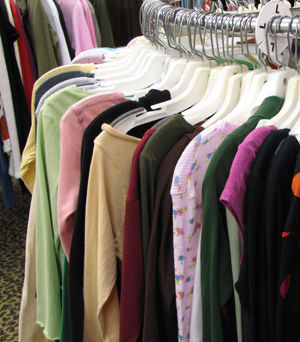
Clothing purchased new off the retail rack may be contaminated with potentially disease-causing organisms from bodily secretions, according to an investigation conducted by Good Morning America.

The television program hired microbiologist Philip Tierno of New York University to culture 14 articles clothing purchased from three different high- and low-end chain stores in New York City. Several articles of clothing tested positive for bacteria indicating contamination with feces or other bodily secretions.

"On this black and tan blouse we found representation of respiratory secretions, skin flora, and some fecal flora," Tierno said.

Another jacket contained similar secretions, especially in the armpit and "buttocks" area, he said. One blouse even contained vaginal organisms and yeast in addition to fecal bacteria.

"Some garments were grossly contaminated with many organisms ... indicating that either many people tried it on or ... someone tried it on with heavy contamination," he said.

Magnify

Think Eating "Organic" Meat is Okay? Think Again

Image
© The Daily MailBrutal: A slaughterman drives his knee into a sheep's body as he wields a bolt gun at the creature
An undercover investigation into an organic slaughterhouse has challenged the assumption that ethically certified meat is any better than the regular kind.

The British animal welfare organization Animal Aid secretly planted cameras inside a slaughterhouse operated by Tom Lang, whose facility had been certified for the "humane slaughter" of organic animals by the Soil Association. The organization chose Lang's slaughterhouse precisely because it is certified to the highest standard available in the United Kingdom.

Forty hours of secret footage uncovered tightly packed animals being driven up to the facility, where they were chased into the factory by men beating them with sticks. Inside the facility, the animals are beaten once more to be herded into place. In one case, a man is seen punching, kicking and kneeing a pig, then striking it with a steel stunning tong at least 20 times, as the animal screams.

Striking animals is a violation of Soil Association rules and national slaughtering regulations.