Health & WellnessS


Ladybug

Researchers Find: A Daily Dose of Nature Significantly Boosts Feelings of Vitality

Image
© ALAMY The most significant findings were that being outside in nature for 20 minutes a day was enough to boost feelings of vitality
Spending just 20 minutes a day in the park is enough to significantly boost vitality and energy levels, researchers have found.

Being outside in nature makes people feel more alive and could be important for mental and physical health, studies have shown.

A series of experiments conducted on college students in America has shown that the boost in well being comes from being outside, rather than the effect of physical exercise or socializing with others.

Info

Children Who Eat a Mediterranean Diet are Less Prone to Asthma

Image
Children who eat a diet rich in fruit, vegetables and fish have a lower risk of asthma and wheezing, but eating three or more burgers a week can increase the risk, scientists have concluded.

Researchers from Germany, Spain and London examined data from 50,000 children aged eight to 12, from 20 different countries, collected between 1995 and 2005.

Parents were asked about their children's usual diet and whether they had ever been diagnosed with asthma or suffered wheezing.

Red Flag

EPA Warns of Dioxin in Food

Image
© Wikipedia CommonsA 3-d representation of a dioxin molecule
Draft report finds dioxin seven times more carcinogenic than before

The U.S. Environmental Protection Agency is moving closer to its goal of releasing an updated estimate on the potential harm of dioxin exposure by the end of the year.

In May, in a long-stalled response to concerns raised by the National Academies of Sciences in 2006, EPA reaffirmed its position that dioxin causes cancer and other negative health effects even at extremely low levels of exposure and stated that most Americans are being exposed to unsafe levels of the chemical through the foods that they eat.

Stephen Lester, science director for the Center for Health Environment and Justice is in the process of reviewing EPA's 1,850 page document .

"EPA is standing behind its analysis that shows dioxin causes adverse health hazards at very low levels," Lester said. "We would say it is a serious public health hazard."

"Food is the primary means of exposure for the general public," he said, and "roughly 90 percent of general population is exposed to dioxin through food, primarily beef and dairy."


Arrow Up

Antidepressants During Pregnancy Cause Alarming 68 Percent Increased Risk of Miscarriage

Image
© Getty Images
Back in 2005, the Food and Drug Administration (FDA) warned that exposure to the antidepressant paroxetine (sold as Paxil, Paxil CR, and Pexeva) in the first trimester of pregnancy might increase the risk for birth defects, especially heart problems. Did this halt the widespread prescribing of paroxetine and other antidepressants for pregnant women? Unfortunately, the answer is no.

In fact, background information in a just published study in CMAJ (the Canadian Medical Association Journal) notes the drugs are frequently used in pregnancy. Almost 4 percent of pregnant women take them at some point during the first trimester -- and the result can be tragic. The new research concludes expectant moms taking antidepressants have an astounding 68 percent increase in the overall risk of miscarriage.

Most previous studies on the use of these medications in pregnancy have been small and haven't looked as miscarriages as a main outcome. But this large study by researchers from the University of Montreal and the Sainte-Justine University Hospital Center (CHU Ste-Justine) evaluated the association between antidepressant use in pregnancy in detail -- analyzing classes, types and doses of the drugs and the risk of miscarriage.

Bad Guys

Hospital Tried to Silence Whistleblower; Up to 1,000 Patients May Have Died from Negligence

A hospital trust where conditions were so bad that more than 1,000 patients may have died due to negligence actively tried to stop employees from raising concerns about patient safety, according to an inquiry conducted by the British Health Department.

"Staff have known about the problems on the wards for many years, but there has been no means by which they can bring them up," said a health official close to the inquiry. "Those who have tried to do so have been shot down. Some have been ordered to withdraw or hide their allegations."

One egregious case occurred following the death of John Moore-Robinson, a 20-year-old who was admitted to the hospital following a mountain bike accident in April 2006. He was discharged with painkillers and died less than 24 hours later from a ruptured spleen that health workers had failed to detect.

Magnify

Brain Regulates Cholesterol in Blood, Study Suggests

Image
© Science Photo LibraryToo much cholesterol leads to dangerous fatty build up in the arteries
The amount of cholesterol circulating in the bloodstream is partly regulated by the brain, a study in mice suggests.

It counters assumptions that levels are solely controlled by what we eat and by cholesterol production in the liver.

The US study in Nature Neuroscience found that a hunger hormone in the brain acts as the "remote control" for cholesterol travelling round the body.

Too much cholesterol causes hardened fatty arteries, raising the risk of a heart attack.

The research carried out by a US team at the University of Cincinnati found that increased levels of the hunger hormone ghrelin in mice caused the animals to develop higher levels of blood-circulating cholesterol.

Magnify

Brain Scans Being Misused as Lie Detectors, Experts Say

Image
© Science Photo LibraryMRI scans are an established way of diagnosing brain conditions
Measures are needed to stop brain scans being misused by courts, insurers and employers, experts have warned.

Scans can show a person's reactions by demonstrating if certain areas of the brain "light-up".

At least one US company is offering scans to employers recruiting staff but American courts have already rejected attempts to use scans in cases.

The subject is being discussed by experts from around the world at a University of Glasgow conference.

Burkhard Schafer, co-director of the SCRIPT Centre for Research in Intellectual Property and Technology at the University of Edinburgh's school of law, said there were issues over privacy and reliability of technology.

Arrow Down

7-Year-Old Girl Dies After Botox Injections

Image
© Getty Images
A 7-year-old girl died after a Botox injection paralyzed her lungs, her family says, and they are suing pharmaceutical company Allergan for wrongful death.

Botox is the trade name for the botulinim toxin, which is produced by the botulism bacteria. Botulinim toxin blocks nerve signaling, leading to muscle paralysis, and has been called the single most toxic protein known. In small doses, it is approved for use to smooth away facial wrinkles. Although it is not approved in the United States for the treatment of muscle spasms such as those caused by cerebral palsy, U.S. law allows doctors to prescribe drugs for unapproved uses if they wish.

Kristen Spears began Botox treatment for cerebral palsy-related spasms at age six. In November 2007, Spears died from pneumonia and respiratory failure, which her family claims was caused when the botulinim toxin spread to her lungs and weakened her breathing muscles.

Laptop

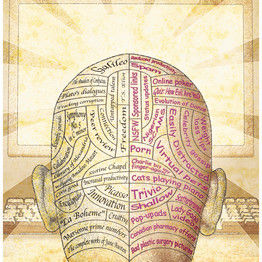
Does the Internet Make You Dumber?

Image
© Mick Coulas
The cognitive effects are measurable: We're turning into shallow thinkers, says Nicholas Carr.

The Roman philosopher Seneca may have put it best 2,000 years ago: "To be everywhere is to be nowhere." Today, the Internet grants us easy access to unprecedented amounts of information. But a growing body of scientific evidence suggests that the Net, with its constant distractions and interruptions, is also turning us into scattered and superficial thinkers.

The picture emerging from the research is deeply troubling, at least to anyone who values the depth, rather than just the velocity, of human thought. People who read text studded with links, the studies show, comprehend less than those who read traditional linear text. People who watch busy multimedia presentations remember less than those who take in information in a more sedate and focused manner.

People who are continually distracted by emails, alerts and other messages understand less than those who are able to concentrate. And people who juggle many tasks are less creative and less productive than those who do one thing at a time.

Laptop

Does the Internet Make You Smarter?

Image
© Charis Tsevis
Amid the silly videos and spam are the roots of a new reading and writing culture, says Clay Shirky.

Digital media have made creating and disseminating text, sound, and images cheap, easy and global. The bulk of publicly available media is now created by people who understand little of the professional standards and practices for media.

Instead, these amateurs produce endless streams of mediocrity, eroding cultural norms about quality and acceptability, and leading to increasingly alarmed predictions of incipient chaos and intellectual collapse.

But of course, that's what always happens. Every increase in freedom to create or consume media, from paperback books to YouTube, alarms people accustomed to the restrictions of the old system, convincing them that the new media will make young people stupid. This fear dates back to at least the invention of movable type.