Health & WellnessS


Coffee

Caffeine's effect on the brain's adenosine receptors visualized for the first time

Image
© Unknown
Scans allow researchers to study the link between caffeine and neurodegenerative disorders.

Molecular imaging with positron emission tomography (PET) has enabled scientists for the first time to visualize binding sites of caffeine in the living human brain to explore possible positive and negative effects of caffeine consumption. According to research published in the November issue of The Journal of Nuclear Medicine, PET imaging with F-18-8-cyclopentyl-3-(3-fluoropropyl)-1-propylxanthine (F-18-CPFPX) shows that repeated intake of caffeinated beverages throughout a day results in up to 50 percent occupancy of the brain's A1 adenosine receptors.

"The effects of caffeine to the human body are generally attributed to the cerebral adenosine receptors. In the human brain the A1 adenosine receptor is the most abundant," said David Elmenhorst, MD, lead author of "Caffeine Occupancy of Human Cerebral A1 Adenosine Receptors: In Vivo Quantification with F-18-CPFPX and PET." "In vitro studies have shown that commonly consumed quantities of caffeine have led to a high A1 adenosine occupancy. Our study aimed to measure the A1 adenosine receptor occupancy with in vivo imaging."

Fifteen male volunteers participated in the study. They abstained from caffeine intake for 36 hours and then underwent a PET scan with F-18-CPFPX. Caffeine was then introduced in short intravenous infusions, increasing in amount. To estimate the occupancy of A1 adenosine receptors by caffeine, the distribution volume at the baseline period of the PET scan was compared with the distribution volume after caffeine administration. Researchers determined that the concentration of the caffeine that displaces 50 percent of the binding of F-18-CPFPX to the A1 adenosine receptor was 13 mg/L, or approximately four to five cups of coffee.

Cheeseburger

"Fast food is good for your waistline" - Really?

Image
Could fast food actually be good for your waistline? According to a writer from U.S. News Health, fast food may be the right choice if you're looking to slim down and cut calories. The article, titled "Why Fast Food Could Be Good for Your Waistline", describes a made-up scenario where a woman named Sharon made the wrong decision by avoiding McDonald's in an attempt to be healthy. What the author seems to not realize, however, is that fast food is loaded with destructive chemicals and ingredients, and is feeding the continuously increasing rates of various health conditions. So, what could possibly make fast food good weight loss aid?

The author shares the same belief as many others: that a calorie is a calorie, and the source or quality is of little importance. He explains that if the phony character chose McDonald's instead of Chili's, she would have consumed less calories, paving way for a slimmer waist.
Had she gone to McDonald's, her usual would have set her back 580 calories. Yet her "smarter" Chili's order quickly added up. Sharon's salad alone contained 690 calories; her ¼ portion of dip and chips contained another 320; and her few small bites of brownie packed a final 137, giving her a Chili's grand total of 1,147 calories - basically double her McDonald's fare.
Like Sharon, many people often assume that somehow fast food is worse for weight than what you might order in a sit-down restaurant. While eating fast food on a regular basis is assuredly not a nutritionally sound plan, there are a few reasons why it may well be a weight-friendlier choice than sit-down dining.

Monkey Wrench

Serving Science or Monsanto?

Image
Timing of AAAS statement on GMO labeling is highly suspicious

With about a week to go before California voters head to the polls to decide the fate of Proposition 37, which would require GMO foods to be labeled, I expected an already ugly campaign to get even uglier.

But the latest gift to the No on 37 campaign smells especially bad. Last week, the American Association for the Advancement of Science (AAAS - goes by "Triple A-S") released this "statement" on GMO labeling that sounds like it was drafted by Monsanto. The statement ends with the non-scientific but very quote-worthy conclusion that "mandating such a label can only serve to mis­lead and falsely alarm consumers." While Prop 37 is never mentioned, what purpose could the timing serve other than persuading Californians to vote no on the measure?

This paragraph of the AAAS press release sounds especially familiar:

Several current efforts to require labeling of GM foods are not being driven by any credible scientific evidence that these foods are dangerous... Rather, GM labeling initiatives are being advanced by "the persistent perception that such foods are somehow 'unnatural,'" as well as efforts to gain competitive advantages within the marketplace, and the false belief that GM crops are untested.

These talking points come straight from the No on 37 campaign. For example, "gain competitive advantages"? What does that have to do with science? Nothing, but it's a favorite refrain from the No side, which I know because it showed up on the mailer sent to my home.

Bullseye

Protecting children's health: American Academy of Pediatrics misses the big picture in their flawed 'organics' analysis

Image
For the first time, the American Academy of Pediatrics (AAP) has weighed in on organic foods for children. Its news release was widely covered in the national media.

While the AAP should be commended for acknowledging the potentially harmful effects of pesticide residues on conventional foods, their report - and associated press coverage - is seriously flawed in its basic approach to agrochemical contamination in our food supply and the associated threat to public health.

Even though the AAP acknowledges that many pesticides are neurotoxins, that studies have linked exposure to pesticides to neurological harm in children, and that a recent peer-reviewed study correlated higher pesticide residue levels in children with higher rates of attention-deficit hyperactivity disorder (ADHD), the AAP is cautious about reaching a conclusion regarding the harmful effects of pesticides.

Megaphone

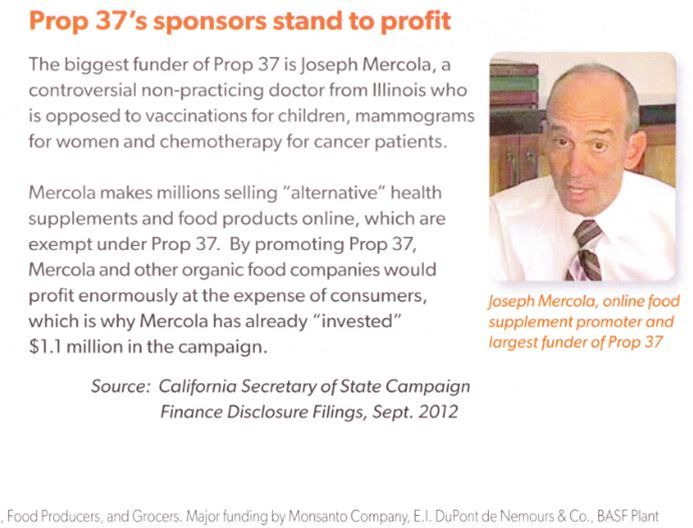
Dr. Mercola attacked by biotech bullies

Image
© drmercola.com
We all know that labeling genetically engineered foods is a common sense right that is enjoyed by over 50 other countries, including China, India, and Russia.

But for Americans, that right has been taken away from us. The chemical companies and the junk food companies have done everything possible to hide the truth from Americans for the sake of their profits.

I knew going into this battle, that it would be a significant challenge and risk to me personally. You see, when you fight against major chemical companies like Monsanto, you're sure to get a little dirty along the way.

The processed food and chemical companies have paid over $40 million to hide the science experiment that has secretly ended up on the dinner plates of hundreds of millions of unknowing Americans. These multinational corporations are worried, and will do anything to keep you in the dark.

Keep in mind that the top six funders of "No on 37" are also the six largest pesticide companies in the world! That alone should tell you that their stance has nothing to do with your health and well-being.

This was just one of the ads that Monsanto & company have been sending voters to discredit me with lies. This is no surprise, considering how many people - inlcuding farmers, Monsanto has attacked in the past.

Extinguisher

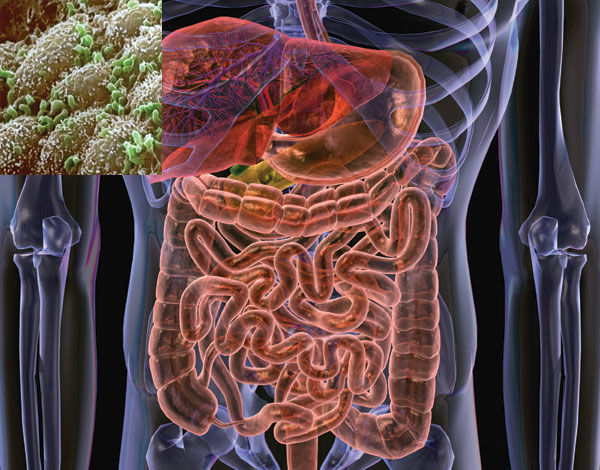
Putting out the fire: Gut flora and the inflammatory cycle

Image
It's funny. Once you realize the relationship between nutrition, disease, health, and metabolism is complicated, complex, and completely interdependent, things somehow get a bit simpler. Everything is connected to everything else. Chronic stress begets chronic inflammation, which chronically elevates cortisol, which induces insulin resistance and belly fat accumulation. Celiacs are usually intolerant of casein, too. Diabetics get heart disease more and have higher cancer mortality rates. Diabetics are often insulin resistant and usually overweight. Celiacs are often Type 1 diabetics. The are overweight sleep less, work more, and get less sun than leaner folks.

Now, it'd be difficult to map out the precise relationships between myriad maladies and their nutritional triggers or risk factors. To do so definitively would produce a mostly unreadable mess. What we do instead is speculate. Make good guesses based on clinical, anecdotal, even anthropologic evidence. We look at what those people with chronic inflammation, obesity, autoimmune disease, diabetes, and celiac are eating, sleeping, and exercising, and we go from there. The precise physiological mechanisms behind some of these relationships have yet to be fully teased out, but the relationships exist and that's usually enough to get results. Hence, simplicity.

Pills

How millions are tricked into ingesting harmful statins

Image
© Activist Post
Are statins safe? When unknowing patients go to their doctor and are found to have high cholesterol or heart disease risk factors, they are usually given a pill rather than given instructions on how to reverse the conditions naturally. And that pill they are given is usually a statin. But, research is showing that these drugs do more harm than good - despite doctors doling them out in increasing and alarming numbers.

Are Statins Safe?

According to the Harvard Health blog, more than half of American men between the ages of 65 and 74 and 39% of women over the age of 74 are on statin drugs. That's huge, and accounts for millions of older adults. What's so frightening about this isn't that these people might have high cholesterol and be at risk for heart disease (the cholesterol myth has been debunked, by the way), but that the statins they are taking could actually be making things worse.

A study recently published in Atherosclerosis found that statins actually increase the risk of calcified arteries. This doesn't just mean a little plaque - it means the plaque has gotten so bad, it is in the latter stages of hardening of the arteries.

Attention

How tumors exploit gut flora to fuel growth, and the surprising finding that chemotherapy boosts resistant cancer

Image
© drmercola.com
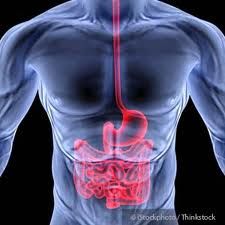
Could your gut flora play a role in cancer growth? According to recent research, the answer is a tentative yes.

Findings published in the journal Nature[1] report the discovery of microbial-dependent mechanisms through which some cancers mount an inflammatory response that fuels their development and growth. These findings provide new insight into how cancer cells can hijack your body's inflammatory reaction by exploiting microbial-dependent immune cells.

As reported by Medical News Today:[2]
"The association between chronic inflammation and tumor development has long been known from the early work of German pathologist Rudolph Virchow. Harvard University pathologist Harold Dvorak later compared tumors with 'wounds that never heal,' noting the similarities between normal inflammation processes that characterize wound- healing and tumorigenesis or tumor-formation.

Indeed, 15 to 20 percent of all cancers are preceded by chronic inflammation - a persistent immune response that can target both diseased and healthy tissues... Still, most cancers are not preceded by chronic inflammation.

On the other hand, they exploit ubiquitous, infiltrating immune cells to unduly provoke and hijack the host inflammatory reaction. Until now, the mechanism of so-called 'tumor-elicited inflammation,' which is detected in most solid malignancies, was poorly explained.

'The tumor-associated inflammatory reaction... may hold the keys for future preventive and therapeutic measures,' said first author Sergei Grivennikov, Ph.D

Noting that studies of long-term users of non-steroidal anti-inflammatory drugs, such as aspirin, have revealed that general inhibition of inflammation reduces the risk of cancer death by up to 45 percent, depending on the type of cancer. 'So inhibition of inflammation during cancer development may be beneficial.'"

Red Flag

Die early with sleeping pills

Image
© Alliance for Natural Health
A new study shows prescription sleeping pills bring an increased risk of dying early - or getting cancer. So why is FDA rubber-stamping such dangerous drugs?

Sleep deprivation is a serious issue. As many as 70 million Americans suffer from insomnia and other sleep disorders. Some 60 million prescriptions for sleeping pills - technically called hypnotic drugs - were filled in 2011 as compared to 47 million in 2006.

Stress, an over-full lifestyle, poor diet, and especially the use of artificial light in the evening after going to bed, can all prevent sleep. As we reported earlier this year, lack of sleep makes you more likely to get sick, raises your risk of type 2 diabetes, high blood pressure, and obesity, and makes you more prone to depression.

Some of the risks of sleeping pills are already well-documented: daytime drowsiness, headaches, nausea, dizziness, and addiction. But a new study published in the British Medical Journal says that people taking a prescription sleeping pill - even when taking fewer than eighteen pills per year - have nearly four times the mortality rate of those who don't take the drugs. And patients who take higher doses of sleeping pills have a 35% increased cancer risk.

Info

Flashback Celiac disease becoming more common

Image
© kelownaceliac.org
Celiac disease, a serious immune system reaction to the protein in wheat and other grains, is far more common today than it was 50 years ago, a new study shows.

People who have celiac disease can't tolerate gluten, a protein found in wheat, rye or barley. Life with celiac is difficult because gluten is found in many medications and processed foods. When gluten is consumed, the body's immune system damages the small intestine and nutrients can't be absorbed.

While it's been known that the incidence of celiac is on the rise, it hasn't been clear whether doctors are simply looking for it more often, and therefore finding more cases. But new research from the Mayo Clinic in Rochester, Minn., suggests that the disease is four times more common today than it was in the 1950s, and not just because doctors are more likely to test for it.

Comment: The Many Heads of Gluten Sensitivity:
Unfortunately, today most people do not understand the difference between gluten sensitivity and celiac disease. As a matter of fact, this is one of the reasons why so many patients fail to get properly diagnosed. Lab tests have traditionally focused on diagnosing celiac disease. This has created a proverbial No Man's Land for those patients who react to gluten differently. Because the labs come back negative for them, they are told to continue the consumption of grains, and they are told not to worry about gluten because they don't have celiac disease.

Until last year, most doctors and celiac disease researchers ignored or denied the existence of gluten sensitivity. The general thought was - if you don't have celiac disease, you don't have to worry about avoiding grains.

A new study published this week attempted to elucidate the differences between Celiac Disease and Gluten Sensitivity
Clues to Gluten Sensitivity
Book Review: Gluten Toxicity - The Mysterious Symptoms of Celiac Disease, Dermatitis Herpetiformis, and Non-Celiac Gluten Intolerance
Gluten Sensitivity Spectrum - Not Just a Celiac Issue
The Dark Side of Wheat - New Perspectives on Celiac Disease and Wheat Intolerance
Opening Pandora's Bread Box: The Critical Role of Wheat Lectin in Human Disease