Health & WellnessS


Bulb

How yoga helps multiple sclerosis

Image
© Huffington Post
Every morning, Homa Fani, 56, of Los Angeles, spends about an hour practicing Iyengar yoga. A form of Hatha yoga, Iyengar focuses on breathing, alignment, and postures to improve strength and flexibility, and to enhance the mind and body.

Fani, who was diagnosed with multiple sclerosis more than 20 years ago, says that practicing Iyengar yoga regularly helps her better manage her disease. "When you have MS and you get up in the morning, you need to stretch your body and do things that help you continue for the rest of the day," she says. "Practicing yoga - breathing and stretching - not only helps me physically but it also helps me mentally and emotionally."

Comment: Breathing exercises are the basis of all yoga practices. One of the most effective breathing techniques to relieve stress and pain can be found here.


Attention

Warning: Anti-depressants causing birth defects, miscarriages

Image
Pharmaceutical companies regularly embellish the benefits and downplay the dangers of anti-depressants, and all medications for that matter - but this time, their profits could be inadvertently endangering and even killing unborn infants. Senior doctors know it and are finally raising their voices.

Tufts University School of Medicine's Dr. Adam Urato decries the practice of prescribing SSRIs to pregnant women.

"Study after study shows increased rates of newborn complications in those babies who were exposed to SSRIs in-utero," he says. These complications include greater risk of autism, lung and bowel diseases, and more.

Post-It Note

50 Countries label genetically engineered foods

The greatest opportunity to give people the right to know if their food is genetically engineered will occur with the California ballot initiative - officially known as Proposition 37 - which is coming up for vote on November 6. Proposition 37 will require labeling of genetically engineered foods, and end the routine industry practice of labeling and marketing such foods as "natural."

Your support, regardless of what state you live in, can make all the difference between winning and losing.

The information in the below video is based on the new report "GMO Myths and Truths" by EarthOpenSource.org. You can find more information here


Info

Yes: Food labels would let consumers make informed choices

Image
© blog.friendseat.com
The paternalistic assertion that labeling of genetically modified foods "can only serve to mislead and falsely alarm consumers" is an Orwellian argument that violates the right of consumers to make informed decisions. Civilization rests on the confidence that an individual's basic human rights will be respected by the government, including the 'right to know.' The AAAS board failed to note that the FDA's testing program for GM foods is voluntary.

As a group of scientists and physicians that includes many long-standing members of the American Association for the Advancement of Science (AAAS), we challenge the recent AAAS Board of Directors statement opposing efforts to require labeling of foods containing products derived from genetically modified crop plants. Their position tramples the rights of consumers to make informed choices.

Comment: Is the statement released by the American Association for the Advancement of Science (AAAS) Serving Science or Monsanto?:
Timing of AAAS statement on GMO labeling is highly suspicious

With about a week to go before California voters head to the polls to decide the fate of Proposition 37, which would require GMO foods to be labeled, I expected an already ugly campaign to get even uglier.

But the latest gift to the No on 37 campaign smells especially bad. Last week, the American Association for the Advancement of Science (AAAS - goes by "Triple A-S") released this "statement" on GMO labeling that sounds like it was drafted by Monsanto. The statement ends with the non-scientific but very quote-worthy conclusion that "mandating such a label can only serve to mis­lead and falsely alarm consumers." While Prop 37 is never mentioned, what purpose could the timing serve other than persuading Californians to vote no on the measure?


Take 2

Vandana Shiva on Prop 37, GMOs, food sovereignty, and more

Image
One of the world's most renowned scientists and environmental activists, Vandana Shiva, is speaking out on behalf of proposition 37. Long a thorn in the side of Monsanto, Dr. Shiva has taken on big bio-tech and agribusiness companies in her home country of India and works with farmers groups all over the world to protect their right to farm using their traditional methods and seeds.

Trained as a physicist, Vandana Shiva is the founder of Navadanya, "a movement which aims to protect nature and people's rights to knowledge, biodiversity, water and food," by creating community seed banks among other things. She just concluded a two week long global action called "seed freedom." She has written nearly two dozen books, including Democratizing Biology: Reinventing Biology from a Feminist, Ecological and Third World Perspective, and Soil Not Oil. Her forthcoming book out next year is entitled Making Peace With the Earth: Beyond Land Wars And Food Wars. Vandana Shiva has won a number of awards including the Sydney Peace Prize and the Right Livlihood Award and was named by the Guardian newspaper as one of their Top 100 most inspiring women.

Comment: Read the following articles written by Dr. Vandana Shiva about the numerous Myths, Falsehoods, Superstitions regarding GMO's:


Info

Inflammation and cognition in schizophrenia

There are a growing number of clues that immune and inflammatory mechanisms are important for the biology of schizophrenia. In a new study in Biological Psychiatry, Dr. Mar Fatjó-Vilas and colleagues explored the impact of the interleukin-1β gene (IL1β) on brain function alterations associated with schizophrenia.

Fatjó-Vilas said that "this study is a contribution to the relatively new field of 'functional imaging genetics' which appears to be potentially powerful for the study of schizophrenia, where genetic factors are of established importance and cognitive impairment - affecting particularly executive function and long-term memory - is increasingly recognized as a core feature of the disorder."

To conduct this study, they recruited patients with schizophrenia and healthy volunteers, all of whom completed a working memory task while undergoing a functional magnetic resonance imaging scan in the laboratory. This allowed the researchers to determine which areas of the brain became activated during the task. Each participant was also genotyped to determine which allelic combination of the -511C/T polymorphism at the promoter region of the IL1β gene they carry: CC, TT, or CT.

Patients who were homozygous for the C allele (CC) showed reduced prefrontal cortex activation associated with working memory than patients who had at least one copy of the T allele. Among the healthy volunteers, frontal brain activation did not differ according to genotype.

"The analyzed genetic variant exerts an influence on prefrontal cortex function and this influence is different in healthy subjects and patients with schizophrenia," summarized Fatjó-Vilas.

Whistle

Activists: European Union is lagging in controls over hazardous chemicals

Image
The publication of the first EU Classification and Labelling Inventory (C&L) was released by the European Chemical Agency (ECHA) on 13 February 2012
More than a thousand potentially hazardous chemicals often found in cosmetics and cleaning supplies remain unregulated on the European market, environmental activists say.

Green campaigners ClientEarth and the European Environmental Bureau (EEB) say there has been little progress by the EU chemicals regulatory agency in tightening up oversight of the industry - a task it was charged with six years ago.

There are more than 30,000 chemicals used throughout Europe with little regulatory control and many pose a potential threat to the health of consumers, said Tatiana Santos, policy officer at the EEB.

"Incomplete, incorrect and irrelevant information is commonly found in the registration dossiers," ClientEarth and the EEB found in a study.

Coffee

Caffeine's effect on the brain's adenosine receptors visualized for the first time

Image
© Unknown
Scans allow researchers to study the link between caffeine and neurodegenerative disorders.

Molecular imaging with positron emission tomography (PET) has enabled scientists for the first time to visualize binding sites of caffeine in the living human brain to explore possible positive and negative effects of caffeine consumption. According to research published in the November issue of The Journal of Nuclear Medicine, PET imaging with F-18-8-cyclopentyl-3-(3-fluoropropyl)-1-propylxanthine (F-18-CPFPX) shows that repeated intake of caffeinated beverages throughout a day results in up to 50 percent occupancy of the brain's A1 adenosine receptors.

"The effects of caffeine to the human body are generally attributed to the cerebral adenosine receptors. In the human brain the A1 adenosine receptor is the most abundant," said David Elmenhorst, MD, lead author of "Caffeine Occupancy of Human Cerebral A1 Adenosine Receptors: In Vivo Quantification with F-18-CPFPX and PET." "In vitro studies have shown that commonly consumed quantities of caffeine have led to a high A1 adenosine occupancy. Our study aimed to measure the A1 adenosine receptor occupancy with in vivo imaging."

Fifteen male volunteers participated in the study. They abstained from caffeine intake for 36 hours and then underwent a PET scan with F-18-CPFPX. Caffeine was then introduced in short intravenous infusions, increasing in amount. To estimate the occupancy of A1 adenosine receptors by caffeine, the distribution volume at the baseline period of the PET scan was compared with the distribution volume after caffeine administration. Researchers determined that the concentration of the caffeine that displaces 50 percent of the binding of F-18-CPFPX to the A1 adenosine receptor was 13 mg/L, or approximately four to five cups of coffee.

Cheeseburger

"Fast food is good for your waistline" - Really?

Image
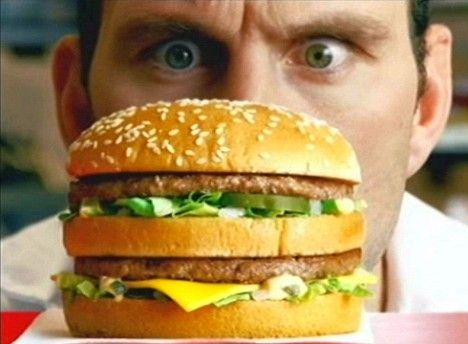
Could fast food actually be good for your waistline? According to a writer from U.S. News Health, fast food may be the right choice if you're looking to slim down and cut calories. The article, titled "Why Fast Food Could Be Good for Your Waistline", describes a made-up scenario where a woman named Sharon made the wrong decision by avoiding McDonald's in an attempt to be healthy. What the author seems to not realize, however, is that fast food is loaded with destructive chemicals and ingredients, and is feeding the continuously increasing rates of various health conditions. So, what could possibly make fast food good weight loss aid?

The author shares the same belief as many others: that a calorie is a calorie, and the source or quality is of little importance. He explains that if the phony character chose McDonald's instead of Chili's, she would have consumed less calories, paving way for a slimmer waist.
Had she gone to McDonald's, her usual would have set her back 580 calories. Yet her "smarter" Chili's order quickly added up. Sharon's salad alone contained 690 calories; her ¼ portion of dip and chips contained another 320; and her few small bites of brownie packed a final 137, giving her a Chili's grand total of 1,147 calories - basically double her McDonald's fare.
Like Sharon, many people often assume that somehow fast food is worse for weight than what you might order in a sit-down restaurant. While eating fast food on a regular basis is assuredly not a nutritionally sound plan, there are a few reasons why it may well be a weight-friendlier choice than sit-down dining.

Monkey Wrench

Serving Science or Monsanto?

Image
Timing of AAAS statement on GMO labeling is highly suspicious

With about a week to go before California voters head to the polls to decide the fate of Proposition 37, which would require GMO foods to be labeled, I expected an already ugly campaign to get even uglier.

But the latest gift to the No on 37 campaign smells especially bad. Last week, the American Association for the Advancement of Science (AAAS - goes by "Triple A-S") released this "statement" on GMO labeling that sounds like it was drafted by Monsanto. The statement ends with the non-scientific but very quote-worthy conclusion that "mandating such a label can only serve to mis­lead and falsely alarm consumers." While Prop 37 is never mentioned, what purpose could the timing serve other than persuading Californians to vote no on the measure?

This paragraph of the AAAS press release sounds especially familiar:

Several current efforts to require labeling of GM foods are not being driven by any credible scientific evidence that these foods are dangerous... Rather, GM labeling initiatives are being advanced by "the persistent perception that such foods are somehow 'unnatural,'" as well as efforts to gain competitive advantages within the marketplace, and the false belief that GM crops are untested.

These talking points come straight from the No on 37 campaign. For example, "gain competitive advantages"? What does that have to do with science? Nothing, but it's a favorite refrain from the No side, which I know because it showed up on the mailer sent to my home.