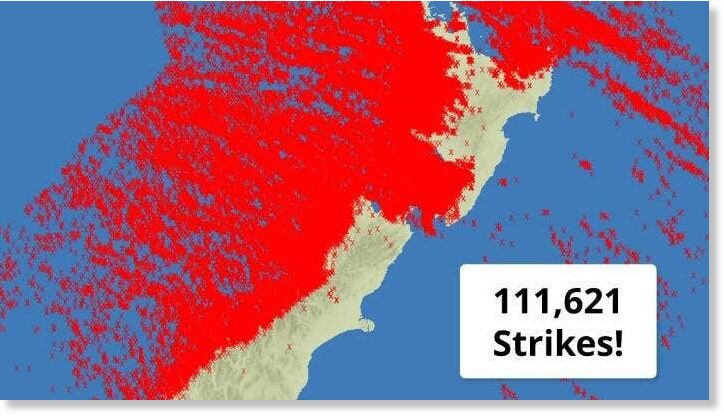
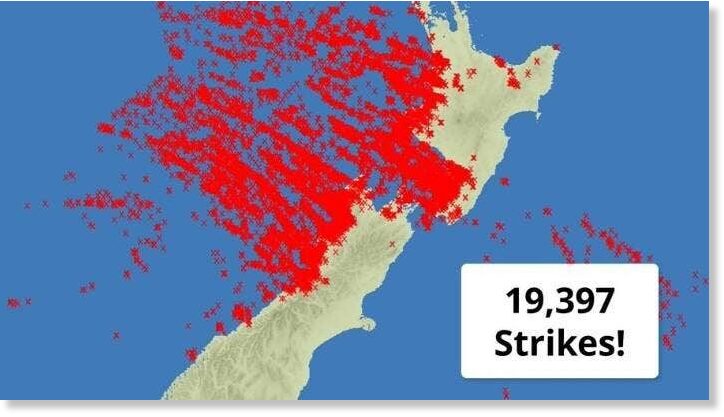
New Zealand has been hit by more than 100,000 lightning strikes during a week of fearsome weather across the country.
While South Island ski field operators are celebrating some of the best June snow conditions in memory, many people are cleaning up or hunkering down due to wild storms.
One of the areas worst-hit by storms is Waikanae, a town 50km north of Wellington, which reported two tornadoes on Monday night. Residents took to social media with pictures of uprooted trees, roof damage and major flooding.
Louise Buurmans, 91, whose ceiling was damaged by the storms, told TVNZ the experience was "bloody horrible".
"When the fire brigade was here they said I could stay with them, I don't even know them all that well so that's really very nice," she said. "I'm still a bit shaken up about it. I'm going to go and stay with family."
A 22-year-old youth B Ravindra and his brother B Ram Prasad aged 20 were killed in lightning strike while they were working in their farm at G Marrimanuguda village in Kurupam mandal of Parvathipuram Manyam district.
The locals said the siblings along with their mother had gone to field on Sunday evening. The brothers were working in the farm while their mother was a little away from the field when the lighting struck the duo.
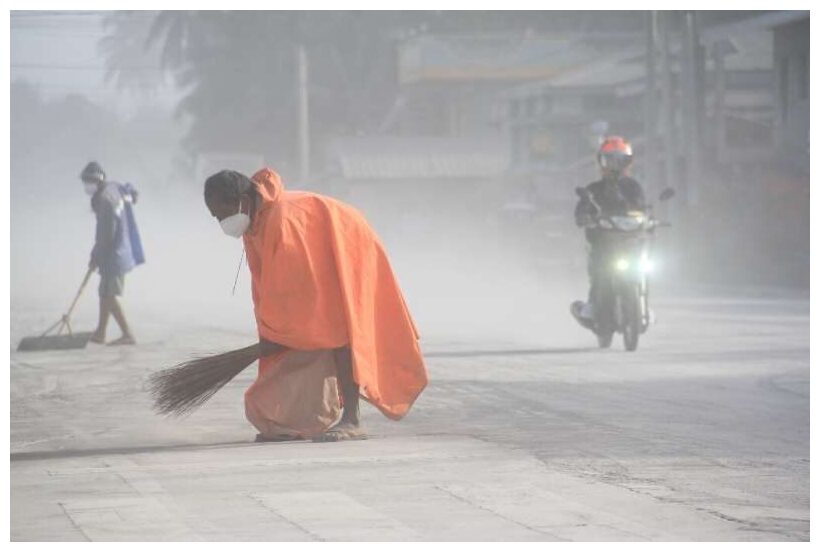
A volcano in the Philippines spewed a huge column of ash into the sky on Sunday, blanketing a region still recovering from last week's eruption.
The blast from Bulusan volcano lasted 18 minutes, the Philippine seismological agency said, impairing road visibility and forcing airlines to cancel flights.
On June 5, Mount Bulusan sent a grey plume shooting up at least one kilometre (0.6 miles) and covered 10 villages with ash.
Residents of Juban town in Sorsogon province, still reeling from last week's eruption, were woken up Sunday by the volcano's thundering.
"I thought it was just raining, but when I looked outside there was ash everywhere," resident Antonio Habitan told AFP. "Our river was once clear but now it is ash-coloured."
No casualties were reported, but the seismological agency raised the alert level to one on the five-level system, indicating "low-level unrest".
"We still can't say that it is over. It's still possible that this eruption could be followed by another one, that's why we need to be careful with the Bulusan volcano," agency head Renato Solidum told local radio station DZBB.
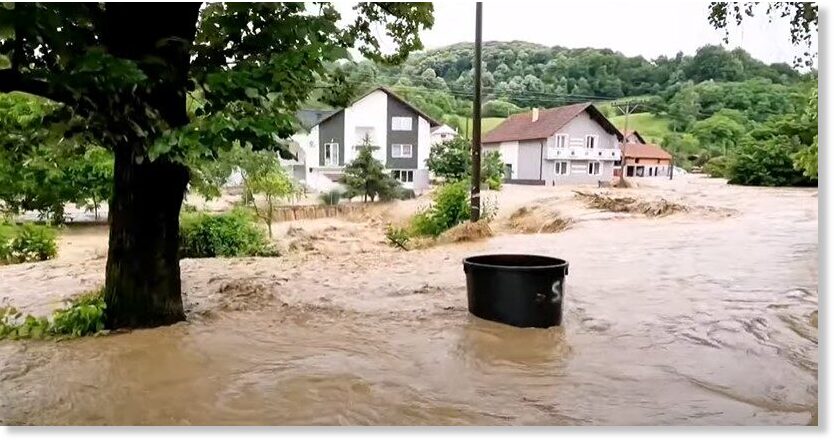
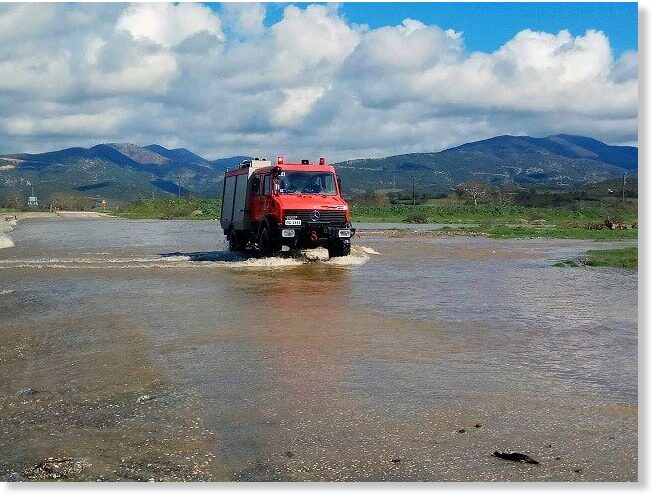
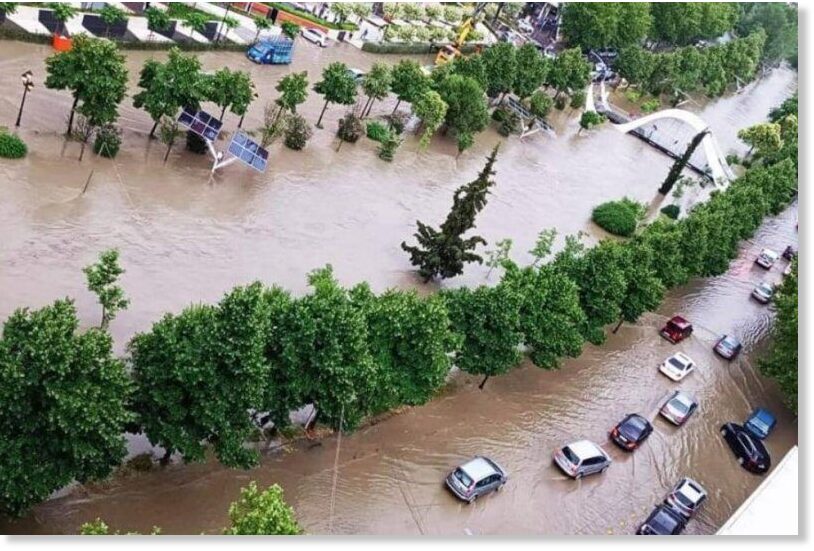
Damaged crops, flooded roads, and hundred of rescue calls from civilians were caused by the "Genesis" weather front, which has been affecting Greece since Thursday, June 8th and escalated on Saturday morning.
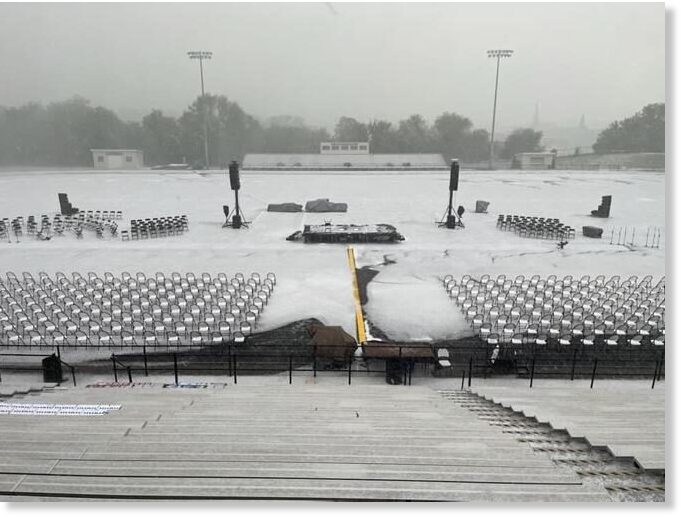
Cities across the country from Thrace and Macedonia to Attica, saw roads flooded during the heavy rainfall while crops were damaged by hailstorms of unprecedented volume and duration in the Thessalian plain and the mountain villages of Thessaly.
The National Observatory of Athens recorded about 8,300 lightning strikes by 6:30 pm on Saturday, most of which were in Thrace, the northern Aegean, Evia, eastern Thessaly, and Central Greece.
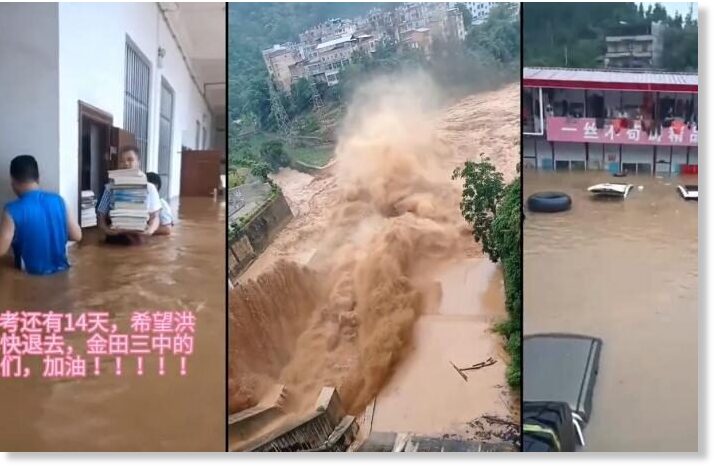
Heavy rain, flooding and landslides have affected over 2 million people in the provinces of Hunan and Jiangxi in China after days of heavy rainfall.
Hunan
Disaster management officials in Hunan said the rainfall intensity exceeded or was close to the historical records. The heavy rainfall has caused rivers and lakes to rise, with significant flooding occurring along small and medium rivers, the Hunan Department of Emergency Management said.
A total of 1.79 million people across the province have been affected by the severe weather. At least 10 people have died and 3 are still missing. Over 2,700 houses collapsed or were seriously damaged and around 286,000 people evacuated.
Torrential rains in southern China have killed at least 32 people, impacted millions of residents and caused billions of yuan in economic losses, as the country grapples with increasingly devastating flood seasons fueled by climate change.
In recent weeks, heavy rainfall has triggered severe flooding and landslides in large swathes of southern China, damaging homes, crops and roads.
In Guangxi province, landslides killed seven people on Thursday, state news agency Xinhua reported. One person remains missing, the report said.
In Hunan province, 10 people have been killed this month and three remain missing, with 286,000 people evacuated and a total of 1.79 million residents affected, officials said at a news conference Wednesday.
More than 2,700 houses have collapsed or suffered severe damage, and 96,160 hectares of crops have been destroyed -- heavy losses for a province that serves as a major rice-producing hub for China. Direct economic losses are estimated at more than 4 billion yuan ($600 million), according to officials.
New Zealand saw nearly 20,000 lightning strikes in the 24 hours to 8am, and MetService say there's more to come with a severe thunderstorm watch for Waikato, Waitomo and Taumarunui.
The lightning strikes have already left around 10,000 west coast residents without power
Buller Electricity said in a statement the whole of the Buller District from Karamea to Punakaiki was without power from about 9.15am.
"Transpower have advised they have had a lightning strike to both circuits they are repairing now," it said.
Lightning storms in Albania have flooded cities, caused power outages in the capital and led to the death of at least person
Lightning storms in Albania flooded cities, caused power outages in the capital and led to the death of at least person Thursday, authorities said.
Police said a 51-year-old man died in a fire after lightning hit a home in the northwestern village of Dedaj and caused an electrical short. Another man was injured, police said.
Another man was found drowned in the sea in the southwestern city of Vlora, but investigators have not determined if his death was weather-related.








Comment: Update June 10
CNN reports: