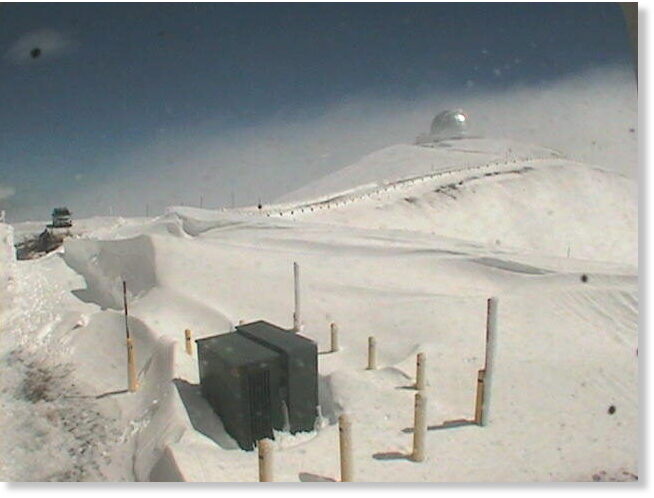
While many areas in East Hawai'i received more than 10 inches of rain from the passing Kona Low storm, Mauna Kea and Mauna Loa were also blanketed with several inches of snow.
Both summits have been under a winter storm warning since Friday. It lifted at noon today.
According to www.snow-forecast.com, 13 inches of snow fell over a 48-hour period between Friday and this morning on the Mauna Kea summit.
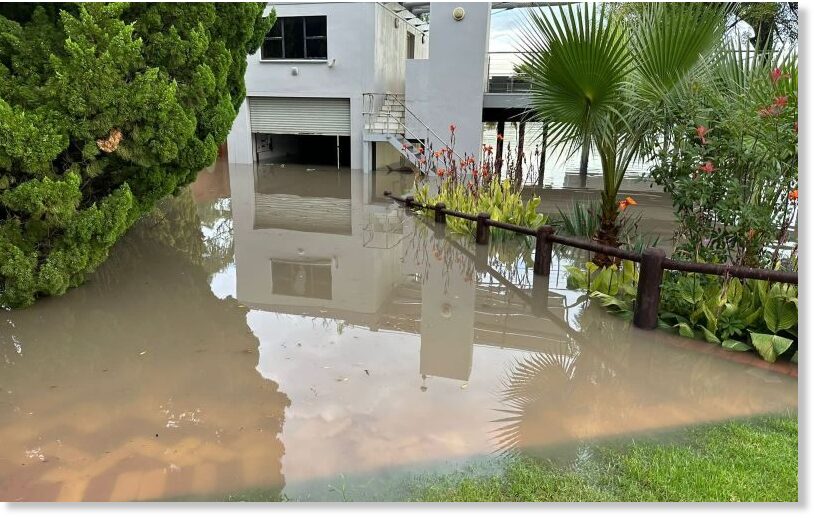
More flooding has affected parts of South Africa in recent days. At least 2 people have died and 5 are still missing. Authorities warn that dam levels are extremely high and floodgates have been opened in several locations.
Flooding caused widespread damage and at least 12 fatalities earlier this month, prompting the government to declare a national state of emergency.
Eastern Cape Province
Severe flooding struck in the town of Coffee Bay and surrounding areas of King Sabata Dalindyebo local municipality on 18 February 2023. Homes, schools and infrastructure were damaged. Six people were swept away by floodwater. Two bodies have since been recovered and four remain missing.
Flooding struck in the town of Komani from 18 to 19 February, where more than 100 people were rescued. The provincial Department of Health in a statement said one person, who had been trapped in the floods with two others, was swept away on the evening of 18 February. Search operations resumed on 19 February.
"Two other people who were on top of their cars that had been trapped in the floods were rescued and taken to Frontier Hospital," said department spokesperson Sizwe Kupelo.
Residents in the area are still recovering from flooding that occurred on 08 February.
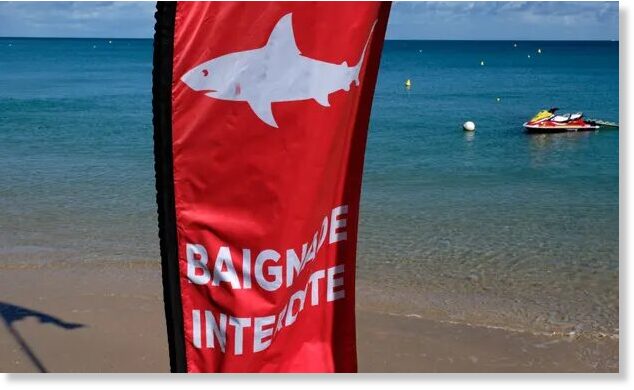
A shark has killed a 59-year-old Australian tourist near a crowded beach in the French Pacific territory of New Caledonia.
The man was swimming close to a pontoon about 150 metres from the beach in the capital, Nouméa, on Sunday when the shark attacked, biting him several times, authorities said.
Two people sailing their boat nearby took him back to the beach, where emergency services tried to save him. He had major wounds to his leg and both arms and died at the scene, despite receiving cardiac massage.
Many people were in the water at the time and witnessed the attack at the Chateau-Royal beach just south of Nouméa. There was a panicked rush back on to the beach and police evacuated the area.
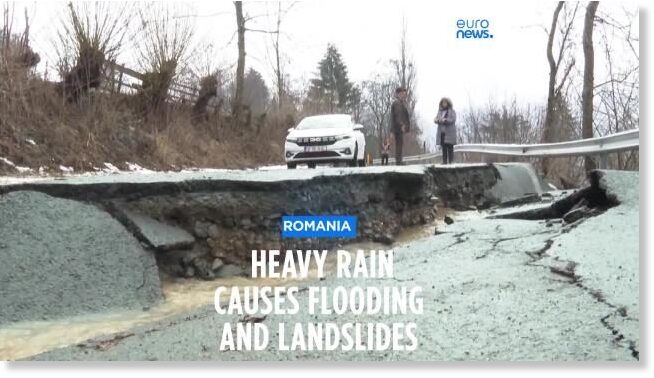
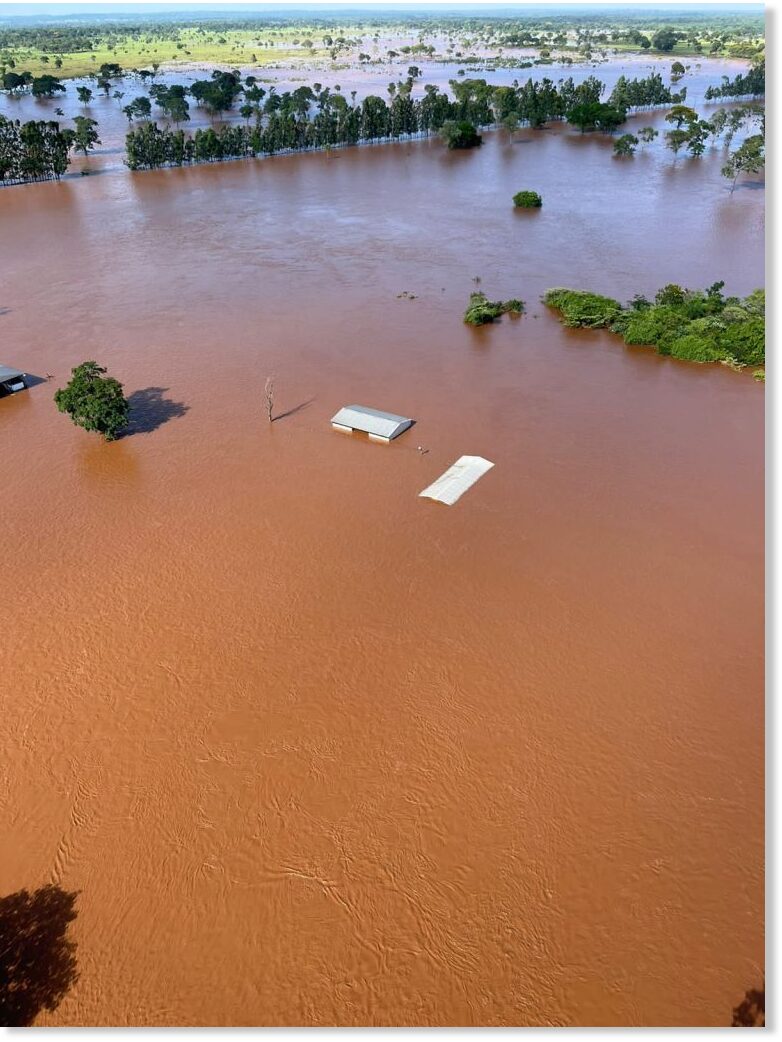
Overflowing rivers in the department of Amambay in northeastern Paraguay have damaged roads and bridges and affected 700 indigenous families in the area.
Paraguya's National Emergency Secretariat (SEN) said the Aquidabán river in Amambay Department broke its banks on 16 February. Several people had to be rescued by helicopter. Photos shared by SEN showed floodwater up to roof height. The flooding caused significant material damage and many residents have lost all their belongings, local media reported.
Will Stewart The Star (UK) Wed, 15 Feb 2023 14:34 UTC
The tiger smashed through the glass of the window in a terrifying incident
A wild tiger jumped through a window of a house before mauling a 19-year-old fisherman in eastern Russia.
The emaciated predator smashed through the glass as it pounced, seriously injuring the man.
His cousin reached for a gun and shot the Siberian tiger, the world's largest cat, dead.
Angler Sergey Kyalundzyuga was in the house on a fishing trip with two others when the tiger suddenly smashed through the window.
A source said: "They heard a noise outside. Sergey went to the window, and then a male tiger flew into it, breaking the glass with his head."
Comment: A contributing factor regarding these tiger attacks in the Khabarovsk region maybe the recent extremely cold temperatures experienced throughout Siberia, perhaps resulting a food prey shortage (or inaccessibility) for these large predators.
Residents of northern Siberia and the Russian Far East are enduring a major cold snap this week as thermostats fall far below 0 degrees Celsius.
On Jan. 23, the temperature in Yakutsk dropped to minus 45 degrees Celsius (minus 49 Fahrenheit).
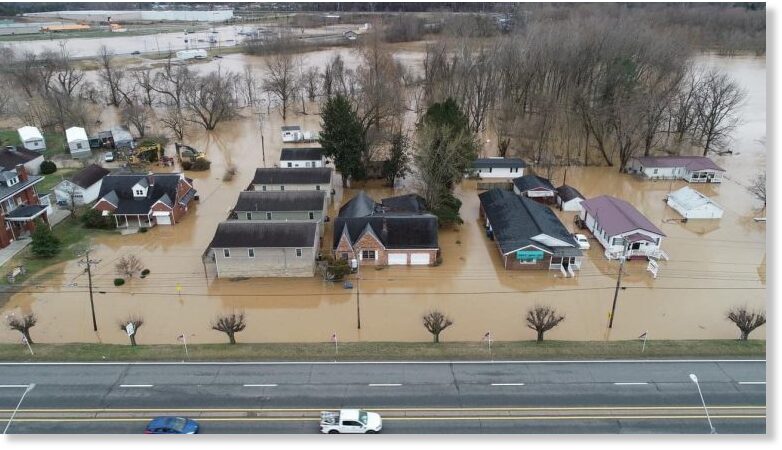
At least 2 people have died after heavy rain caused flooding in several southern states in the USA from 16 February 2023. The governor of West Virginia declared a State of Emergency. Roads and homes were flooded in areas of Tennessee, Alabama and Kentucky.
West Virginia
West Virginia Governor declared a State of Emergency for all of West Virginia's 55 counties due to impacts from heavy rainfall and thunderstorms on 16 February.
The National Weather Service at Charleston, WV, said, "Multiple rounds of moderate to heavy rain affected portions of the region on February 16-17, 2023. When all was said and done, rainfall totals of 2-4″ fell across much of the central/southern portion of the NWS Charleston (WV) forecast area, leading to numerous flooding issues across the region."
In 24 hours to 17 February, Culloden in Putnam County recorded 4.02 inches / 102.108 mm of rain; Hamlin in Lincoln County 4.04 inches / 102.61 mm; and Pinch in Kanawha County 4.08 inches / 103.63 mm.
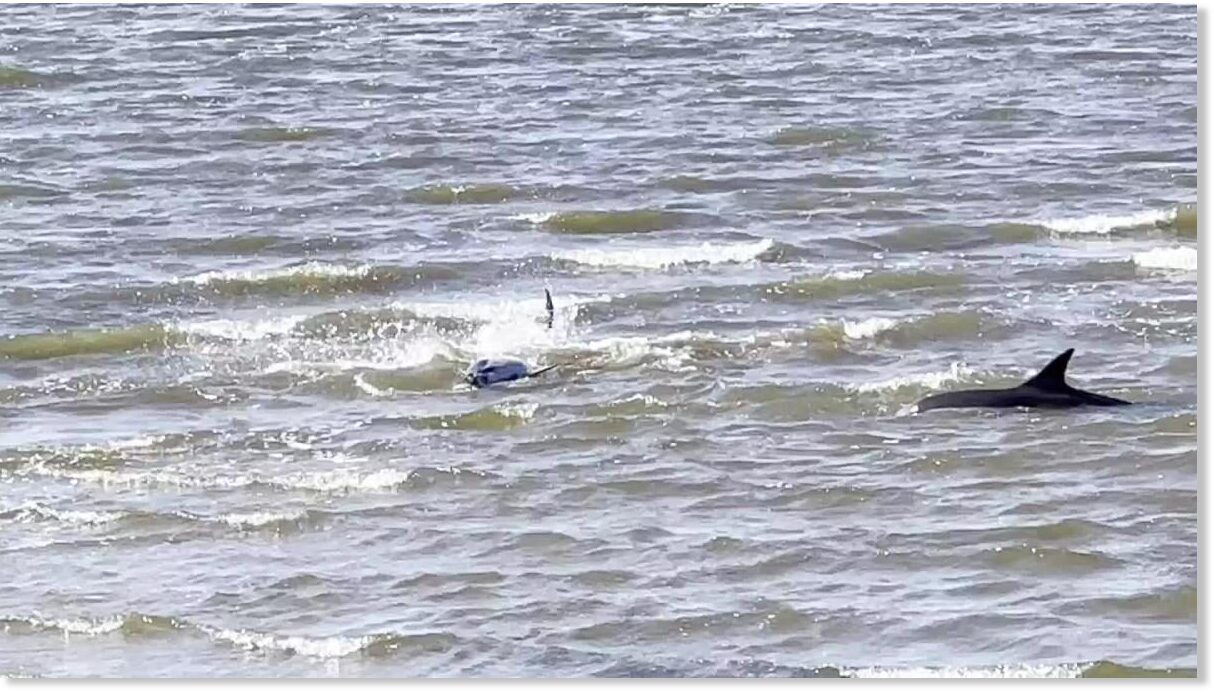
Three dolphins died Saturday after becoming stranded in shallow water off Sandy Hook, the latest large marine mammals to wash up dead at the Jersey Shore this winter.
The dolphins were spotted floundering in the water shortly after 11 a.m.. and a call went out to the Marine Mammal Stranding Center in Brigantine. As a small crowd gathered, a rescue team headed up the Garden State Parkway and volunteers headed to Sandy Hook to keep onlookers away from the dolphins, who were thrashing around in the water close to the shoreline.
Video posted to Twitter by photographer Matthew Renk showed the animals struggling in the surf.
A 7-year-old boy died after being attacked by a pack of stray dogs near his house in Uttar Pradesh's Saharanpur.
The incident took place on Saturday evening when the boy, Kanha, was playing in the field next to his house in Bilaspur village in the Gangoh Police Station area.
According to sources, the boy kept crying for help, but by the time villagers reached to rescue him, he had succumbed to his injuries.
They said villagers shooed the dogs away and recovered the boy's body and went to his house.
Nicholas Yong & Kathryn Armstrong BBC Mon, 13 Feb 2023 11:17 UTC
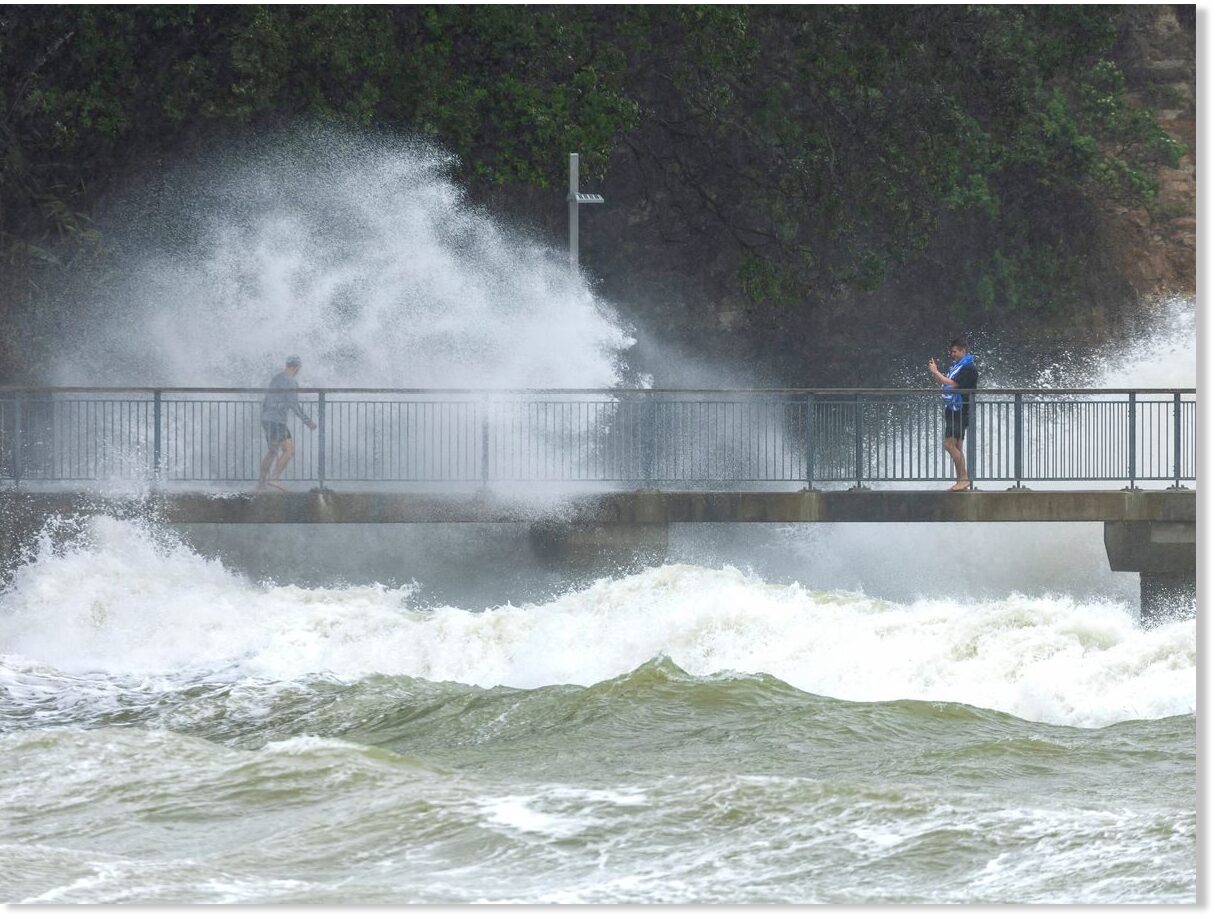
People watch as waves crash against the cliffs in Auckland
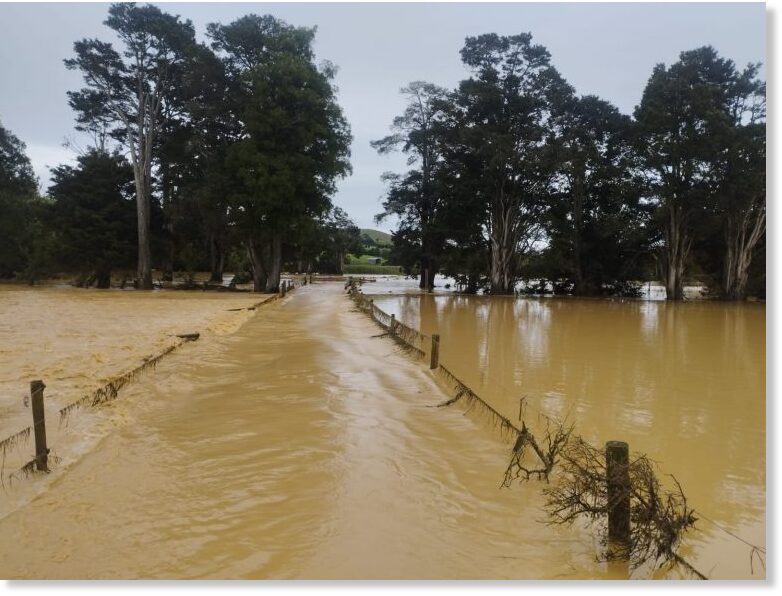
Residents across the north of New Zealand are bracing for a rough night as Cyclone Gabrielle lashes the country with torrential rains and winds.
At least 46,000 homes have lost power in the storm, while hundreds of flights have been cancelled.
A state of emergency has been declared in nine regions - affecting nearly a third of the 5.1 million population.
The storm was expected to peak on Monday night with the deluge to continue until Tuesday.
In New Zealand's largest city, Auckland, authorities earlier evacuated people from 50 homes around a 30m-high tower that was in danger of collapse, local media reported.
New Zealand - State of Emergency as Cyclone Gabrielle Triggers Floods and Landslides
The Government in New Zealand has declared a National State of Emergency in response to Cyclone Gabrielle. The declaration will apply to the regions of Northland, Auckland, Tairāwhiti (Gisborne), Bay of Plenty, Waikato, Hawke's Bay and Tararua District.
Cyclone Gabrielle brought strong winds with gusts of up to 127 km/h, rough seas, storm surge and heavy rain from 12 February 2023. Raparapaririki in Gisborne recorded 568 mm of rain in 48 hours to 14 February.
The Minister for Emergency Management, Kieran McAnulty, said, "This is an unprecedented weather event that is having major impacts across much of the North Island.
"The emergency order enables the government to streamline its response to the disaster. It has been applied to the Northland, Auckland, Tairawhiti, Tararua, Bay of Plenty, Waikato and Hawke's Bay regions."
New Zealand has only previously declared a national state of emergency on two other occasions - during the start of the Covid-19 pandemic and following the 2011 Christchurch earthquake.
Areas of the North Island are still recovering from devastating flooding following record heavy rainfall in late January.
New Zealand's cyclone death toll rises to 11 as thousands remain missing
The death toll from New Zealand's cyclone reached 11 on Sunday as thousands of people remained missing after the nation's most destructive weather event in decades.
Cyclone Gabrielle struck the country's north on Monday, bringing widespread flooding, landslides and power cuts, and the level of damage has been compared to Cyclone Bola in 1988. That storm was the most destructive on record to hit the nation of five million people.
Prime Minister Chris Hipkins said the storm is New Zealand's biggest natural disaster this century. He said more fatalities are possible with 6,431 people still missing.
Lives had been "turned upside down" and recovery is a "steep mountain ahead", he said, pointing to disrupted telecommunications, shortages of fresh water and damaged roads still restricting access to some areas.
At least 28,000 homes are still without power, he added.
"The true extent of the devastation and loss become clearer with every passing day," the prime minister said.
The nation has received at least 12 offers of international aid and a team from Fiji is travelling to New Zealand over the coming days to assist with the recovery.
Twenty-seven emergency workers from Australia are currently assisting with the relief effort.
Recovery efforts continued on Sunday, with teams from Auckland Council carrying out rapid building assessments on damaged homes in the coastal areas of Muriwai and Piha, about 60 km (40 miles) west of the nation's largest city, Auckland.
Emergency authorities and the military have dropped critical supplies via helicopter to those left stranded by the cyclone, which washed away farms, bridges and livestock and inundated homes.
Police have sent an extra 100 officers to Hawke's Bay and nearby Tairawhiti amid reports of looting in some areas.
"The police are working to maintain law and order," Mr Hipkins said.
"The purpose of GLADIO was to attack civilians, the people - women, children, innocent people, unknown people, far removed from any political game. The reason was quite simple: to force the public to turn to the State and demand greater security. Under a strategy of tension, you 'destabilize in order to stabilize', to create tension within society and promote conservative, reactionary social and political tendencies."
~ Italian neo-fascist whose prosecution led to the discovery of NATO's 'Gladio' networks across Western Europe
- Vincenzo Vinciguerra
”
Recent Comments
I guess this kind of tinkering with creatures such as ticks + mosquitoes is due to the people increasingly declining vaccines because they are...











Comment: A contributing factor regarding these tiger attacks in the Khabarovsk region maybe the recent extremely cold temperatures experienced throughout Siberia, perhaps resulting a food prey shortage (or inaccessibility) for these large predators.