
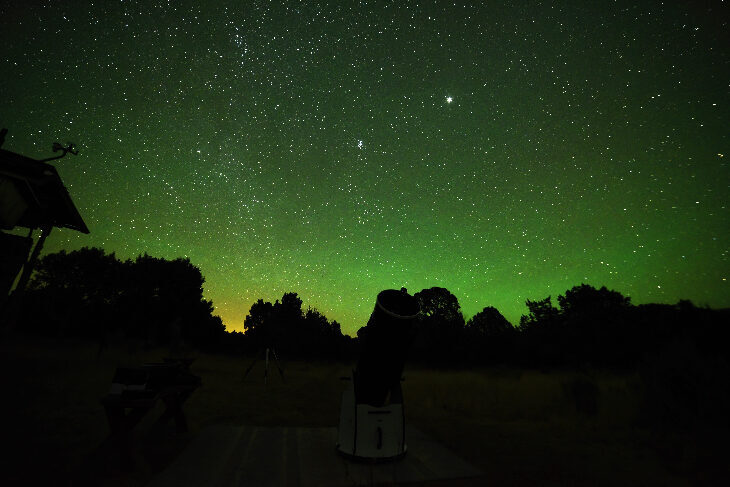
© Strong green airglow Taken by Aaron Watson on October 9, 2023 @ Paonia, Colorado, USAWent out stargazing and it was bright out - I could see things clearly in the "darkness". The previous night's SQM read 21.3 mpsas under clear skies, tonight it was reading below 21.0 under equally as clear skies. SQM Readings of less than 21.0 mpsas on a clear night in my location is quite anomalous. The 20 second Nikon D750 exposure revealed the strong green airglow in all directions. It had a flat color density - there were no ripples. There were also no thunderstorms or lighting anywhere near the region. Interestingly, the views through the 12" dob telescope were still quite clear and enjoyable despite the bright sky quality, though the contrast was adversely affected.
A phenomenon rarely seen in centuries might have just appeared in the night sky over Colorado--a "Bright Night." Philosophers and scientists have reported Bright Nights for literally thousands of years. It's when an otherwise dark and moonless night fills with a soft glow, allowing observers to see distant mountains or read a newspaper. Pliny the Elder, an Army commander in ancient Rome, described the phenomenon as a "nocturnal sun" (~ 113 BCE).
Comment: Pliny may, or may not, have been describing airglow: The Cosmic Context of Greek Philosophy, Part One
In the modern world, Bright Nights are seldom seen. Most of our planet's human population lives in cities, and even rural landscapes are somewhat lit by distant urban bulbs. The "nocturnal sun" has been overwhelmed.
Or has it? Enter Aaron Watson, an experienced night-sky photographer who regularly visits the darkest of dark-sky sites in remote parts of Colorado. On multiple occasions this year he has photographed red auroras and green airglow invisible from any ordinary countryside. Last month, he was at one of his favorite inky-dark sites when he may have experienced a modern Bright Night.

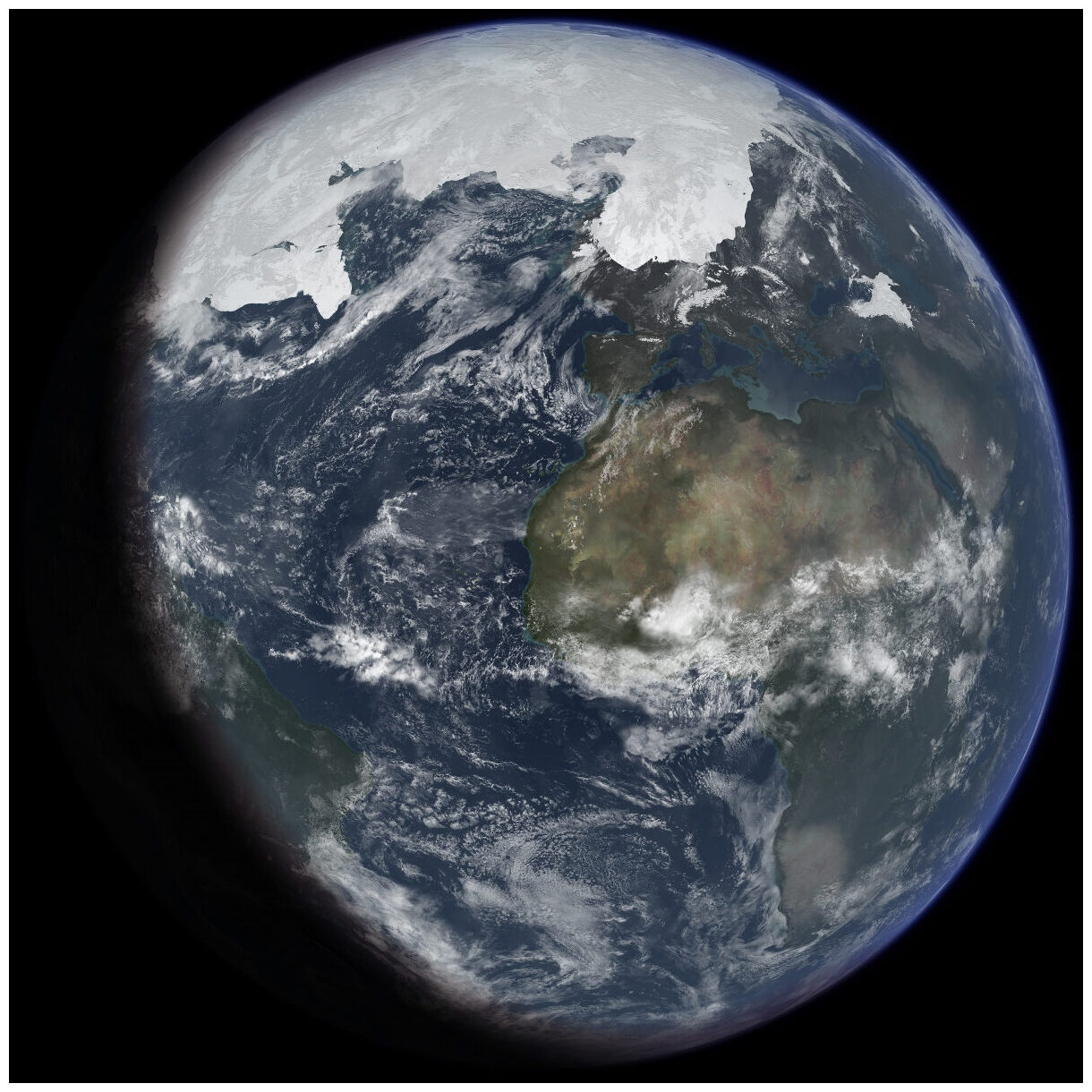










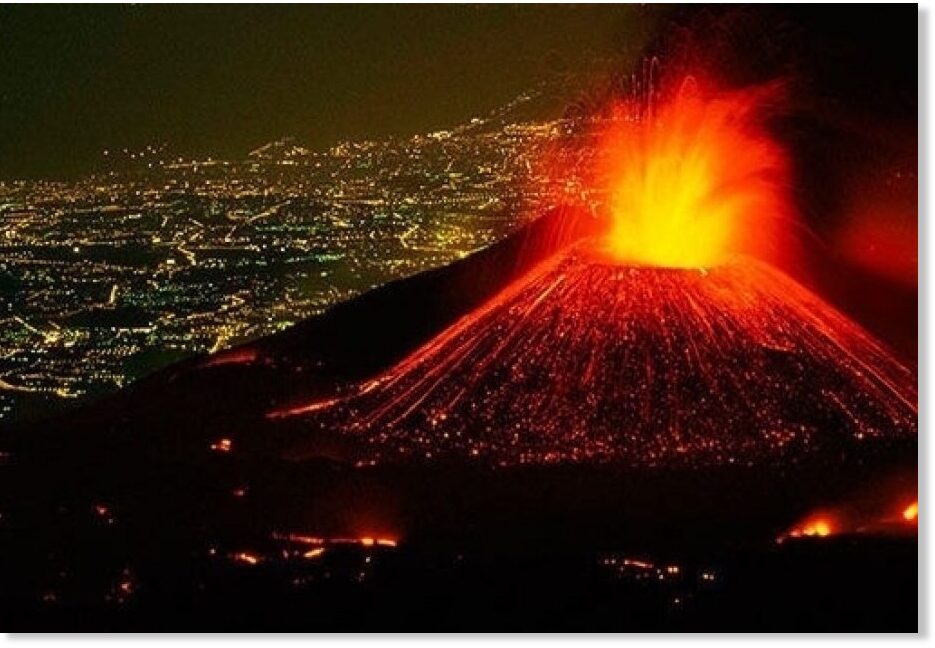



Comment: Whilst solar activity may be contributing to the appearance of airglow, if that was solely the cause, then it would have been documented during the previous solar maximum. Instead, it seems that this can be added to the growing list of previously rare, unusual, and even new phenomena that signals an unprecedented shift is occurring on our planet - and throughout our solar system:
- Rare blue jet atmospheric phenomenon photographed over Texas, several sighted in one night
- Cosmic climate change: 'Space plasma hurricane' observed in ionosphere above North Pole!
Also check out SOTT radio's: