Earth ChangesS


Snowflake Cold

Late-season freeze sets Baltic ice record - scientists say they have never seen anything like it

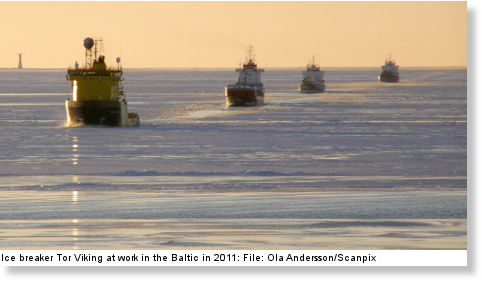
Ice breakers navigating the Gulf of Bothnia have been astounded at the record spread of ice on the Baltic Sea, while scientists say they have never seen anything like it.
Image
© Ola Andersson/Scanpix
"Since record keeping began in the sixties, we've never encountered anything like this before," ice breaker Ulf Gulldne told the local newspaper Örnsköldsviks Allehanda.

On March 29th, 176,000 square kilometers of the Baltic Sea was covered in ice, a record for the time of year. On a map, it means about half of the central and northern parts are frozen over. Far north, the ice is both thick and difficult to break through.

The date on which the ice reaches its maximum spread usually falls much earlier in the year. The previously latest date record was March 25th, 2008. That year, only 49,000 square kilometeres of the Baltic was covered in ice, which was the smallest maximum spread of ice in the previous 100 years.

Comment: It wouldn't be so surprising, if it wasn't for the "global warming" fraud and psychopaths in power, hiding the truth. The Ice Age is coming, and it will have far-reaching consequences for everyone on this planet.

Scientist predicts Earth is heading for another Ice Age - next year!


Attention

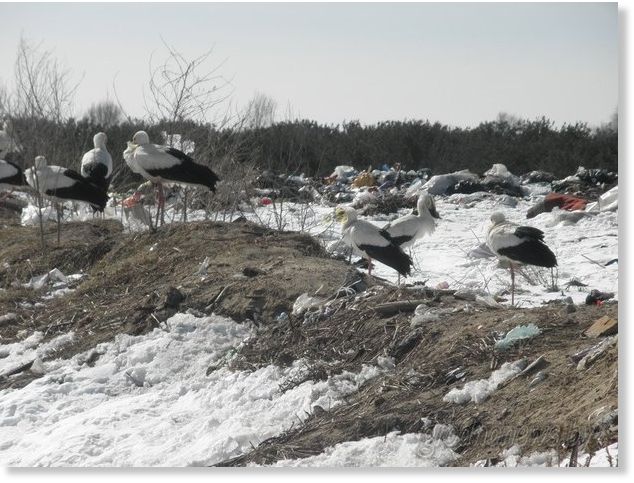
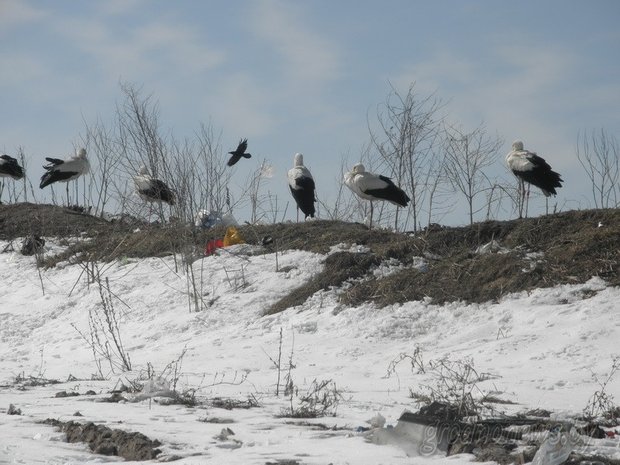
In Belarus, for returning storks, blackbirds, swallows the prolonged winter is a disaster

For migratory birds, the prolonged winter has been a disaster. Without food, many of the already returned storks, blackbirds, starlings, not to mention the swallows will definitely die.
Image
© Unknown
For example, in March, storks are usually in a hurry to occupy the most optimal location for a nest. They are supposed to already start a family, but have nowhere to live.

- Birds, of course, have no awareness of our weather. They focus on the length of daylight hours. For example, 40 years in a row weather conditions at this time in Belarus were quite comfortable, so the birds are accustomed to that, knowing that having arrived first one can take the most profitable territory, - says Dmitry Vintchevski, a known ornithologist, professor of zoology and human and animal physiology in Grodno State University.

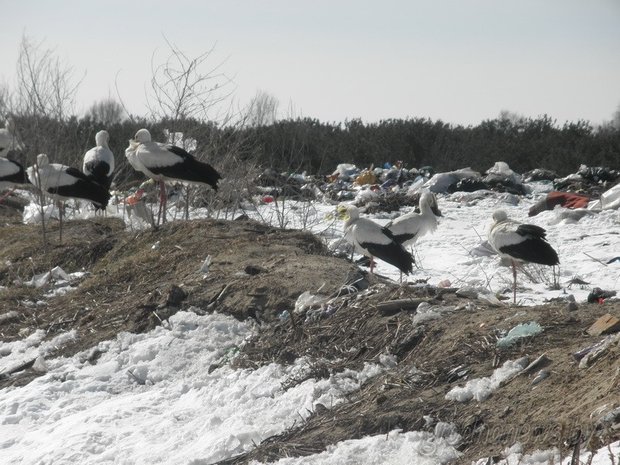
- In the Grodno region we spotted many of the returning singing thrushes, cranes, larks, starlings, wagtails and more... For many of them, the prolonged winter is a death sentence. After all, it's not the cold that is a killer, but the deep snow. They can't get to the food this way.
Image
© Unknown
- Birds have spent all their energy on flying back and, of course, are no longer able to return to the wintering grounds. They also don't have their fat reserves anymore. Usually, the first birds to arrive are the strongest. But today, the winners will be the weaker ones, those who will arrive last. Well, sometimes natural selection is tricky, - says Dmitry Vintchevski.

Red Flag

Over 70 earthquakes hit north Iceland last night

Image
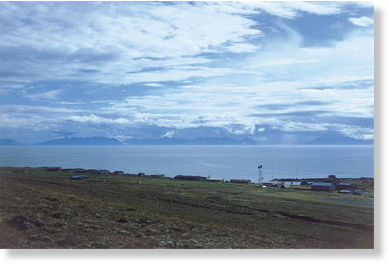
© Páll Stefánsson/Iceland ReviewGrímsey
Approximately 70 earthquakes were picked up by the automatic sensors of the Icelandic Met Office in the Grímsey Island seismic belt in North Iceland from midnight yesterday and until the morning. The activity started with a 5.5 quake on April 2.

Some of last night's quakes were of a magnitude higher than three but none measured above four points, ruv.is reports.

Yesterday, around 70 earthquakes were registered from noon and until the evening, five of which were above three in magnitude. The quakes could be felt on Grímsey but not on the mainland.

Powertool

Sinkhole house in Florida demolished

Rescue crews start to demolish the house in Tampa, Florida, that partially collapsed into a sinkhole on Thursday, swallowing resident Jeffrey Bush as he slept in his bed. Spokesman Mike Merrill told reporters they would be proceeding slowly to allow survivors to retrieve valuables. Experts will examine the hole once the house has been removed. Bush is presumed dead

Attention

Purdue University seismic expert urges Jamaica to prepare for major earthquake

Seismograph
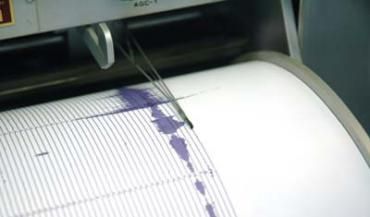
© UnknownThe American geophysics professor said most scientists agree that the island will most likely be exposed to a magnitude 7 or 7.5 quake.
Authorities in Jamaica have been urged by an American seismic expert to start long-term efforts to prepare for another major earthquake to impact the island.

The advice came from geophysics professor Eric Calais of Purdue University, who urged the country's government and various stakeholders to understand that the threat is very real based on the area's history and active seismic activity.

Professor Calais, who visited the island as part of a mission with the United Nations Development Programme (UNDP), said most scientists agree that Jamaica will most likely be exposed to an earthquake with a magnitude of 7 or 7.5 on the Richter scale.

An earthquake of magnitude 7 on the Richter scale is considered "major" and is capable of widespread destruction.

Windsock

Rare tornado touches down in Florida Keys

Florida tornado
© National Weather ServiceThis cistern, which had nearly 200 gallons of water, slid just over 15 yards, knocking the camping trailer off its front mount.
The waterspout that made landfall early Friday was a rare event for the Florida Keys, a NWS senior meteorologist says

A small tornado with gusts between 75-80 mph sent a dock with four kayaks airborne on Big Pine Key early Friday, the National Weather Service said Saturday.

A strong thunderstorm produced a waterspout - essentially a tornado over water - that was backlit by frequent lightning as it approached the Long Beach Estates community from the west-southwest. It moved ashore along the ocean side of Long Beach Drive, on the extreme southern part of Big Pine Key, the National Weather Service said.

The waterspout made landfall and became a tornado at about 3:10 a.m. Friday, which is a rare event for the Florida Keys, said Bill South, a senior meteorologist in the National Weather Service's Key West office.

"It's fairly uncommon. We might have one landfalling waterspout every 10 years or so," he said.

Bizarro Earth

Constant seismic activity near Grímsey island, north Iceland

Grímsey
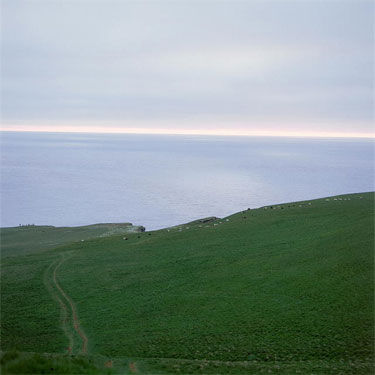
© Páll Stefánsson/Iceland Review.Grímsey
There has been continuous seismic activity in North Iceland since a 5.5 earthquake hit near Grímsey island on April 2. After a quiet afternoon and evening yesterday, the activity picked up again last night following two earthquakes 15 kilometers northeast of Grímsey.

Last night's earthquakes measured 3.4 and 3.6 and hit around midnight. Both of them could clearly be felt by the island's inhabitants, where the earth has trembled for five days now. The seismic activity is currently highest to the northwest of the epicenter of the 5.5 earthquake, ruv.is reports.

Better Earth

Buenos Aires flooding causes severe disruption

Cleanup and rescue operations begin in Buenos Aires after torrential rain causes widespread flooding and severe disruption in Argentina's capital. About 167mm of rain hit Buenos Aires, a record in the city for the month of April. Clogged drains are being cleared and emergency services have been using boats to assist people left marooned

Bizarro Earth

Florida sinkhole footage released by officials

Officials in Hillsborough county, Florida, have released footage showing a giant cavity under a house caused by a sinkhole which engulfed a man as he slept. Jeff Bush, 36, is missing and presumed dead. Neighbours have been asked to relocate after tests revealed a chance of more sinkhole activity

Bizarro Earth

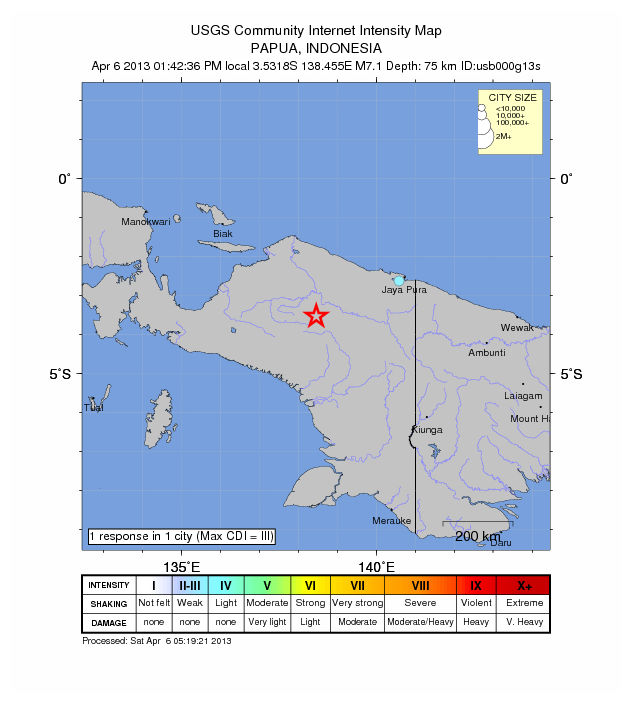
USGS: Earthquake Magnitude 7.1 - E of Enarotali, Indonesia

Indon Quake_060413
© USGS
Event Time
2013-04-06 04:42:36 UTC
2013-04-06 13:42:36 UTC+09:00 at epicenter

Location

3.532°S 138.455°E depth=75.1km (46.7mi)

Nearby Cities
237km (147mi) E of Enarotali, Indonesia
256km (159mi) WSW of Abepura, Indonesia
272km (169mi) WSW of Jayapura, Indonesia
330km (205mi) E of Nabire, Indonesia
1165km (724mi) WNW of Port Moresby, Papua New Guinea

Technical Details