Earth ChangesS


Cow

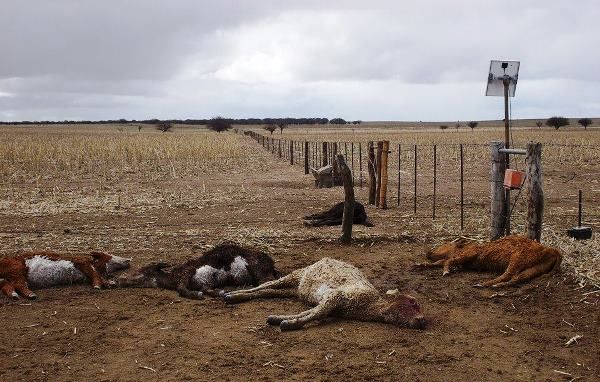
Argentina - 2,200 cattle die in snowstorm

Image
Cows, calves and bulls dead after the snowstorm.

In Bernasconi, General Acha, Ataliva Rock, Quehué, Colonia Santa Maria and Unanue appeared cows, calves and bulls dead after the snowstorm.

The mayor of Bernasconi, Jorge Riera, said about 200 animals were killed in department Hucal while in Utracán department, two thousand cattle were killed. (Journal Textual)

"This came from several months of poor nutrition due to lack of pasture and the cold and snow gave the coup de grace. Government aid was little, almost nothing," said producers.

Includes photo of dead cattle:
http://www.maracodigital.net/?PAG=Vernota&idcontenido=61269

Thanks to Argiris Diamantis for this link

Bizarro Earth

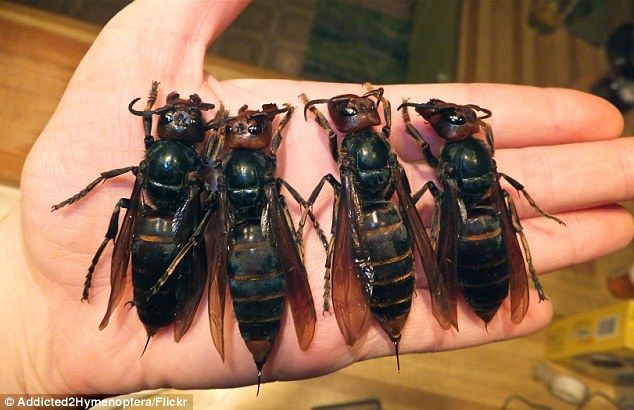
Deadly giant hornets kill 42 people in China, injure 1500

giant hornets
Swarms of deadly hornets have killed more than 40 people and injured more than 1,600 in northern China
Hornets have killed dozens of people in China and injured more than 1,500 with their powerful venomous sting.

The Asian giant hornet, known scientifically as Vespa mandarinia, carries a venom that destroys red blood cells, which can result in kidney failure and death, said Justin O. Schmidt, an entomologist at the Southwest Biological Institute in Tucson, Arizona.

But perhaps a bigger problem than the toxicity of the venom is allergy, Schmidt says. Some people are naturally more allergic to stinging insects than others; a sting can trigger a deadly anaphylactic reaction, which may involve airway closure or cardiac arrest.

Since July, hornet attacks have killed 42 people and injured 1,675 people in three cities in Shaanxi province, according to the local government. Among those attacked, 206 are receiving treatment in hospitals.


Snowman

Scientists to IPCC: YES, solar quiet spells like the one now looming CAN mean ICE AGES

Quiet Sun
© NASA
There's been criticism for the Intergovernmental Panel on Climate Change (IPCC) over its latest AR5 report from many quarters for many reasons. But today there's new research focusing on one particular aspect of that criticism.

The particular part of the IPCC's science in question is its accounting for the effects of changes in the Sun on the climate of planet Earth. Many climatologists have long sought to suggest that the effects of solar variability are minor, certainly when compared to those of human-driven CO2 emissions. Others, however, while admitting that the Sun changes only a very little over human timescales, think that it might be an important factor.

This matters because solar physicists think that the Sun is about to enter a "grand minimum", a prolonged period of low activity.

The current 11-year peak in solar action is the weakest seen for a long time, and it may presage a lengthy quiet period. Previously, historical records suggest that such periods have been accompanied by chilly conditions on Earth - perhaps to the point where a coming minimum might counteract or even render irrelevant humanity's carbon emissions. The "Little Ice Age" seen from the 15th to the 19th centuries is often mentioned in this context.

There are certainly plenty of scientists to say, along with the IPCC, that this isn't so. For instance climate physicist Joanna Haigh has this to say, in tinned quotes offered alongside the AR5 release by the UK's Science Media Centre:

Snowflake Cold

Corbett Report: The IPCC exposed again

PlayPlay

The IPCC has released its latest assessment of the state of climate science, and this time it's even more dire than their 2007 assessment. Global warming is "unequivocal" and humans are the "dominant cause" to a certainty of 95%. But how are these uncertainties calculated? And how does the IPCC process work anyway? Join us this week on The Corbett Report as we dissect the latest IPCC hype and examine the organizations processes and conclusions.

Eye 2

SOTT Focus: Snakes alive! Countless reports of snakes turning up in weird places

Image
As a SOTT editor, I like to keep an eye on what's going on in the animal kingdom. The big news in recent years on that score has, of course, been the high number of mass animal deaths. But has anyone else noticed the extraordinary number of stories about snakes in the news lately? I first noticed a spate of snake stories at the beginning of the summer, and over the last couple of months snakes have been turning up in close proximity to people, and in some highly unusual settings, at an alarming rate. There have also been some particularly horrifying reports of attacks and resulting fatalities by escaped pet pythons - on both children and domesticated animals alike.

It seems appropriate that 2013, according to the Chinese zodiac tradition, is the Year of the Snake!

The following is a quick run-down of some incidents worth highlighting, starting in May, which initially show a slow build-up of such stories, leading fairly rapidly to 'spikes' in reports, some of which we've carried on SOTT.

Cloud Precipitation

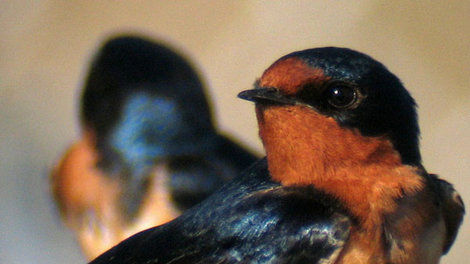
Die-off of thousands of Oregon swallows blamed on weather

Image
© Flickr: K Schneider
Oregon scientists say thousands of swallows died during recent Willamette Valley rains, likely of starvation because the birds feed on insects while flying and they couldn't get out in the weather to feed.

Veterinarians said four days of steady rain and wind helped make September the wettest on record in the Valley. They came at a time when birds would have been feeding in preparation for winter migration to Central and South America.

The Department of Fish and Wildlife says it got calls about dead and dying birds from residents ranging from the Port of Saint Helens on the Columbia River to Junction City north of Eugene.

Groups of 10 to 200 barn and violet-green swallows were reported dead or dying in barns and other structures where they perch.

Source: Associated Press

Propaganda

Climate craziness of the week: Climate boiling point

From the James Hansen said the oceans would boil and the Tabloid Climatology™ department...

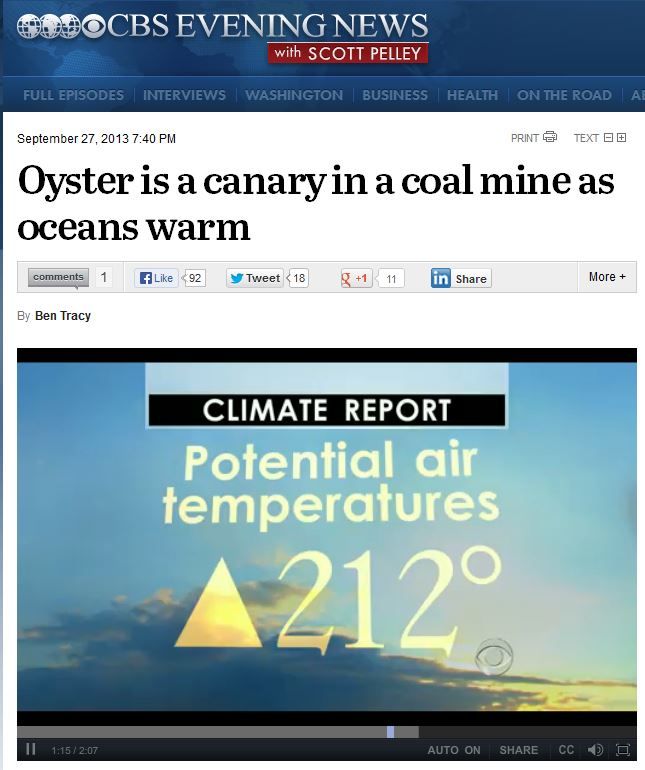
As a long-suffering member of the television news media, some-days, I just want to find the reporter and slap him upside the head and tell him to do some basic science research before making wild claims on national TV. This is one of those days. The graphic below says it all.

Image
From the Business and Media Institute comes this howler from CBS News about the latest IPCC report.
"[CBS] Evening News" took a different tack, airing a story about oyster farming and complaints that climate change is ruining a man's business. But in Ben Tracy's story, which mentioned the IPCC's latest report, he said that oceans have absorbed much of the heat caused by CO2 and that ocean temperatures have risen only slightly. Then he made a claim that Principal Research Scientist Dr. Roy Spencer of the University of Alabama in Huntsville called "totally misleading and irresponsible."
Here's what the reporter said, after telling us most of the heat went into the oceans:
"Had all that heat gone into the atmosphere, air temperatures could have risen by more than 200 degrees [showed 212 degrees onscreen]," Tracy warned.

Snow Globe

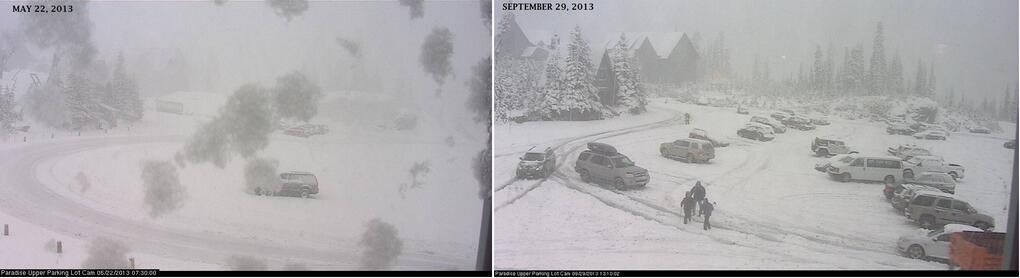
Mt Rainier - Only three months snow-free?

"Interesting there was a snowstorm on May 22nd and then Sept 29th," says reader Ralph Fato. "Four months between snowstorms."
Mt. Rainier snow webcams
© Unknown
"I wonder what the melt gap was?" asks Ralph. "I believe there was still snow there in June which makes it only 3 months being snow free? Something you expect from 10,000 feet up, not 5400′."

See larger image

Comment: According to one commenter there is a lot more snow up there now which can not be viewed as the National Parks service has turned the web cams off.


Snowflake Cold

Romania - Coldest October 1st since 1929 - Snow, blizzards and closed roads

Some claim it was the coldest Oct 1st ever recorded.

Predeal, Azuga and logs show that this was the coldest October 1st in the last 84 years. Plus yellow code for snow in 5 Counties.

After snowfalls in recent days, dozens of trees were broken under the weight of snow and blocked the lines. With the Brasov to Bucharest train delayed more than 10 hours, all those who had the misfortune to start the trip by rail have cursed the day.

Problems between Brasov and Predeal railway began last night when, under the weight of snow, trees collapsed the power lines. Seven trains remained stuck for hours in stations or on the trail.

In total, 13 trains linking the south of Transylvania froze, to the dismay of travelers .

Five roads also closed by snow.

Info

Jellyfish 'invasion' causes Swedish nuclear shutdown

Image
File picture for illustration shows mauve stinger jellyfishes in a bucket on an Oceanological Observatory boat in the southeastern French city of Villefranche-sur-Mer, on July 6, 2012
A Swedish nuclear reactor was restarted on Wednesday following a three-day closure caused by a build-up of jellyfish in a cooling system, according to the operators.

The incident occurred in reactor 3 at Oskarshamn power station on the Baltic Sea coast, which is run by OKG, a subsidiary of the German electricity company EON.

"It was a larger amount than we had ever seen. Every autumn we have to get rid of jellyfish, but not that many," OKG spokeswoman Emmy Davidsson told AFP.

The company announced on Sunday that the reactor -- Sweden's largest with a 1400 MW output and the world's largest boiling water reactor -- was "manually shut down due to a large amount of jellyfish present at the cooling water intake".