Earth ChangesS


Nuke

Four tons of radioactive water spilled in accident at Fukushima nuclear plant

Fukushima nuclear plant
© Agence France-PresseJapanese Prime Minister Shinzo Abe (second right) is briefed during his tour to the tsunami-crippled Fukushima nuclear plant in Okuma, northeastern Japan on Sept. 19, 2013.

The operator of the crippled Fukushima nuclear plant said Tuesday workers had spilled four tonnes of radioactive water, likely contaminating the soil and possibly groundwater.

Workers were pumping rain water that was trapped in a concrete gutter into an empty 12-tonne tank that sat on open soil, said a spokesman for Tokyo Electric Power (TEPCO).

"Work crew started operating the pump around 10:38 am. At 11:50 am, they found water was spilling from the manhole on top of the tank," the spokesman said.

TEPCO has estimated roughly four tonnes of collected rain water might have escaped. The extent of contamination was unclear, the spokesman added, although it was not thought to be highly polluted.

"The water itself was rain water. But it was from the Fukushima Daiichi nuclear plant and could contain radioactive materials," he said, adding: "The water seeped into the ground".

TEPCO has long struggled to control waste water at the plant. The company poured thousands of tonnes of water onto runaway reactors to keep them cool, and continues to douse them.

TEPCO has so far disclosed no clear plan for disposing of the huge amounts of stored polluted water, which is stored at hundreds of tanks at the plant. Some tanks have leaked highly radioactive waste water, which might have washed to sea.

Source: Agence France-Presse

Sheeple

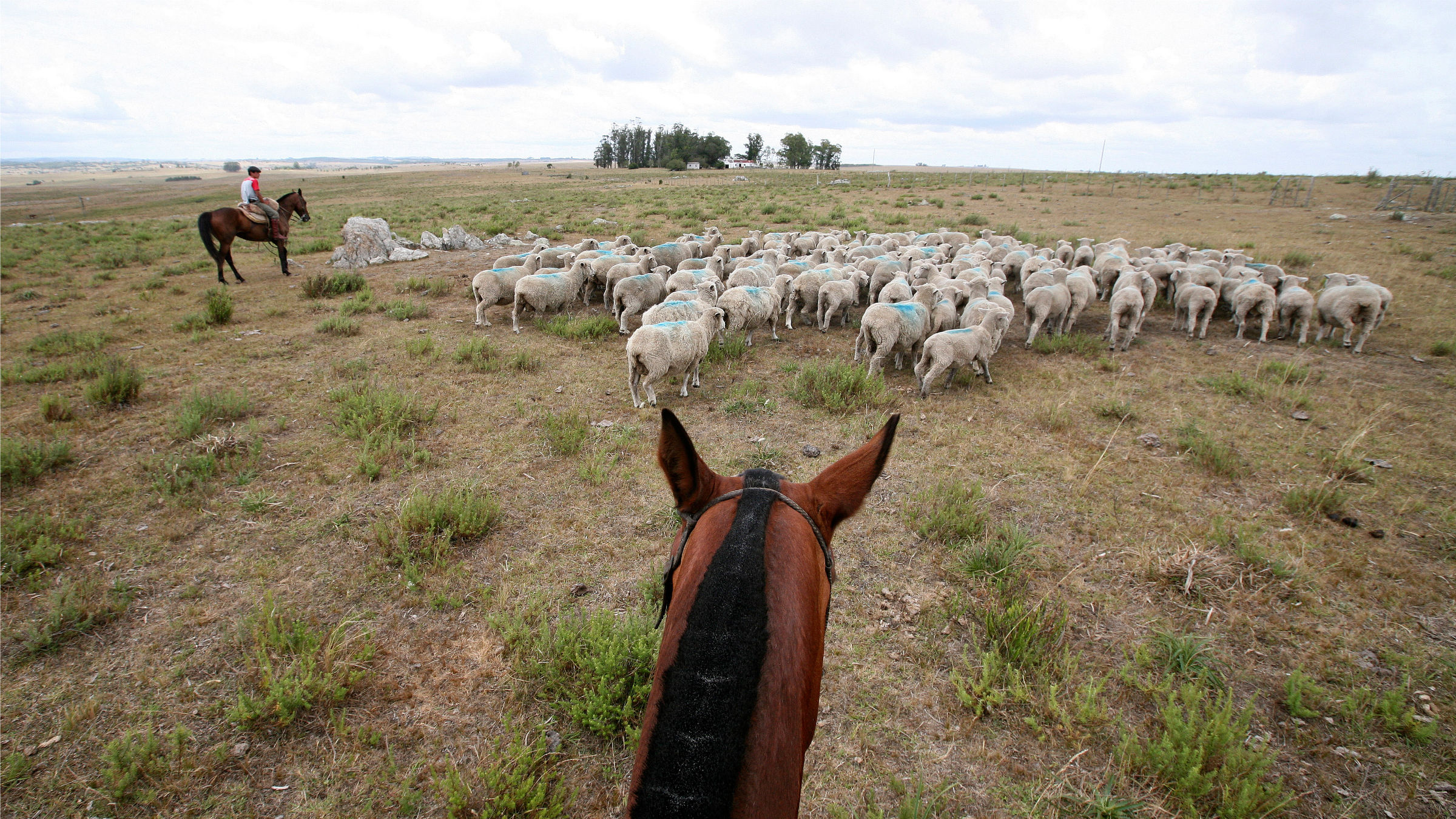
Unprecedented spring storm kills 30,000 sheep in Uruguay

Image
© Reuters/Andres StapffIn better times
A storm carried heavy rainfall, lethal winds and drastic temperature swings into Uruguay last weekend. In the course of the three days that it lasted, the storm managed to take the lives of more than 30,000 of the country's sheep.

The storm, which was particularly damaging for the country's north and northwest regions, where much of Uruguay's sheep and ewes are raised, was unlike anything most of the country's northern residents had ever experienced. "I have never seen anything like it, and the people who have spent years working in the countryside haven't either - not even their parents or grandparents have told them stories like these," Walter Galliazzi, a farmer in Salto in the country's northwest told local newspaper El País The combination of near-freezing temperatures, some eight inches of daily rainfall and powerful winds was too much for the sheep, many of which had recently been shaven.

Comment: According to this report, the temperature in the area dropped from 38 C to -10 C in a matter of a few minutes.


Bizarro Earth

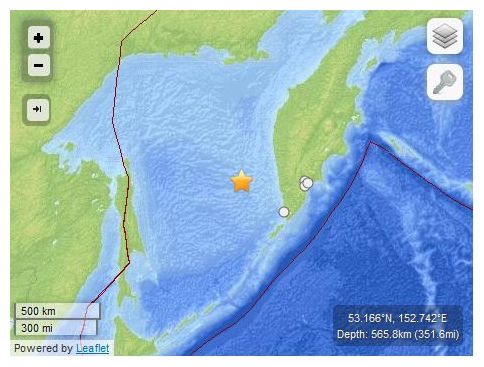
USGS: Earthquake Magnitude 6.7 - Sea of Okhotsk

Okhotsk Quake_011013
© USGS
Event Time
2013-10-01 03:38:21 UTC
2013-10-01 13:38:21 UTC+10:00 at epicenter

Location
53.166°N 152.742°E depth=565.8km (351.5mi)

Nearby Cities
317km (197mi) NW of Ozernovskiy, Russia
376km (234mi) W of Yelizovo, Russia
380km (236mi) W of Vilyuchinsk, Russia
395km (245mi) W of Petropavlovsk-Kamchatskiy, Russia
2194km (1363mi) NNE of Tokyo, Japan

Technical Details

Igloo

Dire climate warnings not happening

Climate Change
© Heartland Org
The United Nations-sponsored International Panel on Climate Change is about to release its 2013 report, but details already are leaking out. Apparently, there are admissions that the dire global warming predictions from the IPCC 2007 report of rising sea levels, more frequent and severe hurricanes and vanishing sea ice - all caused by human activity - are not happening.

Not allowing facts to get in the way of its agenda, the Obama EPA just released its new power plant regulations, which will effectively end the use of coal in new power plants and force consumers to pay higher electricity rates, predicated on coal's contribution to climate change. But that conclusion is now almost impossible for any honest person to reach.

There is no dispute that CO2 levels are rising in the atmosphere. But science proves that CO2 levels - which make up only 0.04 percent of the atmosphere - are not the cause of warming or of other changes in the climate. Natural cycles driven largely by the sun and complex systems of forcings and feedbacks account for such changes.

But as Dick Armey once said, "Conservatives believe it when they see it; liberals see it when they believe it." Consistent with this axiom, climate change alarmists, who believe that humans are destroying the Earth and its atmosphere, cannot suspend their belief even as the peer-reviewed science to the contrary mounts.

Red Flag

Flashback Poll: 3 in 8 Americans believe global warming a hoax

Image
Roughly three of every eight registered voters in the U.S. believes that "global warming is a hoax," according to a national poll released Tuesday by the firm Public Policy Polling (PPP).

The automated telephone poll asked 1,247 American registered voters their beliefs on a wide range of topics broadly categorized as "conspiracy theories" in the firm's press release.

When asked, "Do you believe global warming is a hoax, or not?" 37% of Americans said they do, while 51% said they do not. Twelve percent of those surveyed were not sure.

Dr. Jeff Masters, co-founder and director of meteorology at Weather Underground, isn't hedging his bets:

"So, who is more likely to be correct -- the 97% of all publishing climate scientists, who view the evidence as showing that humans are primarily responsible for global warming? Or the 37% of the public who view global warming as a hoax, who have been subject to a massive PR campaign by the richest industry in human history, to make them believe just that? I'll go with the 97% of climate scientists."

Control Panel

Sorry IPCC - How you portrayed the global temperature plateau is comical at best

global warming fraud
© Unknown
The IPCC released their "approved" Summary for Policymakers for their 5th Assessment Report early this morning (eastern U.S. time), still in draft form. As far as I can tell, there are two paragraphs that discuss the recent global temperature plateau.

Note: I haven't yet crosschecked between the draft and the approved versions to see if they've made any significant changes, so the following may be old hat.

From page 3:
In addition to robust multi-decadal warming, global mean surface temperature exhibits substantial decadal and interannual variability (see Figure SPM.1). Due to natural variability, trends based on short records are very sensitive to the beginning and end dates and do not in general reflect long-term climate trends. As one example, the rate of warming over the past 15 years (1998 - 2012; 0.05 [ - 0.05 to +0.15] °C per decade), which begins with a strong El Niño, is smaller than the rate calculated since 1951 (1951 - 2012; 0.12 [0.08 to 0.14] °C per decade).
And from page 12:
The observed reduction in surface warming trend over the period 1998 - 2012 as compared to the period 1951 - 2012, is due in roughly equal measure to a reduced trend in radiative forcing and a cooling contribution from internal variability, which includes a possible redistribution of heat within the ocean (medium confidence). The reduced trend in radiative forcing is primarily due to volcanic eruptions and the timing of the downward phase of the 11-year solar cycle. However, there is low confidence in quantifying the role of changes in radiative forcing in causing the reduced warming trend. There is medium confidence that internal decadal variability causes to a substantial degree the difference between observations and the simulations; the latter are not expected to reproduce the timing of internal variability. There may also be a contribution from forcing inadequacies and, in some models, an overestimate of the response to increasing greenhouse gas and other anthropogenic forcing (dominated by the effects of aerosols). {9.4, Box 9.2, 10.3, Box 10.2, 11.3}
Regarding the cause of the warming, still living in fantasy world, they write:
Greenhouse gases contributed a global mean surface warming likely to be in the range of 0.5°C to 1.3°C over the period 1951−2010, with the contributions from other anthropogenic forcings, including the cooling effect of aerosols, likely to be in the range of −0.6°C to 0.1°C. The contribution from natural forcings is likely to be in the range of −0.1°C to 0.1°C, and from internal variability is likely to be in the range of −0.1°C to 0.1°C. Together these assessed contributions are consistent with the observed warming of approximately 0.6°C to 0.7°C over this period. {10.3}
They're still misleading the public. Everyone knows (well, many of us know) their models can't simulate the natural processes that cause surface temperatures to warm over multidecadal timeframes, yet they insist on continuing this myth.

Comment: From 'Hiding the Decline' to 'Burying the Pause': Man-made Global Warming is still a lie


Attention

Tree-killer fungus 'impossible to stop' found in 500 areas in Britain

Ash dieback infeected tree
© AlamyAsh dieback is still decimating the countryside, and threatening healthy trees like his one, almost a year after it first struck in Britain
Tree-killer fungus 'impossible to stop' as it sweeps Britain with ash dieback disease found in 500 areas a year after first outbreak
  • Disease out of control in the East and South East of England
  • Somerset confirmed as the 15th English county with the fungal disease
  • Outbreaks in Wales, Scotland and Northern Ireland
  • Of infected sites in Britain, more than half linked to imported ash trees
Tree disease ash dieback is still decimating the countryside almost a year after it first struck in Britain.

The deadly fungus, which is rife across mainland Europe, is now out of control in the East and South East of England and there have been outbreaks in Wales, Scotland and Northern Ireland.

Somerset was confirmed as the 15th English county with the fungal disease after staff on the National Trust's Holnicote Estate near Minehead discovered blighted leaves on a handful of ash trees this month.

The latest official figures reveal there are 571 infected sites in Britain, with 334 linked to imported ash trees, 213 in the wider environment and 24 in nurseries.

But the actual figure could be higher because as the disease has taken hold, there has been less urgency to report new cases.

Forestry Commission staff are now conducting a new survey of woodlands in the East and South East of England to gain a clearer picture of the how disease has spread in the wild.

Infected trees are no longer being felled, in the hope of finding mature trees that are resistant to the disease, which is known as Chalara fraxinea.

Dominoes

95 per cent of intelligent people know the new IPCC report is utter drivel

Image
Well, of course they are. If there is one overriding prerequisite of every new IPCC Assessment report, it's to sound even more scary and urgent and certain than its predecessor.

Professor Bob Carter noted this progression in his excellent book Climate: the Counter Consensus:
First Assessment Report (1990) - "The observed [twentieth century] temperature increase could be largely due...to natural variability."

Second Assessment Report (1996) - "The balance of the evidence suggests a discernible human influence on climate."

Third Assessment Report (2001) - "There is new and stronger evidence that most of the warming observed over the last fifty years is attributable to human activities."

Fourth Assessment Report (2007) - "Most of the observed increase in globally averaged temperature since the mid-twentieth century is very likely [= 90 per cent probable] due to the observed increase in anthropogenic greenhouse gas concentrations."

Magnify

Global warming believers are feeling the heat

Image
On Friday the Intergovernmental Panel on Climate Change delivers its latest verdict on the state of man-made global warming. Though the details are a secret, one thing is clear: the version of events you will see and hear in much of the media, especially from partis pris organisations like the BBC, will be the opposite of what the IPCC's Fifth Assessment Report actually says.

Already we have had a taste of the nonsense to come: a pre-announcement to the effect that "climate scientists" are now "95 per cent certain" that humans are to blame for climate change; an evidence-free declaration by the economist who wrote the discredited Stern Report that the computer models cited by the IPCC "substantially underestimate" the scale of the problem; a statement by the panel's chairman, Dr Rajendra Pachauri, that "the scientific evidence of... climate change has strengthened year after year".

As an exercise in bravura spin, these claims are up there with Churchill's attempts to reinvent the British Expeditionary Force's humiliating retreat from Dunkirk as a victory. In truth, though, the new report offers scant consolation to those many alarmists whose careers depend on talking up the threat. It says not that they are winning the war to persuade the world of the case for catastrophic anthropogenic climate change - but that the battle is all but lost.

Cloud Lightning

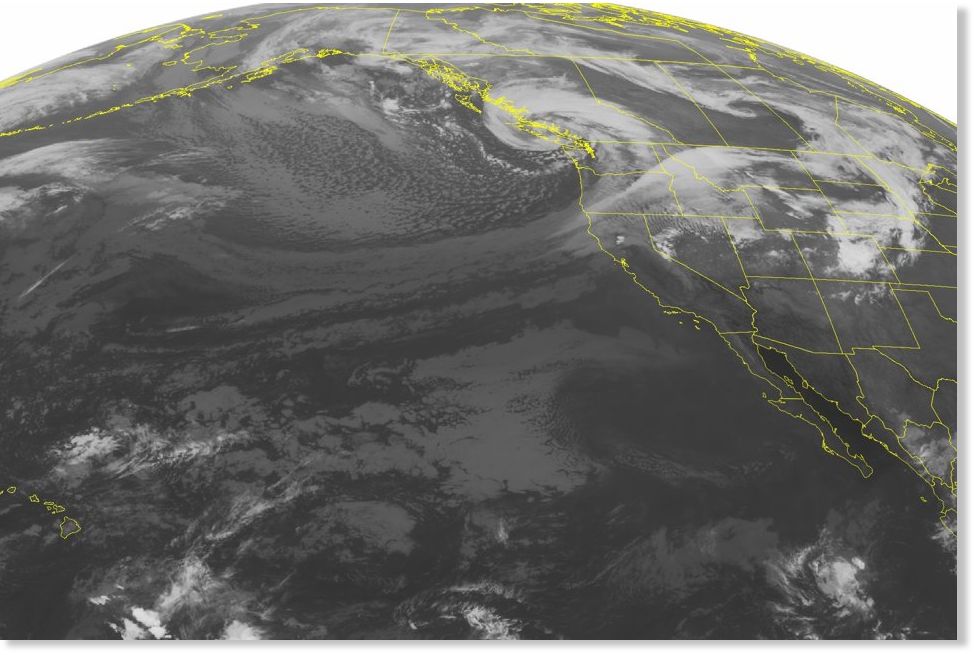
Storm knocks out power, swamps U.S. Pacific Northwest - more rain in a day or two than typically falls in the entire month

Image
This NOAA satellite image taken Monday, Sept. 30, 2013, at 02:00 AM EDT shows an expansive area of cloudine
An early winter storm dumped a record amount of rain in the Pacific Northwest, knocked out power to thousands and likely churned up a rare tornado Monday that ripped a hole in the roof on an industrial plant near Seattle. The most dramatic damage was at an industrial park in Frederickson, south of Tacoma. As thunder and lightning flashed, the wind uprooted trees and tore a jagged hole in the roof of the Northwest Door manufacturing plant.

"It looked from the inside like a wave going along. You could actually see the roof flexing," Northwest Door President Jeff Hohman said. Witnesses reported seeing a tornado in the area at the time, and the Weather Service sent a team to Frederickson to investigate. Washington may get a tornado or two every year, but they are usually small. One of the largest was an F3 in 1972 in Vancouver that killed six people.

No one was injured in Monday. About 100 employees evacuated and the business closed while inspectors assess a 40-by-40-foot hole in the roof. The wind also caused damage at a nearby Boeing plant, mostly in the parking lot, spokesman Doug Alder said. The storm blew out the windows of about two dozen cars and knocked down fences, power lines and trees. Some tiles were blown off the Boeing roof. Nobody was injured and there wasn't any damage to airplane parts or equipment.