Earth ChangesS


Snowflake

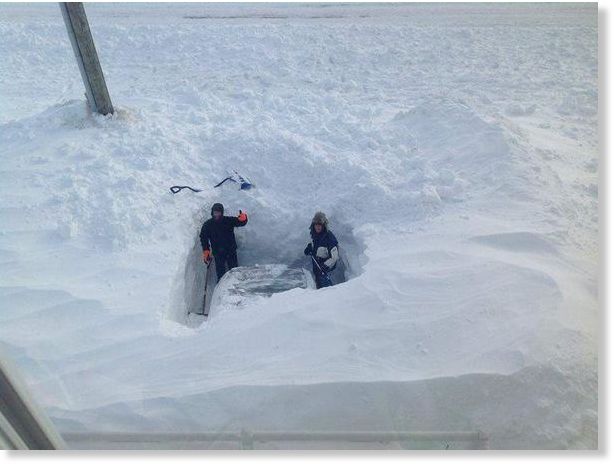
Monster snowfall completely buries cars and streets on Prince Edward Island, Canada

Image
© Kathryn Reed-GarrettSummerside PEI
OMGosh!!!! - this is Summerside PEI this morning!! photo from CBC New Brunswick pic.twitter.com/MwpUuy2h57
Snow always makes driving more difficult, but in Prince Edward Island, so much of it has fallen many people can't even find their cars.

A winter storm has dropped almost a metre of snow in the past few days, and it's often hard to see where the road ends and the ditch begins. On some rural roads, snowbanks are piled three times higher than the people standing next to them.

The Journal Pioneer reported that some residents dug an eight-metre-long tunnel to try to find their car under white stuff piled two storeys high. The island itself is nearly invisible when viewed from space, as satellite images show.

Attention

Boar kills woman in Kerala, India

Image
Wild boar.
A woman has died after being attacked by a boar at Kubdaje near Badiadka.

The deceased person is Ayesha (55), wife of late Abdul Rahiman.

As per reports, at around 7.30 am on Tuesday, February 13, Ayesha was attacked by a boar when she ventured out from her house. When she reached the front side of the house, the boar jumped into her. Mohammed, her son managed to chase the boar.

Ayesha was given first aid in the Badiyadka hospital and was immediately rushed to a hospital in Mangaluru. But she breathed her last on the way due to grave injuries inflicted on her.

The boar which went to a nearby shed later belonging to Prakash also attacked a buffalo there. The baffalo sustained deep injuries on its shoulder. When villagers came to the shed, the boar ran into the nearesr forest.

Wild boar presence in the locality has created problems for the villagers who cannot move out freely these days.

Cloud Lightning

Double cyclones to strike Northeastern Australia

queensland cyclones
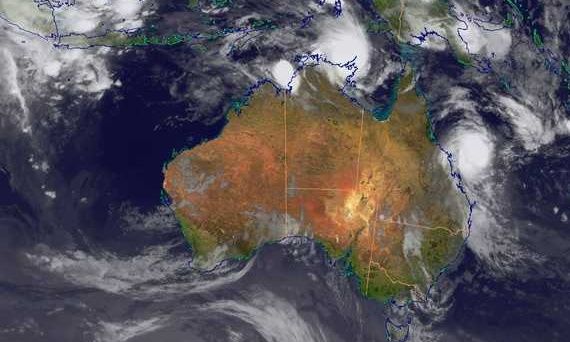
© Australian Government Bureau of Meteorology/courtesy of Japan Meteorological Agency A Bureau of Meteorology map on Thursday morning. Parts of Northern Territory and Queensland are preparing for the approach of tropical cyclones Lam and Marcia.
Two cyclones bearing down on northeastern Australia dramatically intensified on Thursday as emergency officials warned residents to take shelter on higher ground ahead of torrential rain and flooding, destructive winds and massive seas.

Cyclone Marcia is predicted to intensify to a category 4 system --- the second highest rating - as it crosses the northeast Queensland coast on Friday morning with destructive winds up to 270 kmh (170 mph) expected near the core of the system, according to the Australian Bureau of Meteorology.

"This very dangerous cyclone is now at category four intensity and continuing to intensify extremely rapidly," the weather bureau's latest tropical cyclone advice said.

Meteorologists also expect Cyclone Lam, with winds near the center of 140 kph (85 mph) and gusts up to 195 kph (120 mph), is forecast to make landfall in the remote Northern Territory late Thursday or early Friday.

Ice Cube

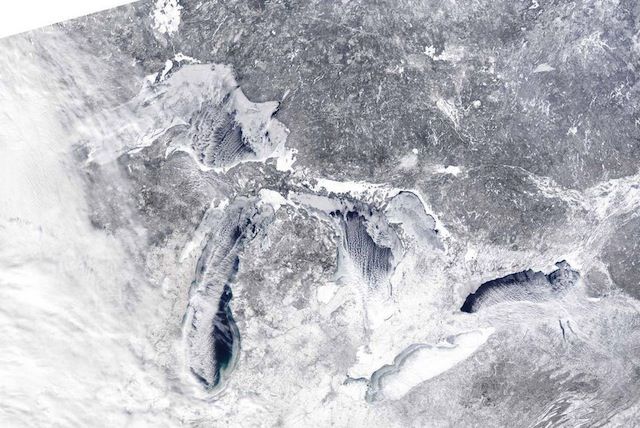
4 of 5 Great Lakes about to be frozen over

Image
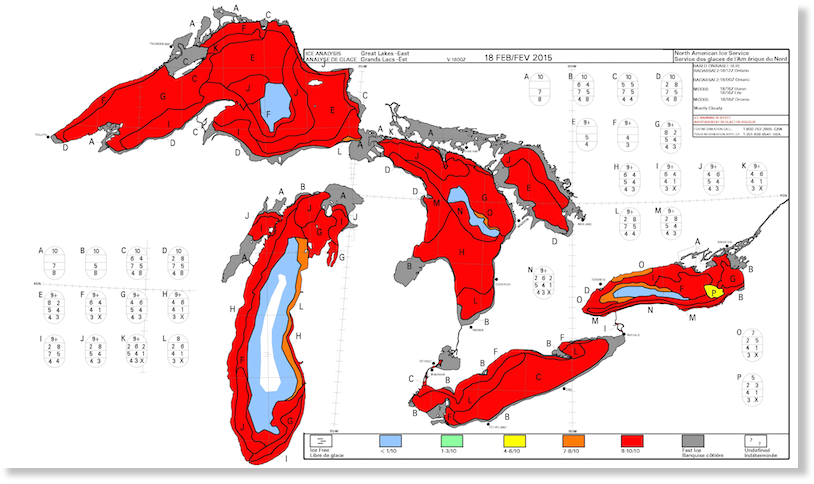
Composite image of the East and West NATICE products for the Great Lakes, see links below for originals
Corky Boyd writes:

The latest NATICE graphics show Lake Erie totally covered with 9/10+ ice, Lakes Superior and Huron are nearly totally covered with 9/10+ and Ontario about 80% covered with 7/10+. It is likely Superior and Huron will join Erie with total coverage of 9/10+ in today or tomorrow's report.

It is possible Ontario could do the same as it is experiencing near or sub-zero temperatures tonight.

The NATICE daily reports are posted about 5:00pm EST. Link is here:

http://www.natice.noaa.gov/products/great_lakes.html

If you have trouble pulling up the ice charts, here are direct links to the West and East areas for Feb. 18:

http://www.natice.noaa.gov/pub/special/great_lakes/2015/charts/composite_east/el150218color.jpg
http://www.natice.noaa.gov/pub/special/great_lakes/2015/charts/composite_west/wl150218color.jpg

It is an unusual event for 3 of the lakes to freeze over, which only happens once every 6 to 8 years. Four or more freezing is a most unusual event.

See high resolution image here

Comment: It sure isn't getting any 'warmer' is it? Read the book Earth Changes and the Human Cosmic Connection to learn more about this topic. The New Ice Age might be just around the corner:


Wolf

Eight-year-old boy attacked by pack of dogs in Baheri, India

Image
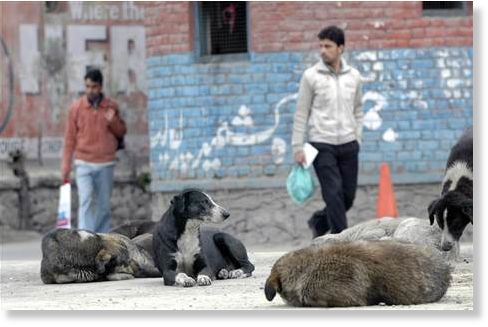
Feral dogs in India
After a brief lull, another child has been attacked by a pack of stray dogs while he was on his way home from a rice mill in Rurki village of Baheri district on Tuesday evening.

According to reports, the pack mauled the eight-year-old boy and dragged him towards a sugarcane field. However, a few passersby heard his cries for help and rushed to his aid. The mill workers, armed with bamboo sticks, hit the dogs and shooed them away.

The minor sustained serious injuries on his neck, head, legs and arms. He was admitted to a community health centre (CHC) in Baheri but was later referred to district hospital where he is currently undergoing treatment.

Starting from January 15, pack of stray dogs have killed four children and seriously injured more than ten to date.

Comment: See also:

Feral dogs kill 5-yr-old in Bareilly, India: Third fatality in a month of 10 attacks

Pack of stray dogs maul 17-month-old boy outside his house in Bangalore, India

Indore reports at least 50 dog bite cases daily, India


Bizarro Earth

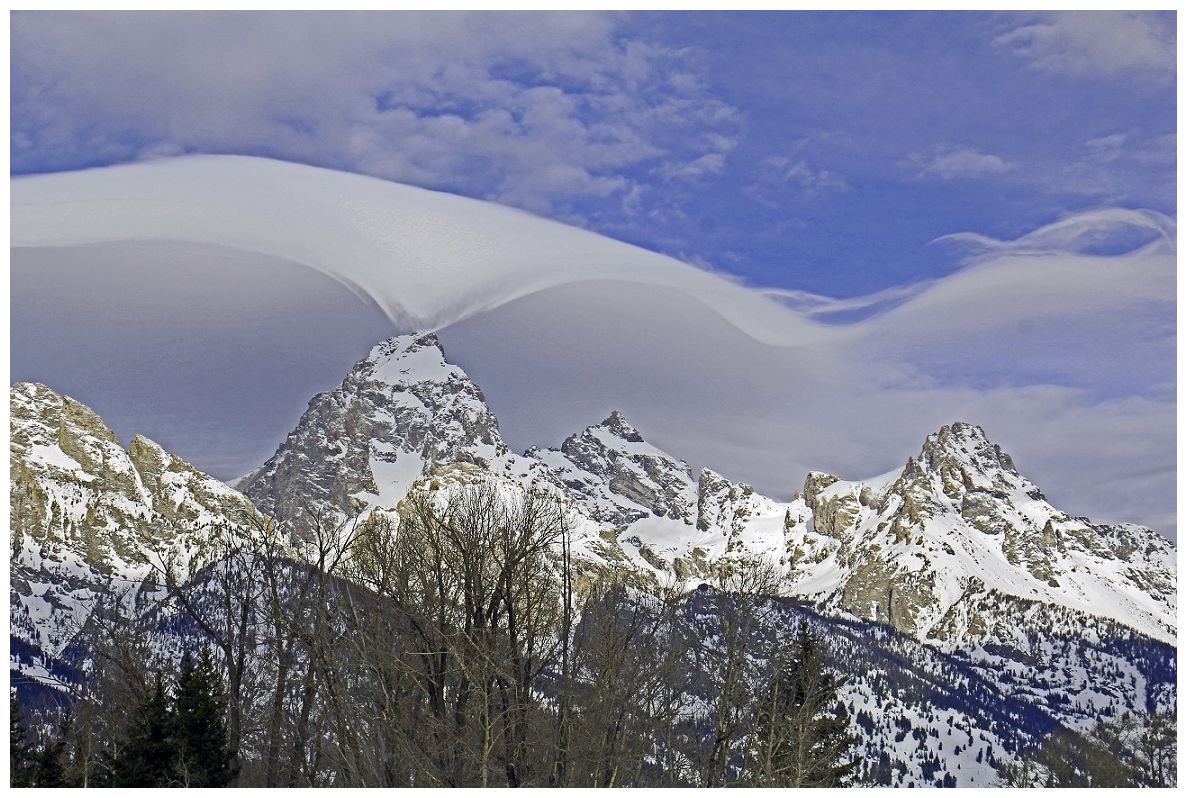
Mysterious, wavelike cloud hugs Wyoming mountains

Lenticular cloud
© Jackie SkaggsJackie Skaggs snapped this stunning photo of a lenticular cloud embracing the summit of the Grand Teton Range from the park's headquarters in Moose, Wyoming, on Feb. 12, 2015.
A bizarre sheet of clouds embraced the highest peak in Grand Teton National Park in Wyoming last week, enchanting even the park's most seasoned visitors.

The clouds looked like a billowing handkerchief or an ocean's wave crashing into the mountain. The clouds were so strange they even surprised park spokeswoman Jackie Skaggs.

"I've lived here for almost 40 years, and honestly, I've never seen something last that long and take so many different shapes," Skaggs told Live Science.

Cloud Lightning

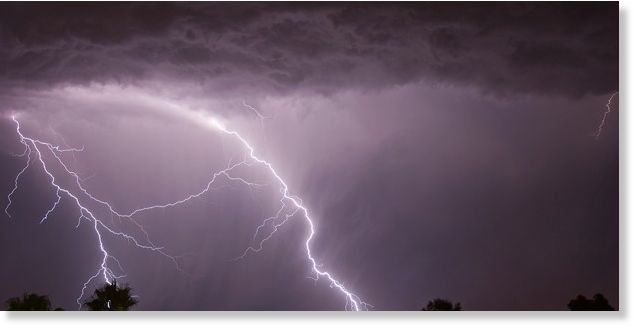
Lightning bolt kills 3 in Nepalese village near Everest

Image
At least three people were killed after a lightning struck a mountain village of Waku, located in northeast Nepal to the south of Mount Everest, according to local officials.

Every year scores are killed in lightning-related incidents in the country. In 2012, lightning strikes claimed 130 lives in Nepal, a record for the nation, Yale Scientific Magazine said.

Binoculars

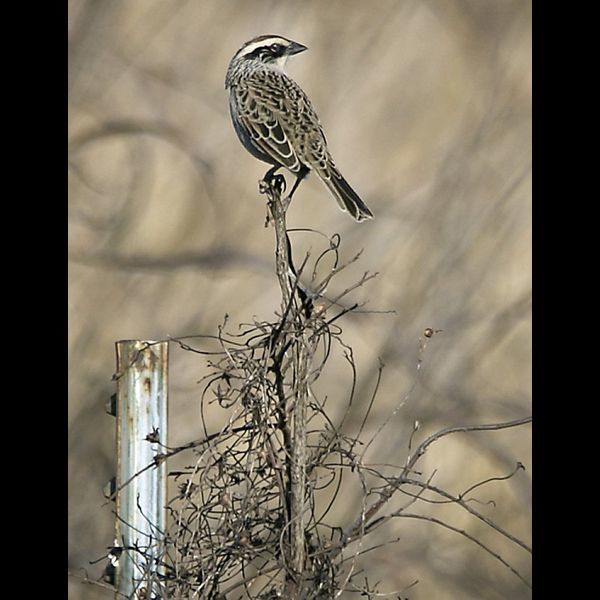
Striped sparrow resident in Mexico turns up 700 miles from home for the first time in the US

Image
© Austin American-StatemanThe striped sparrow has been seen mixed in with a variety of other small birds feeding on crushed pecans and other food resources, with plenty of water nearby from a Williamson County creek.
Richard Kostecke stood on the side of a Williamson County road for more than two hours peering on and off through a telescope. Then he quietly said, "I've got it."

Right in the middle of his lens was a bird never before seen in the wild in the United States.

The striped sparrow, recognizable by a black mask-like stripe on its head, was perched on a shrub 200 feet away on a sunny February afternoon. It was 700 miles away from its home in the western mountain ranges of Mexico, said Kostecke, the associate director of conservation for the Nature Conservancy in Texas.

Snowflake Cold

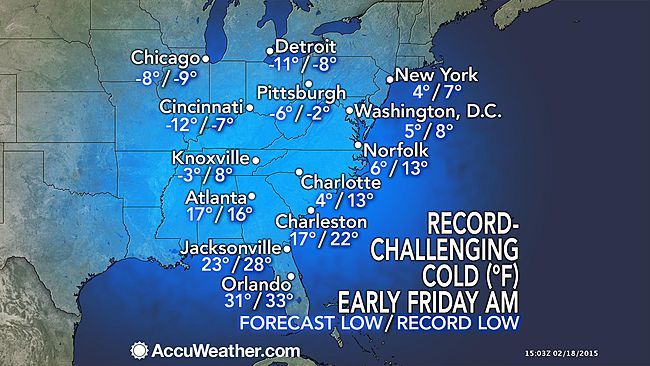
Arctic chill to bring coldest U.S. temperatures since late-1800s in East; record cold in Midwest, South

Image
Old Man Winter will be unrelenting across the Midwest and Northeast this week as yet another blast of arctic air rolls in and spreads deep into the South.

This next push of arctic air is expected to bring air that is just as cold, or even colder than the air that brought subzero lows to the Midwest and Northeast during the weekend.

Millions will shiver from Chicago to New York City as record lows are challenged during this bitter blast. Records may also fall across parts of the South where temperatures manage to fall into the teens and single digits.

Some southern cities forecast to dip into the teens or lower include Birmingham, Alabama; Charlotte, North Carolina; Columbia, South Carolina; Nashville and Atlanta.

Floridians will even experience a taste of the arctic chill with temperatures dipping down to the lower 30s in cities such as Orlando, Melbourne and Daytona Beach.

The worst of the cold is expected to focus over the East for Thursday into Friday.

In the mid-Atlantic, some daily record lows set during the late-1800s will be challenged.

AccuWeather.com RealFeel® temperatures below 0 F will be common across the regions during the daytime hours, including cities along the Interstate 95 corridor. These values can then drop by as much as 20 degrees during the overnight hours, making for a bitterly cold morning commute.

Snow showers are also likely to develop downwind of the Great Lakes late in the week even though the lakes are quickly becoming covered in ice.

Temperatures can be very dangerous, and possibly even life threatening during this arctic outbreak.

Ice Cube

4,750 square miles of Great Lakes freezes overnight; total ice cover 82%

Image
© NOAAGreat Lakes ice cover continues to grow rapidly, now surpassing the amount of ice at this time last year.
The recent arctic blasts have caused the ice cover on the Great Lakes to increase rapidly. As of Tuesday, Feb. 17, the amount of ice on the Great Lakes is more than the same date last year.

The total ice cover on the Great Lakes is now rated at 82.3 percent as of Tuesday. On the same date last year, the Great Lakes had 81.6 percent total ice cover.

The Great Lakes ice cover has grown over 5 percent in the past 24 hours. That's about 4,750 square miles of ice overnight. At that pace of ice growth, the Great Lakes would be almost totally iced over in the next four days.

The blast of arctic cold tonight through Friday will certainly help ice continue to grow.

The cold will come with a 10 mph to 20 mph wind, which could temporarily break up and reduce some ice. But the light wind days in the next 10 days also look very cold.

So it's going to be very interesting to watch the ice expand in the next few weeks.

From the bitter cold weather I'm expecting to head our way, combined with several days of light winds, I think we will surpass last year's total ice cover on the Great Lakes. In fact, I'm wondering if we could see the Great Lakes almost totally ice up by the end of February.

Comment: It sure isn't getting any 'warmer' is it? Read the book Earth Changes and the Human Cosmic Connection to learn more about this topic. The New Ice Age might be just around the corner: