A rare weather phenomenon known as "fire rainbow" was spotted over Saint John from several people in the region.
Peter Coade, a CBC meteorologist, said fire rainbow is a rare phenomenon that is formally known as circumhorizontal arc.
Coade said the colourful cloud formation requires very specific conditions to be in place.
"When the sun is very high in the sky, sunlight entering flat, hexagon shaped ice crystals gets split into individual colours just like in a prism," he said.
"The conditions required are very precise - the sun has to be at an elevation of 58° or greater, there must be high altitude cirrus clouds with plate-shaped ice crystals and sunlight has to enter the ice crystals at a specific angle."
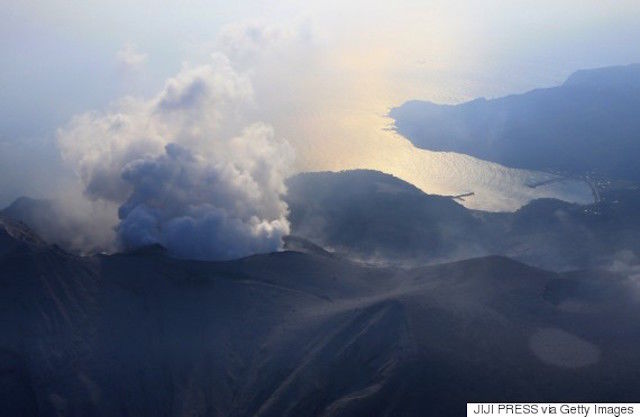
Mount Shindake rumbled back to life Thursday as a second eruption rocked Kuchinoerabu Island off Kagoshima Prefecture shortly past noon, the Meteorological Agency said.
The scale of the volcano's first eruption in 20 days was smaller than its May 29 blast but apparently took from 12:17 p.m. to around 12:47 p.m. to complete, the weather agency said.
Initially, the agency had difficulty confirming the eruption because of bad weather, but a Japan Coast Guard vessel reportedly confirmed seeing small rocks falling while on patrol about 9 km east of the volcano.
The eruption follows the volcano's mighty blast in May, which forced the sparsely populated island's residents to flee to neighboring Yakushima Island. Although the agency had said volcanic activity on Kuchinoerabu had halted since last month's blast, earthquakes started rattling the area earlier this week, with 10 on Tuesday, 31 on Wednesday and seven by 9 a.m. Thursday, the agency said.
Kuchinoerabu's eruption alert remains at 5, the highest level, and residents in the area have been warned to remain alert for further eruptions.
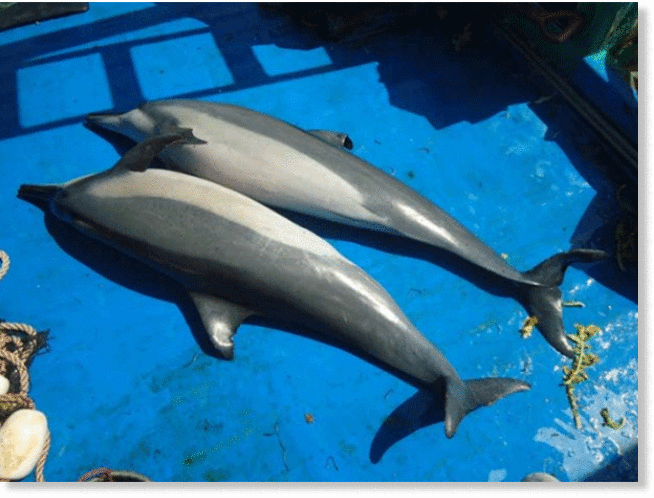
Pakistani waters can no longer be deemed safe for dolphins as a staggering 12,000 dolphins are killed annually as a result of tuna gillnet operations along the coast.
A recent study conducted by the World Wide Fund for Nature-Pakistan (WWF-Pakistan) and funded by the Australian Marine Mammal Centre, found that dolphins were frequently getting enmeshed in tuna gillnets due to Pakistan's fishing practices.
The study- An Assessment of Cetacean Mortality in the Tuna Fisheries of Pakistan ,found that the use of tuna gillnets in fishing practice was marred with high bycatch of dolphins, turtles and other cetaceans; due to operations which are non compliant to United Nations General Assembly (UNGA) regulations which prohibit the use of large scale driftnets on high seas.
Tuna fishing in Pakistan is based on large scale gillnets which increases the interaction between dolphins and the gillnet. Between Iran and Pakistan, it is estimated that there are more than 7,000 operational gillnets.
With approximately 500 vessels dedicated to catching tuna along the coast, the length of the gillnet was observed to be longer than 2.5 kilometres, much higher than the average, and large scale gillnetting is more harmful to non-target species especially cetaceans.
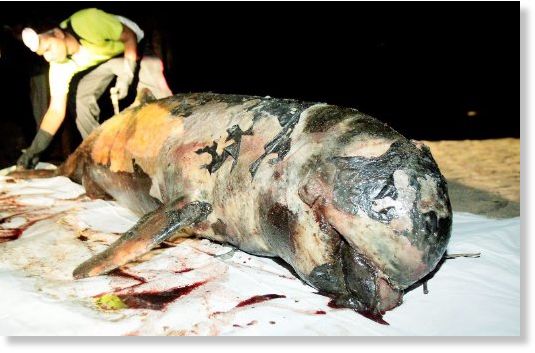
A male dolphin, weighing about 100 kilograms, was found dead and washed ashore on the beach of Tanjung Serai, here, on Saturday evening.
The 2.13 metre long dolphin, a rare species was found with wounds in its mouth and bruises on the bottom right flipper.
A chalet owner who found the dead dolphin is said to have brought the mammal to the Turtle Management and Information Centre in Padang Kamunting in Pengkalan Balak.
State Fisheries Department head of Fisheries Extension Division, Mohd Azam Jusoh said the department received information about the discovery of a dead fish at about 6pm on Saturday and immediately went to the scene along with four department staff.
He said the dolphin, a Irrawaddy Dolphin, was endangered and rare species is believed to have spent the last few days without food based on the wounds in the mouth caused by ulcer.
Phil Helsel nbcnews.com Sun, 21 Jun 2015 14:33 UTC
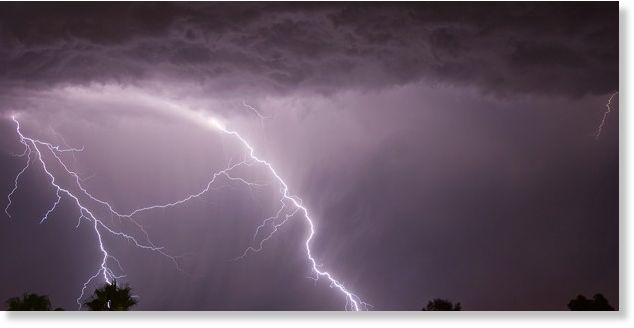
A woman in Iowa died after she was struck by lightning Saturday as storms rolled through the area, authorities said.
Rebecca McCarthy, 42, of Hiawatha, was hit by lightning at around 5:30 p.m. as she walked between camp sites at Pleasant Creek State Recreation Area, northwest of Cedar Rapids in the eastern part of the state, the Iowa Department of Natural Resources said.
McCarthy was rushed to a hospital where she was pronounced dead, the Iowa DNR said. The fatal lightning strike occurred as the possibility of strong storms were forecast for eastern Iowa and northwest Illinois Saturday.
In Linn County, where the recreation area is located, there were reports of quarter-sized hail that fell so heavy in parts that it resembled snow, according to the National Weather Service.
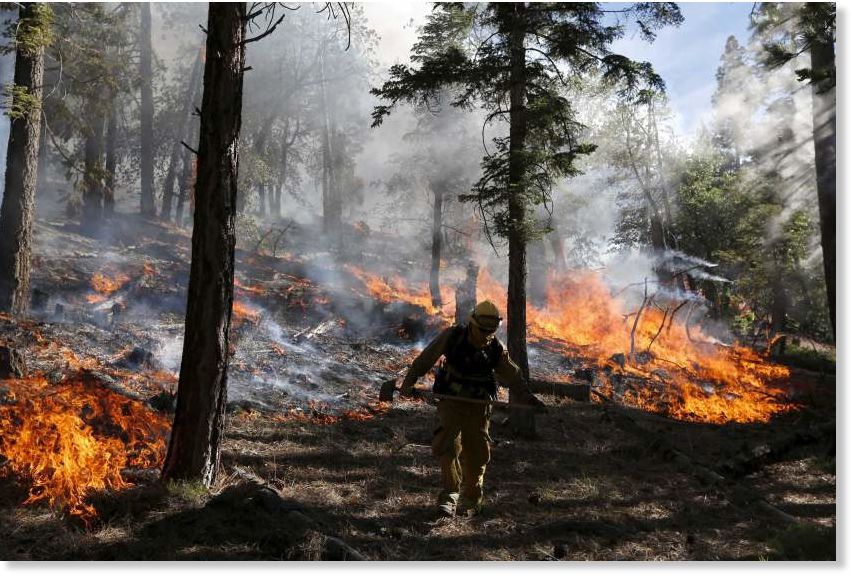
In less than two days, a wildfire near Big Bear Lake, California, has spread to an estimated 11,000 acres as of Friday morning. The "Lake Fire" sparked on Wednesday afternoon, and has since been roaring through the San Bernardino National Forest. According to Time, this is the worst wildfire yet this year on California forestland. Dry and windy conditions on Thursday afternoon sparked the quick spread of the wildfire, which has so far ravaged an estimated 12 square miles of national forest.
At this point in time, the fire is 10 percent contained, and The Los Angeles Times reports that over 500 fire personnel, 32 engines, five air tankers, and seven helicopters continue to work to further contain it. The cause of the fire remains under investigation.
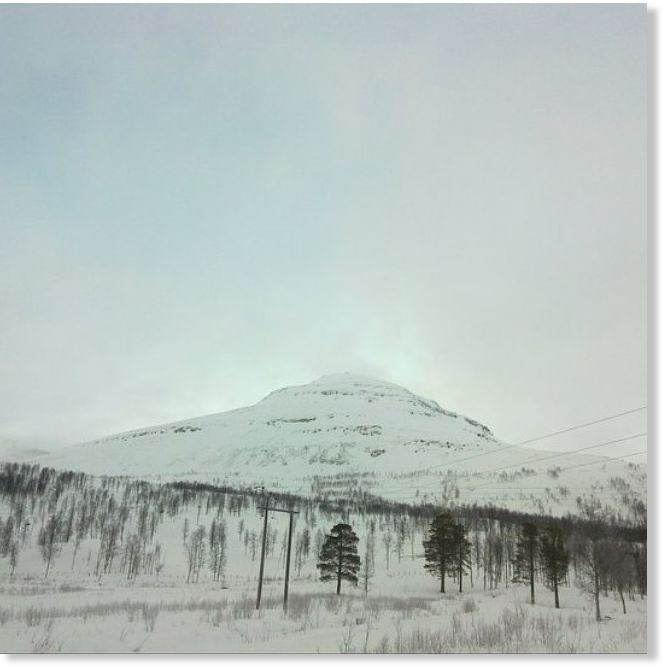
The mountains of Sjufjellet are still covered in 243 cm (8 ft) of snow - and their spring has been unseasonably cool and overcast with 149% of normal precipitation.
The summer solstice occurs June 20-21st when day length begins turning shorter and there seems to be a lot of whinging going on:
"High latitudes are the first to experience real climate changes, and you can't get much higher of a latitude than Tromsø," says H.B. "With NH land temperatures showing a declining trend since 1950, and upwards of 90% of land-based temperature variance affected by oceanic thermal currents, any cooling of the North Atlantic is going to show up on land."
"We already see the decline off Greenland and in the North Atlantic from direct SST measurements, so Norway and others should expect a continued cooling if the linear logic used by AGW proponents is to be believed.
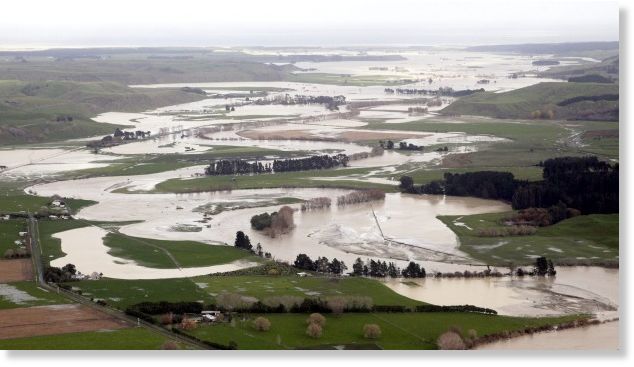
A hundred people have been evacuated from Waitotara - likely the south Taranaki village's entire population - after flooding engulfed the remote town.
Waitotara is located about 30 kilometres north of Whanganui. It has sixty houses and sits on the Waitotara River, which flooded in the heavy rain over the weekend.
Residents were not able to return to their homes on Sunday, as flood waters were still high, Civil Defence said. Some residents were asked to evacuate, while others self-evacuated. Many went to the nearby town of Waverley.
A state of emergency remains in place for Taranaki, Whanganui and Rangitikei.
More than 200 people were evacuated from areas near the Whanganui River, which reached record levels of 9.1 metres at Town Bridge at 3am on Sunday. Many more people had self-evacuated.
About 100 flood affected homes on the city's Anzac Parade could be inaccessible until Tuesday because of the high waters, the Ministry of Civil Defence said.
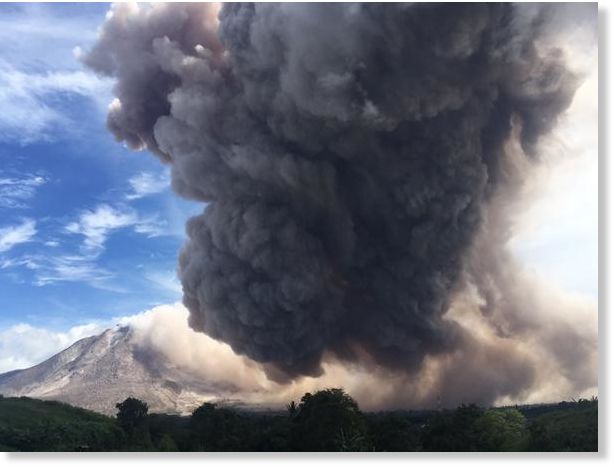
Mount Sinabung in Indonesia has been exploding with ash and debris since early June, now in its fifth year of activity since the long-dormant volcano came back online after hundreds of years of silence.
Environment videographer James Reynolds has been on the Indonesian island of Sumatra since Thursday, sharing video of Sinabung's intense eruptions of ash and gas. In Reynolds' video above, Sinabung's pyroclastic flow surges down the mountainside on Friday, destroying everything in its path, including farms. The beginning of the video shows how pyroclastic flow can pour down the side of a volcano like an avalanche.
The USGS says that pyroclastic flow — made up of small pieces of rock, ash and hot gas — can vary in speed, it is universally deadly and destructive. "A pyroclastic flow will destroy nearly everything in its path," says the USGS. "With rock fragments ranging in size from ash to boulders traveling across the ground at speeds typically greater than [50 mph], pyroclastic flows knock down, shatter, bury or carry away nearly all objects and structures in their way.
"The extreme temperatures of rocks and gas inside pyroclastic flows, generally between [400 and 1,300 degrees Fahrenheit], can cause combustible material to burn, especially petroleum products, wood, vegetation, and houses."
Mystery creates wonder, and wonder is the basis for man's desire to understand. Who knows what mysteries will be solved in our lifetime, and what new riddles will become the challenge of the new generations.
- John Keel
”
Recent Comments
So charge him, perp walk him, give him a 24 / 7 OJ trail so we can finally watch him squirm, like he made the majority squirm. Deplete his savings...