Earth ChangesS


Wolf

Dog attacks on the rise in New Zealand

Image
© AFP
The Association of Plastic surgeons looked at ACC claims from 2004 to 2014 and said the number of attacks increased each year.

The study found almost 6000 of those bitten by dogs were admitted to hospital - a rate of almost two a day. More than a third of them are children, with mostly facial injuries.

Plastic surgeon Dr Zachary Moaveni said about 70 percent of attacks occured on private properties.

He said children under 10, Maori and Pacific Islanders and people who lived in low socio-economic areas were more likely to be attacked.

Attention

Man attacked by bear at the Joint Base Lewis-McChord, Washington

Image
A man was attacked by a bear at the Joint Base Lewis-McChord, suffering minor injuries.

KOMO-TV reports the attack happened around 8:30 a.m. on Saturday on the base near Tacoma, Washington. Officials said the man, a civilian, was attacked while walking in a restricted area. He sustained only some scratches.

Officials are now looking into why the man was there. They're also looking for the animal that attacked him.

Bears are common in the area. In April, Washington state wildlife agents shot and killed a black bear at the base, a week after a bear attacked a civilian base employee. That employee, who was attacked while he was running with his dog on the base, was treated for non-life-threatening injuries.

Source: The Associated Press

Comment: It seems that the local bears just don't take kindly to humans in the vicinity of this military installation, see also: Man survives second bear attack in 4 years at Joint Base Lewis-McChord, Washington: 'I just had this deja vu'


Attention

Dead whale found on beach in Pacifica, California: 3rd since mid-April

Image
© KGO-TVA whale washed up on Esplanade Beach in Pacifica, Calif. on Sunday, August 2, 2015.
Another dead whale has washed up on a beach in Pacifica. Biologists have not yet identified what species of whale it is.

Biologist says dead whale that washed ashore has shark bites, but likely not the cause of death. #Pacifica #mapit pic.twitter.com/s55Lxiww5I
— Lilian Kim (@liliankim7) August 3, 2015

A dog walker discovered the large marine mammal on the beach along Esplanade Avenue around 6 a.m. Sunday.

Comment: See also: Dead sperm whale found on beach in Pacifica, California

Second dead whale found at Pacifica, California within 3 weeks


Cloud Precipitation

Monsoonal rains leaves thousands stranded and 27 dead in Myanmar flooding: toll expected to rise

Image
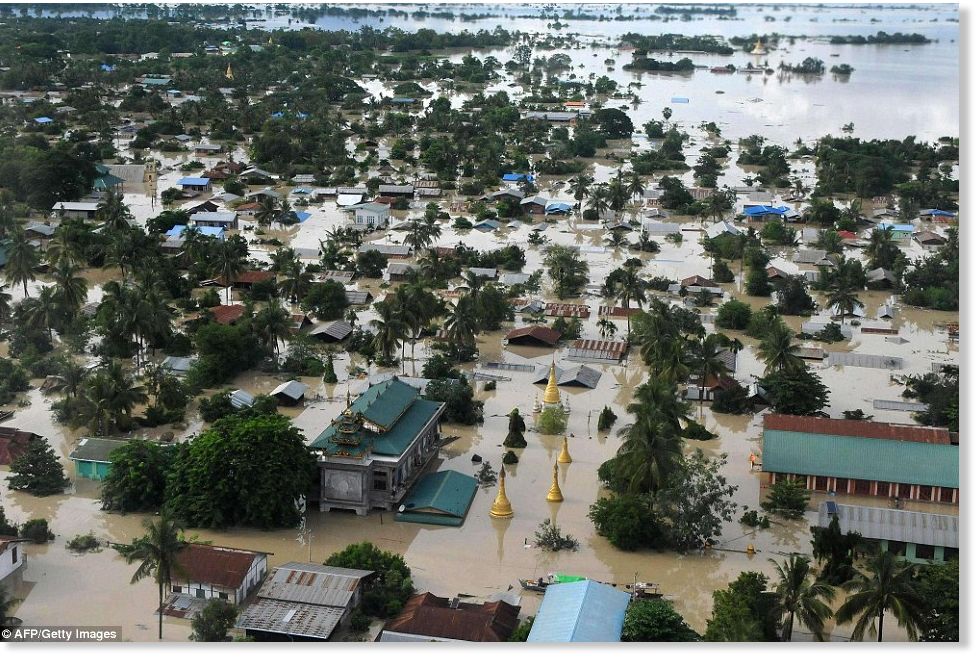
An aerial view of Kalay, Sagaing Region in Upper Myanmar. Western Rakhine and Chin states are among the four worst affected areas by the monsoon
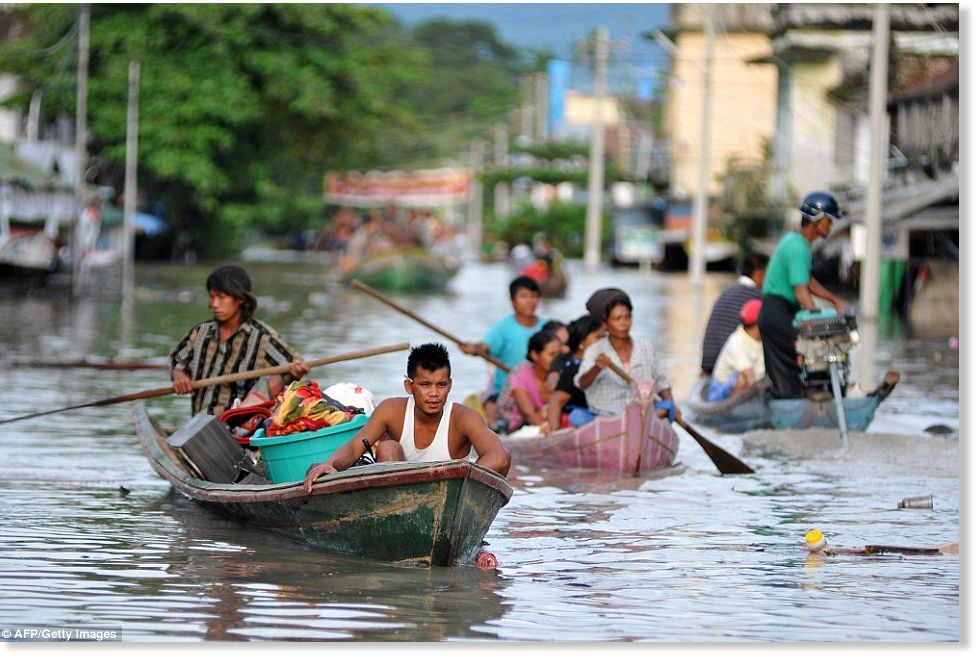
Monsoonal rains have caused severe flooding across Myanmar, killing at least 27 people.

The death toll of 27 has not been updated since Thursday due to disrupted communications, and this figure is expected to increase.

Rescue efforts are underway, but Myanmar authorities and aid groups are 'struggling to access flood-hit areas' a director at the social welfare ministry said, the ABC reported.

Over 156,000 people have been affected by the floods, strong winds and resulting landslides.

Image
Residents paddle through floodwater in Kalay, carrying necessities


Arrow Down

Road collapse into river filmed in China following thunderstorms, gales and hailstorm

Image
China's meteorological authority issued a blue alert for 24 hours
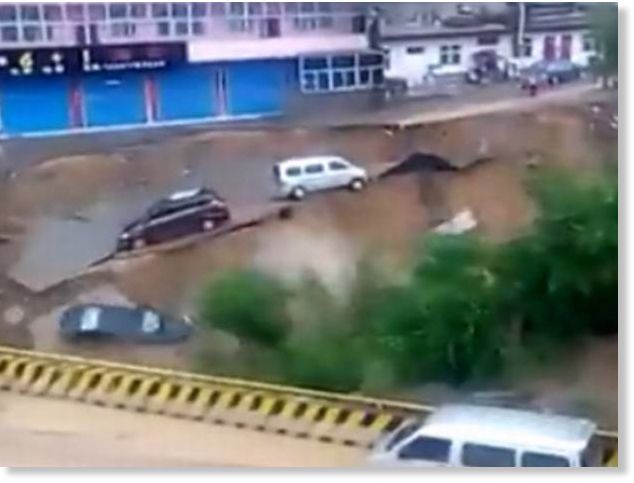
Video from China's Shanxi Province shows the moment a road collapsed and plunged into a river, sending several parked cars into the muddy water below following torrential downpours in the region.

The video emerged after China's meteorological authority issued a blue alert for 24 hours, warning of possible thunderstorms, gales and hailstorms in northern and some southern regions of the country.

Heavy rain swept parts of Gansu, Shanxi, Shaanxi, Hebei, Shandong, Liaoning and Yunnan provinces.

No one was injured following the collapse of the road in Shanxi, which shows cars hanging perilously on the side of the river bank following the collapse of the road.


Snowflake Cold

Melbourne in Australia experiences coldest July in 20 years

Image
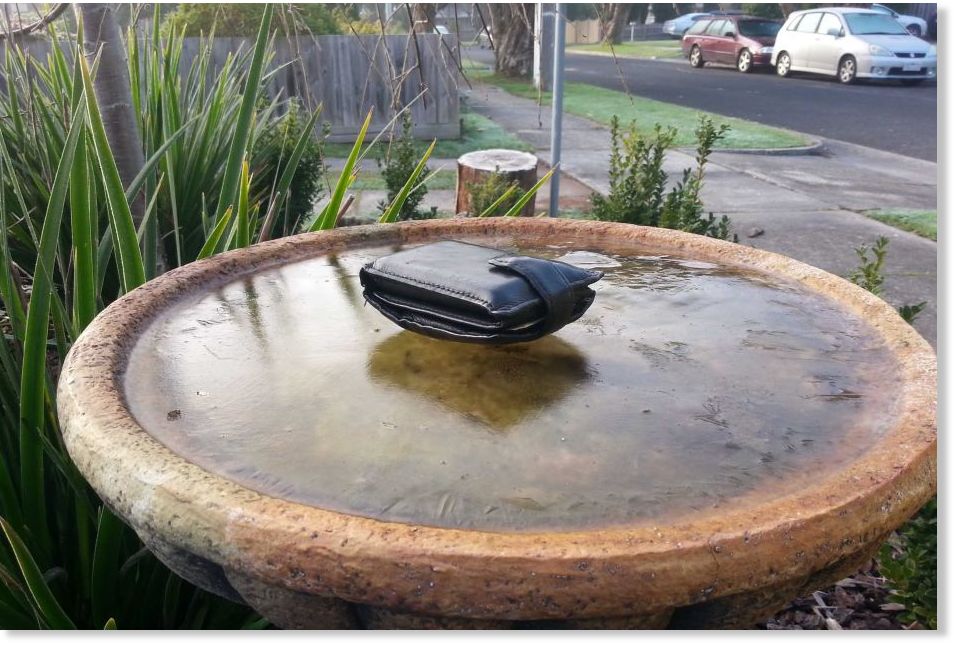
© Russell PhillipsIt was so cold in Croydon, in Melbourne's east, that even birdbaths were freezing over.
A continuous series of cold fronts and brisk north-westerly winds have contributed to the coldest July in Melbourne in two decades, the Bureau of Meteorology says.

The average top temperature was 13.3 degrees Celsius in July, the lowest mark since 1995, when it was 12.9C.

Temperatures were consistently 1C below the normal average maximum temperature across the state.


The mercury dropped as low as minus 6C in Bendigo.

Melbourne had its coldest morning in 18 years on July 19, when the mercury dropped to just 0.6C in the city.

Attention

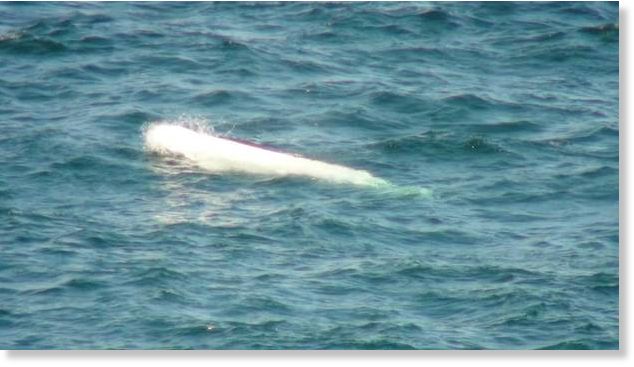
Wrong time, wrong place: Rare Arctic Beluga whale seen off the Irish coast

Image
© Gordon WatsonThe rare arctic whale was spotted off the coast of Antrim.
The beluga whale was seen surfacing near Dunseverick, Co Antrim on Thursday.

It is believed to be the first ever sighting in Northern Ireland.

The beluga whale is normally found over 3,000km away around the Barents sea, eastwards of the the Svalbard Archipelago.

This sighting marks what is believed to be the 17th time in 100 years that this type of whale has been seen in Britain and Ireland.


There have been just two recorded sightings of the whale in the Republic of Ireland - one off Clare Island, Co Mayo in 1948 and another at Cobh, Co Cork in 1988.


Comment: This is the second such report in 2015 for this species which is normally resident in Arctic waters at this time of year, see in addition: Wrong place, wrong time: Trio of Arctic Beluga Whales seen off coasts of New York, Rhode Island and Connecticut

This unusual southward migration was also recorded in June of last year -

Wrong time, wrong place: Rare Arctic Beluga whale seen in Massachusetts

Wrong place, wrong time: Dead Arctic beluga whale washes up on a Scottish beach


Arrow Down

Large sinkhole opens up under trailer at Cartersville Gas Department, Georgia

Image
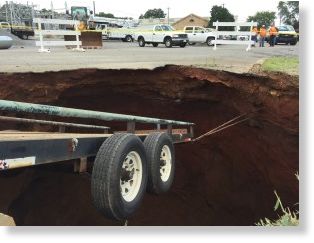
Sinkhole under trailer
The Cartersville Fire Department responded to the gas department on Cook Street Thursday afternoon in response to a possible gas leak and a sinkhole. The sinkhole opened up under a trailer. No one was injured. The sinkhole was about 25 feet by 30 feet and about 25 to 27 feet deep when the BCFD arrived.

The scene was secured, all utilities in the area were disconnected, Cartersville Electric rerouted power and Cartersville Natural Gas was able to shut down. There were no leaks or exposure.

Everyone present worked on the scene until one a.m. Friday morning. The sinkhole had to be opened up to two or three times larger in order to stabilize it. Air quality was monitored. The main concern was a number of fuel tanks that was close to the sinkhole, but there was never a problem.

Cloud Lightning

Microburst damages Rhode Island town

microburst damage in Rhode Island
Strong to severe thunderstorms quickly tore through parts of Southern New England Tuesday, leaving behind damage in some communities.

Heavy downpours led to street flooding in Southeastern Massachusetts, while the National Weather Service (NWS) put a Tornado Warning into effect in Narragansett after radar indicated the storm was capable of producing a tornado. The storm moved offshore before that could happen, but a microburst left one neighborhood looking like a disaster area.

Gold Seal

The sooner, the better! Study says Washington, DC could sink 6 inches into the Earth by 2100

Image
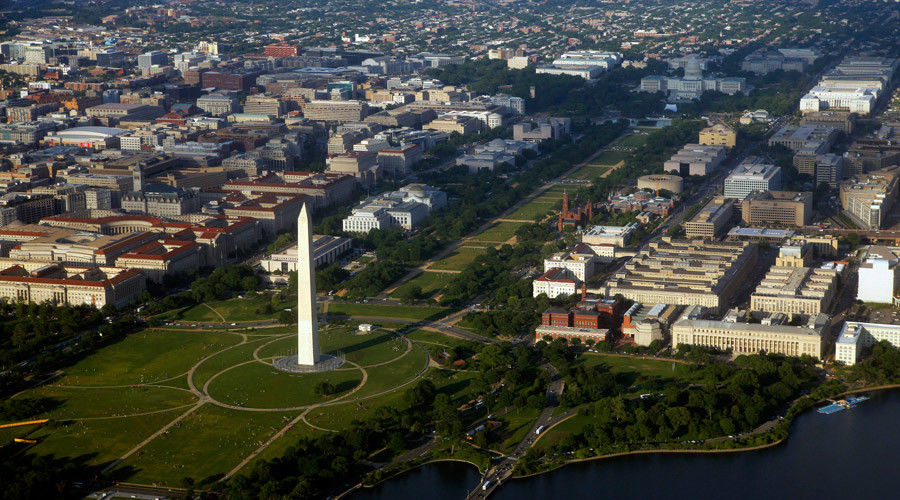
© Jim Bourg/Reuters
Washington, DC is slowly seeping into the Earth, and it could sink another six inches in the next century due to subsurface land movement under the Chesapeake Bay, according to a new study.

The research confirms twin hypotheses, both of which are worrying. The first is that tide gauges show sea level rises in the Chesapeake region are twice the global average, and that levels are rising faster than elsewhere on the East Coast. The second is that the pre-historic ice sheets in the north which pushed up the land around DC are now melting, and the land in the Chesapeake region is settling back down as a result.

"It's a bit like sitting on one side of a water bed filled with very thick honey, then the other side goes up," explained Ben DeJong, a doctoral student in geology at the University of Vermont (UVM) and the lead author of the study, in a statement. "But when you stand, the bulge comes down again."

Researchers at UVM said the sinking land under the nation's capital would exacerbate the effects of flooding caused by climate change and rising ocean waters, and threaten the region's roads, monuments, wildlife refuges, and military installations.