Earth ChangesS


Snowflake

Skid row! Cars slide down slippery slope, slamming into others following heavy snowfall in Vladivostok, Russia (VIDEO)

Skid row
© RuptlySkid row
Heavy snowfall in Russia's Far East had car owners showing some extreme driving while negotiating a slippery slope in Vladivostok - but none of them succeeded. Multiple cars skidded downhill and rammed into each other, all caught on camera.

A narrow one-way road down a hill has become a nightmare for drivers. Stunning footage released by RT's Ruptly video news agency shows some drivers tried to simply slide down the road, but failed and ended up slamming into parked cars. Slow driving didn't help much either, as others simply smashed into moving traffic.

More than 250 car accidents were reported earlier last week on the icy up-and-down roads of Vladivostok during the 24 hours after the first massive snowfall of the season. The city was almost brought to a standstill, with many commuters spending hours trying to get home.

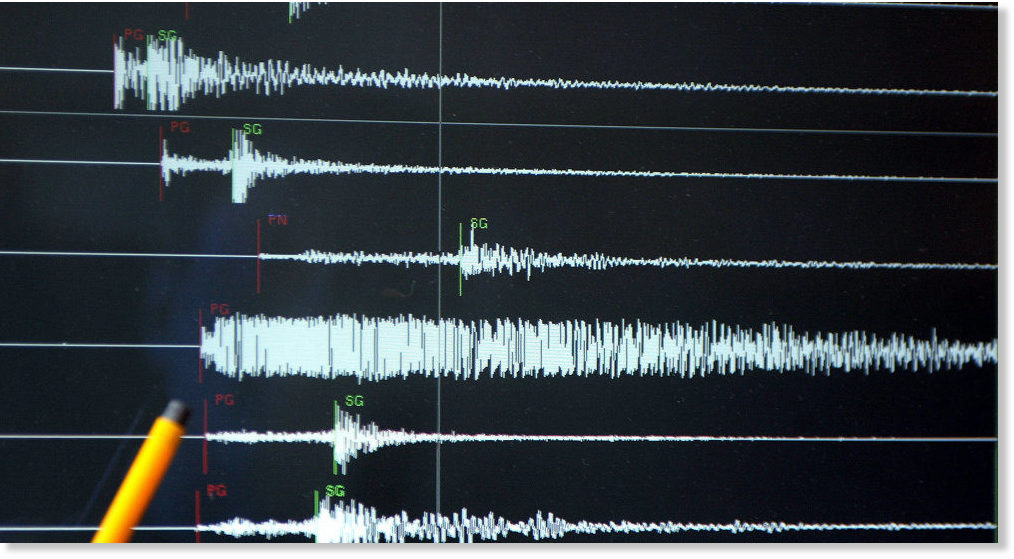
Seismograph

Another 134 earthquakes hit Monterey County, California

chart
A 4.6 magnitude earthquake shook Monterey County last Monday, and the area hasn't stopped shaking since.

Last week's widely-felt quake was centered 13 miles northeast of Gonzales, along the San Andreas Fault.

Since then, there have been 134 earthquakes within 5 kilometers (or about 3 miles) of the epicenter, according to the U.S. Geological Survey.

However, most of those aftershocks weren't felt by the Central Coast. Only 17 were stronger than a 2.5 magnitude and six were greater than 3.0, said Ole Kaven, a seismologist with the USGS.

Comment: This happened there just last week:

Monterey County in California struck with a series of 3 earthquakes after more than a dozen quakes last week


Cow Skull

Hundreds of cattle found dead in Odisha, India; locals suspect epidemic

Representative image
An unknown epidemic has caused the death of hundreds of cattle at Gumabirsinghur village under this block in Ganjam district.

"There have been no visible symptoms. The cattle are found dead everywhere in forest, riverside, canals, hills and farmlands in the village. This condition has been occurring for the last three days," locals said.

The deadly issue came to the fore after the affected farmers brought the matter to the notice of Berhampur sub-collector. Surprisingly, the veterinary department has failed to tackle the disease as the cause of the outbreak of the disease is yet to be ascertained.

The unknown epidemic has spread panic among locals who held the administration responsible. Among the many farmers who had lost their cattle were Jagili Gouda, Bauri Gouda, Dhaneswar Pradhan, Balram Pradhan, Sudam Pradhan, L Panda, L Seemanchal, Narsingh Gouda, M Andha, D Bijay, K Trinath and M Kameshu.

Seismograph

Shallow magnitude 6 earthquake hits off Samoa

chart
The U.S. Geological Survey says a magnitude 6 earthquake struck waters west of Samoa and American Samoa. There were no immediate reports of damage or injuries.

The agency said Monday the earthquake was centered 220 miles west of Apia, Samoa, and 290 miles west of Pago Pago, American Samoa.

The quake struck at a depth of 6 miles (10 kilometers) shortly before 8 a.m. in American Samoa.

The Pacific Tsunami Warning Center in Honolulu said there was no chance of tsunami from the temblor.

Nua Leilosi of American Samoa's Department of Public Safety says she didn't feel any shaking.

Source: AP

Fire

Global warming... in the deeps: Tremendous geothermal heat source is melting Antarctic ice sheet from below

antarctica ice volcano
© Zina Deretsky / NSF / NASA
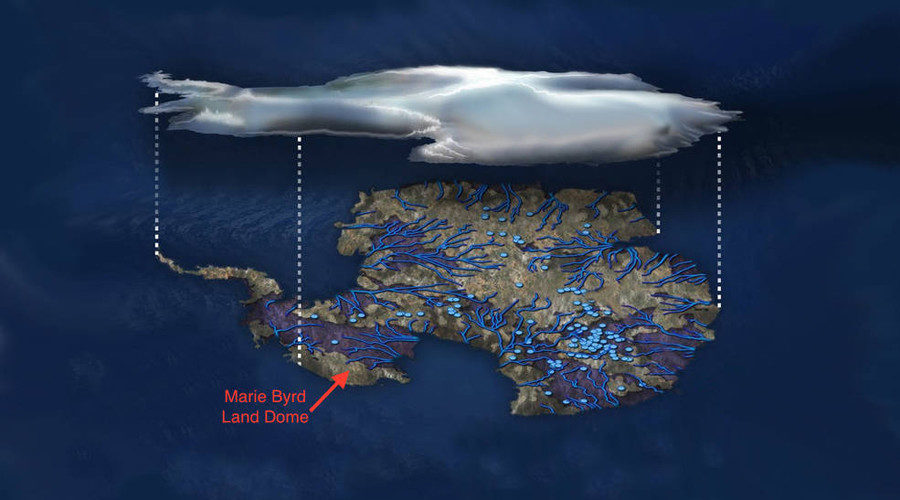
Scientists at NASA's Jet Propulsion Laboratory (JPL) have found new evidence to support a theory that the breakup of Antarctic ice may be caused in part by a massive geothermal heat source, with output close to the scale of Yellowstone National Park.

A geothermal heat source called a mantle plume - a hot stream of subterranean molten rock that rises through the Earth's crust - may explain the breathing effect visible on Antarctica's Marie Byrd Land and elsewhere along the massive ice sheet.

While the mantle plume is not a new discovery, the recent research indicates it may explain why the ice sheet collapsed in a previous era of rapid climate change 11,000 years ago and why the sheet is breaking up so quickly now.

Comment: No man-made pollution involved, see?

Climate change is substantially natural...


Cloud Precipitation

Flash floods kill 2, damage over 360 houses in central Indonesia

Flash floods in West Nusa Tenggara, Indonesia
© Sutopo Purwo Nugroho / BNPBFlash floods in West Nusa Tenggara, Indonesia
Two people were killed and 367 houses damaged as flash floods struck West Nusa Tenggara province of central Indonesia, a government official said here Sunday.

Heavy downpours were blamed for the natural disaster in four sub-districts of Lombok Timur district, spokesman of national disaster management agency Sutopo Purwo Nugroho said.

"The flash floods hit residential areas and agricultural lands," the spokesman told Xinhua in a text message.

One of the casualties was hit by a damaged building and another was swept away by currents, said Sutopo.

The floods also destroyed 14 bridges and one mosque, he added.


Comment: Earlier this month 9 people died as heavy rainfall caused floods and landslides in Indonesia.


Cloud Precipitation

2017 is wettest calendar year on record at Reno, Nevada

Record rainfall in Reno, Nevada
The weather record's keep accumulating in northern Nevada.

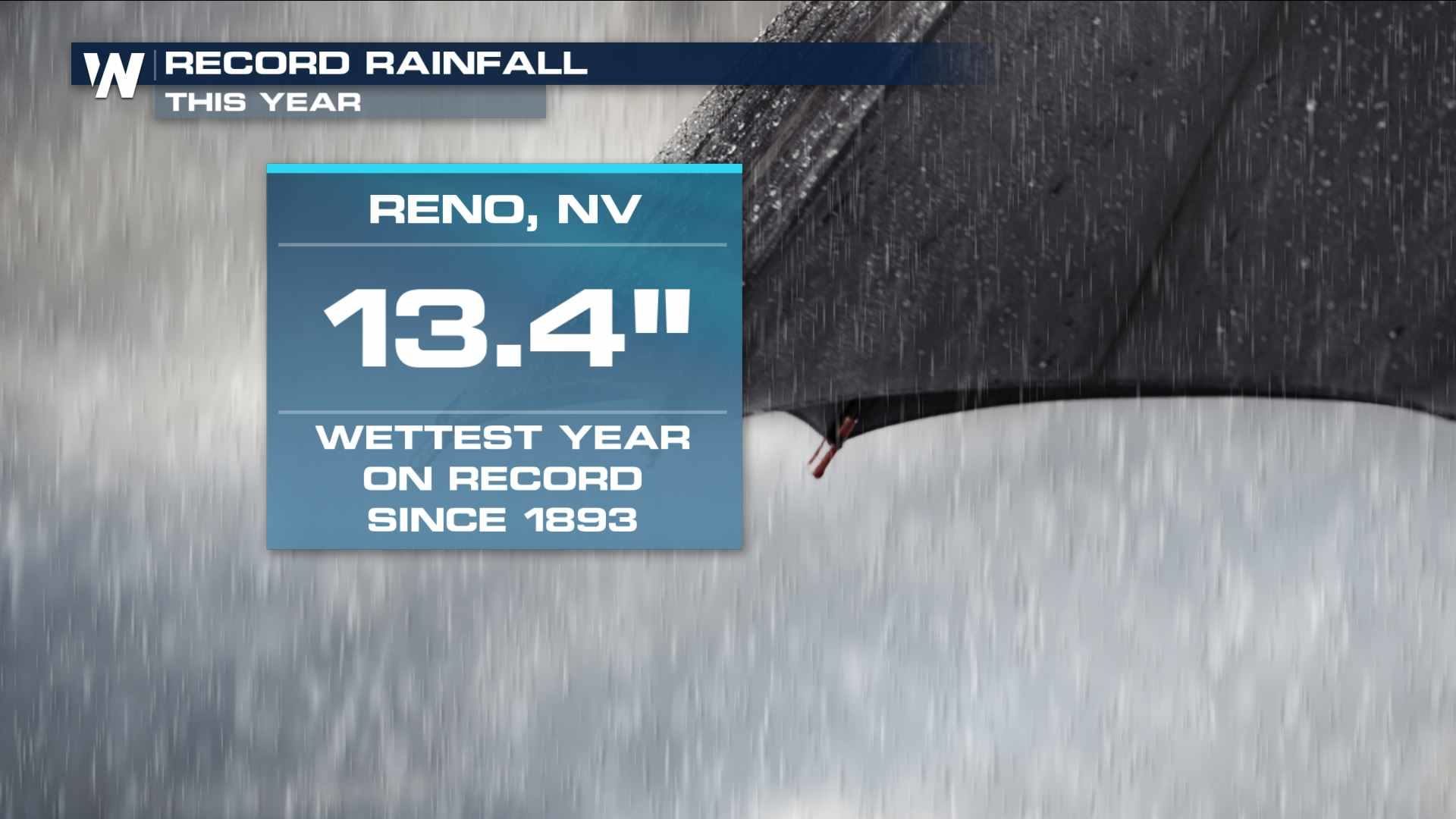
After Thursday's heavy rainfall, Reno surpassed its wettest calendar year on record, according to the National Weather Service in Reno. With a record rainfall of 0.81 inches on Thursday, Nov. 16, the total precipitation for 2017 now stands at 13.40 inches, setting a new record for the greatest precipitation total in any calendar year at Reno.

This, NWS Reno says, breaks the old record from 1983, which had a total of 13.23 inches.


Attention

Sandy beach that 'vanished' 12 years ago in freak storm suddenly returns overnight in Mayo, Ireland


Comment: This is the 2nd time this has happened this year on the very same Achill Island. In May, the sand at Dooagh - on the Western side of the island, that was washed away by freak storms 33 years ago leaving only bare rock, reappeared to the delight of locals. In the last few days, freak storms again were responsible for bringing the sand back to the beach at Ashleam Bay, this time on the Southern coast of the island.


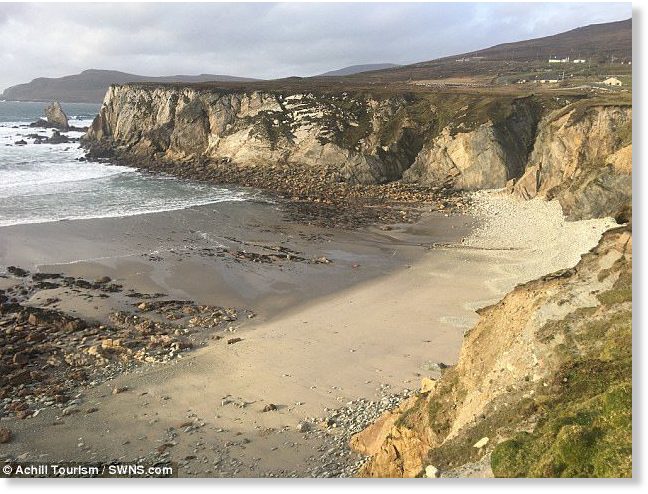
Islanders are celebrating after the beautiful beach at Ashleam Bay (pictured), which 'vanished' 12 years ago, suddenly reappeared overnight
Islanders are celebrating after a beautiful beach which 'vanished' 12 years ago suddenly reappeared overnight.

The white sands of Ashleam Bay on the picturesque island of Achill off the coast of Mayo in Ireland were washed away during a freak storm in 2005.

But following recent freak weather locals noticed the beach had suddenly returned
- and are now enjoy a stroll on the sand once more.

Seán Molloy, manager of AchillTourism.com, said recent stormy weather had cleared the beach of rocks and boulders, and Storm Brian dumped a load of sand in their place.

Mr Molloy said: 'It came back after Storm Brian. It brought the first amount of sand and cleared the boulders that was on the beach way as well.


Cloud Precipitation

Towering 8 metre waves batter rescue boat as horrific storm foils efforts to find Argentine navy sub

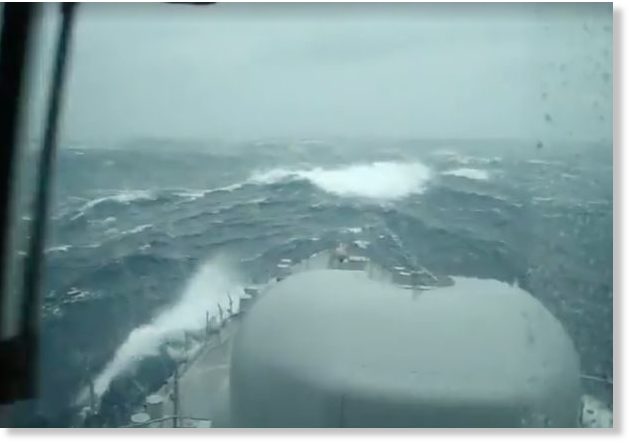
Footage from the vessel shows horrific conditions
A horrific storm has thwarted emergency efforts to find an Argentine navy submarine missing in the South Atlantic with 44 crew members.

Footage from a search boat showed horrendous sea conditions as waves eight metres in height crashed over the deck.

Winds of 90km have been battering the vessel for three days, according to reports.


The defence ministry said the ARA San Juan appeared to try to make contact through seven failed satellite calls on Saturday between late morning and early afternoon.

The vessel was 432 km (268 miles) off Argentina's coast when its location was last known early on Wednesday.

And as the storm complicated desperate search efforts, authorities spent Sunday trying to trace the submarine's location through data from the satellite calls without significant progress.


Comment: See also: US Navy and NASA join the hunt for missing Argentine submarine which vanished 250 miles off the coast of Patagonia almost 3 days ago - UPDATES


Seismograph

Strong shallow earthquake of magnitude 6.2 hits off Wallis and Futuna in the south Pacific

chart
Most important Earthquake Data:

Magnitude : 6.2

Local Time (conversion only below land) : Unknown

GMT/UTC Time : 2017-11-20 18:51:04

Depth (Hypocenter) : 10 km