Earth ChangesS


Snowflake

Scientists are stunned as the North Pole surges above freezing

temperature map
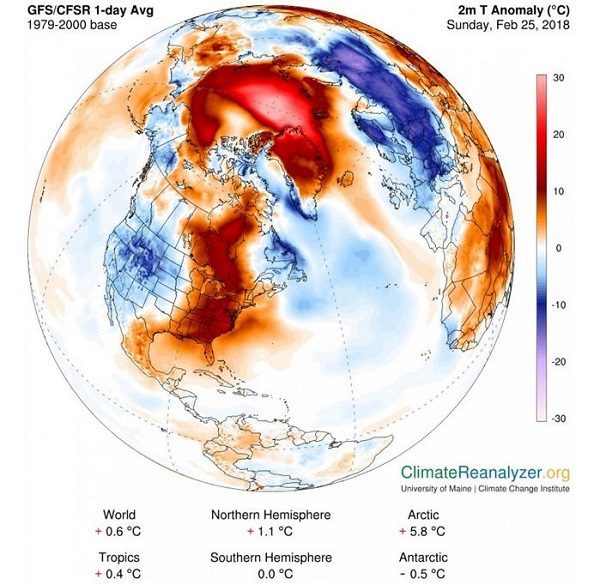
© University of Maine Climate Re-analyzerGFS model analysis of temperature difference from normal (in Celsius) on Sunday over the Arctic. The temperature is above freezing at the North Pole.
The sun won't rise at the North Pole until March 20, and it's normally close to the coldest time of year, but an extraordinary and possibly historic thaw swelled over the tip of the planet this weekend. Analyses show that the temperature warmed to the melting point as an enormous storm pumped an intense pulse of heat through the Greenland Sea.

Temperatures may have soared as high as 35 degrees Fahrenheit (2 degrees Celsius) at the pole, according to the U.S. Global Forecast System model. While there are no direct measurements of temperature there, Zack Labe, a climate scientist working on his PhD at the University of California at Irvine, confirmed that several independent analyses showed "it was very close to freezing," which is more than 50 degrees (30 degrees Celsius) above normal.

The warm intrusion penetrated right through the heart of the Central Arctic, Labe said. The temperature averaged for the entire region north of 80 degrees latitude spiked to its highest level ever recorded in February. The average temperature was more than 36 degrees (20 degrees Celsius) above normal. "No other warm intrusions were very close to this," Labe said in an interview, describing a data set maintained by the Danish Meteorological Institute that dates back to 1958. "I was taken by surprise how expansive this warm intrusion was."

Rainbow

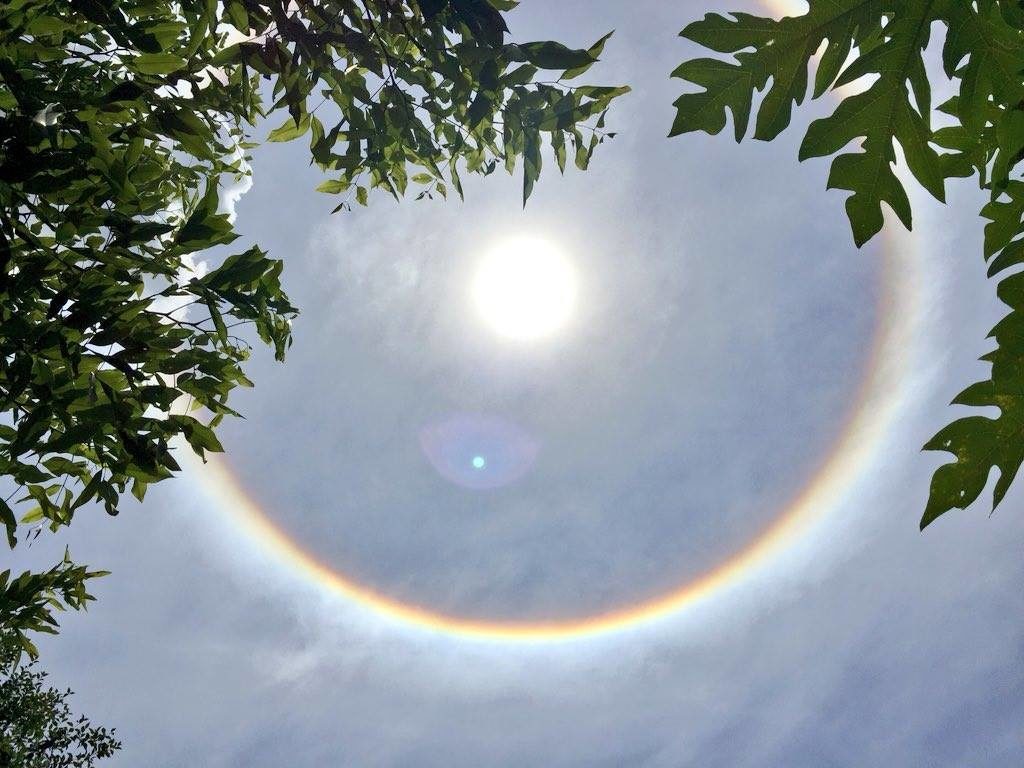
Awesome sun halos sighted in Brazil and Slovenia (PHOTO, VIDEO)

SUMMER SUN HALOS Florianópolis
© Andujar


SUMMER SUN HALOS:
Yesterday's high temperature in Florianópolis, Brazil, topped 90 degrees F, typical of the region's warm summer days. Nevertheless, when Cristiano Andujar looked up from the steps of the City Cathedral, he saw definite signs of freezing air. "There were two beautiful ice halos around the sun," he says. "People on the sidewalk were stopping and pointing."

In this photo, which Andujar took, the big ring around the sun is a common 22-degree halo, caused by sunlight shining through hexagonal ice crystals in cirrus clouds. Floating almost 10 km high, these clouds were freezing despite scorching temperatures on the streets of Florianópolis.

Snowflake Cold

Siberian cold hits France leaving two people dead

walking in the snow
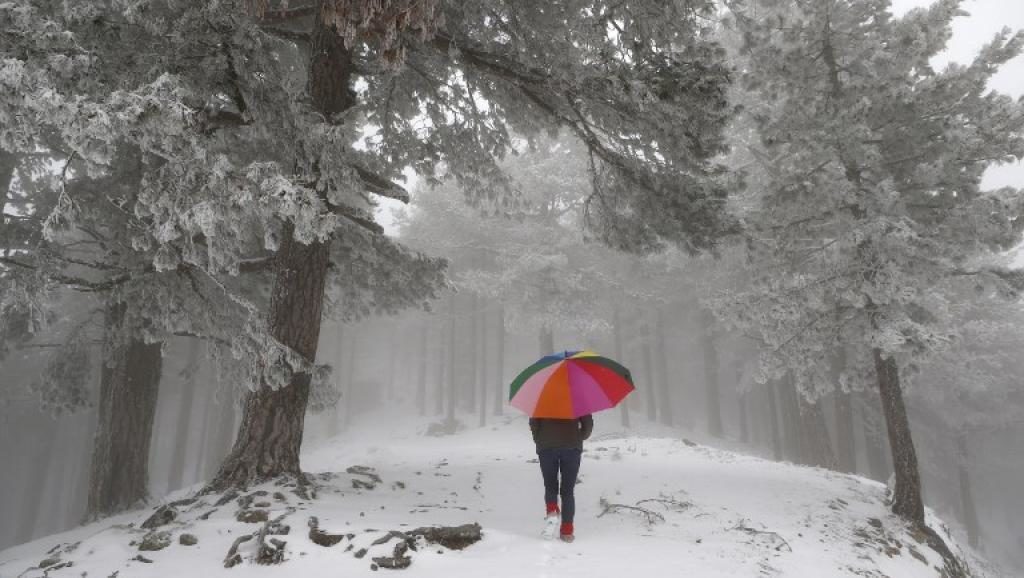
© PASCAL POCHARD-CASABIANCA/AFPSnow in a forest in Corsica last week.
Two homeless men were found dead in France this weekend as temperatures plummeted to their lowest at this time of year since 2005. There were snow and ice warnings in the Alps as the cold front that originated in Siberia crossed Europe and hit France.

A 35-year-old homeless man was found dead by his companions in the south-eastern city of Valence on Sunday and on Friday the body of a 62-year-old who lived in a cabin in the woods near Paris was also found.

Both probably died because of the cold, officials said.

As temperatures drop to as low as -10°C in the east of the country, the authorities have ordered 3,100 emergency accommodation places to be opened, 500 of them in Paris.

Snowflake

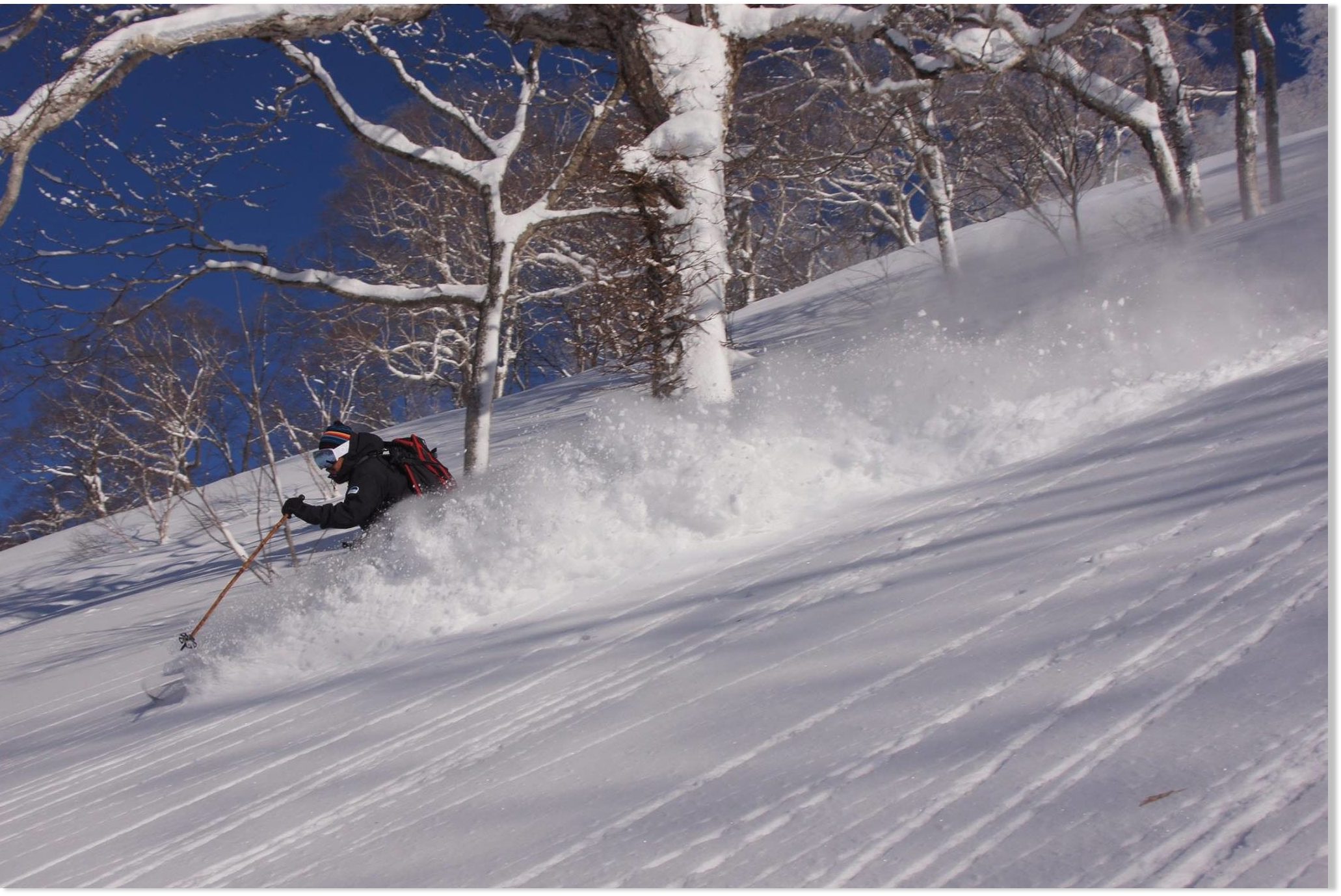
Snow depth passes 5 meter mark at ski resorts on 3 continents with 11 meters at Niseko in Japan

Niseko
Niseko, Japan
The 2017-18 season snow depth total has now passed the 5 metres mark at ski areas in Asia, Europe and North America according to their official statistics.

Engelberg in Switzerland was the first to pass the 5m mark in the northern hemisphere, several months ago, and peaked at a 655cm base after the exceptional January snowfall in the Alps. Its total dropped back below six metres earlier this months but recent snowfalls have taken it back up to 645cm at present.

North America had a slow start to the season in its famously snowy west, particularly in more southerly states but Mt Baker in Washington State has a reputation for getting the most snow of any ski area in the world most years and it is clocking up the inches, reporting nearly 90cm of snow in the past 72 hours alone and a base depth now up to 597cm.

Tornado2

Waterspout filmed off Palm Beach, Florida (VIDEO)

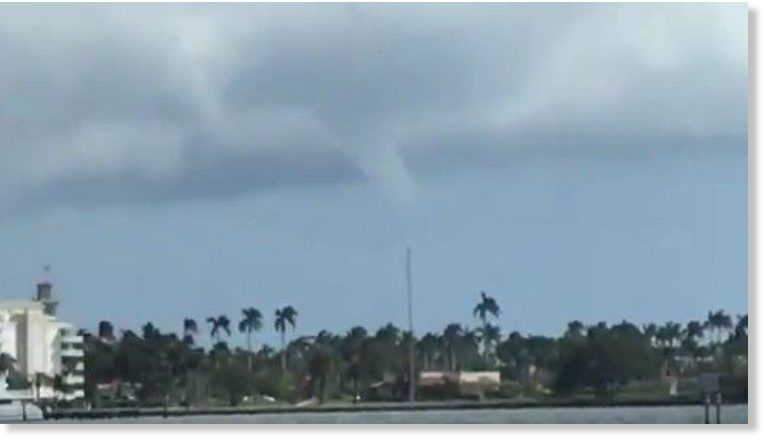
Waterspout off Palm Beach
A waterspout off Palm Beach this afternoon was caught on camera just as the National Weather Service sent out an alert about gusty showers offshore.

Greg Travers said he was on the west side of the Intracoastal waterway in West Palm Beach when he spotted the waterspout near The Breakers Hotel on the island.

At 2:07 p.m. Doppler radar indicated showers offshore that were capable of producing winds to 34 mph, according to the NWS in Miami.

Meteorologists said mariners should expect locally higher wave with the possibility of more waterspouts forming.

Tornado2

Waterspout filmed near Gozo, Malta

A video of a 'tornado' forming over Ramla l-Ħamra bay in Gozo earlier today has been uploaded onto YouTube as a partly cloudy Tuesday makes way for a surprisingly fresh night. The clip was uploaded by Mike Fox Photography.

It turns out that the formation in question, which can be seen increasing in height over the short, 23-second clip, is actually a waterspout. A relatively common occurrence especially over Northern Malta, waterspouts are non-supercell tornados which form over water.

Waterspouts can be formed by severe thunderstorms, but are even more commonly associated with developing storm systems. The clouds from which they descend are rarely fast-moving, and that makes waterspouts very easy to spot and film since they are often static.


Tornado2

4 tornadoes confirmed as daylight reveals swath of damage in southern US

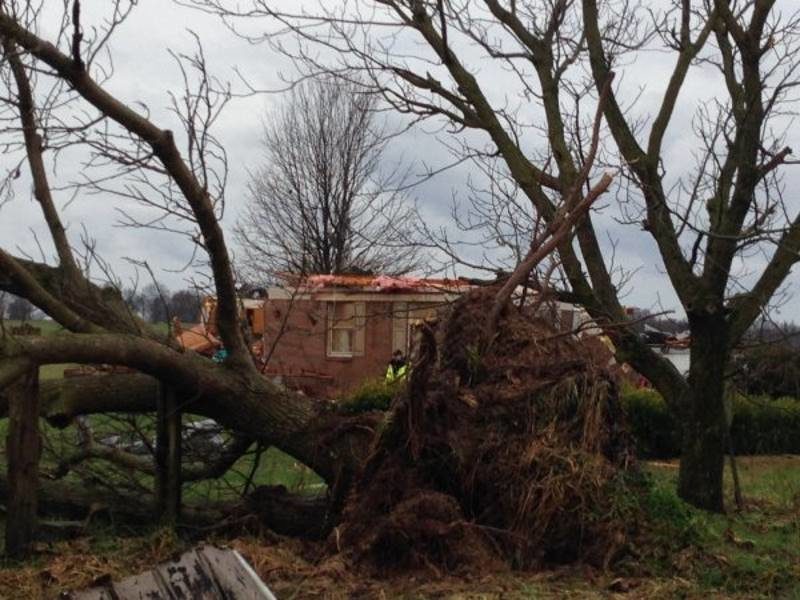
tornado kentucky 2018
© WHOPLogan County, Ky.
National Weather Service survey teams confirmed 'at least' EF-2 tornado damage with max winds of 120 mph on the east side of Clarksville near I-24 and Rossview Road and in Logan County, Kentucky an EF-2 touchdown with max winds of 135 mph.

The NWS also confirmed another 'high end' EF-1 tornado in southwestern Clarksville near the Dotsonville community.

This powerful line of storms is blamed for at least two deaths, including an elderly woman trapped when her Logan County home was hit by a tornado.

An EF-2 tornado was confirmed in Hopkinsville, Ky. with winds of up to 135 mph.

79-year-old Dallas Jane Combs was inside the home when it collapsed on her. Combs was pronounced dead at the scene. Authorities say Combs' husband was outside and was not seriously injured.

Bug

Insect population decline reported across Australia

Entomologists are concerned Australia's insect populations are in decline. (ABC News: Penny McLintock)
© Penny McLintockEntomologists are concerned Australia's insect populations are in decline.
A global crash in insect populations has found its way to Australia, with entomologists across the country reporting lower than average numbers of wild insects.

University of Sydney entomologist Dr Cameron Webb said researchers around the world widely acknowledge that insect populations are in decline, but are at a loss to determine the cause.

"On one hand it might be the widespread use of insecticides, on the other hand it might be urbanisation and the fact that we're eliminating some of the plants where it's really critical that these insects complete their development," Dr Webb said.

"Add in to the mix climate change and sea level rise and it's incredibly difficult to predict exactly what it is."

Ice Cube

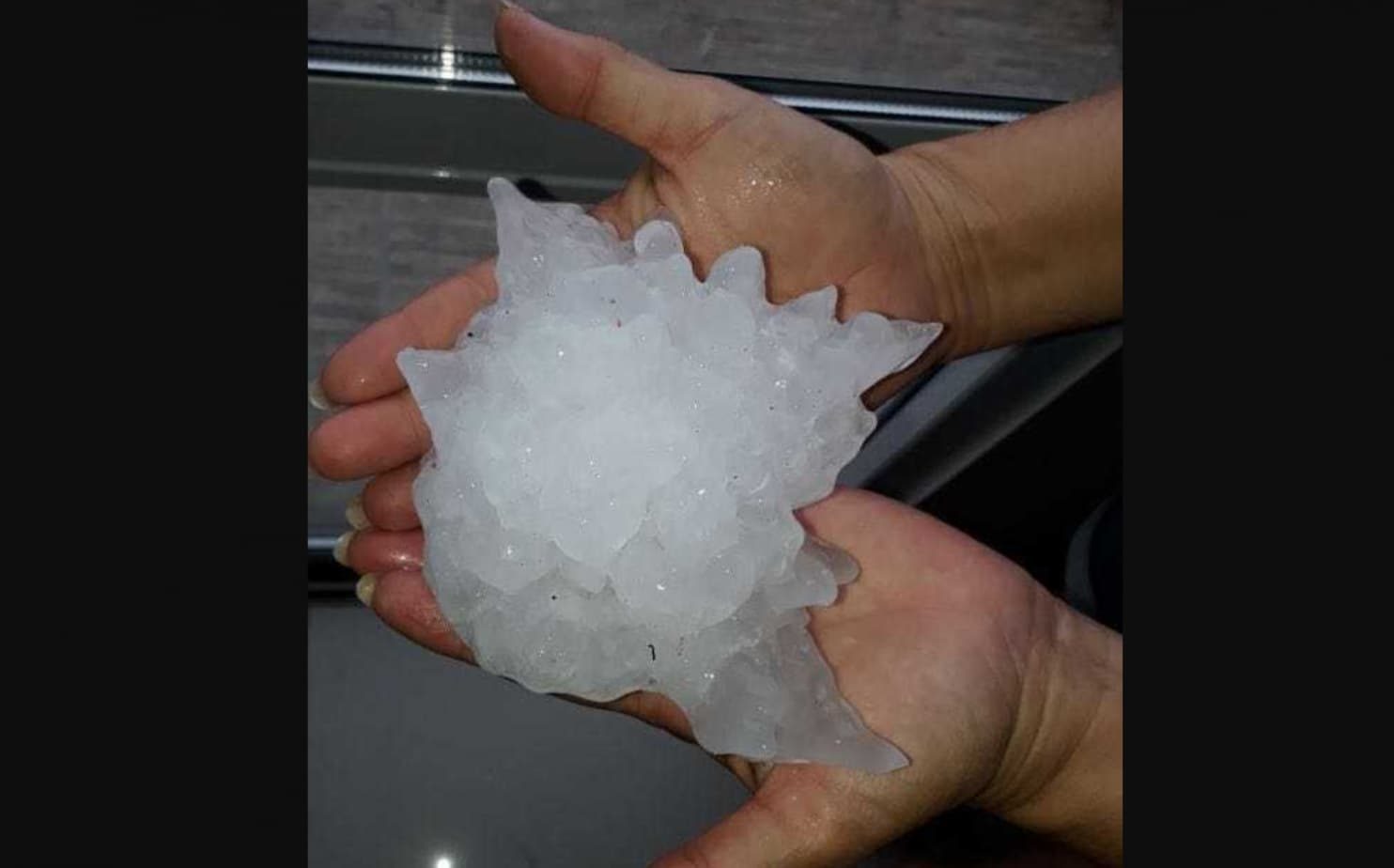
Adapt 2030 Ice Age Report: Record sized hail - Sun halos planet wide - Shrimp & fish cold kill (VIDEO)

Hail larger than softballs pummeled an Argentina city Thursday
Huge hail hit Cordoba, Argentina earlier this month
As galactic cosmic rays increase in Earth's atmosphere we are beginning to see record sized hail, intense sun halos across the globe which used to be a rare event. Now winter temperatures are responsible for fisheries collapses of white shrimp in the SE USA and lake fish stocks. This is now affecting terrestrial crops along with aquatic species, its global and we do have a problem that needs to be addressed.


Comment: For related articles see also:


Attention

Some of the world's largest lakes are drying up

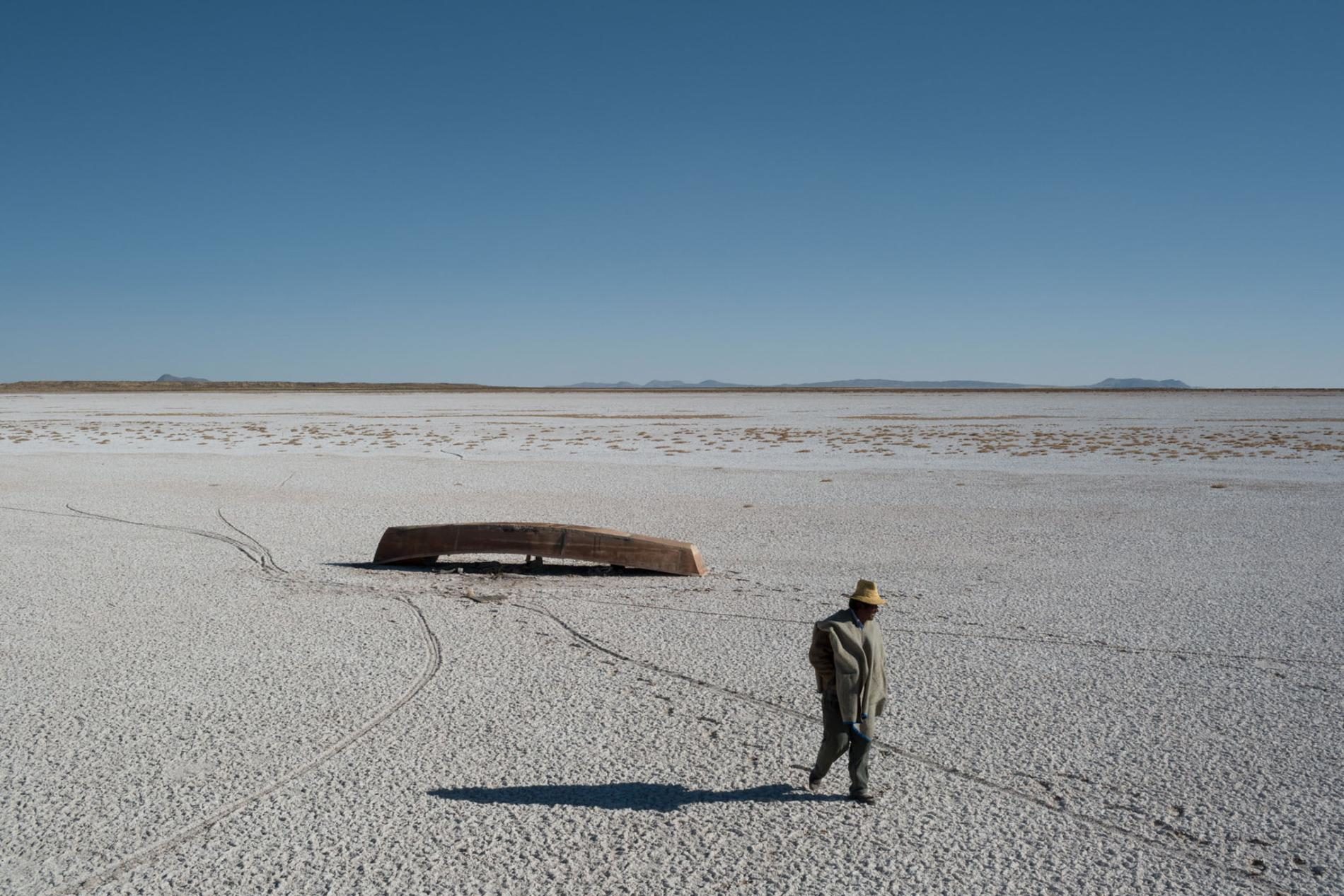
LAKE POOPÓ The dry, salt-crusted Bolivian lake bed unfurls into the distance. Boats are stranded; the fish and waterfowl are gone. Fishermen who depended on the lake are moving else - where. It’s a diaspora born of drought.
© MAURICIO LIMALAKE POOPÓ The dry, salt-crusted Bolivian lake bed unfurls into the distance. Boats are stranded; the fish and waterfowl are gone. Fishermen who depended on the lake are moving else - where. It’s a diaspora born of drought.
Warming climates, drought, and overuse are draining crucial water sources, threatening habitats and cultures.

Tire tracks stretched across the flat lake bed to the horizon. We followed them in a Suzuki 4x4, looking for clues about what's happened to Poopó, once Bolivia's second largest lake, which has vanished into the thin air of the Andean highlands.

We were driving on the lake bottom, yet we were more than 12,000 feet above sea level. The spring air was lip-chapping dry. Many of the fishing villages that have relied on Lake Poopó for thousands of years have emptied too, and we drove past clusters of abandoned adobe homes. Dust devils danced around them, spinning in warm winds. In the distance we spotted several small aluminum boats that seemed to be floating on water. As we drove closer, the mirage receded, and we found the boats sitting abandoned in the silt. I stepped out of the vehicle. My shoes cracked the salty crust that had formed jagged lumps, like ice cream in a freezer that has melted and recrystallized.

Comment: Our climate is changing and it's symptomatic of Earth entering an ice age, bringing with it drought and deluge, but we're also seeing the earth beneath our very feet shifting: