OF THE
TIMES
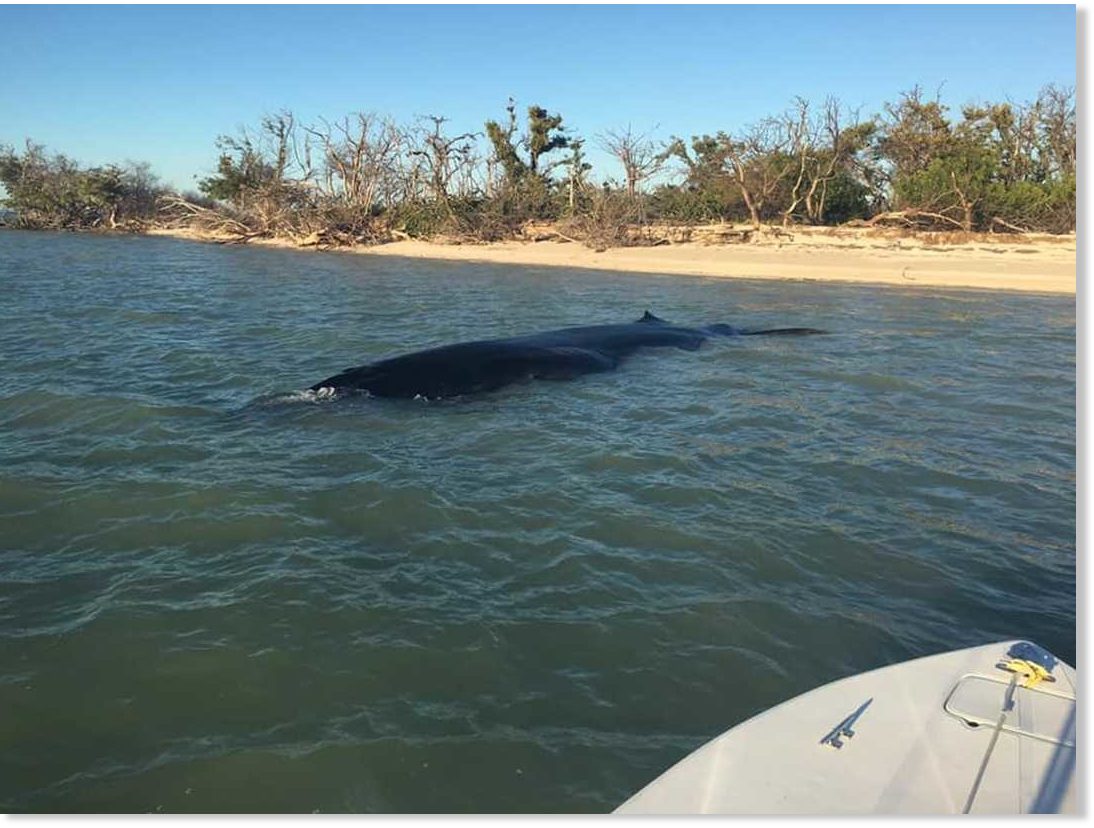
According to lore, the fish rise to the surface and beach themselves ahead of an impending earthquake. That ties in with scientific theories that bottom-dwelling fish may very well be susceptible to movements in seismic fault lines and act in uncharacteristic ways before an earthquake.
Hiroyuki Motomura, a professor of ichthyology at Kagoshima University, has a more mundane explanation for the recent discovery of oarfish off Toyama Prefecture.
"I have around 20 specimens of this fish in my collection so it's not a very rare species, but I believe these fish tend to rise to the surface when their physical condition is poor, rising on water currents, which is why they are so often dead when they are found," he said.
"The link to reports of seismic activity goes back many, many years, but there is no scientific evidence of a connection so I don't think people need to worry."
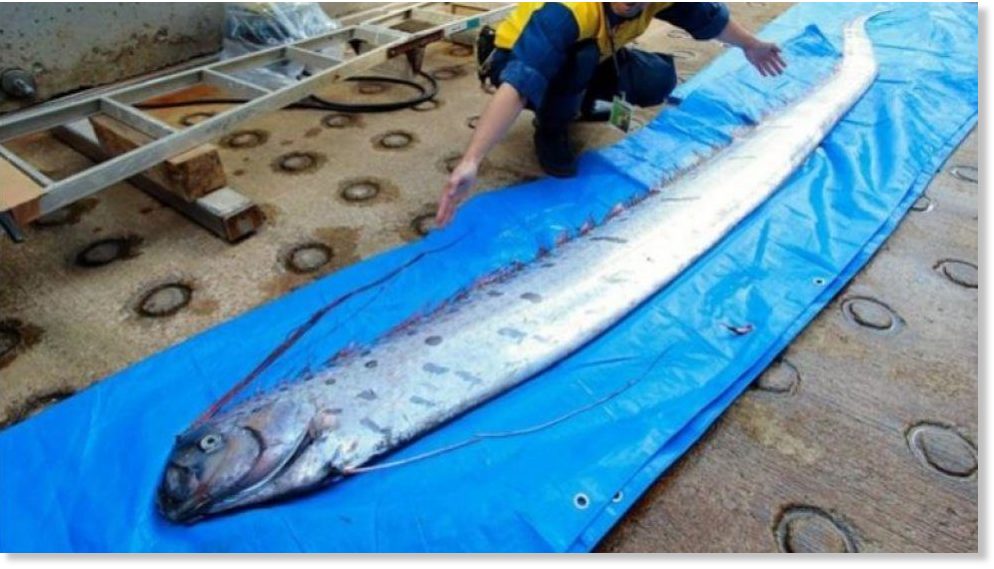
Oarfish - characterised by long silver bodies and red fins - usually inhabit deep waters and the fish are rarely seen from the surface, although legend has it that when oarfish rise to shallow waters, disaster is near. via Strait Times
Nevertheless, the oarfish's reputation as an indicator of imminent doom was enhanced after at least 10 oarfish were washed up along Japan's northern coastline in 2010. In March 2011, a magnitude-9 earthquake struck off northeast Japan, triggering a massive tsunami that killed nearly 19,000 people and destroyed the Fukushima nuclear plant.
With that anniversary looming, people on social media became jittery about the omens.
A message on Twitter claimed: "This is no doubt evidence of a precursor to an earthquake. And if it is in the Nankai Trough, it might be a huge quake."


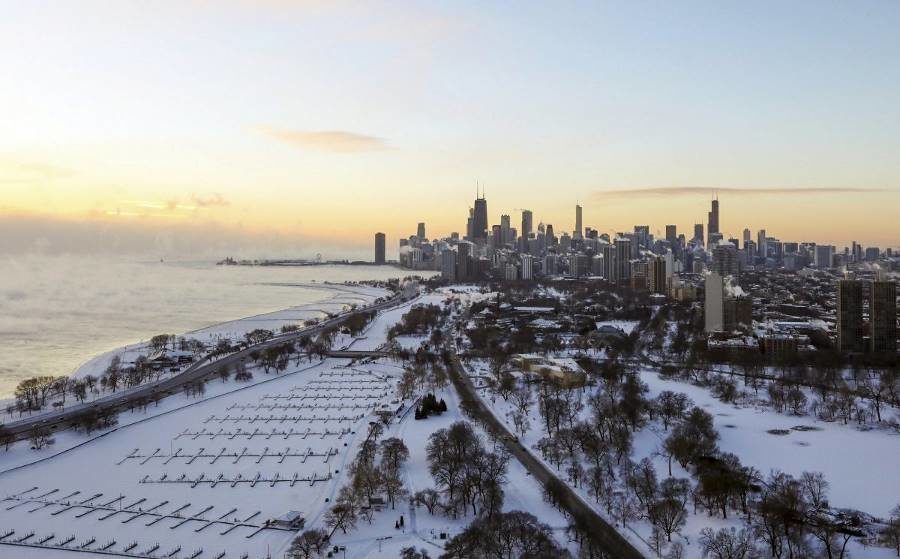
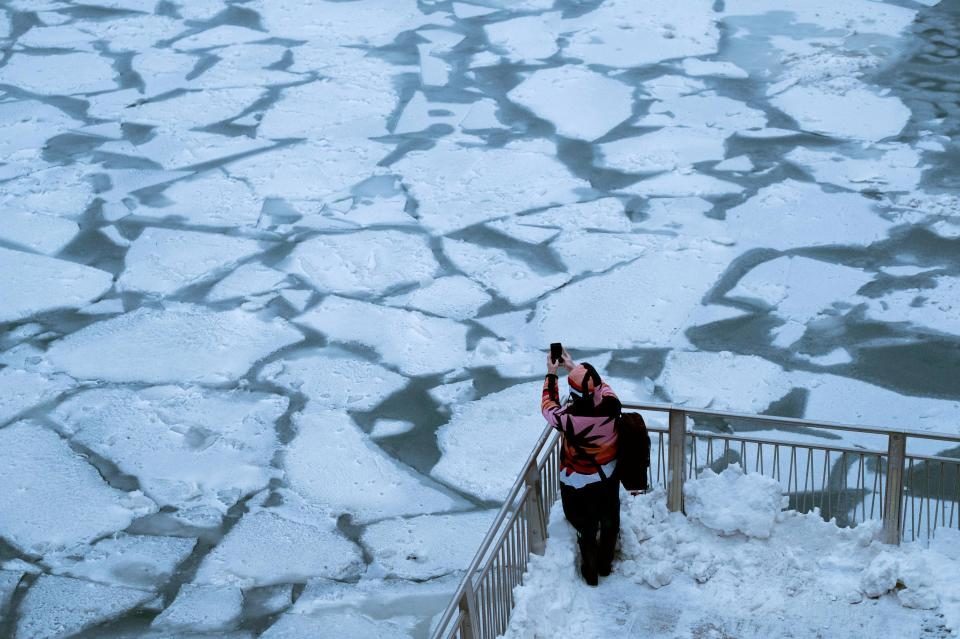
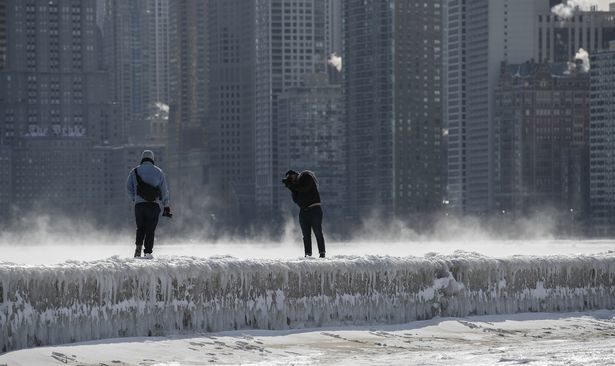
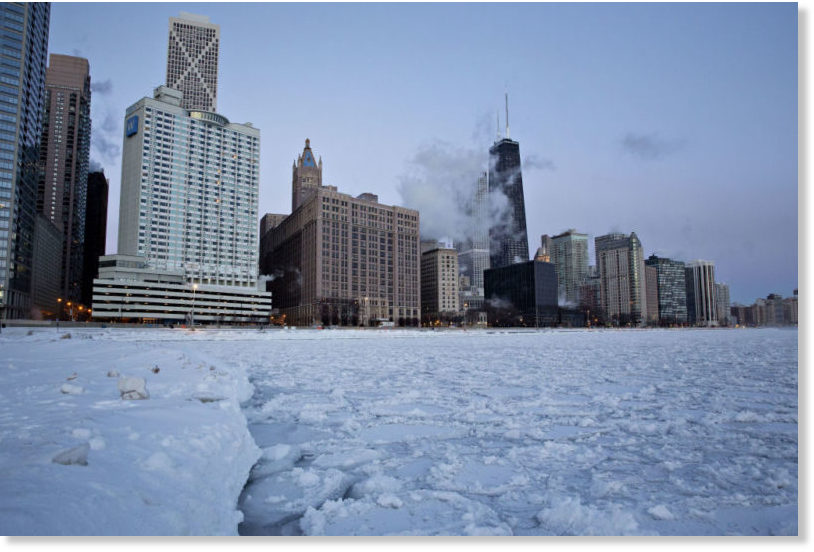
The death toll from the polar vortex causing freezing temperatures in the US has risen to 21.
Tens of millions of Americans braved Arctic-like temperatures as low as -48C on Thursday that has paralysed the US Midwest.
Officials across multiple states linked numerous deaths to the frigid air.
The death toll rose from a previous 12 after at least nine more people in Chicago were reported to have died from cold-related injuries, according to Dr Stathis Poulakidas at the city's John H Stroger Jr Hospital.
A University of Iowa student was found dead on campus of possible exposure early on Wednesday.
The wind chill at the time police found Gerald Belz, 18, was -46C, according to the National Weather Service.
Homeless and displaced people were particularly at risk, with Chicago and other cities setting up warming shelters.
But many toughed it out in encampments or vacant buildings.
A 60-year-old woman found dead in an abandoned house in Lorain, Ohio, was believed to have died of hypothermia, Lorain County Coroner Stephen Evans said.
"There's just no way if you're not near a heat source that you can survive for very long out in weather like this," Evans told the Chronicle-Telegram newspaper.
It has been more than 20 years since a similar Arctic blast covered a swath of the Midwest and Northeast, according to the weather service.
More than 30 record lows were shattered across the Midwest.
Cotton, Minnesota, had the lowest national temperature recorded early on Thursday at -48 C before the weather warmed up, the weather service reported.
US homes and businesses used record amounts of natural gas for heating on Wednesday, according to preliminary results from financial data provider Refinitiv.
In Detroit, General Motors Co suspended operations at 11 Michigan plants after a utility made an emergency appeal to conserve natural gas. Fiat Chrysler Automobiles NV also canceled a shift on Thursday at two of its plants.
Relatively balmier weather is on the horizon, however.
By the weekend, Chicago was expected to bask in snow-melting highs in the mid-40s to low 50s Fahrenheit, along with other parts of the Midwest, the weather service said.
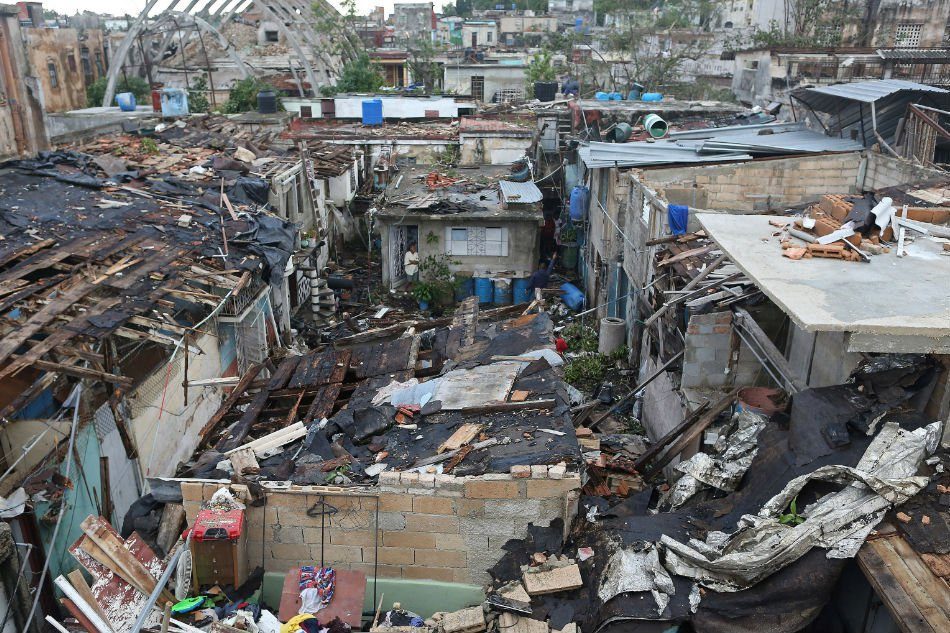
A rare tornado ripped through Havana late on Sunday, leaving at least four dead and nearly two hundred injured as it tore off roofs, flipped vehicles and reduced some of the buildings in its path to rubble.Meanwhile the huge clean-up effort in Havana continues:
The twister was the strongest to hit Cuba in nearly 80 years, according to Jose Rubiera, a meteorologist with the Cuban weather service. It pummeled its way 7.15 miles (11.5 km) through Havana over 16 minutes, at times reaching 0.62 miles (1 km) in diameter.
The streets of the worse-hit neighborhoods, mainly in eastern and central Havana, were strewn on Monday with shards of glass and debris as well as downed trees and power lines. Some areas lacked electricity and running water.
The devastation wrought suggested it was an "EF4" tornado on the Enhanced Fujita scale, the second most powerful category with winds up to 200 miles per hour (322 km per hour), Rubiera told state-run news agency Prensa Latina.
"When I rushed up to the first floor to look for my mother, I found this disaster - the roof and front wall had gone, and she'd fallen into the street," said Victor Leiva Ramos, 41.
Leiva Ramos, who was injured while trying to find her in the rubble, including a severed tendon, had his arm bandaged. His 73-year-old mother survived with a few fractures.
Cuba prides itself on suffering relatively few deaths in hurricane season due in part to a rigorous evacuation scheme.
Yet the tornado took Havana by surprise, although state-run media had warned residents that an approaching cold front from the north and winds from the south would create high winds, thunderstorms and heavy rainfall in the area.
Rubiera was later cited as saying that such phenomena were virtually impossible to predict when they affected such concentrated areas.
Diaz-Canel said the council of ministers had held an emergency meeting early on Monday to assess the damage and take the necessary steps to speed up the recovery work.
Comment: