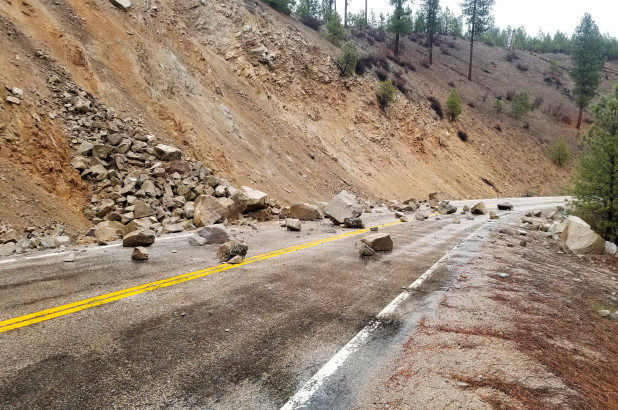
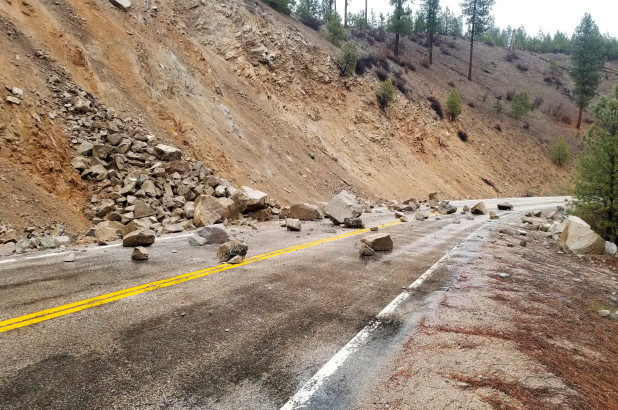
© Tyler Beyer via APThe earthquake caused a rockslide on Highway 21 near Lowman, Idaho.
It was a typical Tuesday evening at the Albertsons grocery store in this resort town about 100 miles north of Boise.
Until Susie Baker looked up and saw all the hanging aisle signs swinging back and forth.
"Then I thought I heard a sound ... and the floor was moving," said Baker, a checker at the store.
It was the force of the most powerful earthquake to strike the Gem State since 1983, a magnitude 6.5 temblor that jolted people across Idaho and three neighboring states. No injuries or damage were immediately reported.
The quake was centered 73 miles northeast of Meridian, near Boise, according to the U.S. Geological Survey, and, for some, conjured up memories of the state's worst such natural disaster, the 6.9 magnitude Borah Peak earthquake nearly four decades ago that killed two people and resulted in millions in damages, according to the Idaho Geological Survey.
"At first I thought it was thunder, weird thunder, but then the house was moving and I realized this is an earthquake — a really big earthquake," said Melissa Hawkins, 44, who lives in northwest Boise with her family. "It felt like it was in Boise."

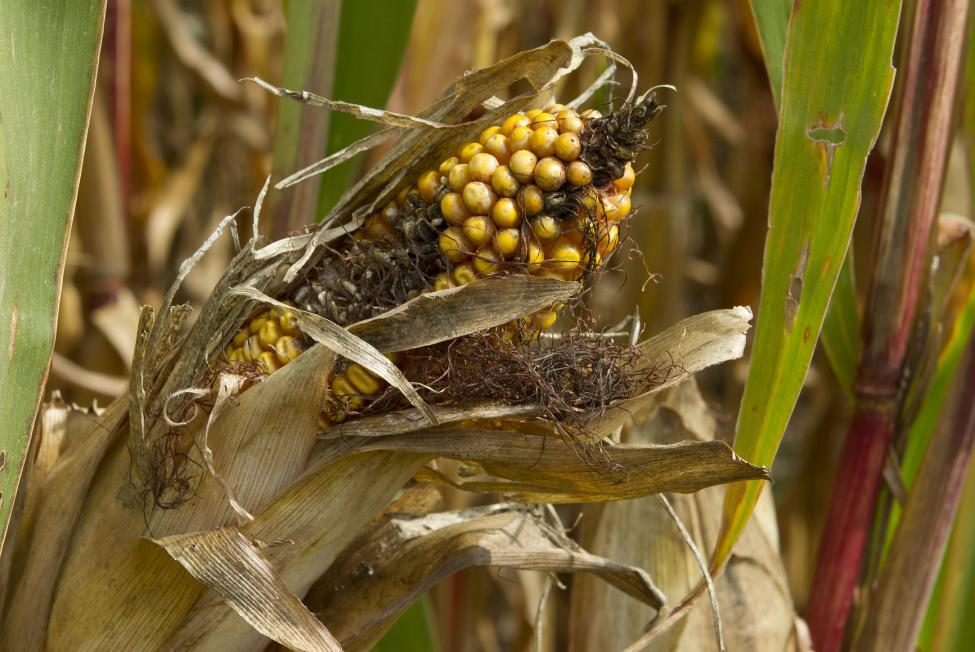

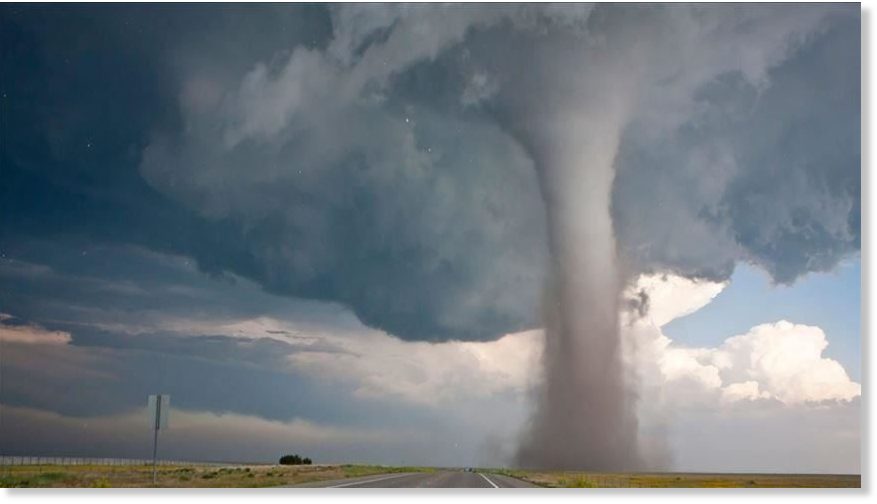


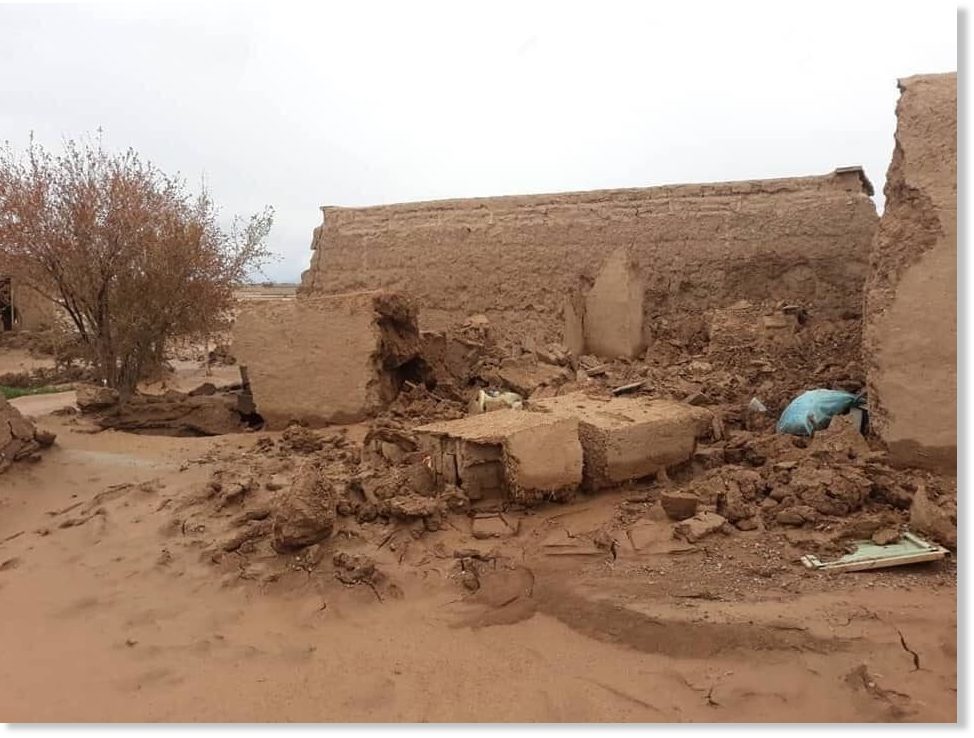






Comment: All over the planet erratic seasons and extreme weather are devastating harvests and have been for a number of years resulting in depleted stocks, this, coupled with the draconian and unfounded coronavirus lockdown measures means there's a good chance many countries could be looking at significant food shortages in the near future: UK's empty supermarket shelves: Panic is not the problem
It's also worth noting that there is good evidence the Americas are subject to cyclical megadroughts during times of planetary cooling, as happens to be the case today: A warning from ancient tree rings: The Americas are prone to catastrophic, simultaneous droughts