Science of the SpiritS


Red Pill

How to de-program Greta Thunberg

Greta
© Jack Davidson/Rolling Stone/KJN
Regardless of how many climate change doomsday stories are debunked, from showing billions of people misleading pictures of a skeletal polar bear hopelessly lurching through iceless lands to reporting about raging Californian wild fires set by radical arsonists, people have been given a story. Regardless of whether or not various natural catastrophes can actually be causally linked to CO2 levels, rather than merely correlatively linked, once we adopt a certain story as our own, the introduction of new information may or may not translate into a newly adapted story. It often doesn't. Regardless, the story we choose for ourselves serves as a map to help us navigate the world and how we choose to interpret our sense-perceptual experience.

At this point, we should state that this article is not about information, but about stories, and how we frame our stories using information. The stories we live our lives by and filter our experience through run much deeper than any amount of information. Information only sinks so deep into the mind. Stories seep into the "deep structures" of our psyche and soul. What's important here is how we use information to frame our story.

Comment: Even those who consider themselves awake and observant must constantly evaluate incoming information to discern truth or motive. Make it a way of life.


Info

Brain surgery without a scalpel

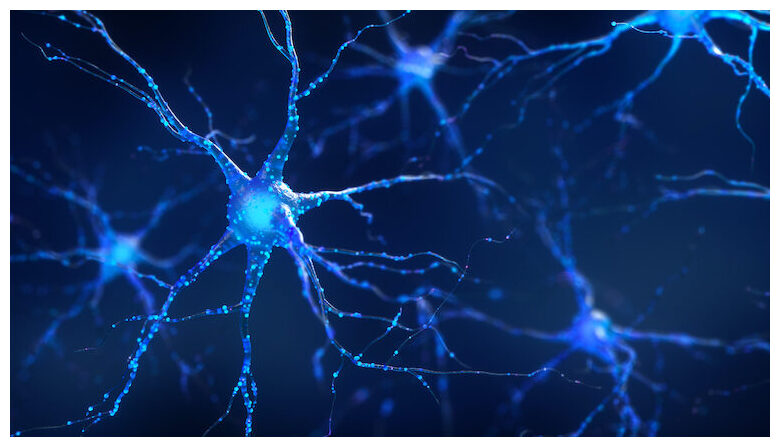
Neurons in Brain
© University of Virginia
School of Medicine researchers have developed a noninvasive way to remove faulty brain circuits that could allow doctors to treat debilitating neurological diseases without the need for conventional brain surgery.

The UVA team, together with colleagues at Stanford University, indicate that the approach, if successfully translated to the operating room, could revolutionize the treatment of some of the most challenging and complex neurological diseases, including epilepsy, movement disorders and more. The approach uses low-intensity focused ultrasound waves combined with microbubbles to briefly penetrate the brain's natural defenses and allow the targeted delivery of a neurotoxin. This neurotoxin kills the culprit brain cells while sparing other healthy cells and preserving the surrounding brain architecture.

"This novel surgical strategy has the potential to supplant existing neurosurgical procedures used for the treatment of neurological disorders that don't respond to medication," said researcher Kevin S. Lee, PhD, of UVA's Departments of Neuroscience and Neurosurgery and the Center for Brain Immunology and Glia (BIG). "This unique approach eliminates the diseased brain cells, spares adjacent healthy cells and achieves these outcomes without even having to cut into the scalp."

Blue Planet

Panpsychism is starting to push out naturalism as a scientific world view

panpsychism naturalism graphic
A key goal of naturalism/materialism has been to explain human consciousness away as "nothing but a pack of neurons." That can't work

Naturalism, often called "materialism," posits that nature is all there is. Panpsychism doesn't dispute that. But the panpsychist also thinks that consciousness is real — present in all nature (or all living nature) but especially developed in humans. Last Monday, writing about a classical atheist naturalist who was attacking panpsychism, I reflected on the difficulties the trend to panpsychism presents him.

The naturalist is hostile to the panpsychist because he assumes that human consciousness will, in due course, be explained away. It is either an illusion, or an aid to survival that evolved among early humans. Or perhaps it is a spandrel (in evolution theory, a useless accompaniment of useful traits).

In short, what we thought was our means of understanding the world is just another part of that world. It's not a place we can stand that gives us some insight.

Comment: Human beings have always instinctively understood the pervasive nature of consciousness in the world. From the attributions of qualities to a particular mountain or lake, to warriors naming their weapons, to the names given to ships or personal vehicles. The acknowledgment of that consciousness can be seen in the 'whisperers' of animal species, or even mechanics who 'have 'the knack' for machinery, which of course are a product of consciousness. The naturalists would have us live in a dreary world indeed.


People 2

Majority of adults in US believe in afterlife, Republicans much more than Democrats, poll shows

Afterlife 3
© unknown
A majority of adults in the United States believe in some form of an afterlife, but Republicans believe in it with a greater frequency than their Democratic counterparts, a Pew Research Centre report said on Tuesday.

"A majority of Americans believe in both heaven and hell, including 74% of Republicans and 50% of Democrats. But about a third (35%) of Democrats say that they do not believe in either heaven or hell, compared with just 14% of Republicans who say this. In fact, when given the option to express belief in some sort of afterlife aside from either heaven or hell, a quarter of all Democrats say that they do not believe in any afterlife at all, which is much higher than the share of Republicans who express the same view (9%)," Pew Research Assistant Justin Nortey said in the report.

Clipboard

Five reasons why Dostoevsky is SO great

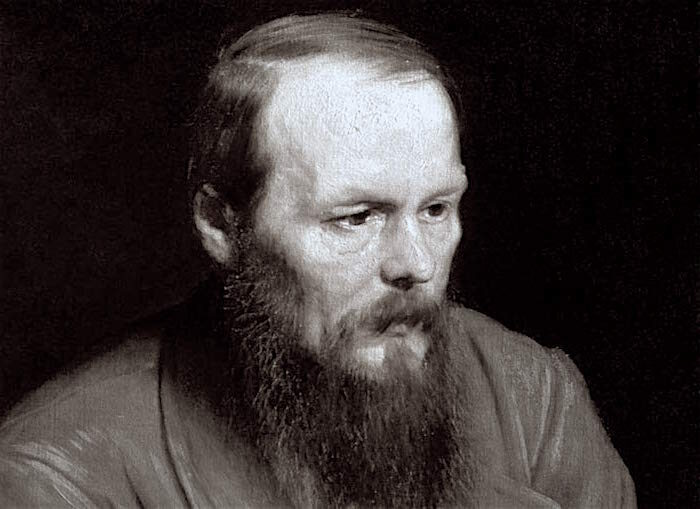
Fyodor Dostoyevsky
© UnknownFyodor Dostoyevsky
A great thinker. A true believer. An intrepid explorer of the darkest corners of the human mind. The man who conceived the world's most famous literary equation - Crime and Punishment. One hundred and forty years after his death, Fyodor Dostoevsky is still a source of great national pride in Russia and a magnet for bibliophiles across the world.

Vasily Rozanov, one of the most influential Russian philosophers of the 20th century wrote in 1912:
"Dostoevsky is a horseman in the desert with a quiver of arrows. Blood drips where his arrow hits. Dostoevsky lives in us. His music will never die."
Here are the top five traits of Fyodor Dostoevsky's personality which made him so great.

Snakes in Suits

Psychopaths and the managerial class: How homology in modus operandi risks pathocratic capture

Psychopath
Homology refers to a correspondence between two entities that share a common structure. What I'm arguing for here is a homology between the modus operandi of the current ruling managerial class and the manipulative, verbally fluent psychopath, which leaves the former - particularly the surplus elites of the ruling class - constantly vulnerable to pathocratic capture.1

The concept of pathocracy has been elaborated in an earlier post - those unfamiliar with that concept are suggested to learn about it, here. Additionally, no effort is made here to defend or support my claims about the ruling, managerial class. That has been done at length in my book, The Managerial Class on Trial. Those interested in evidence and elaboration of the claims made in this post should look there.

Briefly, over the last century and a half, Marx's bourgeois ruling class has been displace in the West by a new, managerial ruling class. The latter remain very much a class in Marx's sense, having a distinct relation to the mode of production. Like any other ruling class, they perpetuate an ideological superstructure that sustains their hegemony. What is unique about this managerial class, though, is that - being composed of symbol manipulators - they are uniquely verbally fluent and capable of psychological manipulation.

Comment: See also: And check out SOTT radio's:


Brain

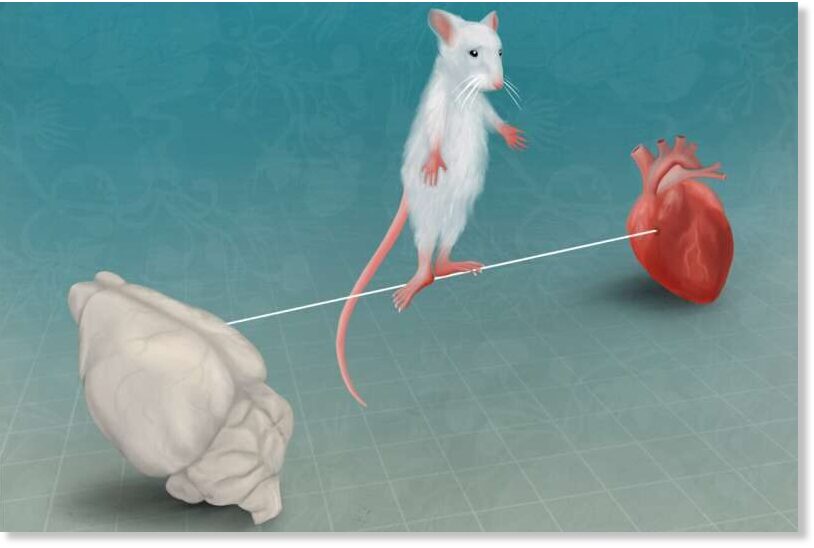
The brain uses bodily signals to regulate fear

insular cortex heart fear
© MPI of Neurobiology / KuhlThe insular cortex in the brain processes information about the heart rate to keep fear in balance.
Fear is essential for survival, but must be well regulated to avoid harmful behaviors such as panic attacks or exaggerated risk taking. Scientists at the Max Planck Institute of Neurobiology have now demonstrated in mice that the brain relies on the body's feedback to regulate fear. The brain's insular cortex strongly reacts to stimuli signaling danger. However, when the body freezes in response to fear, the heartbeat slows down, leading to attenuated insular cortex activity. Processing these opposing signals helps the insular cortex to keep fear in balance. The body's reactions are thus actively used to regulate emotions and are much more than passive emotional responses.

We usually experience fear as extremely unpleasant. Nevertheless, this emotion has a crucial function: It prevents us from engaging in overly risky behaviors. However, this only works if fear is kept within a healthy range. Excessively intense fear can severely impair our daily lives, as in the case of anxiety disorders or panic attacks. So how can fear be kept in balance? It seems obvious that bodily signals may play a crucial role, as fear causes noticeable changes in our bodies: The heart beats faster or breathing becomes shallower. However, how exactly the brain processes this information to ultimately regulate emotions like fear is still largely unknown.

Cassiopaea

Best of the Web: Pre-emptive compliance versus "It will only happen when it has happened"

spiritual
In my time working in the UK universities and National Health Service - these functions were brought under managerial control, and integrated into The System which (since early 2020) is now global.

The almost complete surrender of power by academics and doctors happened almost entirely without coercion. Why?

Essentially, deeply, due to the lack of motivation and courage from living as godless-expedient hedonists (i.e. regarding mortal life as wholly about 'utility'), on the basic of incoherent (increasingly inverted) Leftist values.

Lacking any positive transcendent values (truth, beauty, virtue, coherence...); modern people, especially Westerners, are easier to control than any group I have heard of throughout history.

But how did this control operate proximately? The answer could be termed pre-emptive compliance.

The management (whether national or local) would announce what was going to happen - some new scheme to strip autonomy from academics and subordinate teaching, research, scholarship under administrative control; or some new, extra, unpaid and harmful bureaucratic tasks...

Attention

The Temptations of Tyranny

Smash statues
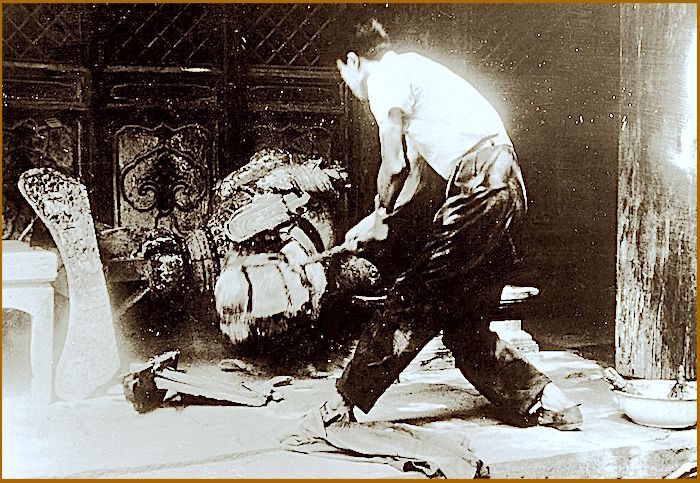
© Getty ImagesDestruction of statues during the Cultural Revolution in 1967.
When Shigalyov, one of the revolutionaries in Dostoevsky's Demons, lays out his "system of world organization," he admits that he got "entangled in my own data." Confronted with the brutal logic of his idealism, he is forced to concede that his conclusion "directly contradicts the original idea from which I start." His starting point, familiar to generations of revolutionaries, is the idea of "unlimited freedom." Rather than taking Shigalyov to the Utopia he imagines, it leads him down a path that ends in "unlimited despotism." Far from being disturbed by this unpalatable discovery, Shigalyov resolves his cognitive dissonance with a deepened sense of the correctness of his vision: "apart from my solution of the social formula, there can be no other." The revolutionary agitator sees his ideals collapse into their opposite, but even this does not damage the certainty with which he clings to them.

Comment: See also:

Study: Left-wing authoritarians share key psychological traits with far right


Brain

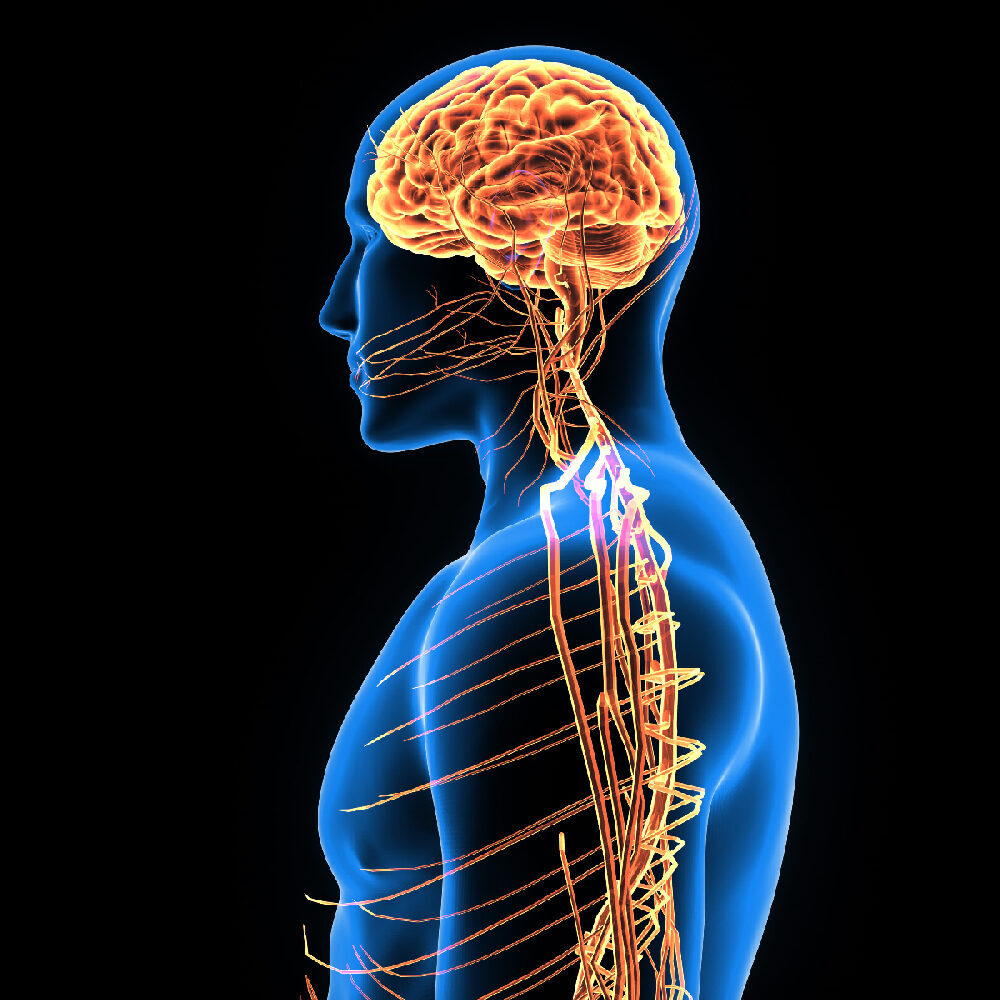
Consciousness: Is it in the Cerebral Cortex — or the Brain Stem?

3d brain illustration
3d illustration human body brain
In a recent discussion/debate with neurosurgeon Michael Egnor, neuropsychologist Mark Solms offers an unconventional but evidence-based view, favoring the brain stem.

In September, neurosurgeon Michael Egnor debated atheist broadcaster Matt Dillahunty at Theology Unleashed, on the existence of God. This time out (October 22, 2021), he is teamed with distinguished South African neuropsychologist Mark Solms, author of The Hidden Spring (2021) — who begins by declaring, in his opening statement, "the source of consciousness in the brain is in fact in the brain stem," not the cerebral cortex, as almost universally assumed. He explains his reasoning with evidence.

Egnor doesn't dispute that statement; in fact, in his own opening statement later, he reinforces it with observations from his own practice. To learn more, read on.

Comment: See also: