Secret HistoryS


Snakes in Suits

An old ruse: Psychopathic leaders have advocated false flag terrorism for over 2,000 years

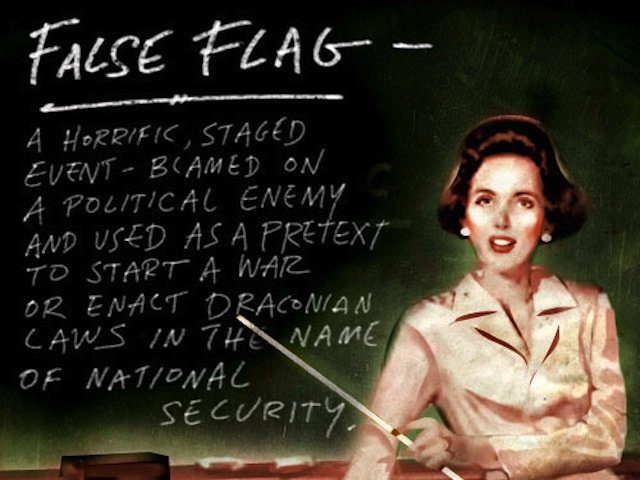
Teaching false flags
© Anthony Freda
Kautilya (also called "Chanakya") was a royal advisor thousands of years ago in ancient India. His writing is considered an important precursor to much modern thought. Wikipedia notes:
He is considered the pioneer of the field of political science and economics in India, and his work is thought of as an important precursor to classical economics.
2,300 years ago - in the 4th century B.C. - Kautilya advocated the use of false flag attacks:
The brother of a seditious minister may put forward his claim for inheritance. While the claimant is lying at night at the door of the house of the seditious minister or elsewhere, a fiery spy ... may murder him and declare "Alas! the claimant for inheritance is thus murdered (by his brother)." Then taking the side of the injured party, the king may punish the other (the seditious minister).

Comment: The first question to ask after a terror attack: Was it a false flag?


Archaeology

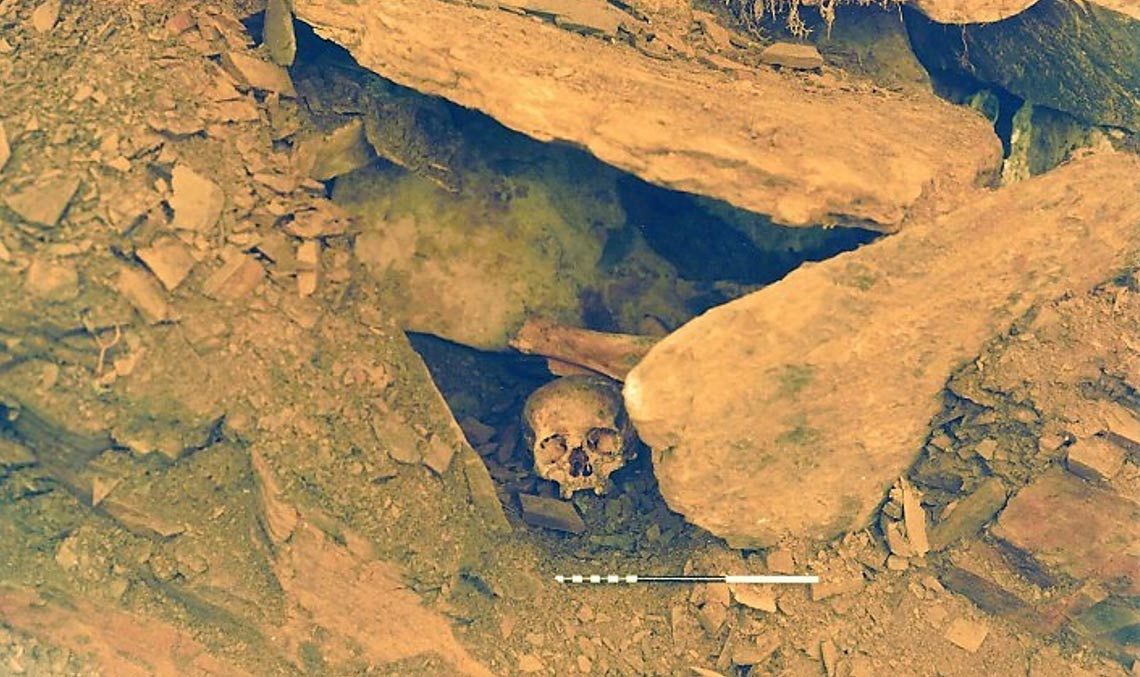
Hereditary trait or head-binding? Archeologist seeks answers on strange skull found at Scotland's Achavanich Beaker burial site

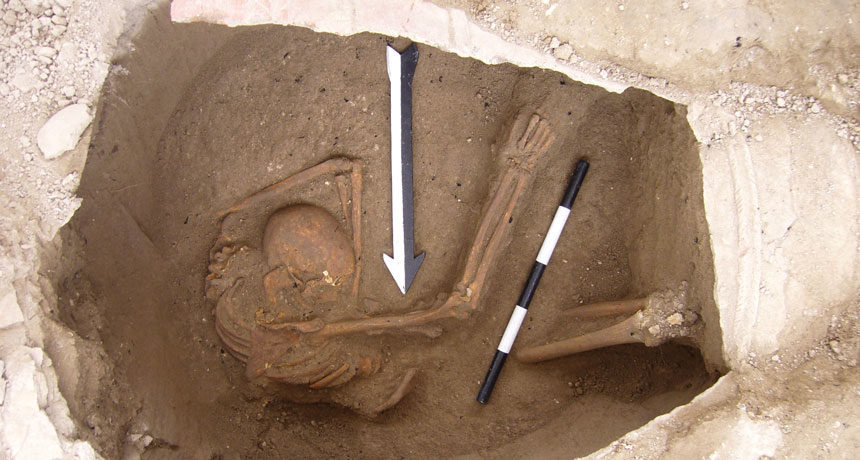
Scottish Achavanich Beaker burial skull
© M. HooleSkull shown in-situ prior to excavation at the Achavanich Beaker burial site.
In 1987, the remains of an 18-22-year-old woman, now dubbed Ava, were discovered at Achavanich in Caithness in the north of Scotland. The site was excavated by the Highland Regional Council Archaeology Unit, and the burial was later dated to the Middle Bronze Age. Although the discovery is interesting, and one aspect of it has been hotly debated by researchers, it was soon forgotten by most people. Now, an archaeologist is working to change that.

Archaeologist Maya Hoole hopes to renew public interest in the burial from about 3,700 years ago. As she told the BBC, "Like many others, I'm sure, I find skeletal remains completely mesmerising."

On Hoole's website, the Achavanich Beaker Burial Project, she explains her goal further: "I had one objective when I started this project: to change our understanding of this site and, over the last year, have been trying to make this happen." Hoole believes that a renewed interest and modern technology could make this happen, revealing much more about the secrets of Ava's life and death.

Comment: More on other discoveries of deformed skulls:


Info

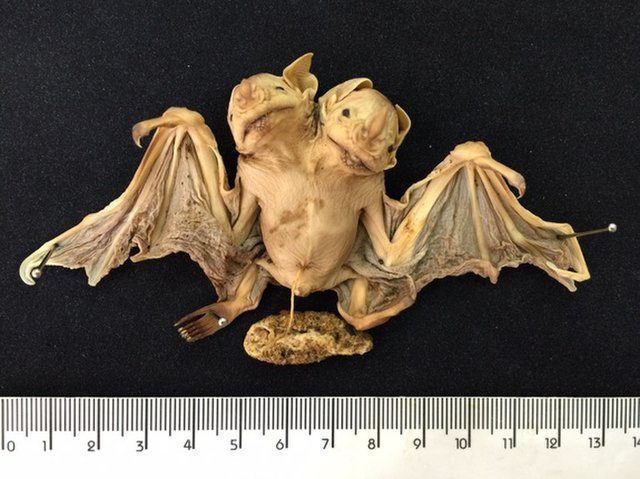
Rare conjoined bat twins discovered in Brazil

Conjoined bat twins
© Dr. Nadja L. PinheroThese conjoined bat twins, found under a mango tree in southeastern Brazil in 2001, were either stillborn or died shortly after birth.
The corpses of rare conjoined bats found in Brazil have given scientists a closer look into a phenomenon that has only ever been recorded twice before.

When Marcelo Rodrigues Nogueira, a postdoctoral researcher in biology at the State University of Northern Rio de Janeiro first saw the bat twins, he was "completely astonished," he wrote in an email to Live Science. "I have handled many bats [in my career], some with very impressive morphological characters (and bats are very special in this respect!), but none [were as] surprising as these twins."

Only two other pairs of conjoined bat twins have been reported in the scientific literature, one in 1969 and another in 2015.

Light Sabers

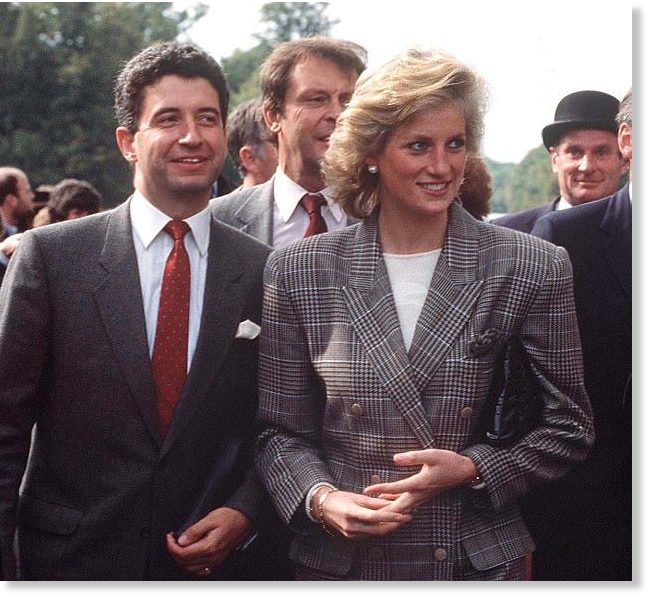
Princess Diana's former private secretary berates Royal Family for disrespectful treatment towards Diana

princess diana
Princess Diana's former private secretary Patrick Jephson (left) has decided that the time is right to berate the Royal Family for a failure to treat her with the humanity and respect she deserved
As the 20th anniversary of the death of Diana, Princess of Wales, approaches, her former private secretary Patrick Jephson has decided that the time is right to berate the Royal Family for a failure to treat her with the humanity and respect she deserved.

In a new American edition of his book Shadows Of A Princess, published today, Jephson writes: 'Remembering Diana... can be summed up in one word - a word traditionally synonymous with the British Crown, exemplified by Elizabeth II's lifetime of service.

'The word is decency. Yet in some corners of the royal establishment, two decades of spin doctors and a naive fondness for the slippery arts of news management have put the word and the idea at risk...

'Diana alive was a decency test for the Windsors, which some of them failed.'

Attention

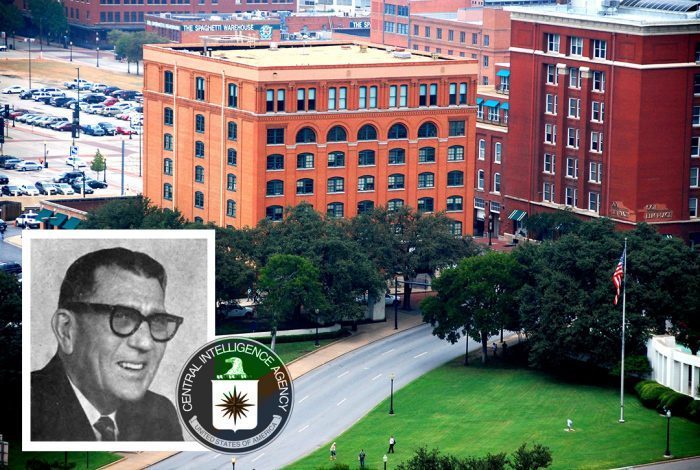
JFK docs revelation: Dallas mayor during assassination was CIA asset

Earle Cabell dealey plaza
© Anita & Greg / Flickr (CC BY-NC 2.0), US Government Printing Office / Wikimedia and CIA / Wikimedia.=Texas School Book Depository in Dealey Plaza, Dallas. Former Dallas Mayor Earle Cabell (inset).
Here is the first major revelation from the historic release of previously withheld government records on the JFK Assassination: the mayor of Dallas when President John F. Kennedy was killed in that city was a CIA asset.

We were alerted to this salient fact by retired military intelligence officer and author John Newman, who is conducting a thorough analysis of the long-secret documents.

At the time of the assassination, Dallas Mayor Earle Cabell, brother of one-time Deputy Director of Central Intelligence Charles P. Cabell, had been a CIA asset since 1956.

It is worth noting that Kennedy dismissed CIA Director Allen Dulles in November 1961, and that Earle Cabell's brother Charles left the CIA on January 31, 1962, after Kennedy forced him to resign. Thus, both Dulles and Charles Cabell were no longer working for the CIA on November 22, 1963, when Kennedy was killed.

Comment: As the article goes on to state, Cabell was responsible for planning JFK's motorcade route through the city. Here's a link to the relevant recently released documents.


Flashlight

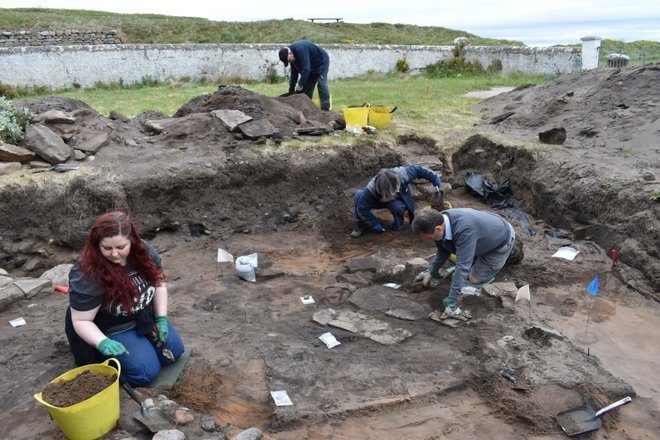
1,000-year-old Pictish fort unearthed in Scotland

Pictish fort
© University of AberdeenArchaeologists have recently unearthed the traces of an ancient Pictish fort in Scotland underneath an 1800s-era town.
A fort that is more than 1,000 years old, dating back to the time of Alfred the Great, has been unearthed in Scotland, more than 200 years after it was thought to have been completely destroyed.

The ancient fort was built by the Picts, a loose confederation of tribes who lived in what is now Scotland during the Dark Ages. The fort was likely a major source of power for the Pictish kingdom between A.D. 500 and 1000. In the 1800s, a town was built over the ancient stronghold, known as Burghead Fort, and most archaeologists thought the last remaining traces of the fort were destroyed at that time.

However, new archaeological excavations are revealing major structures hidden beneath the town, including a rare coin that dates to the period of English king Alfred the Great.

"Beneath the 19th century debris, we have started to find significant Pictish remains," Gordon Noble, head of archaeology at the University of Aberdeen in Scotland, said in a statement. "We appear to have found a Pictish longhouse. This is important because Burghead is likely to have been one of the key royal centers of Northern Pictland."

Dig

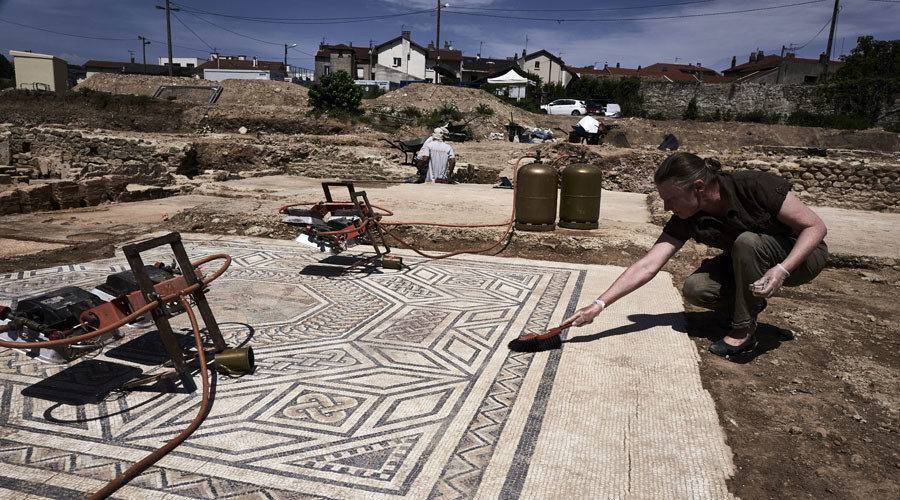
French archaeologists unearth 'Little Pompeii' dating back to 1st century

archaeology dig
© Jean-Philippe Ksiazek / AFPAn archaeologist carries out a search at a site near Vienne, eastern France.
French archaeologists have unearthed a Roman neighborhood in the country's southeast, calling the discovery a "real little Pompeii." The findings include the remains of luxury homes and public buildings.

The discovery took place on the banks of the Rhone river in the city of Vienne, about 30 kilometers (18 miles) south of Lyon. It was found on land awaiting the construction of a housing complex and covers nearly 7,000 square meters (75,000 square feet).

The neighborhood includes homes dating back to the 1st century AD, and is believed to have been inhabited for around 300 years before being abandoned after a series of fires.

"We're unbelievably lucky. This is undoubtedly the most exceptional excavation of a Roman site in 40 or 50 years," lead archaeologist, Benjamin Clement, told AFP.

The French culture ministry termed the discovery an "exceptional find."

Many artefacts at the site have been well-preserved, prompting Clement to refer to the area as "a real little Pompeii in Vienne." The remark references the Roman-city state, now a UNESCO World Heritage Site, which was extremely well-preserved after being covered in volcanic ash.

Dig

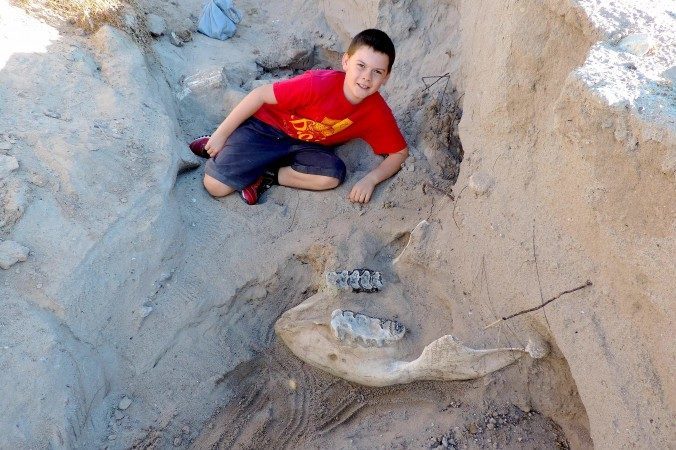
Boy literally stumbles upon rare 1.2 million-year-old fossilized skull

Jude Sparks poses with the jawbone of a stegomastodon
© Peter HoudeJude Sparks poses with the jawbone of a stegomastodon he discovered while hiking in the desert in Las Cruces, N.M., with his family.
Ten-year-old Jude Sparks was hiking in the desert near Las Cruces in New Mexico with his family in November when he tripped over something extraordinary-a large, well-preserved, 1.2 million-year-old fossilized skull.

"I was running farther up and I tripped on part of the tusk," Jude said. "My face landed next to the bottom jaw. I looked farther up and there was another tusk."

MIB

Tapes reveal that Princess Diana feared bodyguard she was 'deeply in love with' was "bumped off," Prince Charles insisted on having a mistress

Diana and Barry Mannakee
© Tim GrahamDiana had a close bond with bodyguard Barry Mannakee
The late Princess opened up in a series of tapes in 1992 and 1993 - but it is the first time they will air in the UK

Sensational and previously unseen tapes have revealed Princess Diana feared her close friend and protection officer was "bumped off".

The shocking TV documentary, never seen on British TV, lays bare Diana's disastrous marriage to Prince Charles.

In it she speaks candidly about his affair with Camilla Parker Bowles, her struggles within the Royal Family, her battle with bulimia and her love for late protection officer Barry Mannakee.

Viewers will see the sadness in Diana's eyes as she speaks about her love for protection officer Mannakee who died in a motorbike crash in 1987 weeks after being sacked.

Diana believed he had been "bumped off". While never using his name, she says: "When I was 24 or 25 I fell deeply in love with someone who worked in this environment.

Comment: It gets far worse than this, see: Unlawful Killing - The Murder of Princess Diana and Why it Matters


Beaker

Ancient DNA sets the record straight on the Canaanites

Canaanites DNA
© DR. CLAUDE DOUMET-SERHAL/THE SIDON EXCAVATION
DNA is setting the record straight on ancient Canaanites.

For the first time, scientists have deciphered the complete genetic instruction manuals of Canaanites. By comparing five Canaanite genomes with those of other ancient and modern populations, the researchers identified the Canaanites' ancestors and discovered their descendants, modern Lebanese people.

The results, reported online July 27 in the American Journal of Human Genetics, give new insight into the origins and fate of a people whose story has largely been told through the secondhand accounts of its contemporaries.

The Canaanites emerged in the Levant, a region east of the Mediterranean Sea, 3,000 to 4,000 years ago. This cultural group, which established extensive trade networks and colonies across the Mediterranean region, left behind few written records, perhaps because they wrote on papyrus rather than clay. So most knowledge of the Canaanites comes from ancient Egyptian, Hebrew and Greek documents.

Comment: Further reading:

Judaism and Christianity - Two Thousand Years of Lies - 60 Years of State Terrorism