Secret HistoryS


Info

An unholy alliance that never was: How North Korea and Israel almost became buddies

Benjamin Netanyahu
© AP Photo/ Ahn Young-joonIsraeli Prime Minister Benjamin Netanyahu and his wife Sara Netanyahu speak to reporters after visiting the Demilitarized Zone separating South Korea from its communist rival, North Korea, Thursday, Aug. 28, 1997.
In an exceptional episode, little-known and never acknowledged in the Western mainstream media, Israel secretly negotiated a billion dollar buy-out of North Korea's missile export program to the Middle East. Negotiations ran between 1992 and 1994, when the US intervened to terminate the deal.

One might not think it, but North Korea and Israel have quite a lot in common. For one, neither is a signatory to the Nuclear Non-Proliferation Treaty (NPT), yet both maintain nuclear arsenals, often overtly and covertly threatening their use to further their foreign policy objectives. Moreover, both states are perhaps justifiably paranoid about their neighboring countries.

They are also both regional exceptions - Israel a predominantly Jewish state in a Muslim, Arab region, North Korea an ostensibly pro-China communist state surrounded by pro-Western capitalist proximates.
Info

Humans lived on Sumatra 20,000 years earlier than previously thought

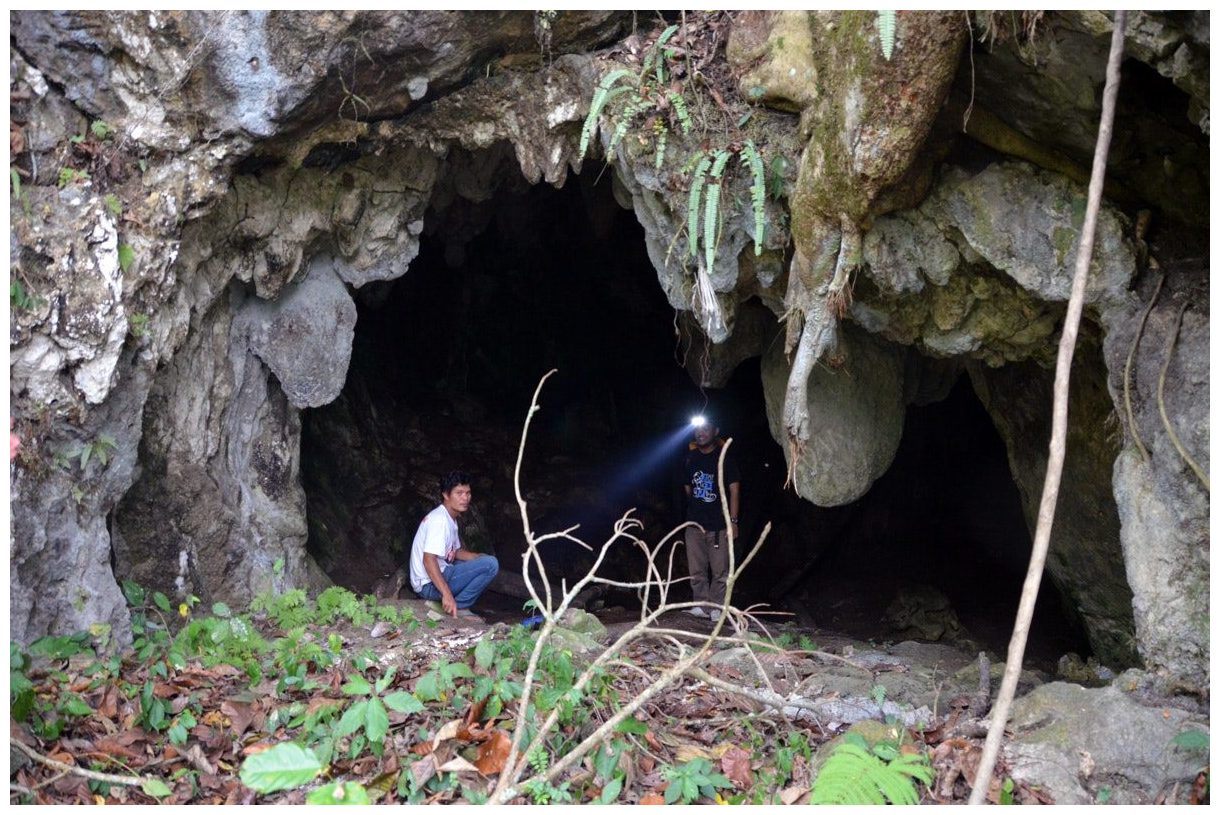
Lida Ajer cave
© Julien LouysThe entrance to Lida Ajer cave.
Fossil teeth found at an ancient cave site lost to science for more than a century indicate humans lived on the Indonesian island of Sumatra 63,000 to 73,000 years ago - 20,000 years earlier than previously thought.

The teeth, retrieved from a cave named Lida Ajer, in the Padang Highlands on Sumatra's west coast, provide the earliest evidence of modern humans living in a rainforest - an environment known to be extremely challenging for incoming Homo sapiens, who were adapted to open grassland survival.

The research, published in the journal Nature, has ramifications in several areas.

Together with recent research indicating the earlier-than-expected arrival of modern humans in northern Laos, the study potentially resets the time frame for the arrival of Homo sapiens in Asia.

This, in turn, may cause a re-examination of timelines for modern human migration out of Africa. It could also impact on research establishing the earliest arrival of humans in Australia.

Archaeology

New study suggests ancient Egyptian pharaoh may have been a giant

Pharaoh Sa-Nakht
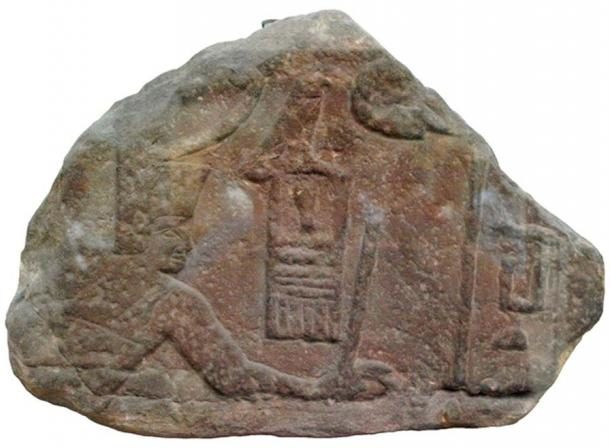
© Wikimedia CommonsRelief fragment of Pharaoh Sa-Nakht from The British Museum.
A new study suggests that the remains of an ancient Egyptian, believed to be the Third Dynasty pharaoh Sa-Nakht, could belong to the first and oldest known human giant. Experts are now wondering: are giants more than just myth after all?

Did Giants Ever Exist?

In the search for proof that giants existed, people have traditionally exaggerated with unfounded stories and tales. Nevertheless, the controversial discoveries of skeletons measuring 7 feet to more than 9 feet tall, along with other artifacts, have suggested to some that truth inspired these legends.

Interestingly, American president Abraham Lincoln once stated, inspired by viewing Niagara Falls: "The eyes of that species of extinct giants, whose bones fill the mounds of America, have gazed on Niagara, as ours do now. Contemporary with the whole race of men, and older than the first man, Niagara is strong, and fresh today as 10,000 years ago." Apparently, Lincoln believed in the existence of giants, but was he right? A new study says yes; well, kind of (not the kind of giants most of us would imagine).

Archaeology

Persian bronze bowl found encasing skull of 1,000 year old Arctic chieftain's infant child

siberia grave child persian bowl
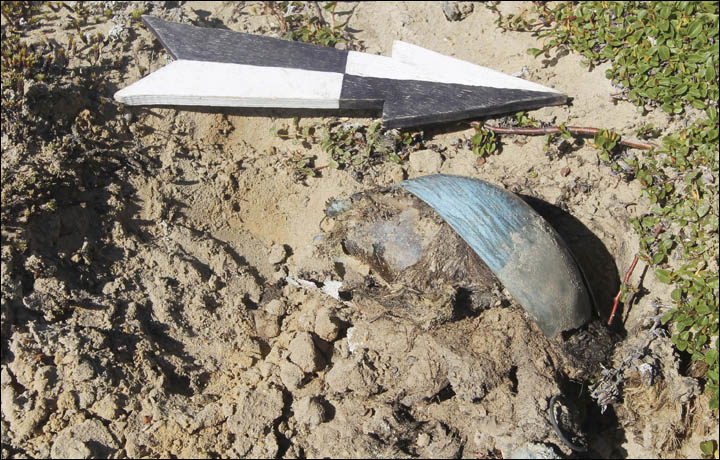
© Vesti YamalThis unique discovery in the extreme north of Russia was part of an elaborate burial of a child from an elite family, aged no older than three when he or she died.
Medieval child's remains buried with a knife and fur clothes for protection in the afterlife by mystery polar civilisation.

The skull pieces were discovered by archeologists above the Arctic Circle on the remote permafrost Gydan peninsula close to the Kara Sea in Yamalo-Nenets autonomous region.

Scientists last year announced the find of the turquoise-coloured bronze bowl fragment - originally from Persia, some 6,000 kilometres to the south - but now say that this unique discovery in the extreme north of Russia was part of an elaborate burial of a child from an elite family, aged no older than three when he or she died. Earlier the bowl was identified as a cup.

Archeologist Andrey Gusev, researcher at the Arctic Research Centre, Salekhard, suggested the child was born to a medieval polar potentate.

'We can definitely say that this child was not ordinary,' he said. 'He or she was from some wealthy family, judging by the things laid in the grave. The parents could afford quite expensive things, especially the bowl - it was imported.'

MIB

Newly unearthed memo reveals CIA infiltration of the media

cia william casey disinformation program quote
A new declassified CIA report unearthed by the FOIA investigative cooperative MuckRock contains some shocking commentary on how the intelligence community views and interacts with the media. The 1984 series of internal memos, part of the CIA's recent CREST release (CIA Records Search Tool) of over 900,000 newly declassified documents, were drafted in response to a study on unauthorized leaks and disclosures written by legendary CIA officer Eloise Page.

The CIA Inspector General [IG] was tasked by CIA Director Bill Casey to investigate and review CIA vulnerabilities to media scrutiny. One of Eloise Page's suggestions involved CIA and agency friendly individuals gaining influence at universities and journalism schools in order to change and shape curriculum. As MuckRock explains:

Archaeology

Discovery of 2,500 year old honeycombs in northern Italy suggests Etruscans were expert beekeepers

Etruscan honecomb
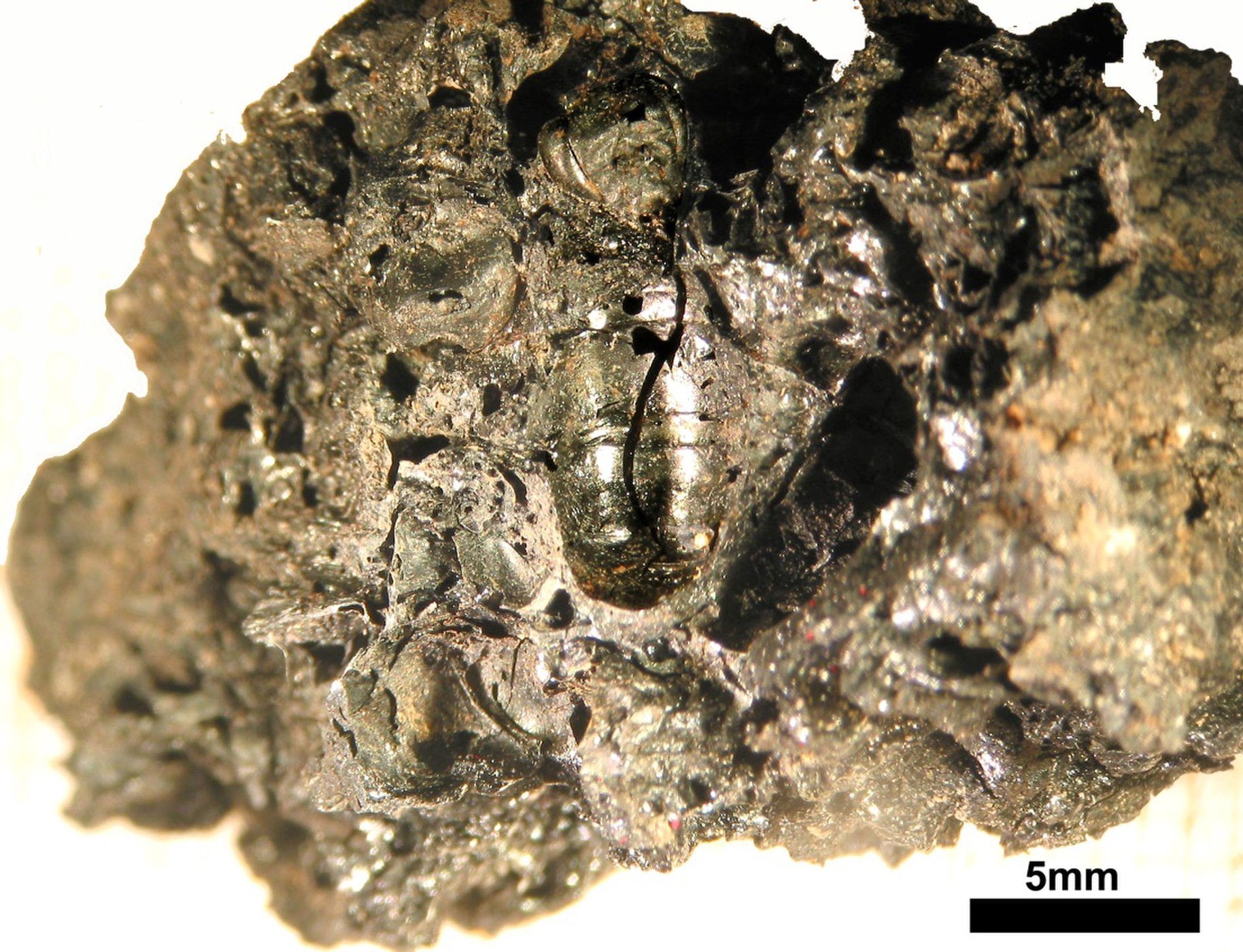
© Lorenzo CastellanoScientists discovered charred honeycombs, preserved honeybees (shown here) and honeybee products on the floor of a workshop at an Etruscan trade center in Milan, Italy.
The charred remains of 2,500-year-old honeycombs, as well as other beekeeping artifacts, have been discovered in an Etruscan workshop in northern Italy.

The findings included the remains of a unique grapevine honey produced by traveling beekeepers along rivers, according to a new study.

"The importance of beekeeping in the ancient world is well known through an abundance of iconographic, literary, archaeometric and ethnographic [or cultural] sources," Lorenzo Castellano, a graduate student at the Institute for the Study of the Ancient World at New York University and first author of the new study, told Live Science. (In archaeometry, scientists use physical, chemical and mathematical analyses to study archaeological sites.)

Even so, since honeycombs are perishable, direct fossil evidence of them is "extremely rare," he added.

Info

Carbon 14 dating and settled science

Carbo 14  Norwegian Blues
© Malaga Bay
A depressing aspect of some published papers is that they assiduously avoid analysing the raw data.

Instead they plunge headlong into transmogrifying their raw data into Settled Science.

This is regrettable because a simple reality check can provide some valuable insights.

USA

The Bush Family - Destroying America for over 30 years

The Bush Family
© Wikimedia Commons
In 1961, General Eisenhower warned America about the dangers of the Military Industrial Complex.

In 1988/1989/1990 I was dating Oscar Wyatt's legal secretary. Oscar Wyatt was CEO of the Coastal Corporation, and is the real life person whom J.R. Ewing was modeled after in the TV show Dallas. So I was privy to the daily inner workings of (the very dirty) Texas politics. There were four powerful groups in Texas : the Bushes, Oscar Wyatt, John Connally and Ross Perot. John Connally was a narrow survivor of the deep state coup which killed JFK in 1963 (in Texas and put a Texan in the White House.)

Info

Humans had farms 30,000 years earlier than previously thought

Ancient Remains in Cambodia
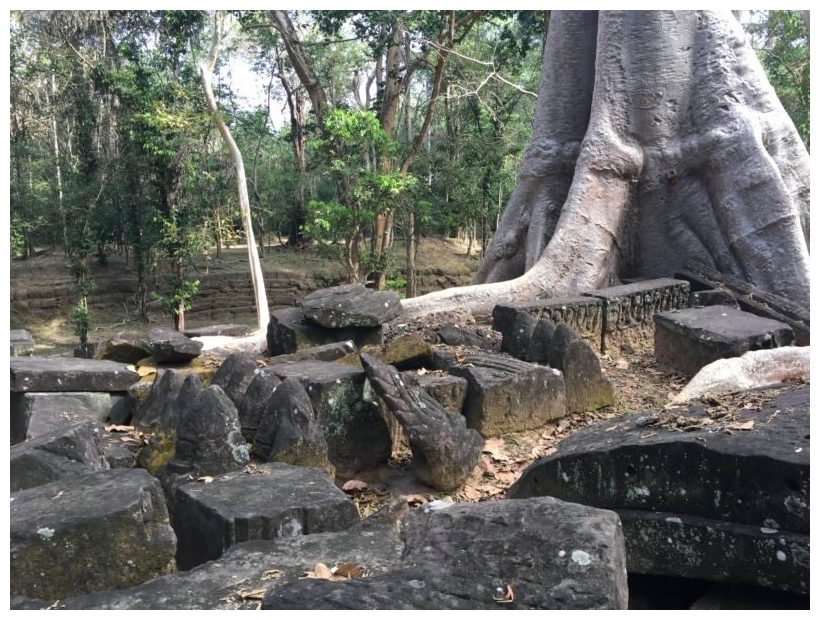
© ars TechnicaThese are the relatively recent remains of an ancient temple in the tropical forest of Cambodia.
It's an idea that could transform our understanding of how humans went from small bands of hunter-gatherers to farmers and urbanites. Until recently, anthropologists believed cities and farms emerged about 9,000 years ago in the Mediterranean and Middle East. But now a team of interdisciplinary researchers has gathered evidence showing how civilization as we know it may have emerged at the equator, in tropical forests. Not only that, but people started farming about 30,000 years earlier than we thought.

For centuries, archaeologists believed that ancient people couldn't live in tropical jungles. The environment was simply too harsh and challenging, they thought. As a result, scientists simply didn't look for clues of ancient civilizations in the tropics. Instead, they turned their attention to the Middle East, where we have ample evidence that hunter-gatherers settled down in farming villages 9,000 years ago during a period dubbed the "Neolithic revolution." Eventually, these farmers' offspring built the ziggurats of Mesopotamia and the great pyramids of Egypt. It seemed certain that city life came from these places and spread from there around the world.

But now that story seems increasingly uncertain. In an article published in Nature Plants, Max Planck Institute archaeologist Patrick Roberts and his colleagues explain that cities and farms are far older than we think. Using techniques ranging from genetic sampling of forest ecosystems, to soil analysis and lidar, the researchers have found ample evidence that people at the equator were actively changing the natural world to make it more human-centric.

Meteor

Greeks' main genetic ancestry from the Minoans and Mycenaeans

Ever since the days of Homer, Greeks have long idealized their Mycenaean "ancestors" in epic poems and classic tragedies that glorify the exploits of Odysseus, King Agamemnon, and other heroes who went in and out of favor with the Greek gods. Although these Mycenaeans were fictitious, scholars have debated whether today's Greeks descend from the actual Mycenaeans, who created a famous civilization that dominated mainland Greece and the Aegean Sea from about 1600 B.C.E. to 1200 B.C.E., or whether the ancient Mycenaeans simply vanished from the region.

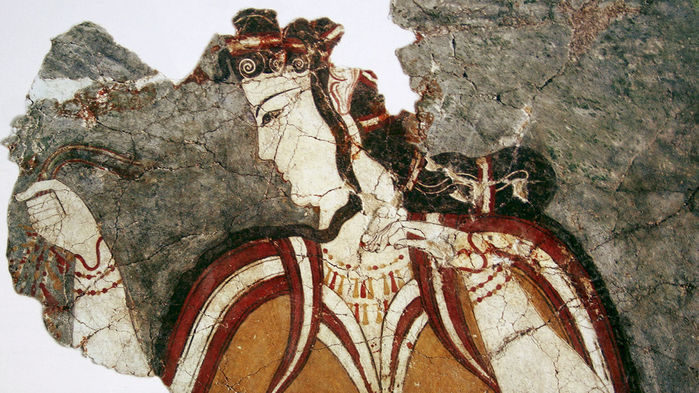
Mycenaean woman fresco
© Yann Forget/Wikimedia CommonsA Mycenaean woman depicted on a fresco at Mycenae on mainland Greece.

Comment: Original letter (behind paywall):
Genetic origins of the Minoans and Mycenaeans, Nature 2017