Secret HistoryS


Fire

Archaeologist finds new evidence of the Romans who escaped Mt. Vesuvius

Vesuvius
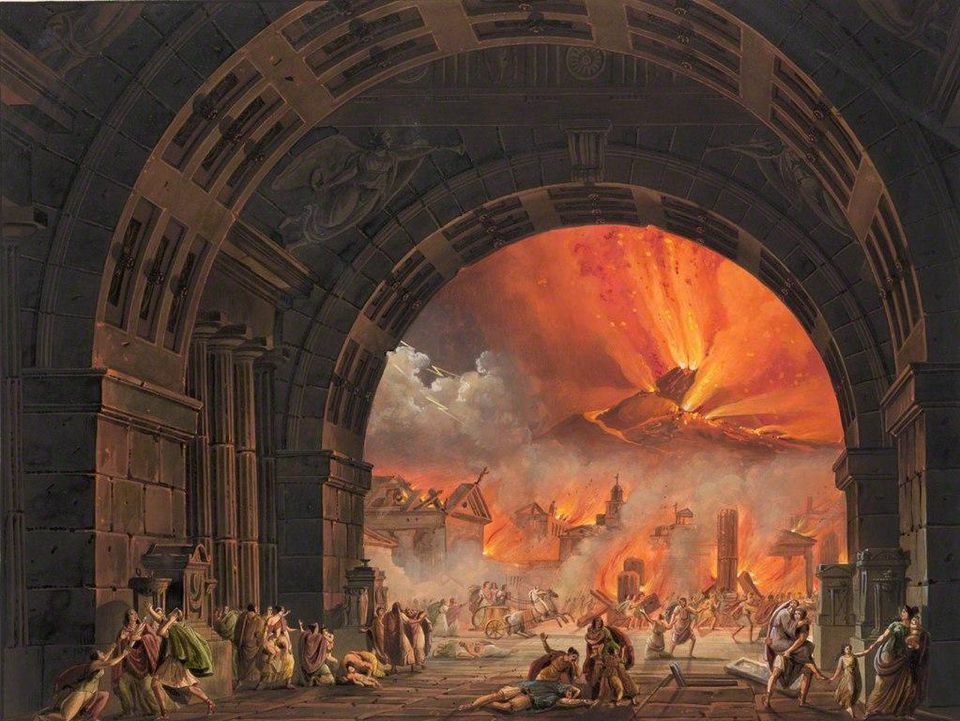
© Wikimedia Commons / Public DomainAlessandro Sanquirico's set design depicting the eruption of Vesuvius, the climactic scene of Giovanni Pacini's opera, L'ultimo giorno di Pompei, which premiered at the Teatro San Carlo, Naples in 1825.
The plaster casts of Romans killed when Mt. Vesuvius erupted in 79 A.D. are internationally famous, but scholars have long known that more people escaped the volcano's destruction of the Bay of Naples than were suffocated by it. New evidence from inscriptions provides clues to where these refugees settled.

In a forthcoming open-access article in the journal Analecta Romana, archaeologist and historian Steven Tuck of Miami University explains how his creation of a database of Roman last names led him to match up records from Pompeii and Herculaneum with records from the parts of Italy unaffected by the destructive power of Vesuvius. Tuck's goal in doing this work was not just to identify refugees but also "to draw conclusions about who survived the eruption, where they relocated, why they went to certain communities, and what this pattern tells us about how the ancient Roman world worked socially, economically, and politically."

In order to find refugees, Tuck needed to investigate inscriptions on public buildings and tombstones, because historical records only emphasized the physical damage of disasters. This may seem odd to us today, as our news reports tend to center the loss of human life as the main result of a catastrophe, but in Roman times only a handful of narratives, such as Pliny the Younger's account of his famous uncle's death near Pompeii, reflect the human toll of these ancient natural disasters.

Comment: See also: And for more on the disasters civilizations have endured, check out SOTT radio's: Behind the Headlines: Who was Jesus? Examining the evidence that Christ may in fact have been Caesar!


Attention

Documentary film, Human Zoos, exposes scientific racism and explores the history of eugenics

Bronx Zoo
© Evolution News
It's a sordid chapter in American history many scientists would rather not talk about. Thousands of indigenous people from Africa and elsewhere were put on public display in 20th-century America, often touted by scientists as evolutionary "missing links" between humans and apes.

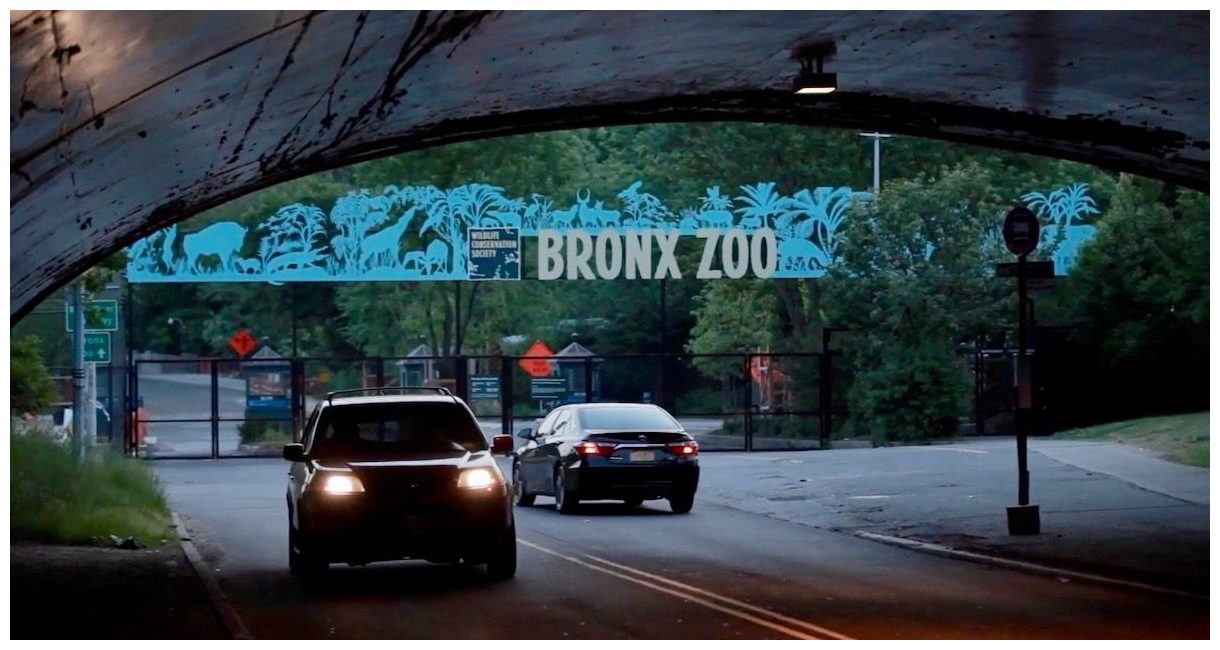
Perhaps the most shocking display of all was the exhibition of an African man, Ota Benga, in a cage in the Monkey House at the Bronx Zoo in New York City.

The scandalous story is exposed in Human Zoos, an award-winning documentary from Discovery Institute being given its YouTube premiere this week as part of African-American History Month. Human Zoos also explores the history of eugenics, the crusade by scientists and doctors to breed a "better" human race by applying the principles of Darwinian evolution.

Film director John West says he hopes his film will help Americans avoid the mistakes of the past. "I hope people will be encouraged to stand up for human dignity even when it comes under attack in the name of science," he explains. "Science is a wonderful thing, but human zoos, scientific racism, and eugenics were shocking betrayals of science."

Cloud Precipitation

History says California overdue for biblical, catastrophic flooding

flood San Francisco 1862
© ArchiveSacramento underwater due to floods in an 1862 rendering that ran in local papers.
Californians are always talking about the coming Big One, but what if the big one is a flood, not an earthquake?

With this recent cavalcade of rainstorms, there's been renewed interest in a 2011 USGS study on the so-called "ARkStorm." In it, the USGS lays out a case for a hypothetical "megastorm," one that could cause up to $725 billion in damage and impact a quarter of California's homes.

The ARkStorm would bring with it catastrophic rains, hurricane-force winds and hundreds of landslides. Central Valley flooding alone is projected to span 300 miles.

If that sounds far-fetched, there's historic precedent: Geological evidence indicates that California endures massive flooding caused by atmospheric rivers every 100-200 years. And settlers who moved to California after the Gold Rush soon found what the native population had known for centuries: Northern California is prime flooding territory.

Jet5

Flashback Best of the Web: The Soviets Were Winning Their Afghan War Against US-backed Insurgency Until Gorbachev Pulled Them Out

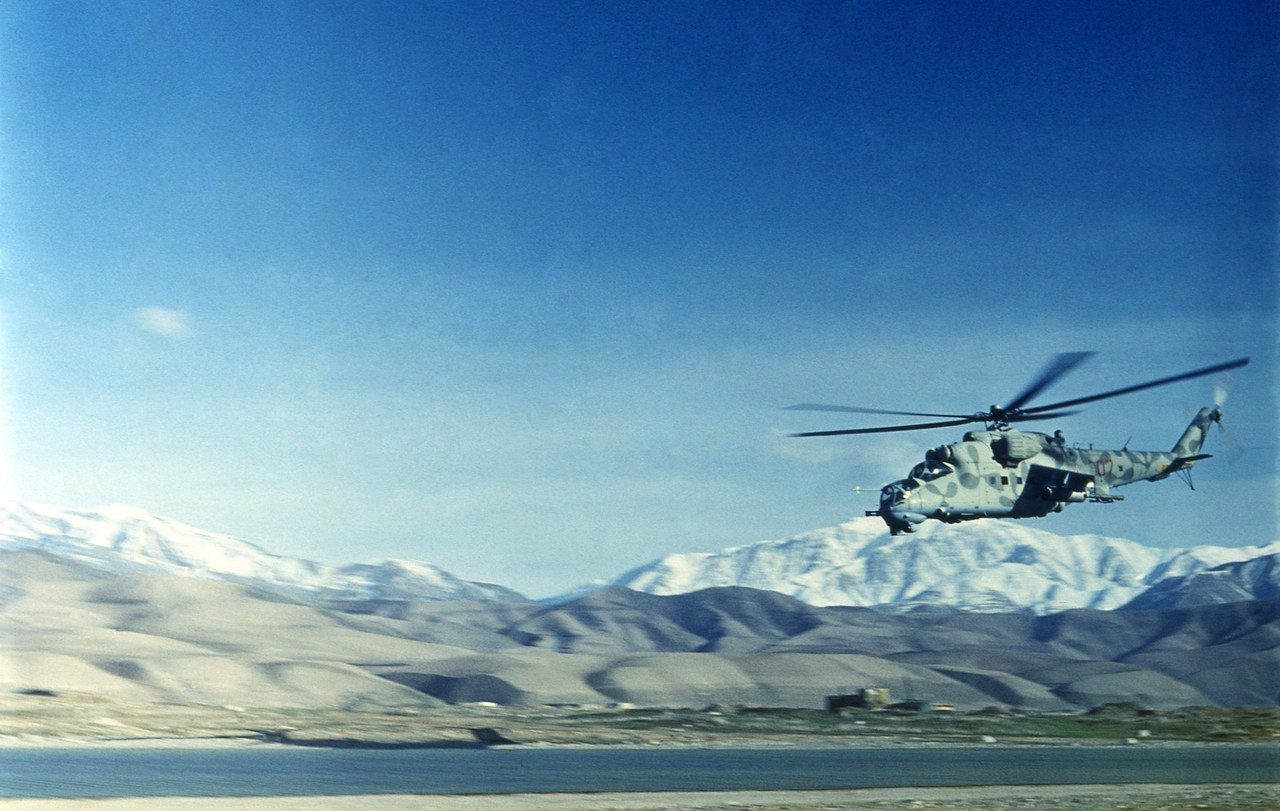
Soviet Mi-24 Hind Attack Helicopter
Soviet Mi-24 Hind Attack Helicopter in Afghanistan in the 1980s
Twenty-five years ago, on Christmas Eve, Soviet troops marched into Afghanistan with the aim of restoring order in a few months. Nine years later they withdrew amid continued violence. In their wake, civil war erupted and the Taliban rose to power, providing a haven to Al Qaeda.

Critics of the U.S. military effort in Iraq often cite the Soviet experience in Afghanistan as evidence that using foreign troops to put down an insurgency is bound to fail. But that "lesson" is misleading because it depends on a depiction of the Soviet-Afghan war that is downright inaccurate.

When Soviet forces invaded Afghanistan, they initially failed to protect their logistical and communications lines. But Soviet commanders quickly corrected these mistakes and brought in better troops, including helicopter pilots trained for mountain warfare. From mid-1980 on, the Afghan guerrillas never seized any major Soviet facilities or prevented major troop deployments and movements.

When Soviet generals shifted, in mid-1983, to a counterinsurgency strategy of scorched-earth tactics and the use of heavily-armed special operations forces, their progress against the guerrillas accelerated. Over the next few years, the Soviets increased their control of Afghanistan, inflicting many casualties - guerrilla and civilian. Had it not been for the immense support - weapons, training, materials - provided to the Afghan guerrillas by the United States, Saudi Arabia, China and Pakistan, Soviet troops would have achieved outright victory.

War Whore

SOTT Focus: How US Hardliners Ensured Soviet Withdrawal Did Not Lead to Peace in Afghanistan

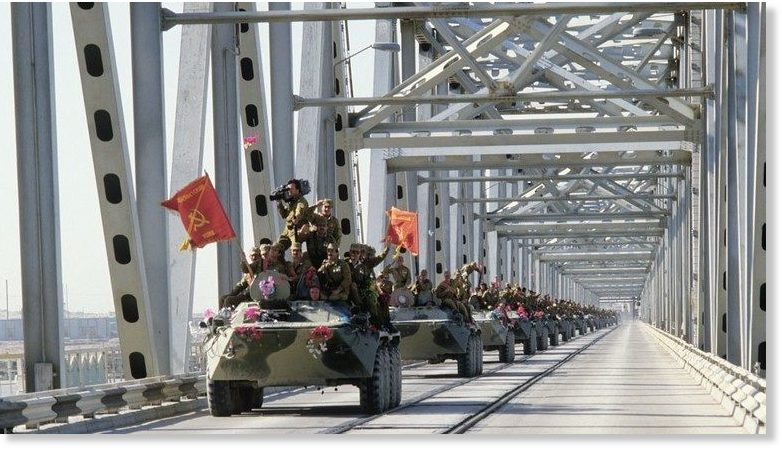
soviet tanks
© Sputnik / V. Kiselev
Thirty years after the withdrawal of the last Soviet forces from Afghanistan, the US is still fighting the monster they helped create in their anti-Soviet crusade.

February 15, 1989. The date when the Soviet Army left Afghanistan for the last time. Trying to defend the left-wing government in Kabul from US-backed mujahideen had cost the Soviet Union countless millions of rubles and the lives of over 15,000 soldiers. So you can understand why Mikhail Gorbachev wanted out. He actually wanted to withdraw earlier. But the Kremlin's proposals for a negotiated settlement were blocked by neocons in the Reagan administration, who met attempts at compromise from Kabul and Moscow with intransigence and increased support for the most militant factions.

Gorbachev warned of the global consequences of an extremist takeover in Afghanistan, but his words went unheeded. The US, in their determination to give the Soviet Union its own Vietnam, helped create a Frankenstein monster which they are still fighting, or pretending to fight, today.

Blackbox

Flashback Best of the Web: An Eccentric Tradition: The Paradox of 'Western Values'

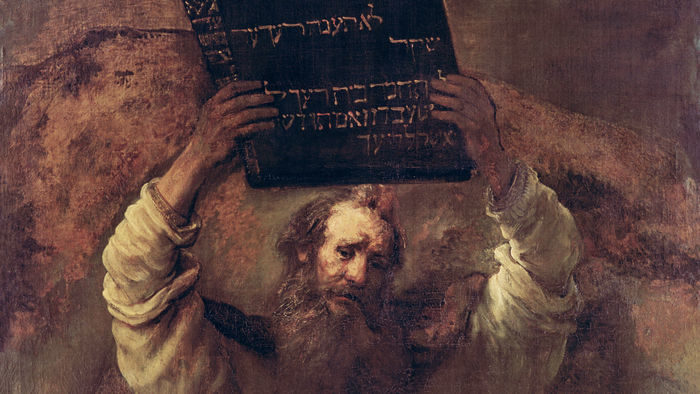
moses painting
© Rembrandt Harmensz. van Rijn / Getty ImagesWestern values?
It is no secret that former Australian Prime Minister Tony Abbott is a fan of Western values.

On more than one occasion he has lamented what he calls "the great Australian silence" - the neglect of "the Western canon, the literature, the poetry, the music, the history and above all the faith without which our culture and our civilisation is unimaginable."

Abbott's predecessor, John Howard, is also known as a stout defender of the Western tradition and its values, and he too worries that we are losing our connection to it: "When we think of our civilisation, we lack an integrated understanding of the contribution of the early Romans and Greeks, the framework of what is frequently called the Judaeo-Christian ethic."

Further afield, former UK Prime Minister David Cameron has preached the importance of Christian values for Britain.

More recently, and perhaps unhelpfully for the cause, Donald Trump has jumped on the bandwagon. In a rare moment of coherence, Trump delivered a speech ahead of the 2017 G20 summit in Poland, urging the defence of "our values" and "our civilization."

Doberman

Dog burials were common in Neolithic north-eastern Iberia

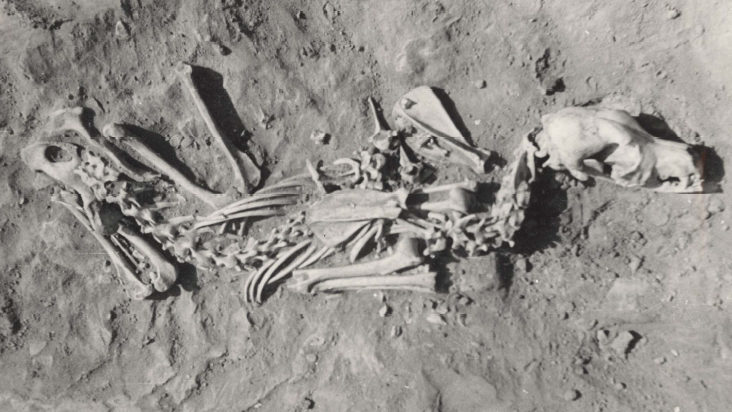
dog burial
© Losey RJ, Garvie-Lok S, Leonard JA, Katzenberg MA, Germonpre´ M, et al. (2013)A dog buried at the site of Pad’ Kalasnikova in Siberia. This dog was buried in a crouched or sitting position.
Coinciding with the Pit Grave culture (4200-3600 years before our era), coming from Southern Europe, the Neolithic communities of the north-eastern Iberian Peninsula started a ceremonial activity related to the sacrifice and burial of dogs. The high amount of cases that are recorded in Catalonia suggests it was a general practice and it proves the tight relationship between humans and these animals, which, apart from being buried next to them, were fed a similar diet to humans'.

This is the conclusion of a research study led by Universitat Autònoma de Barcelona (UAB) and the University of Barcelona (UB), which provides new data to describe and understand the presence of dogs in sacred and funerary spaces of the middle Neolithic in the Iberian Peninsula, and gets an insight on the relation between humans and these animals. The study has been published in the Journal of Archaeological Science: Reports.

The study analyses the remains of twenty-six dogs found in funerary structures from four sites and necropolises of the Barcelona region, and has conducted an isotopic analysis for eighteen of them, to determine whether the relation with their owners included other aspects, such as a control of their diet.

Comment: See also:


Nuke

Scottish nuclear submarine collision, a cold war secret for 43 years

Cable
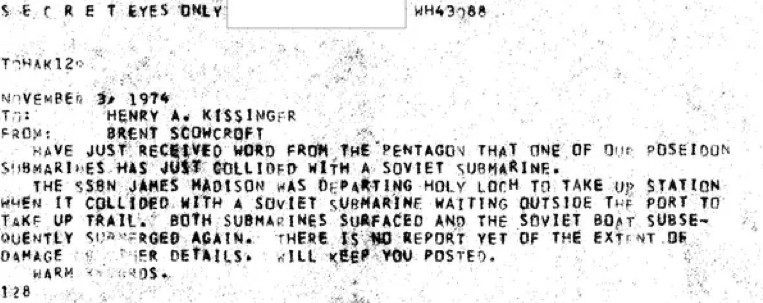
© Photo: CIAThe cable to Henry Kissinger about a collision involving two nuclear submarines near Holy Loch in Scotland corroborates a report on the incident by the Washington Post.
Documents published by CIA reveal crash between US and Soviet subs a few miles off coast of Scotland in 1974.

Two nuclear submarines from rival sides in the cold war collided a few miles off the coast of Scotland in an incident that was covered up for 43 years.

The potentially catastrophic crash occurred in November 1974 when the SSBN James Madison, armed with 16 Poseidon nuclear missiles, was heading out of the US naval base at Holy Loch, 30 miles north-west of Glasgow.

People

12th-century three-person toilet found in London's river Thames goes on display

3 person toilet seat
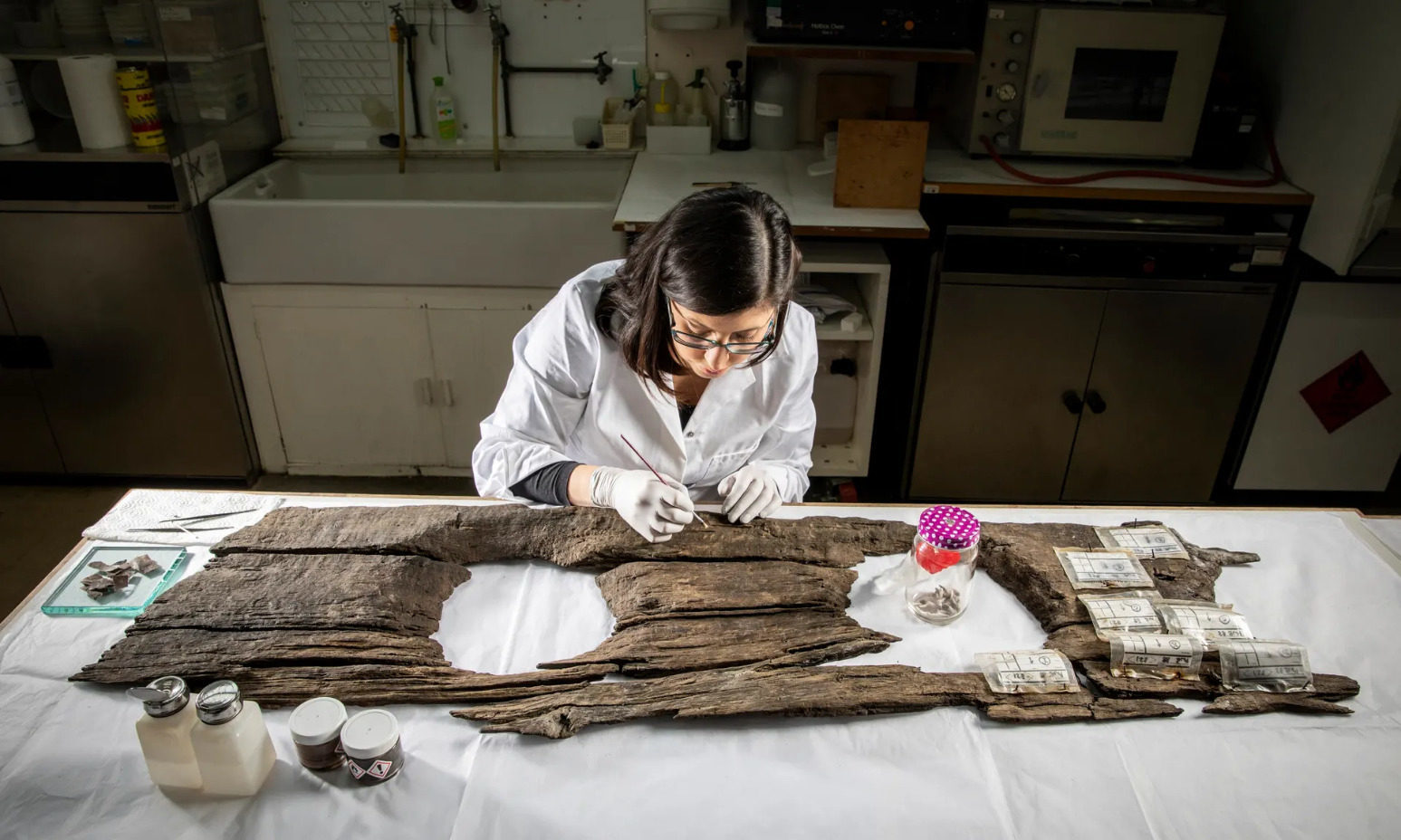
© David Levene/The GuardianConservator Luisa Duarte working on the 12th-century toilet seat.
A rare 12th-century toilet seat built to accommodate three users at once is to go on display for the first time at the Museum of London Docklands.

Nine hundred years after the roughly carved plank of oak was first placed over a cesspit near a tributary of the Thames, it will form the centrepiece of an exhibition about the capital's "secret" rivers.

The strikingly well preserved seat, still showing the axe marks where its three rough holes were cut, once sat behind a mixed commercial and residential tenement building on what is now Ludgate Hill, near St Paul's Cathedral, on land that in the mid-1100s would have been a small island in the river Fleet.

Comment: See also:


Sherlock

New book blames CIA operative Robert Maheu for murder of RFK - gets coverage in WaPo

Sirhan Sirhan and RFK
© Miss Open
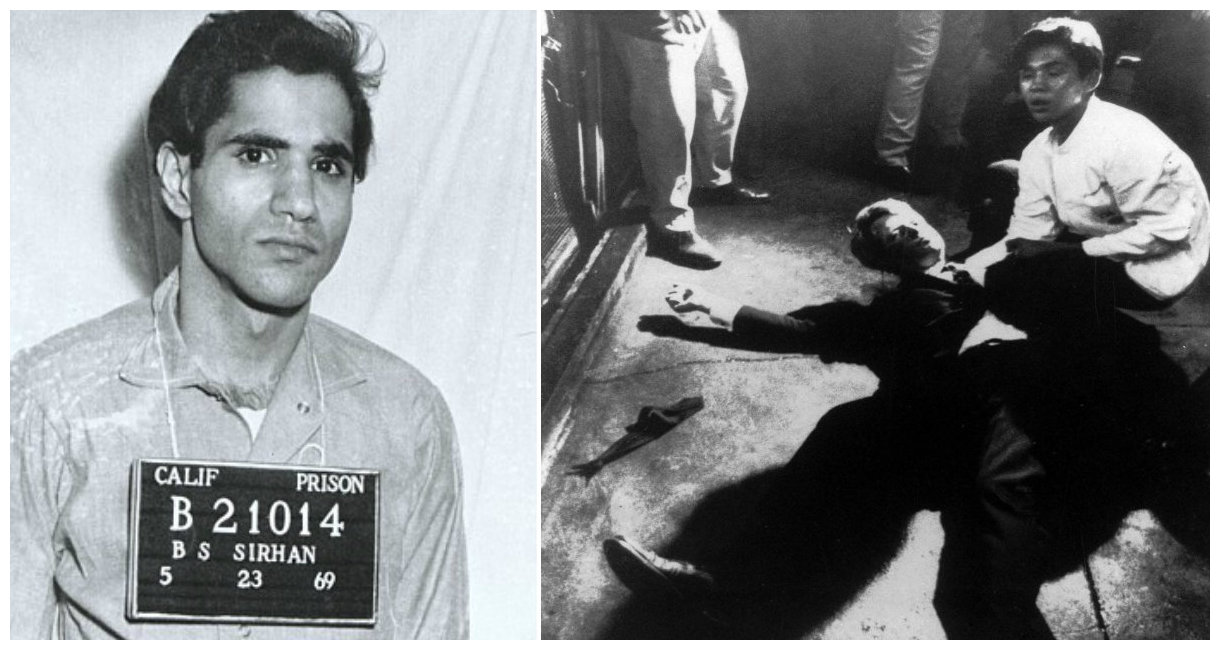
The assassination of Democratic Party candidate Robert F. Kennedy in Los Angeles the night he won the California presidential primary in June 1968 dealt a shocking blow to the national consciousness.

After all, the murder came less than five years after the shooting death of his brother, President John F. Kennedy, and the official investigations into both deaths would prove to be highly controversial, creating generations of conspiracy theorists eager to explore whether there were mysterious forces behind the two deaths.

Lifelong information activist and researcher Lisa Pease has immersed herself in the case of RFK since 1992, when she stumbled across extensive Los Angeles Police Department case files on the assassination when she opened the wrong drawer at the Los Angeles Public Library's main downtown branch. Delving into the files and conducting countless interviews ever since, she has crafted the massive 512-page new book A Lie Too Big to Fail: The Real History of the Assassination of Robert F. Kennedy, which pokes many holes in the official story that former Pasadena resident Sirhan Sirhan was his killer.

Comment: Neal Colgrass at newser.com writes:
The cloak-and-dagger figure who likely inspired the TV show Mission: Impossible also planned Robert F. Kennedy's assassination - at least according to a lengthy new book on the subject, the Washington Post reports. In A Lie Too Big to Fail, author Lisa Pease contends that Robert Maheu, an ex-FBI agent and CIA contractor, may have had Sirhan Sirhan hypnotized into firing blanks at Kennedy in June 1968 while the real killers shot the senator from behind. Maheu was indeed a shadowy figure who helped the CIA with jobs they didn't want to handle (like hiring the mob to murder Fidel Castro) and worked as Howard Hughes' right-hand man as the magnate supported CIA missions and purchased big portions of Las Vegas. But was Maheu behind Kennedy's killing?