A new study, borrowing techniques from artificial intelligence research,
suggests hominins in the eastern Mediterranean forged flint blades in flame, a task that requires creating and controlling heat.

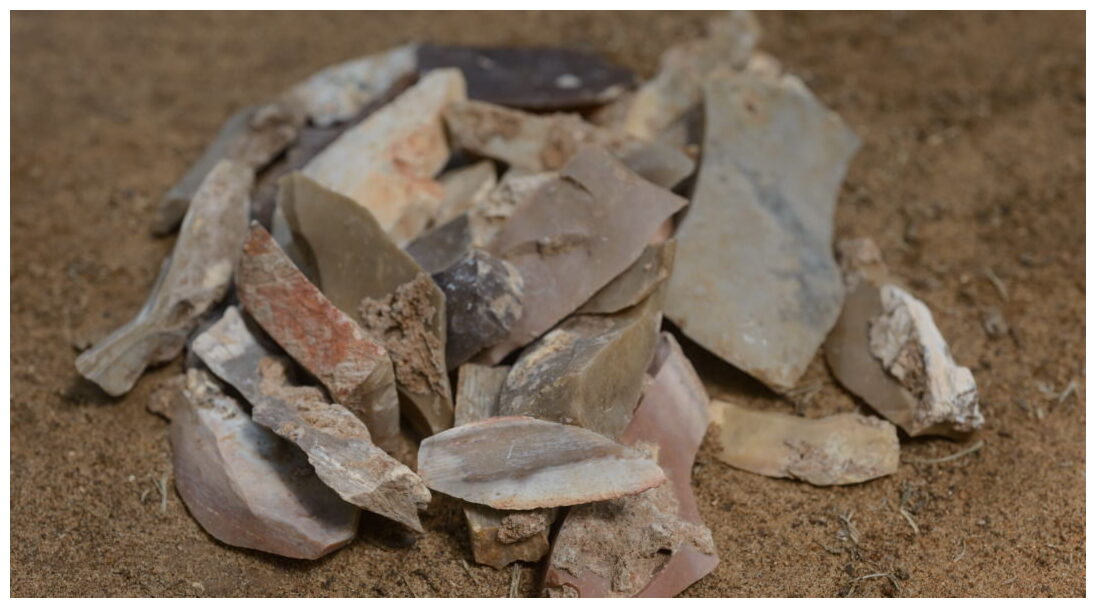
© Filipe NatalioResearchers found these ancient flint blades in Israel’s Qesem Cave.
Humanity's creation and mastery of fire likely
came in stages. Being able to reliably kindle this source of light and heat was only one step, managing the flames was another. It was a crucial turning point in human evolution when
Homo sapiens — or one of our species'
hominin relatives — first controlled fire not only as a safeguard from predators, but also for sculpting tools from stone.
Now scientists believe they have found evidence of this level of mastery. In an analysis published in
Nature Human Behaviour, researchers at the Weizmann Institute of Science and the Sonia and Marco Nadler Institute of Archaeology, both in Israel, make the case that more than 300,000 years ago, hominins living in Qesem Cave, a small cavern in what is today Israel, succeeded in controlling fire to enhance the production of tools.
The study suggests that the cave's inhabitants — which hominin resided there remains unknown — used and controlled fire in one way to produce simple stone tools called flakes and another to produce blades. The researchers demonstrated that these tools must be forged at different temperatures.Considering that a typical fireplace reaches 600 degrees Celsius easily, maintaining heat around the median temperature of 259 degrees Celsius to create blades, for example, was a technological challenge for the Qesem hominins. "If they wanted to produce blades, they would have to think in advance about which protocol to use," says Filipe Natalio, an archaeologist at the Kimmel Centre for Archaeological Science in the Weizmann Institute of Science, and one of the authors on the new study.











Comment: A point that the above does not address is why numerous studies document changes in DNA that occurred with the advent of farming: