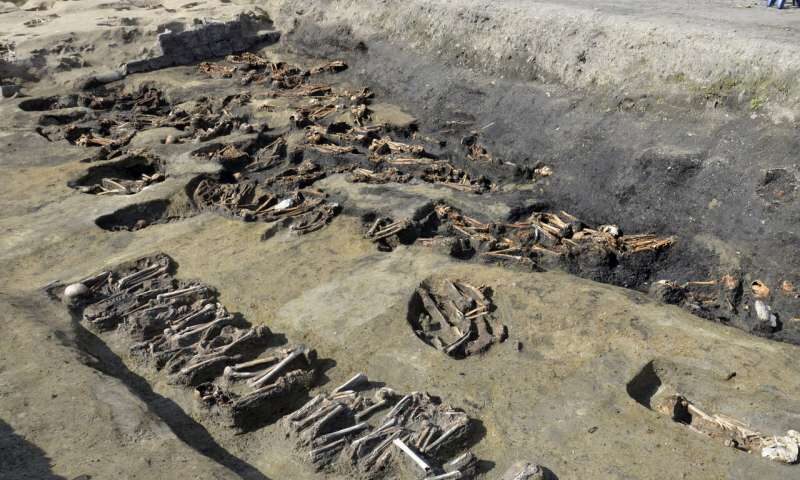
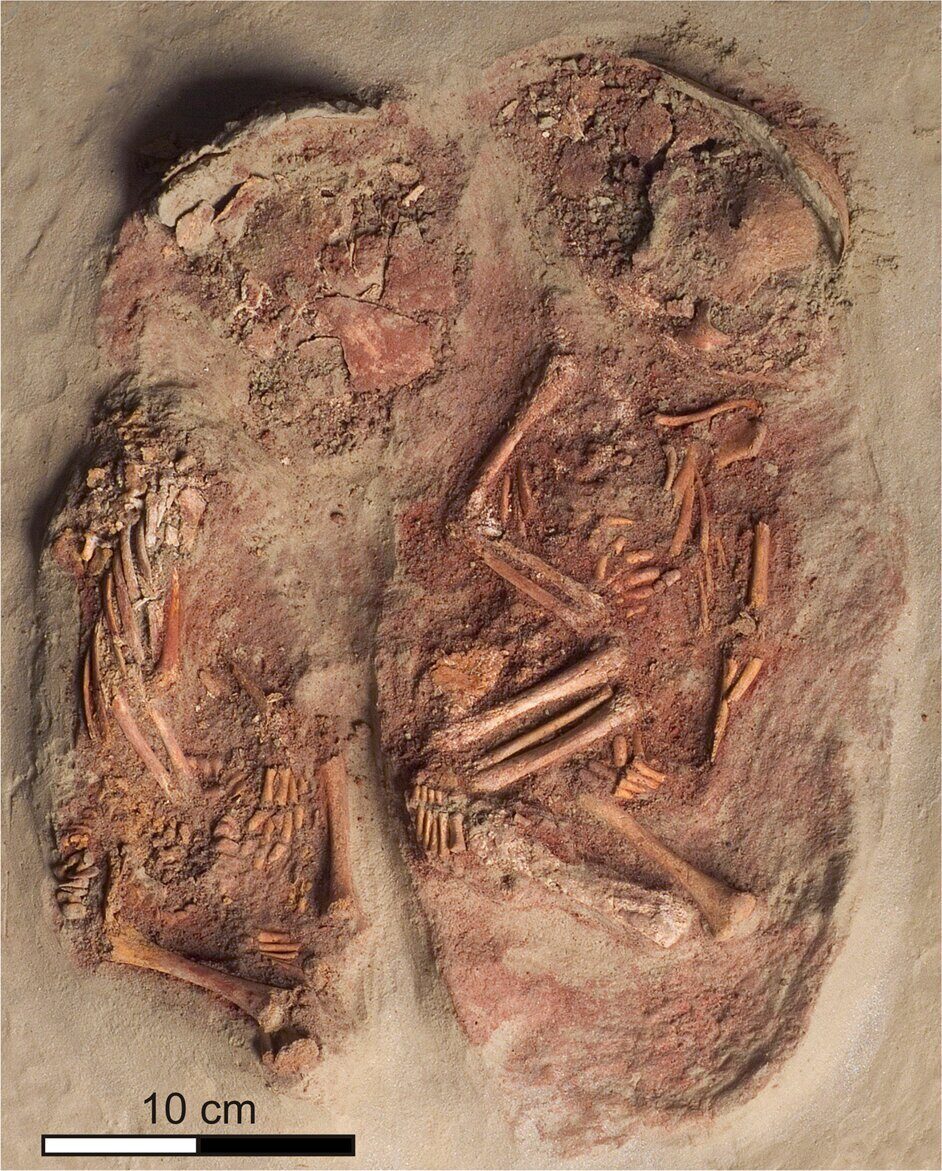
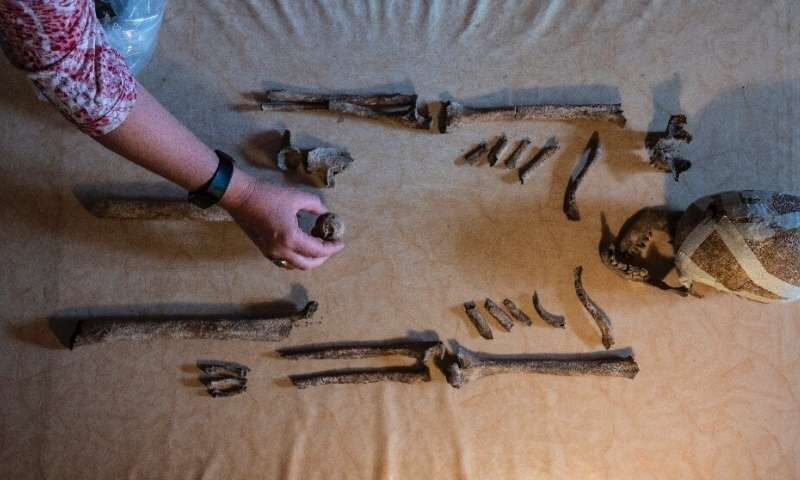
© Osaka City Cultural Properties Association via APThis undated photo provided Wednesday, Aug. 26, 2020, by Osaka City Cultural Properties Association shows human bones found at the north section of the "Umeda Grave" burial site in Osaka, western Japan. The photo was taken during the cemetery research between Sept. 2019 and Aug. 2020. Archaeologists have dug up remains of more than 1,500 people, many of them showing signs of death from epidemic, at a site of a 19th century mass grave during excavation ahead of a city development project near a main train station in Osaka, western Japan.
Archaeologists have dug up the remains of more than 1,500 people, many of them believed to have died in an epidemic, who were buried in a 19th century mass grave that is being excavated for a city development project in Osaka in western Japan.
Officials at the Osaka City Cultural Properties Association studying the remains said Wednesday that they
believe they are of young people who died in the late 1800s.
The Umeda Grave, one of seven historical burial sites in Japan's bustling merchant city of Osaka, was unearthed as part of a redevelopment project near a main train station.
The more than 1,500 remains were found during excavations that began in September 2019, following an earlier 2016-2017 study that dug up hundreds of similar remains at adjacent locations, according to Yoji Hirata, an official at the association.








Comment: Submerged 6,000-year-old prehistoric settlement reveals Black Sea level was 5 meters lower