
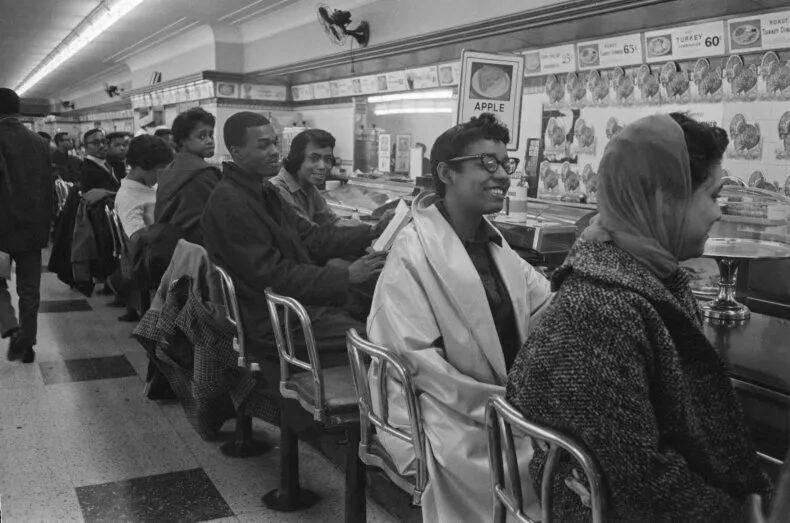
© Getty ImagesBlack students line the counter of a dime store in protest for the stores refusal to serve them. Some 150 students staged the "sit down strike" after the store refused to serve them. The lunch counter was quickly closed by the store manager.
The problem with critical race theory is much deeper than that, though. It stems from a fundamental misunderstanding of the complexities of our social and political realities, reducing them to a single factor: racism. But when it comes to how race and power intersect, black history is far, far richer than critical race theorists allow.
Many in the critical race theory camp view black people as uniquely disempowered by America's history of racism. Racism "has contributed to all contemporary manifestations of group advantage and disadvantage along racial lines, including differences in income, imprisonment, health, housing, education, political representation, and military service," write several critical race theory scholars, including Kimberle Crenshaw and Mari Matsuda in Words that Wound. "Our history calls for this presumption."
But our history actually tells a different story, too, one of empowerment through struggle. In the racist Jim Crow South, segregation forced African Americans to form their own businesses, universities, legal funds and other civil society institutions. "The more cut off black communities became from white communities and the more that white businessmen refused to cater to black customers, the more possible it became for enterprising black entrepreneurs to create viable businesses of their own," The Henry Ford Foundation's Donna Braden writes.













Comment: See also: