Society's ChildS


Camcorder

Shocking video of Russian freestyle wrestler Yuri Vlasko's murder appears online

Shocking video of Russian wrestler Yuri Vlasko
© Издательский дом Информ Полис / YouTube
Yuri Vlasko, murdered at the end of June in the Russian Republic of Buryatia, has appeared online.

The footage shows one of the attackers stabbing Vlasko, who was wearing a red track suit, in the chest among a group of people standing on the shore of Lake Baikal.

Magnify

'Shocking' experience: Utah mayor goes undercover for three days as homeless man

homeless person
© Kevin Lamarque / Reuters
The mayor of Salt Lake County, Utah went undercover as a homeless person with just the clothes on his back before deciding where to place a new shelter. He has now spoken out about his experience, saying he "didn't feel safe" due to drug abuse and violence.

Mayor Ben McAdams can generally be found wearing a suit as he governs Utah's most populous county.

However, he broke that rule on March 24, when he left his office wearing jeans, sneakers, and a hoodie, and embarked on his new adventure as a homeless person.

He and an unnamed colleague left the comfort of their homes, their IDs, and their money behind. For three days and two nights, they immersed themselves with the city's homeless population, spending one night in a shelter and one on the streets.

The experiment, according to McAdams, was aimed at "deepening" his understanding of the current homeless system before he was forced to make a decision on where to place the county's third homeless resource center - a decision he knew would anger residents of whichever town he picked.

Star of David

First time for everything: Israel revokes Arab-Israeli terrorist's citizenship

Zayoud
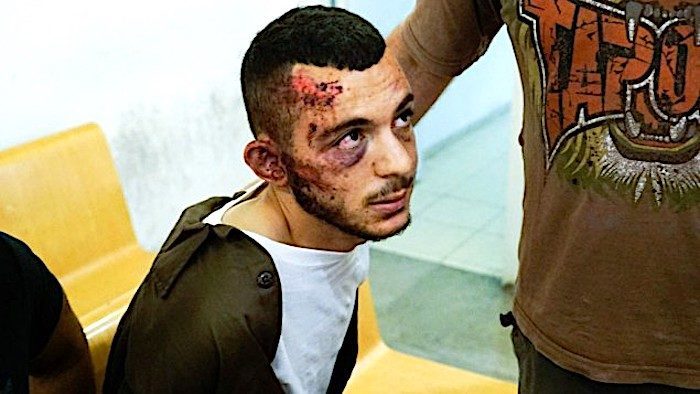
© The Times of IsraelAlaa Raed Ahmad Zayoud, decitizenized
Israel has for the first time in its history stripped an Arab-Israeli of his citizenship. The move is in response to a car-ramming and stabbing attack that left four people injured two years ago. Human rights groups were quick to criticize the measure as setting a dangerous precedent.

Alaa Raed Ahmad Zayoud's Israeli citizenship was revoked Sunday by the Haifa Magistrate's Court. The man had been convicted on four counts of attempted murder and sentenced to a 25 year prison term in June last year. In October 2015, Zayoud drove his vehicle into an IDF soldier before getting out and stabbing three civilians near the Gan Shmuel Kibbutz.

"For every citizen, alongside his rights, there are commitments," Deputy President of the Haifa Magistrate's Court, Avraham Elyakim, said in his ruling. "One of them is the significant and important commitment to maintaining loyalty to the state, which is given expression also in the commitment to not carry out terror acts to harm its residents and their security."

Describing the sentencing as "suitable and proportional" given the crimes committed by Zayoud, the judge expressed hope that the measure will dissuade potential future attacks on Israelis.

Comment: With reports out of Israel, it is difficult to ascertain when facts are facts or the narrative is altered, through coercion, to serve a purpose.

Times of Israel also reported:
"The court decision strengthens the deterrent and strengthens our campaign to protect the security of the country," Deri said in a statement. "The decision states unequivocally that anyone who harms the state or its citizens can't be a part of it."

Zayoud had admitted to investigators that his attack was "nationalistically motivated," a police term indicating a terror attack. His confession marks a retraction from his initial claim that the attack was an accidental car collision, and the stabbings an act of self-defense after he was attacked by onlookers.

In his testimony, Zayoud told investigators he wished to kill himself by killing Jews.
There may be two very different stories of Zayoud's attack.


Bomb

British jihadists in Syria trained by secretive ISIS unit to launch UK suicide attacks

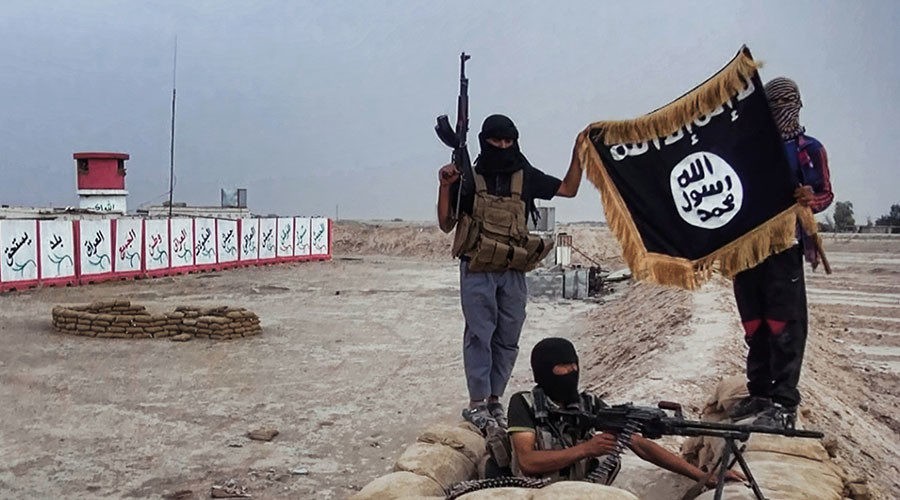
Armed jihadists with ISIS flag
© AFPArmed jihadists with ISIS flag
British extremists in Syria are being trained to carry out suicide attacks on their return to the UK, an Islamic State (IS, formerly ISIS/ISIL) fighter captured by Kurdish forces claims.

The fighter told his captors that many European extremists were sent to the shadowy al-Kharsa Brigade upon arrival in Syria, where they would undertake months of arduous training in preparation for attacks, according to a report by the Rupert Murdoch-owned Times newspaper.

"It takes seven months to be trained in al-Kharsa brigade," the fighter reportedly said under interrogation.

"It is very hard. Every European who crosses the border to Syria, they are offered [the opportunity] to join. If 20 start the training, only five finish it. Then after that they go back to Europe and attack."

Comment: See also: Be very afraid: Report claims Interpol fears ISIS trained 173 bomb attackers for Europe


Archaeology

How ISIS uses middlemen to smuggle antiquities to the West for profit

syria antiquities
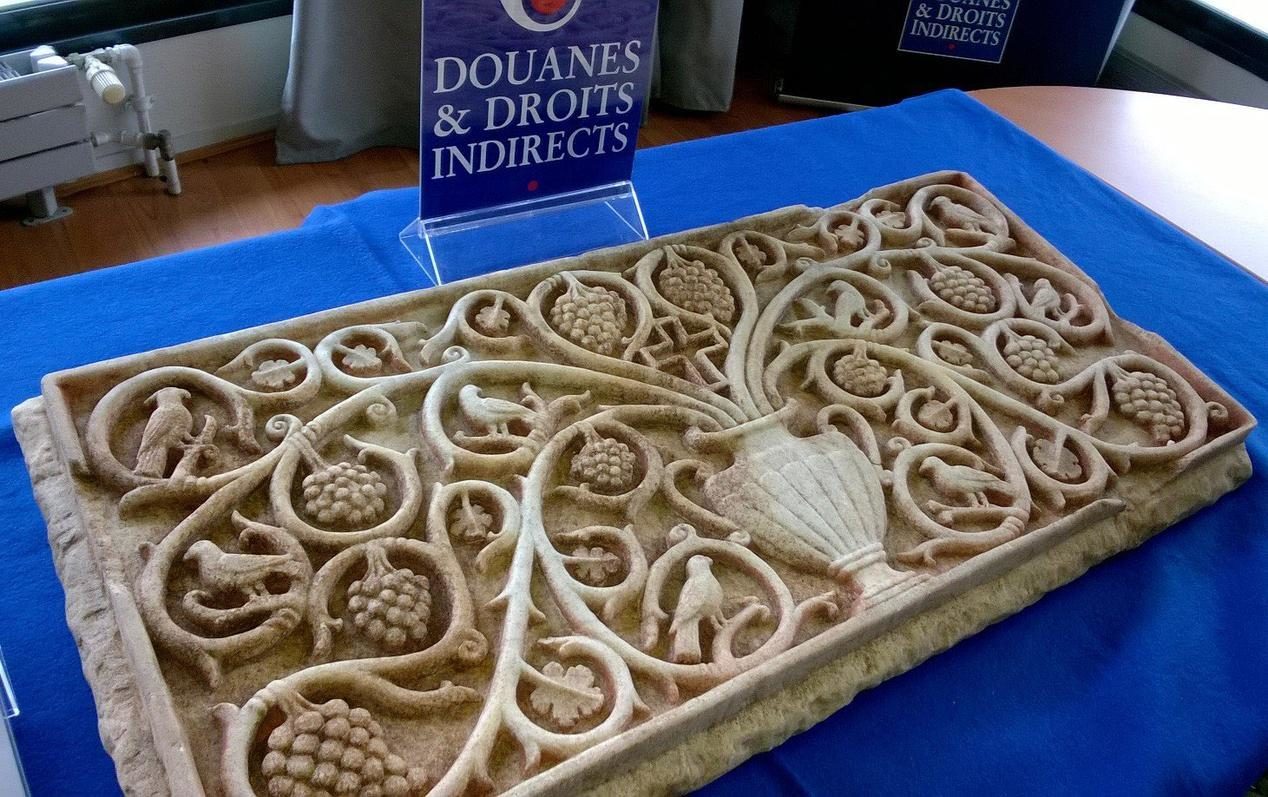
© AFP/GETTY IMAGESA marble bas-relief from the Middle Euphrates valley, likely looted by Islamic State, according to French officials. The object was seized at Paris’s Roissy airport in March 2016 after arriving from North Lebanon.
A stream of plundered antiquities flowing out of Syria and Iraq to Western art collectors is dependent on men like Muhammad hajj Al-Hassan.

Mr. Al-Hassan, a 28-year-old Syrian, says he started to trade antiquities in 2015 after being contacted by a top official of Islamic State who sought his archaeological expertise to find Western buyers.

Later, he became a cog in an international supply chain smuggling art looted by ISIS.

ISIS's territorial grip is fading fast: Iraq has declared victory over the terrorist group in Mosul and ISIS is fighting to hold its self-proclaimed Syrian capital Raqqa - the last major city under its control. But the group's legacy of looting will linger for many years, law-enforcement officials say, in much the same way that art looted by the Nazis continues to surface 70 years later. The ancient statues, jewelry and artifacts that ISIS has stolen in Syria and Iraq, are already moving underground and may not surface for decades, according to these officials and experts in the trade.

"Once looted in Syria and Iraq, objects enter a gray market shrouded in secrecy," said Michael Danti, an archaeologist who directs the Boston-based Cultural Heritage Initiatives and advises the U.S. State Department on the looting of antiquities in Syria. "It's a problem that will stay with us for years to come."

Western security officials say they expect revenue from looted antiquities from Iraq and Syria to become an increasingly important source of money for ISIS if its other revenue streams, such as oil, continue to dwindle.

Smoking

Brit think tank concludes smoking is good for the economy

cigarettes
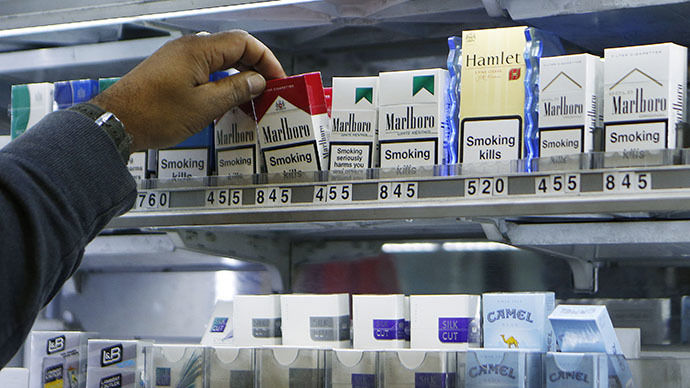
© Reuters / Suzanne PlunkettA shopkeeper reaches for a packet of cigarettes in a newsagent in London
If you're trying to break the habit, look away now! Smoking brings in £15 billion ($19.5 billion) to the UK economy each year, according to the Institute of Economic Affairs (IEA).

But before you take a patriotic puff, take a look where the money is made. Besides clawing in revenues from the high tax on tobacco, the state also saves a bundle on unpaid benefits, treatment, and pensions, thanks to the high mortality rate among smokers. Cough.


Comment: One wonders where they got their figures. On the one hand, obesity is a true cause of lower life expectancy due to metabolic derangement leading to a host of health problems. Blaming smoking for higher mortality rates is a canard. But to conclude that more death is an economic benefit is pure psychopathy.

The IEA claims that although cancer treatment, house fires, and cleaning up cigarette butts on the street cost the UK economy up to £4.6 billion per year, the habit brings in more than three times that figure every year.

Overall, £24 billion is brought in through the so-called "sin tax."

Chart Pie

Support for policy of income redistribution shaped by compassion, self-interest, envy

pie sharing income inequality
© Lev Kropotov/Thinkstock
In a new paper published in the Proceedings of the National Academy of Sciences (PNAS), Professors Leda Cosmides and John Tooby from the University of California, Santa Barbara, and their coauthors take an evolutionary look at the issue of income inequality and redistribution. As the authors note,
"Markets have lifted millions out of poverty, but considerable inequality remains and there is a large worldwide demand for redistribution. Although economists, philosophers, and public policy analysts debate the merits and demerits of various redistributive programs, a parallel debate has focused on voters' motives for supporting redistribution. Understanding these motives is crucial, for the performance of a policy cannot be meaningfully evaluated except in the light of intended ends."
The authors of the study argue that support for redistribution reflects motivations that evolved for the small-scale world of our hunter-gatherer ancestors. "Understanding the economic and political nitty-gritty of redistribution does not come naturally to us," said lead author Daniel Sznycer, an assistant professor of psychology at the University of Montreal. "But humans have been interacting with worse-off and better-off individuals over evolutionary time. This process built neural systems that motivate us to act effectively in situations of giving, taking, and sharing."

According to the authors, we see the modern world through the eyes of our ancestors. "Political rhetoric about redistribution involves a cast of characters," said Cosmides, such as "the poor" and "the rich." "The idea is that we view these characters through the lens of motives that evolved to regulate interactions with their ancestral counterparts-community members who are worse-off and better-off than you are."

Life Preserver

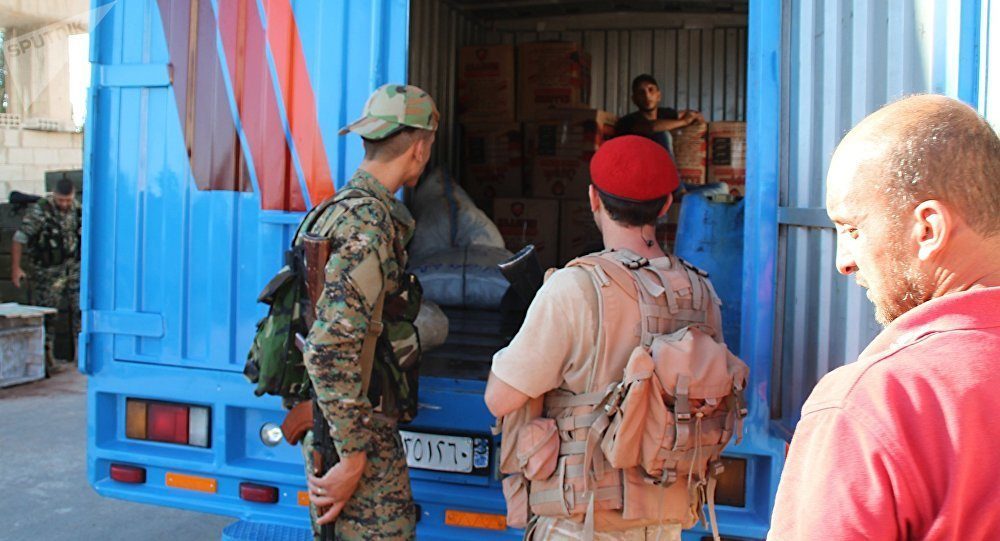
Syria's safe zones: 1,500 people daily pass through checkpoint in Daraa Province

security checkpoint in Syria's southwestern Daraa province
© Sputnik/ Mikhail Alaeddin
Some 1,500 people pass through the security checkpoint in Syria's southwestern Daraa province, where a safe zone has been established.

Russian servicemen at a checkpoint in Syria's southwestern Daraa province have checked some 1,500 people and 1,000 vehicles every day since the safe zone in the area was established, Russian military police serviceman said Monday.

"We have been staying at this border checkpoint for two weeks, everything is normal... We check thousands of people, [namely] how many enter and how many exit. Some 1,500 people per day. We inspect cars to prevent transfers of arms and ammunition. We communicate well with everybody, [and] the Syrians with us, as well," Artur Kartoev told reporters, adding that around 1,000 cars pass the checkpoint per day.

The figures demonstrate that the local population have stopped being afraid of militants, been getting used to a peaceful life and shown an understanding of the security requirements, he said.

Smiley

The Twitterverse explodes over Chelsea Clinton 'kids to prison to see their moms' tweet

chelsea hillary
'Of course I'll visit you, ma!'
Chelsea Clinton is not the sharpest knife in the drawer.

Clinton made it too easy for users on twitter to spot the irony in Chelsea's "kids to prison to see their moms" tweet.

Via The Gateway Pundit...
Left-wing media darling, Chelsea Clinton, who is known for doing absolutely nothing in her life besides skate by with her 'Clinton' surname tweeted about little girls visiting their mothers in prison-and the internet responded accordingly.

Chelsea Clinton sent out a tweet Saturday morning, "Inside a Girl Scout Program That Brings Kids to Prison to See Their Moms'

Arrow Up

Despite recent split, Bitcoin surges to a record high

bitcoin
© Manuel Romano / Global Look Press
The world's most popular cryptocurrency bitcoin has surged to record high despite initial investor concerns over its recent split, which led to the creation of a new virtual currency called Bitcoin Cash.

The price of bitcoin jumped over 15 percent since Friday and is currently hovering around $3,230 per token, according to Coin Market Cap, a cryptocurrency market cap and price checker with portfolio tracker.

The price surge has also boosted bitcoin's collective market capitalization to over $53 billion.

Last week, bitcoin divided into two currencies. The solution dubbed SegWit2x has been debated for a long while in the bitcoin community, as developers wanted to retain the original blockchain that protects the cryptocurrency from hackers, while miners preferred to double the size of data blocks to make the network faster.


"The miner-orchestrated hard fork has had limited traction and will not impact the price or future development of bitcoin. The activation of SegWit is a significant milestone in bitcoin's technological evolution," said Aurelien Menant, chief executive officer of Gatecoin a cryptocurrency exchange in Hong Kong, as quoted by Bloomberg.