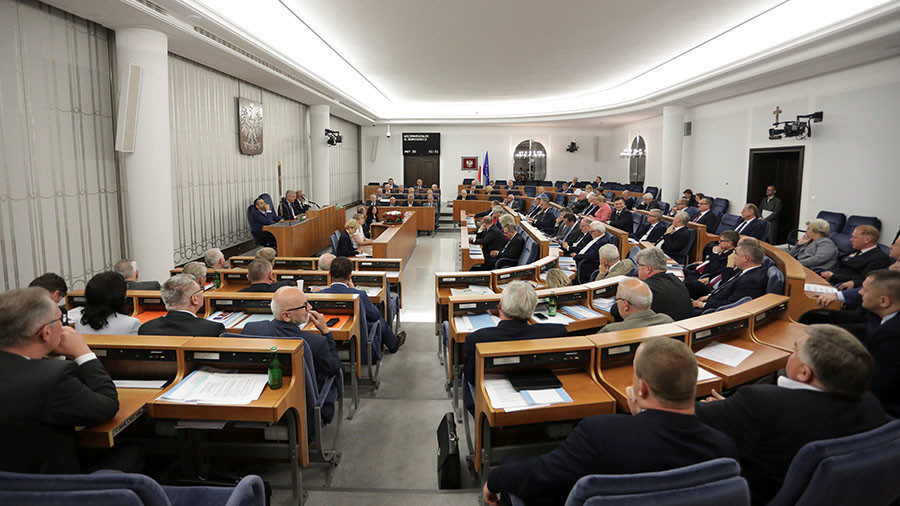
© Agencja Gazeta / Slawomir Kaminskivia / Reuters
Poland passed an internationally "contentious" draft law banning the phrase "Polish death camps", the Bandera ideology, and the denial of wartime Ukrainian fascist crimes.
Israel and Ukraine reacted with fury at the
decision and harshly criticized Poland for what they each claimed for their own respective reasons was "historical revisionism". Israeli Prime Minister Netanyahu
forcefully condemned the bill and hinted that it amounts to "denying the Holocaust", and a few people frenziedly speculated that it would outlaw any conversation about the complicity of some Polish citizens in that tragic event. Kiev, meanwhile,
decried what it claimed was the painting of all Ukrainians as fascist sympathizers and protested Warsaw's use of pre-war geographic terminology in reference to the genocide of Poles by Ukrainian so-called "nationalists" in Volhynia and Eastern Galicia.
Newly appointed Polish Prime Minister Mateusz Morawiecki responded to his Israeli counterpart over the weekend when he wrote on
Twitter that "Jews, Poles, and all victims should be guardians of the memory of all who were murdered by German Nazis. Auschwitz-Birkenau is not a Polish name, and 'Arbeit Macht Frei' is not a Polish phrase", one day before the two spoke to each other and
agreed to enter into a dialogue on this issue.
To be fair, historian Jan Grabowski has argued in his work that some Poles did in fact do terrible things to Jews, but claiming that these individuals committed these acts on behalf of the Polish Nation and collectively punishing the entire population with undeserved guilt is wrong and could be criminalized under the new legislation.









Comment: See also: