Society's ChildS


Eye 1

Security theater: COVID-19 and the normalization of the global surveillance state

contact tracing Covid-19
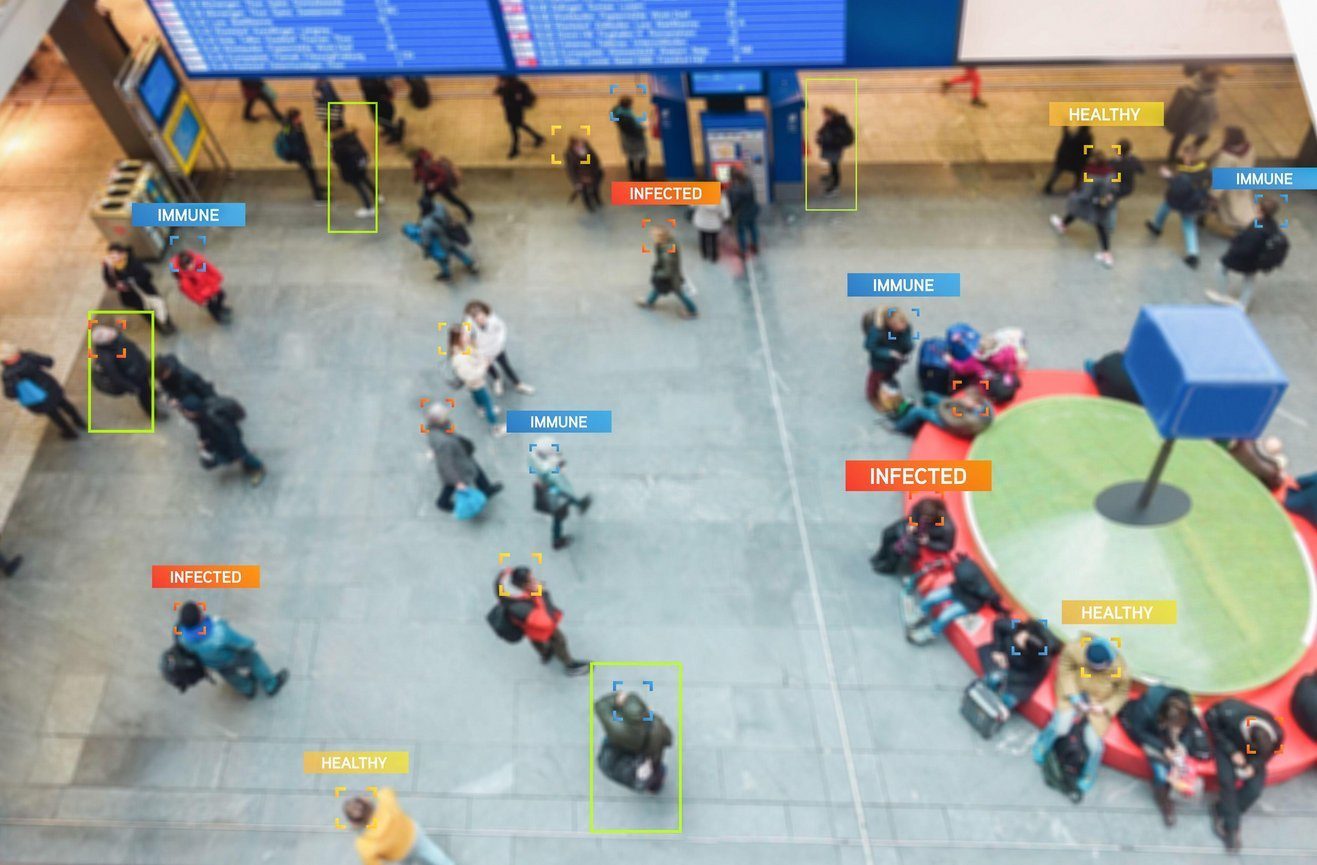
In the past few months, governments ranging from Australia to the United Kingdom and corporations as influential as Google and Apple have pushed the idea that cellphone tracking can be used to effectively fight COVID-19. There was even an essay here at Quillette, arguing that a mandatory phone tracking app would save lives while also saving jobs as a policy alternative to economic lockdown. Unfortunately, the idea that phone apps should be popularized or even mandated to fight outbreaks is techno-utopian, based on optimism rather than evidence. The real impact of such an approach on society wouldn't be better immunity, but rather the acceptance and creeping growth of an even more powerful and omniscient global surveillance state.

Governments, scientists, and product designers are racing to find technological fixes for the spread of COVID-19. Some of these solutions — such as more efficient mass-production of masks, more accurate and prevalent testing, and efforts to create a vaccine — are valid and vital, and defend the health of citizens and strength of society without violating civil liberties. Masks can arguably even help promote freedom by disguising protestors and flustering increasingly prevalent public facial recognition cameras. And there are other key antiviral tactics that don't rely on cutting-edge technology: handwashing, social distancing, and contact tracing.

Contact tracing is the important practice of interviewing the sick to find out who they've met in recent days, so that health authorities can warn them, so they can take proper precautions, isolate themselves, and seek medical help if necessary. It is a resource-intensive practice, requiring tens of thousands of human "contact tracers" for large populations. Silicon Valley has clamored that there must be ways to automate this process. At least two dozen governments are already experimenting with or rolling out contact tracing phone apps.

Academics have provided ammunition for this approach, recently stating in Science that "controlling the epidemic by manual contact tracing is infeasible. The use of a contact tracing app... would be sufficient to stop the epidemic if used by enough people." Regardless of rationale, the immediate, often unsaid problem is that phone contact tracing is not accurate enough for medical use, and trying to implement this strategy will expose individuals and authorities to false positives and false negatives and bring false confidence. The bigger problem is that the promotion of phone contact tracing will help normalize mass surveillance and further erode our already endangered civil liberties.

Comment: As John W. Rutherford states "this is just another wolf in sheep's clothing, a "show me your papers" scheme disguised as a means of fighting a virus. It lays the groundwork for a society in which you are required to identify yourself at any time to any government worker who demands it for any reason."

The Worst is Yet to Come: Contact Tracing, Immunity Cards and Mass Testing


Bizarro Earth

Dutch official advice to single people: Find a sex buddy for lockdown

in bed
Single men and women in the Netherlands are being advised to organise a seksbuddy (sex buddy) after criticism of rules dictating that home visitors maintain a 1.5-metre distance from their hosts during the coronavirus lockdown.

In a typically open-minded intervention, official guidance from the Dutch National Institute for Public Health and the Environment (RIVM) has been amended to suggest those without a permanent sexual partner come to mutually satisfactory agreements with like-minded individuals.

On the advice of scientists at the RIVM, the Netherlands has been on what the government describes as an "intelligent lockdown" since 23 March, allowing up to three visitors into homes on the strict condition that they keep their distance.

Airplane

Flashback Best of the Web: Air travel won't return to pre-crisis levels until 2023, IATA chief warns


Comment: How long is the lockdown to go on for?

This article provides a clue: airlines have apparently been told it won't end for another two-to-three years, which seems to fit with Bill Gates and friends' Global Mandatory Chip/Vaccine plan...


Lufthansa airplanes
© MaxarLufthansa airplanes parked on the runway in Frankfurt, Germany.
The impact on air travel from the coronavirus will be felt for many years to come, according to the International Air Transport Association, which estimates that passenger traffic won't rebound to pre-crisis levels until at least 2023.

The trade association for the world's airlines said that demand for air travel had dropped more than 90% in Europe and the U.S. since the start of the pandemic, and warned that recovery will be even slower if lockdowns and travel restrictions are extended.

"We are asking governments to have a phased approach to restart the industry and to fly again," Alexandre de Juniac, the IATA's director general and CEO, told CNBC's "Squawk Box Europe" on Thursday. De Juniac is hopeful that some flying will resume by the summer.

"We are aiming at reopening and boosting the domestic market by end of the second quarter, and opening the regional or continental markets — such as Europe, North America or Asia-Pacific — by the third quarter, and intercontinental in the fall," he said.

Chess

Nord Stream 2 to challenge German regulator's decision denying waiver of 'discriminatory' EU rules for gas pipeline from Russia

Akademik Cherskiy
© Global Look Press / dpa / Stefan Sauer
The company building the Nord Stream 2 gas pipeline has vowed to appeal Germany's refusal to remove the multibillion-dollar project from the restrictions laid out in the "discriminatory" EU Gas Directive.

The latest amendment to the EU rules was greenlighted in April last year, long after Nord Stream 2 construction began. The legislature made the rules governing the European gas market apply to all pipelines to and from third countries. The new rule means Russia's Gazprom, which designed the project, will be allowed to use not more than 50 percent of the pipeline capacity while allowing third parties to use the rest of it.

In a ruling published on Friday, the German energy regulator, Bundesnetzagentur, said that the massive project, meant to pump natural gas from Russia to Germany, is not exempt from the amended European rules known as the Gas Directive. It said that, to qualify for an exemption, the pipeline should have been completed by May of last year.

Bullseye

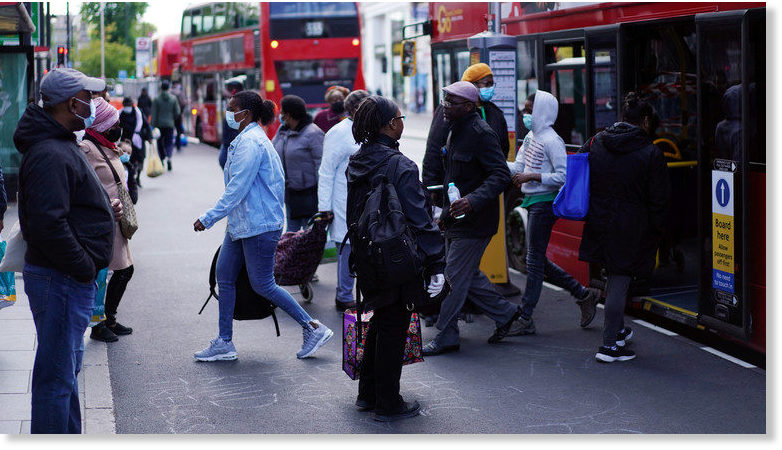
London's Covid-19 R number is well below critical at 0.4, with only 24 new cases a day. NOW why can't we have our lives back?

face mask
© Getty Images / AlbertoGonzalez
While rates of infection around the UK vary wildly, the capital has managed to hit a low of fewer than 24 cases a day. Now the clamor is growing to ease up on the lockdown and get back to normal life.

With fewer than 24 new cases of coronavirus appearing in London each day now, surely, for the love of man, it's time we moved back to normality, pronto.

From the outset, it's been drummed into us that it's the science that matters. The science said that the R number - the crucial indicator of how many new people one coronavirus sufferer would infect - needed to be less than one, and holding, before any easing of restrictions would be considered.

In Germany, where their line in the sand was R1 - having three consecutive days above that figure this week - they're even kicking off the Bundesliga again tomorrow. Why not here?

Bug

Pure insanity: Bars and restaurants allowed to reopen - IF they agree to snitch on customers

closed bars
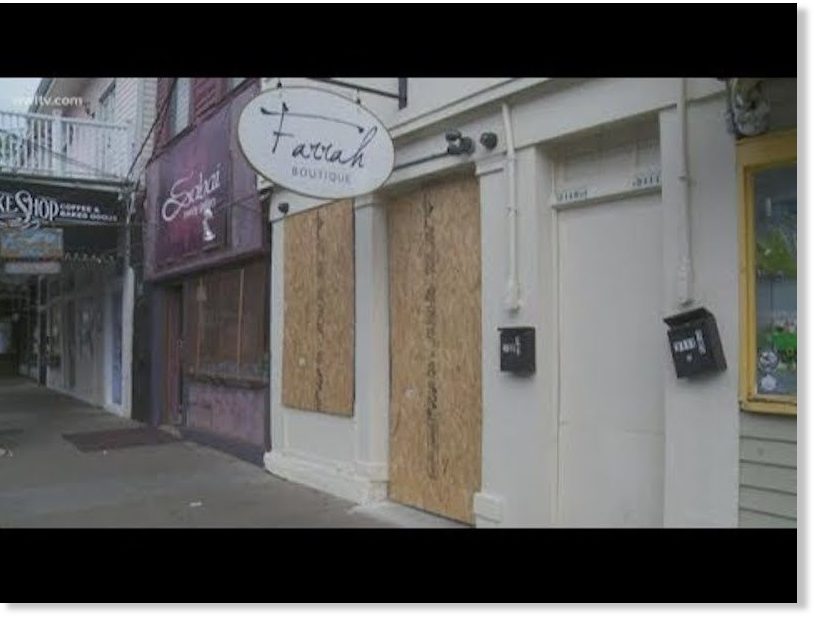
If you are like me, you are looking forward to finally getting out of your house and maybe having a few drinks or a nice dinner at your local bar or restaurant. But going out to your local bar or restaurant once the lockdown ends comes with a steep price.

That's because three cities, in Louisiana, Texas and Missouri, will only allow non-essential businesses to reopen if they agree to collect customers personal information.

According to NOLA Ready, The Department of Homeland Security (DHS) and the city of New Orleans are creating a "new normal" by forcing bars and restaurants to collect customers personal information.
"We know everyone is eager to reopen. It's not going back to normal; it's what we're calling 'the new normal.' It will be the data and not the date that drives not only the decision but the phased approach to reopen the City of New Orleans. Today, we are outlining what those guidelines will be for the City," said Mayor Latoya Cantrell.
As Forbes.com explains the "new normal" is for bars and restaurants to become government snitches.
"New Orleans Mayor LaToya Cantrell announced business owners will be required to keep logs of the names and contact information of patrons who enter their establishments once the Big Easy reopens to help with contact tracing — a move that Cantrell called part of the new normal, as New Orleans and Louisiana plan to rollback coronavirus restrictions this month."

Megaphone

Over QUARTER of UK population could have had Covid-19 already, doctor tells RT

london
More than 25 percent of the UK population may already have had the Covid-19 virus, with many experiencing only a "mild dose" of the illness, Dr Adrian Heald, who conducted new research at the University of Manchester, has told RT.

The research, published this week in the International Journal of Clinical Practice, used local authority data to predict the cumulative spread of the virus since the beginning of the outbreak.

"What we're saying in this study is that far more people than was thought may actually have had some exposure to the virus," Heald said.

Gold Seal

People Power! How a Berks County woman used Facebook to rescue an egg farmer's 80,000 hens amid the coronavirus

Timi Bauscher network eggs save farmer
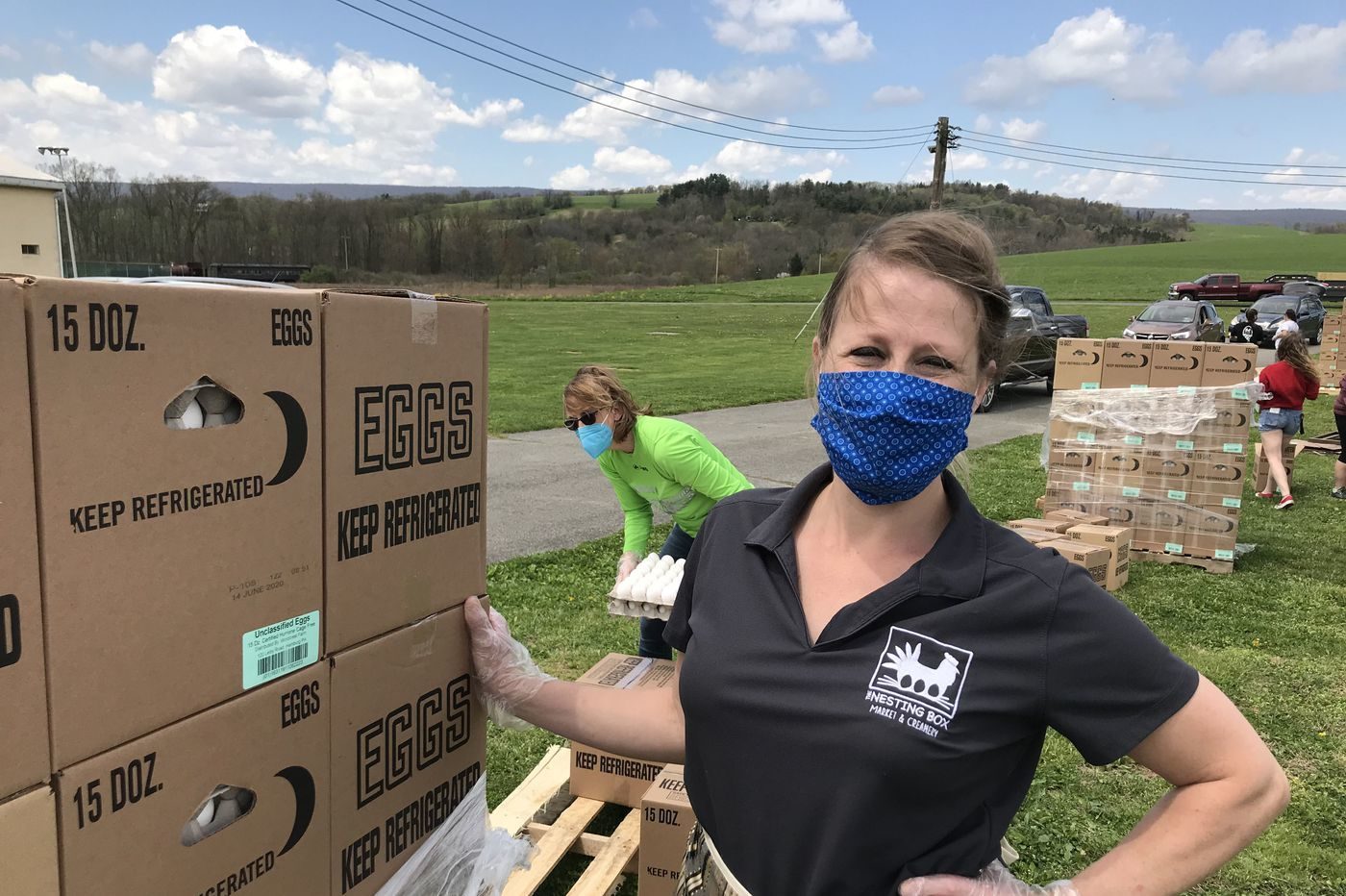
© Bob Fernandez / StaffTimi Bauscher
A Pa. egg farmer considered killing half his flock until a woman on Facebook devised a plan to save them

Hamburg egg farmer Josh Zimmerman faced disaster about a month ago when his bulk-egg processor ran out of storage for liquefied eggs for cruise ships, hospitals, hotels, and school cafeterias. The yellow goo from millions of eggs, stored in bladder bags, had filled all the available freezer space. So processors had to shut off the flow.

With a veritable Ol' Man River of eggs, 60,000 a day rolling out of his hen houses, Zimmerman, 37, faced a hard choice: either euthanize his 80,000-hen flock or find a new market for eggs.

Into that void stepped go-getter Timi Bauscher, 38, who runs the Nesting Box Farm Market and Creamery in Kempton, about 20 minutes from Zimmerman's cage-free spread, both in Berks County. She proposed to sell some of Zimmerman's eggs at her roadside market, offering a minimum of five dozen on flats for a discounted $2 a dozen.

Comment: The do-it-yourself supply chain is being rediscovered all over, but bureaucracies still get in the way:
On a recent Wednesday morning, Sean Daniels pulled a large van up to the parking lot of a community center in Newark, New Jersey. There, volunteers were busy packing potatoes, mushrooms, onions, green beans, and other produce items that had been donated by the meal kit company HelloFresh into dozens of bags to be delivered to local senior centers and affordable housing complexes.

This was not Daniels' usual gig — he was a parts-and-service worker at an Audi dealership in northern New Jersey. But that day, he was acting as a volunteer for the Do-Good Auto Coalition, an organization that had sprung up in the few weeks since the start of the coronavirus pandemic with the goal of recruiting car dealerships and automakers to help shuttle supplies and food to those in need. Together with the food waste-reducing nonprofit Table To Table, which acted as the middleman between HelloFresh and the community center, the volunteer packers and drivers served more than 800 families that day.

Food waste might seem like an odd problem to have during a pandemic, but the shuttering of restaurants, arenas, schools, and other public institutions has created a glut of fresh produce stuck on farms with no buyers. Those producers operate within a completely separate supply chain to those who supply direct-to-consumer markets like grocery stores and food banks.

"Products that depend heavily on the food service market are clearly going to waste in much higher quantities right now. That's things like seafood, specialized products like broccolini that, you know, you probably buy more in a restaurant than you would at home," said Dana Gunders, the executive director of the national food waste-reducing non-profit Re-Fed. "Even more standard products like onions and tomatoes that we do buy and use in our homes [are not being used] in nearly the quantity that they are used in food service."

The number of people in need of food assistance is also ballooning. The U.S. had about 40 million food-insecure people in pre-pandemic times, and now with unemployment rising to the highest level in nearly a century, demand for food assistance has outpaced supply.

Local organizations all over the country like Table to Table are trying to redirect excess food to families, but it's unclear how much of a dent they can make to bridge the current disconnect in the food supply chain. Despite the general outcry against reports of fresh food being destroyed across the country while an estimated 1 in 5 American children goes hungry, the scramble for solutions to the food system's collapse has been piecemeal. As governments, nonprofits, individual farmers, and even startup-spirited college students attempt to address the dual problems of too much food on farms and not enough in fridges, experts and advocates are cautioning that we'll need a coordinated, long-haul set of solutions.

One of the main challenges right now, Gunders said, is a lack of good data. Even though the media is flooded with images of produce rotting in the fields, it's unclear how much food is actually being produced and left to rot as retailers, consumers, and government agencies shift their buying habits in response to the pandemic.

Another challenge is that the programs springing up in response to the food crises may not be flexible enough for the food system to efficiently take advantage of them. In mid-April, for example, the U.S. Department of Agriculture announced the federal Coronavirus Food Assistance Program, under which the agency will buy up to $3 billion in fruits and vegetables, dairy products, and meat from farmers and redistribute it to families in need. But the plan tasks distributors with packing the goods in variety boxes ready to hand directly to families, rather than shipping the food to pantries and food banks in bulk — a requirement that many smaller distributors are not prepared to fulfill.

"You're hearing a lot of 'I could save 15 truckloads of broccoli right now, but I can't necessarily get them all into their own boxes,'" said Gunders.

Another challenge is getting food from one place to another. Farmers who try and donate their doomed harvests also face untenable out-of-pocket costs for transporting their crops to areas where it can be distributed. "Right now, if you donate food, you receive an enhanced tax deduction for that donation," explained Gunders. "But if you donate the service of transporting donated food, you don't ... It's a key hurdle, especially for getting fresh, perishable healthy products to the food rescue system."

Harvard's Food Law and Policy Clinic director Emily Broad Leib agreed that restructuring tax incentives for farmers could be an easy way to reduce food waste. But there's no quick fix for the massive amount of coordination required between various government agencies and food system stakeholders.

Broad Leib recommended encouraging states and localities to buy farmers' excess food as much as possible. And more importantly, she said the government should expand the reach of the Supplemental Nutrition Assistance Program, also known as food stamps, including for online food orders. Broad Leib points out that because every dollar spent on SNAP generates about $1.50 in GDP growth, increasing access to SNAP could also bolster local economies — especially if Americans could easily use the vouchers to buy food from local markets and farmers as well as large supermarket chains.

"We have a food system that has a lot of challenges, even in good times," said Broad Leib. "This pandemic has really shown those frayed edges."


Pistol

Member of German elite army unit already probed for weapons cache is now suspected of extremist links

weapon inspection
© REUTERS/Hannibal HanschkeFILE PHOTO: A KSK member inspects his weapon
Probed for stockpiling military-issue firearms and ammunition, a non-commissioned officer from Germany's elite KSK army unit reportedly had close ties to other commandos under scrutiny for glorifying a Nazi past.

Identified only as Philipp Sch. by local media, the 45-year-old sergeant major was arrested this week by the German army's counterintelligence wing. Detectives uncovered an AK-47 assault rifle, complemented by a sizeable stockpile of ammunition and TNT, at his house in a hamlet in northern Saxony.

Stock Down

Economic carnage: 100,000 businesses have permanently collapsed under the pandemic

business closed coronavirus covid-19
© Alan Levine/Flickr
More than 100,000 small businesses have permanently shuttered within just two months as pandemic lockdowns devastated the nation's economy landing 36 million Americans out of work, according to a new survey this week.

A team of researchers at the University of Illinois, Harvard University, Harvard Business School and University of Chicago discovered at least 2 percent of the nation's small businesses are now gone after conducting a representative survey of more than 5,800 enterprises between May 9-11.

"The broad conclusion of our research is that a lot of small businesses which make up a big share of U.S. employment have daily limited resources and are under a fair amount of financial distress," said Illinois economist Alexander Bartik who co-authored the study.

Comment: Is the extremely generous unemployment benefits a trojan horse step towards Universal Basic Income? It's certainly suspicious that the billionaire class is endorsing the idea.