Puppet MastersS


Info

Russia and Armenia inch closer in collective defense with upgraded joint task force

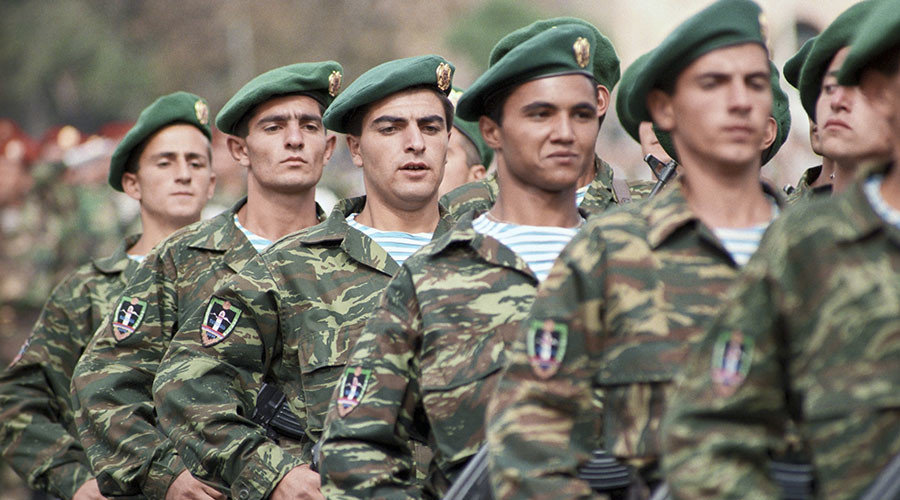
Armenian soldiers
© R. Mangasaryan / Sputnik
Armenia and Russia are set to sign a treaty on a joint task force, which would give legal grounds for Russia to use its military to protect Armenia from foreign aggression. Armenia is among the few nations hosting Russian troops on its territory.

The new Joint Task Force (JTF) agreement set to be signed this later week between Moscow and Yerevan upgrades an existing military cooperation mechanism, going into far greater detail about how troops would be used in case of a hypothetical attack. For instance, it marks the Russian military base in Armenia as a key component for the JTF deployment, gives Russian command and communication systems a priority in the force's operation, and states that the JTF commander, who remains in the Armenian chain-of-command during peacetime, may become subordinate to the commander of Russia's Southern Military District in wartime.

"If Armenia is attacked, the Russian military base in Gyumri would be involved in our defense, but this requires legal grounds. This international agreement will provide such grounds," Armenian Defense Minister Vigen Sarkisyan told Armenian media.

Comment: Two years ago Russia and Abkhazia entered into a similar military agreement:
Georgia has accused Russia of moving towards the de facto annexation of its territory, after the Kremlin announced a far-reaching military agreement with the breakaway Georgian province of Abkhazia on Monday.

Under a treaty signed by Vladimir Putin and Abkhazia's leader - both former KGB officers - a Russian commander will lead a new joint force of Russian and Abkhaz troops. Abkhazia also agreed to harmonise its foreign and defence policies with Moscow's. Putin promised subsidies to the lush coastal Black Sea enclave, amounting to $270m (£170m) over the next three years.

"I'm sure cooperation, unity and strategic partnerships between Russia and Abkhazia will continue to strengthen," Putin said. Abkhazia's president, Raul Khadzhimba, added: "Ties with Russia offer us full security guarantees."
Both Abkazia and Armenia border Georgia.

Map of Georgia


Megaphone

Think tank that helped shape Trump's defense views claims US military incapable of winning major wars

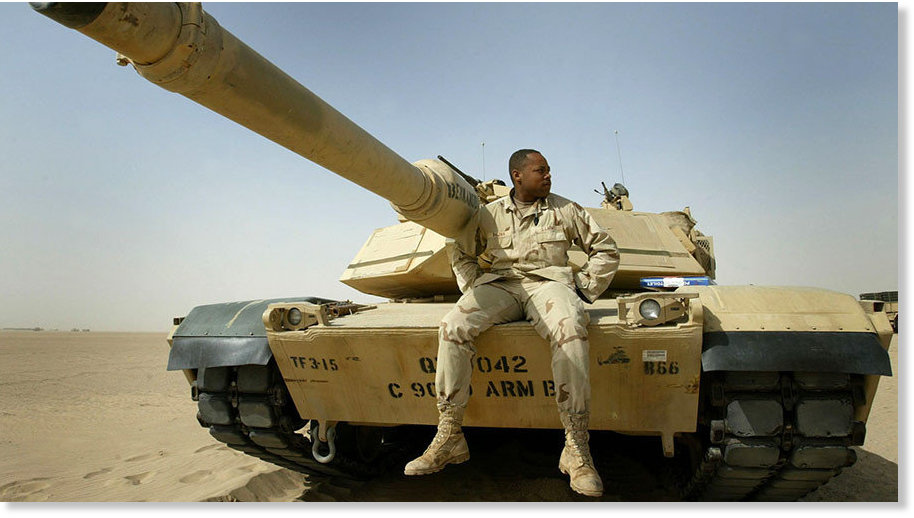
us soldier tank
© Kai Pfaffenbach / Reuters
All branches of the US military - Army, Navy, Air Force, and Marine Corps - have shrunk so much that they are now incapable of winning two regional wars at once, a report from an influential think tank that helped shape Donald Trump's defense views says.

The Heritage Foundation, an influential Republican think-tank, says that none of the branches of the US armed forces is strong enough to deal with threats to Washington's interests, whether actual or perceived, coming from around the world.

A new report entitled '2017 Index US Military Strength' assesses the Army, Navy, Air Force, and Marine Corps, giving them a collective grade of "marginal" for total capability, checked against a top score of "very strong." The Army, the backbone of the US military, has been branded "weak."

The Army's active "end strength" has dropped from 566,000 troops in 2011, and is projected to stand at 450,000 troops by 2018, while the number of 4,500-strong Brigade Combat Teams (BCTs) has fallen from 45 to 31. Only 13 of those 31 BCTs are considered fully combat-ready, and nine are currently involved in ongoing operations, leaving only three to deal with emerging contingencies, the Heritage report said.

Dollar

Chairman of top Nordic bank believes Trump election will be good for US economy

Bjorn Wahlroos
Bjorn Wahlroos, chairman of Nordea Bank AB
The chairman of the biggest Nordic bank says Donald Trump's election win is good news for the U.S. economy, thanks to the real estate mogul's pledge to deliver tax cuts and deregulation.

"Based on the expectation that the American President and Congress are likely to act on taxes, and perhaps on regulation as well, I think there is a slightly more positive outlook for the American economy over the intermediate horizon," Bjorn Wahlroos, the chairman of Nordea Bank AB, said in an interview in Stockholm on Thursday. But for the rest of the world, things will probably continue "as before," he said.

Wahlroos's view of Trump's policies contrasts with criticism he has leveled at Sweden's government for pushing laws he says are too tough on banking. The ruling coalition in Scandinavia's largest economy, whose banks are among the world's best capitalized, is planning a new financial tax to help cover welfare spending. The finance industry warns such a levy may wipe out 16,000 jobs as firms either move operations abroad or rely on robots instead of humans. The government says banks are exaggerating.

There's much to suggest Sweden's regulatory environment has done little to hamper its banks from thriving. In the years following the 2008 financial crisis, Sweden's four biggest banks -- Nordea, Handelsbanken, Swedbank and SEB -- have consistently outperformed most of their peers in European stress tests.

Light Saber

DU30 talks about alliance with Russia and China to make the world a more peaceful place

DU30 duterte
The Philippines is not yet ready for new military alliances, but in the wake of disagreements with the US, will cooperate with "new friends" Russia and China to make the world a more peaceful place.

Philippines President Rodrigo Duterte spoke with RTD's Marina Kosareva in an exclusive interview.

RT: So you've become world famous for quite a number of sharp statements, and some people even went so far as to say they were politically incorrect. Why did you choose this style of conducting politics?

Rodrigo Duterte: Well, I never ... that was not an ambition, I never decided to be an international figure. I wanted to [just] be a mayor here, but fate somehow changed the course of my life.

Now, foreign policy. Fundamentally, the foreign policy of the Philippines follows the foreign policy of the United States. Why? Well, we were occupied by Spain, made their colony for 400 years. Then, when the Spaniards lost the Philippine-American war, one of the concessions that was asked of the Spaniards was to concede real estate in the Pacific, and that would include Guam, that's why they'd have the Spaniard name. And the Philippines very similar - only a name, because they were occupied also by the Spaniards.


Comment: While US-Philippines relations have recently become understandably bitter, there is a possibility of reducing tensions if the US takes a less invasive position under Trump. Duterte is extending a magnanimous gesture given the historic damage done to the Philippines under US influence. Time will tell what the extent of change in US foreign policy will be under Trump. For now, Duterte has expressed an openness towards working with Trump.

"Trump is great, it is possible to work with him," Duterte told the Rossiya-24 television channel. He also congratulated Trump after the election and expressed optimissm that the two countries could work together in the future.

Meanwhile, Duterte is forming the basis of a relationship with Putin and Russia. "He [Russian President Vladimir Putin] was pleased to hear our offer of friendship, pleased with the fact that the initiative came from us. Not because we need money ... or arms. If we have money, we will buy them [arms]," Duterte told the Rossiya-24 broadcaster.

Update: Duterte also had harsh words for the West when asked about the ICC possibly indicting him over his reported "extrajudicial killing" in his country's war on drugs, saying:
"You scare me that you will jail me? International Criminal Court? Bulls**t,"
while also pointing out that the US itself isn't a signatory of the International Criminal Court:
"America itself is threatening to jail me in the International Criminal Court. It is not a signatory of that body. Why? Because at that time, they were afraid [former President George W.] Bush would face it," he said.


Che Guevara

'Castro Warned Us on Freedom Charter' but offered Mandela and others advice for a peaceful end to apartheid

Castro Mbeki south Africa
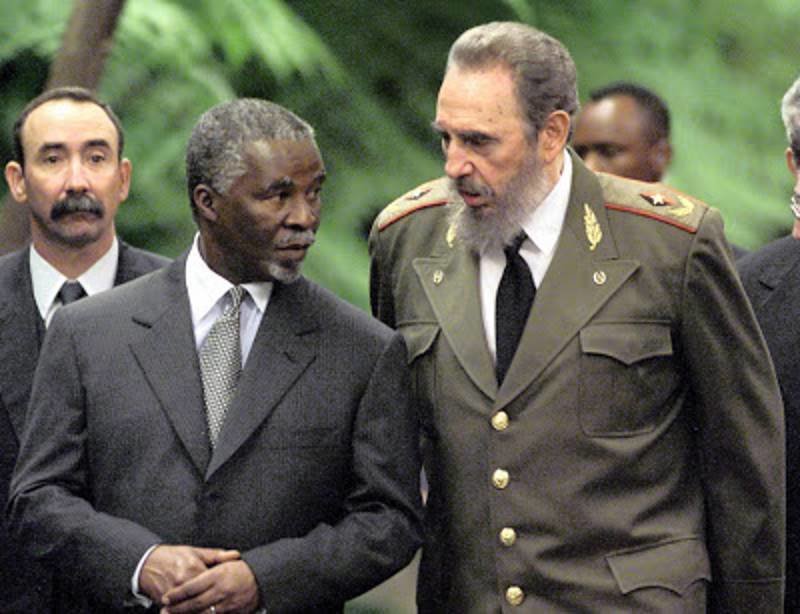
Cuban presiden Fidel Castro with South African President Thabo Mbeki
Cuban evolutionary leader Fidel Castro warned of the challenges the ANC would face in implementing the contentious Freedom Charter, saying the party should get political freedom first before transforming the economy.

This was revealed by former president Thabo Mbeki following Castro's death at the weekend. He was 90.

The ruling party has often been rapped over the knuckles for its slow pace in transforming Africa's largest economy and the cabinet ministers are critical of that.

Deputy Finance Minister Mcebisi Jonas has said the social and political pact reached in 1994 has collapsed and that the country's leaders needed to find a "new social consensus" to transform the economy as continuing on the current trajectory was unsustainable.

President Jacob Zuma has spoken out about the economic situation in the country, saying it was being sabotaged because South Africa was part of the BRICS emerging countries.

In an interview on YouTube, Mbeki said he was part of the ANC delegation from Lusaka in Zambia, led by party president Oliver Tambo, that was invited by Castro to the capital city Havana during the dark days of apartheid.


The Cubans had insisted on discussing the Freedom Charter, a precursor to the constitution, which calls for the nationalisation of mines, banks and other commanding heights of the economy.

Castro, who was internationally recognised as one of the 20th century icons, warned the ANC about the challenges it would face in implementing the document, which was adopted at the Congress of the People in Kliptown in 1955.

Comment: The courageous example of Fidel Castro's leadership of Cuba has been an inspiration to struggling nations around the world.

Vietnam:
In September 1973, Fidel Castro was the first and only foreign leader to visit the southern liberation area of Vietnam when the war was ongoing, bringing a great encouragement to Vietnamese soldiers and people and a promise to help realise President Ho Chi Minh's wish to build a more prosperous country. This showed the special sentiments of him and Cuban people towards Vietnam and its national liberation.
[...]
Also in his first visit to Vietnam, Fidel Castro presented Vietnam with five important socio-economic works: Thang Loi Hotel in Hanoi, Vietnam-Cuba Hospital in Quang Binh, Xuan Mai Road, Ba Vi cow breeding farm, and a Luong My chicken factory.

He also gifted Vietnam cow and chicken breed, along with more than 6 million USD for buying modern production equipment. At the same time, Cuba also sent experts to Vietnam to join the construction of Ho Chi Minh Trail and train more than 1,000 Vietnamese university students and post-graduates. Cuba also supported Vietnam in joining the United Nations.
Angola:
Castro sent tens of thousands of troops when oil-giant Angola became embroiled in a proxy war between the United States and Russia who were vying for Cold War supremacy.

Having gained independence from Portuguese colonial rule in 1975, the Popular Movement for the Liberation of Angola (MPLA) government faced a civil war against the rival National Union for the Total Independence of Angola (UNITA).

Castro supported the MPLA, which was fighting US- and apartheid-backed UNITA.

While Cuba provided troops, the Soviet Union was responsible for military hardware.

By the time the war ended Angola owed Moscow $5-billion, but nothing to Cuba. Castro believed "revolution was not something you paid for," said Roque.

It culminated in the 1988 Battle of Cuito Cuanavale, in southern Angola, an epic confrontation that sounded the death knell for South Africa's apartheid regime and indirectly led to the independence of Namibia.

More than 42 percent of healthcare workers in Angola are Cubans, many of whom decided to stay on after the war.

Elsewhere in the region, South African state security, intelligence officers still go for training in Cuba, according to Roque.
Palestine:
Palestinian flags were flown at half-mast in honor of the Cuban revolutionary leader Sunday. Across the Palestinian resistance spectrum, the late Cuban leader and revolutionary Fidel Castro left a mark on the development of the struggle against decades of Israeli colonialism and occupation and so several Palestinian groups took the time to express their gratitude for Cuban solidarity throughout the years.

Under the leadership of Fidel, "Cuba stood with the Palestinian people and their liberation movement in all facets of international struggle, building a revolutionary alliance for collective movement against imperialism, colonialism and its particular manifestation in Palestine, Zionism," the statement posted on the PFLP website Saturday said.

Diplomatic ties between Cuba and Palestine began in the same year that Fidel became prime minister in 1959 following the Cuban Revolution when Raul Castro and Che Guevara visited the Gaza Strip.

Fidel invited late Palestinian President Yasser Arafat to Cuba eight times, where the Cuban leader "always welcomed (Arafat) like he was a head of state," Palestinian officials told Al-Jazeera.

Fidel broke diplomatic relations with Israel in 1973 and has repeatedly called Zionism a form of fascism and racial discrimination. In 2014 he said that Israel was committing a "Palestinian Holocaust" in his reaction to the brutal Israeli 50-day war on occupied Gaza that year.


Arrow Down

Japan PM Abe insistent on hanging on to sinking TPP trade deal

Shinzo Abe ministro japonés
© Sputnik/ Mikhail Klimentiev
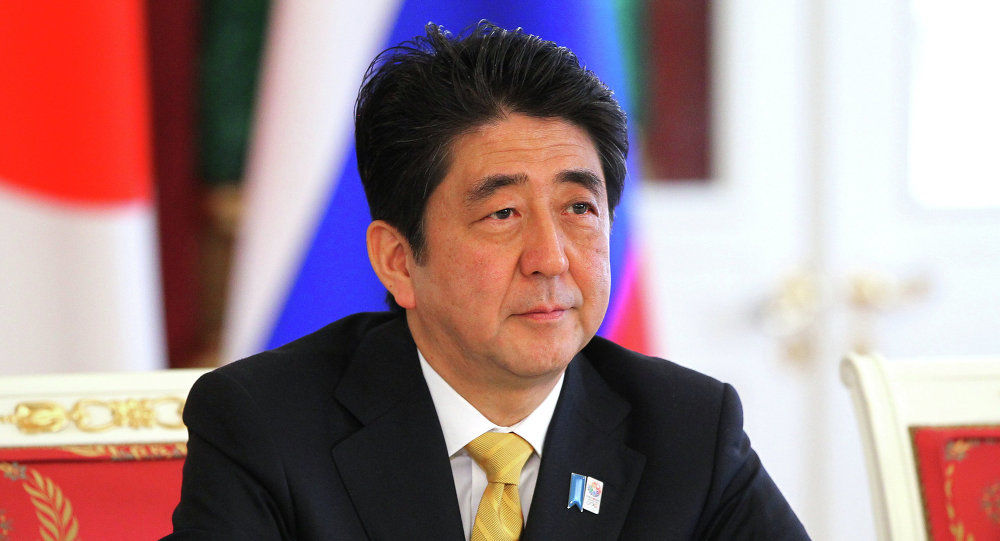
Japan's Prime Minister Shinzo Abe said he intends to ratify of the Trans-Pacific Partnership (TPP) trade deal despite President-elect Trump's promise to pull the US out of the agreement.

"We do not have to be affected by the other countries and blindly follow them. Japan needs to go by its own ideas and creeds. We cannot waver now," Abe said at the plenary session of Japan's Upper House of parliament.

However, the Japanese parliamentary opposition sharply criticizes the government's approach, describing its policy on TPP as a "total failure." The deal had previously been approved by the Lower House of parliament, where the ruling coalition of the Liberal Democratic Party is in the majority as well as in the Upper House.

Last week, Donald Trump promised to withdraw the US from TPP that had been negotiated between twelve countries over seven years.

War Whore

Terrorists' Religious Leader Begs for Continued Turkish Invasion in Syria

Abdullah Muhammad al-Muhaysini
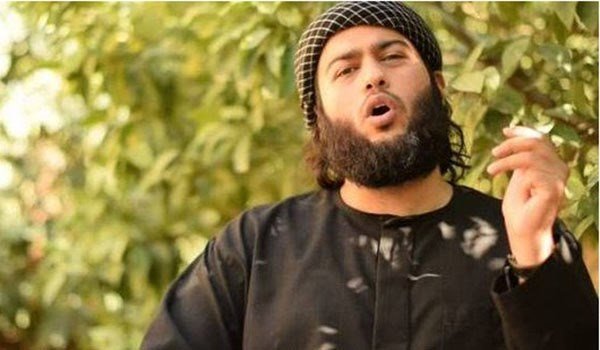
Abdullah Muhammad al-Muhaysini, a senior al Qaeda-linked cleric and the religious leader of Jeish al-Fatah coalition of terrorist groups, said Ankara is duty bound to intensify militant invasion of Syria from the standpoint of Takfiri interpretation of Islam.

The Saudi Mufti (religious leader) called on the Turkish air-defense units, deployed at Turkey's border with Syria, to target the Syrian fighter jets.

Al-Muhaysini acknowledged the militant groups' defeats in both phases of their Great Epic Operation in Aleppo, and demanded the Turkish army to change military equation against the Syrian army in the Northern part of the war-hit country by intensifying military interference in the country.

He further lashed out at Arab armies that are spending their funds on holding military drills and festivals and urged them to instead spend their money to back militant groups in Syria and removal of Syrian government forces' siege on the militant-held districts in Aleppo city.

Al-Muhaysini said that 3,500 militants are now in Aleppo and urged the youth to take up arms and join them instead of escaping the city.

He went on to say that if the militant groups do not unite they will be forced to withdraw from the entire Levant.

Comment: The Syrian Arab Army is pushing the jihadis up against the ropes in East Aleppo, and unless the US can get a no-fly zone established it will only be a matter of time until the city is cleared of Western backed militants:


Eye 2

Ukrainian neofascists support useful idiot Saakashvili in attempted rehabilitation

Mikheil Saakashvili
Mikheil Saakashvili
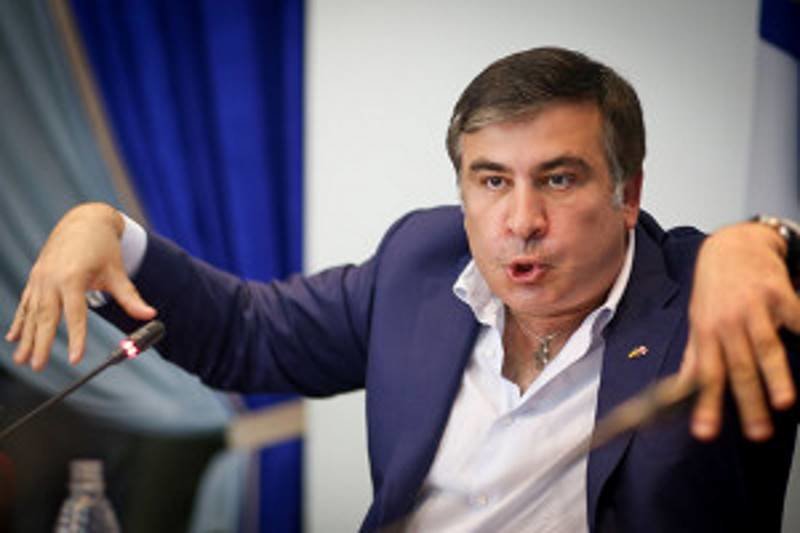
One reader recently wrote to me, "I would really love more articles on Nazi collaborators and Saakashvili." Well there is plenty of material. Even though Saakashvili is now leaving Ukraine, his appointment there is the first place, and the manner of his leaving, tell us a great deal about what he has been doing in that country, and for whom.

Saakashvili efforts to "reform" Ukraine in the wake of the Poroshenko's election were expected to ruffle some feathers, as every reform process does. But as the Washington Post describes, his efforts in Odessa have met particularly stiff resistance. He is accusing local elites, and especially Odessa Mayor Gennady Trukhanov, of thwarting him, which we are supposed to accept unchallenged because Trukhanov is a member of the party once led by Viktor Yanukovych, the former Ukrainian president twice forced to flee following massive US-sponsored protests.

Odessa is indeed known for its organised crime as well as its exquisite theatres and museums. But so was Saakashvili's Georgia. If you actually wanted to root out corruption Saakashvili is the last person you would appoint to the role. If you want to use corruption as an excuse to do what you like however - even when you created that corruption to begin with - appointing him is a much more sensible idea.

The fascists in Ukraine are doing their usual thing - erecting a stalking horse to take power for themselves. Saakashvili has little choice but to be that just to stay alive. The only question is whether he is working for the Ukrainian neofascists directly, having changed sides, or as part of a US-neofascist alliance, as he has been until now. The evidence suggests that he might actually be doing both - each side its hedging its bets by having him there, waiting for him to make an even bigger fool of himself than he already has.

Snakes in Suits

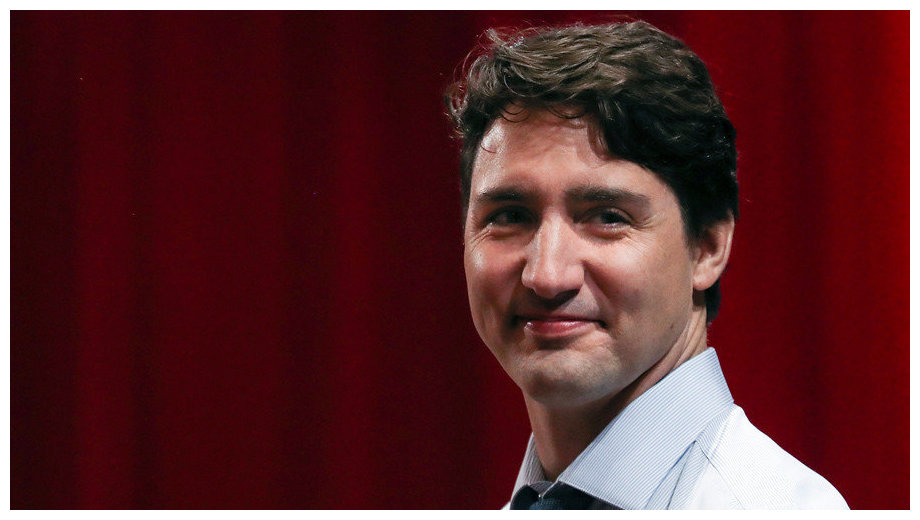
Justin Trudeau's Castro comment catastrophe

Justin Trudeau
© Carlo Allegri/Reuters Canadian Prime Minister Justin Trudeau.
The Canadian Prime Minister has found that liberal tolerance has its limits. His words mourning the death of Fidel Castro have not played out according to plan.

Justin Trudeau is something of the archetypal preachy, feel-good liberal who has something positive to say about everyone from far-right Ukrainian maniacs, to those suffering transcendental crises of identity, yet are paradoxically proud of who they are. He has nothing bad to say about anyone (except Donald Trump) and is ready at a moment's notice to remind everyone that he is positively positive about the power of positive thinking.

His endless river of kindness has now flowed to Cuba as he paid tribute to the life of Fidel Castro upon his recent death. It seems, however, that the tide of good will that the global liberal community had offered to Trudeau, has suddenly dried up.

He has faced something that liberals the world over fear the most.... the dreaded Twitter backlash!

The Canadian Prime Minister's statement said the following:
"It is with deep sorrow that I learned today of the death of Cuba's longest serving President.

Fidel Castro was a larger than life leader who served his people for almost half a century. A legendary revolutionary and orator, Mr. Castro made significant improvements to the education and healthcare of his island nation.

While a controversial figure, both Mr. Castro's supporters and detractors recognised his tremendous dedication and love for the Cuban people who had a deep and lasting affection for "el Comandante".

I know my father was very proud to call him a friend and I had the opportunity to meet Fidel when my father passed away. It was also a real honour to meet his three sons and his brother President Raúl Castro during my recent visit to Cuba.

On behalf of all Canadians, Sophie and I offer our deepest condolences to the family, friends and many, many supporters of Mr. Castro. We join the people of Cuba today in mourning the loss of this remarkable leader."
The remarks contrast sharply with those of Donald Trump whose initial response was a single line Tweet which read, "Fidel Castro Is Dead!"

Comment:


Eye 2

Trump claims millions voted illegally - he's probably right

Trump
President-elect Donald Trump is claiming, without evidence, that millions of people voted illegally in the election he won, issuing the baseless claim as part of his angry response to a recount effort led by the Green Party and joined by Hillary Clinton's campaign.

"I won the popular vote if you deduct the millions of people who voted illegally," Trump tweeted Sunday. He later alleged "serious voter fraud in Virginia, New Hampshire and California."

Trump's transition team did not provide any evidence to back up the president-elect's assertions of fraud in the November election. They pointed only to past charges of irregularities in voter registration.

Sen. James Lankford, R-Okla., said Monday he had "not seen any voter irregularity in the millions."

Comment: See here for more on True to Vote
True the Vote (TTV), the nation's leading voters' rights and election integrity organization, today released a statement with respect to President-Elect Donald Trump's claim that "millions" of individuals illegally voted in the 2016 Election.

"True the Vote absolutely supports President-elect Trump's recent comment about the impact of illegal voting, as reflected in the national popular vote. We are still collecting data and will be for several months, but our intent is to publish a comprehensive study on the significant impact of illegal voting in all of its many forms and begin a national discussion on how voters, states, and the Trump Administration can best address this growing problem."

True the Vote (TTV) is an IRS-designated 501(c)(3) voters' rights organization, founded to inspire and equip voters for involvement at every stage of our electoral process. TTV empowers organizations and individuals across the nation to actively protect the rights of legitimate voters, regardless of their political party affiliation. For more information, please visit www.truethevote.org.