Puppet MastersS


Cowboy Hat

The psychology and consequences of Neo-McCarthyism and the demonization of Russia

Neo-McCarthyism
The American public is being conditioned to fear and hate Russia, but why?

This article is not intended to alter your position in regard to Donald Trump in any way. Whether you love him or hate him isn't an issue of global importance, nor is his political survival relevant to this analysis. Some of the tactics being used in the push to take Trump down however, are.

THE STAKES

Before we dive into the quagmire that the topic of of Russia, Trump and the 2016 elections has become, it behooves us to anchor to the stakes: Russia is a nuclear power. The demonization of foreign nations is a precursor to war, and even a limited conflict between the United States and Russia would kill millions (if not billions) of people; rendering much of the planet uninhabitable for decades. Using U.S. Russian relations as a political football in this context is foolish and irresponsible.

Stock Up

Dow up over 150 points, ends longest losing streak since 2011

NY Stock Exchange
© Cleveland.comThe poverty of wealth by the numbers.
Rebounding from an historical eight-day decline, the Dow Jones Industrial Average stock market index gained over 150 points when consumer confidence hit a 16-year high and President Donald Trump signed an executive order revoking energy regulations.

The Dow gained 150.52 points on Tuesday, or 0.7 percent to reach 20,701.50 points after eight consecutive days of declines. The last time the Dow fell nine days in a row was in 1978.


Comment: The nature of money has an ebb and flow in order to create balance, like a monetary Newton third law. Investors seem to forget how that works, basing their bets on situational wishful thinking versus grounded economic sense.


Brick Wall

Build or not build: Funding border wall may force government shutdown

wall and handmarks
© Jose Luis Gonzalez / ReutersThe deeper and permanent connotation of a surface impression.
Mexico won't pay for the border wall, and it seems Congress isn't quite ready either. A $3.8 billion proposal by President Donald Trump is expected to complicate lawmakers' negotiations to prevent a government shutdown.

Senate Republican leaders signaled Tuesday that they are unlikely to seriously pursue Trump's supplemental border wall funding to avoid a potential government shutdown, courtesy of Senate Democrats who have vowed to block any funding of the 30-foot southern border wall.

At a press conference on Tuesday, Senator Roy Blunt (R-Missouri), a senior member of the Appropriations Committee, confirmed that he had received the $1 billion request for supplemental funding that would build an estimated 62 miles of the border wall, according to The Hill. It also includes a $2.8 billion request for border infrastructure and technology for next year as well.

With a deadline of April 28 for fiscal year 2017 fast approaching, Blunt was not willing to commit to the supplemental request that would improve 14 existing miles of the wall and add an additional 48 miles. "All of the committees, House and Senate leaderships, are working together to try to finalize the rest of the FY17 bill," he added. "My guess is that comes together better without the supplemental."

Comment: Interesting the correlation in the implications of 'Wall' and 'Shutdown'.


X

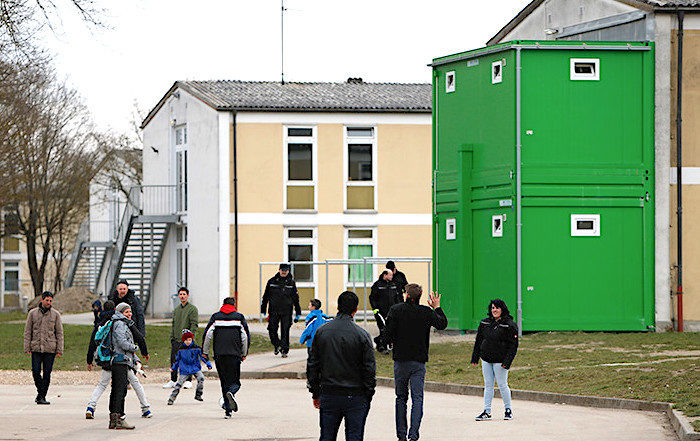
German proposal: EU sanctions for countries not taking back deported immigrants

Deportation center
© Michaela Rehle/ReutersRefugee deportation center in Manching, Germany
Germany suggests the EU should impose sanctions on countries refusing to take back their nationals deported from the bloc. The measures include tightening "generous" visa policies towards these countries' senior officials, as well as curbs on financial aid. Addressing an EU meeting in Brussels, German Interior Minister Thomas de Maiziere said the 28-member bloc needs to get tough on countries reluctant to take back failed asylum applicants, Spiegel reported on Tuesday.

Berlin's proposal to unleash "a whole range of policy measures to encourage the readiness to receive the returnees" has been met with "great approval," the magazine said. "It is mandatory under international law to take one's own citizens back," de Maiziere stated, adding that "many states are not pleased to do so. If a country is not ready to take its own citizens back, it has to understand that visa policies which allow travel to Europe are not as generous as they used to be, maybe even for the country's leadership," de Maiziere said.The minister added it is necessary "to put all eggs you have in the negotiation basket" while talking to North African and other countries.

According to government statistics cited by Spiegel, around 207,000 migrants were obliged to leave Germany as of the end of 2016, including approximately 99,000 failed asylum seekers. Last year, 27,000 people were deported, while another 54,000 decided to leave voluntarily after receiving government cash offers incentivizing them to return home.

Some EU countries, however, resist the implementation of certain repatriation schemes, particularly the Dublin Regulation stipulating that refugees can be returned to the first EU state they arrived in. Greece has recently said it will cease to take refugees back as its immigration capacities are all but on the verge of collapse.

Comment: The old adage of "divide and conquer" doesn't work if it is within an organization dependent on member unity. By threatening and alienating member EU countries in order to hold together a leaky premise and policy, it could be far more trouble than worth. Germany, et al, should be looking for cohesive and collective solutions, while recognizing and acknowledging the rush to accommodate was not well thought out and a dagger in its side. Sanctions on countries within the EU are self-defeating, lending credence to the idea the EU is in jeopardy of coming apart.

Victim countries, vanquished by war, have insufficient means and infrastructure to quickly accommodate thousands, or hundreds-of-thousands, of home-bound refugees, no matter what the 'mandate under international law' says. Someone broke their country. Someone has to fix it. Sanctions on these countries are doubly detrimental to the outcome to which Germany attests.


Bizarro Earth

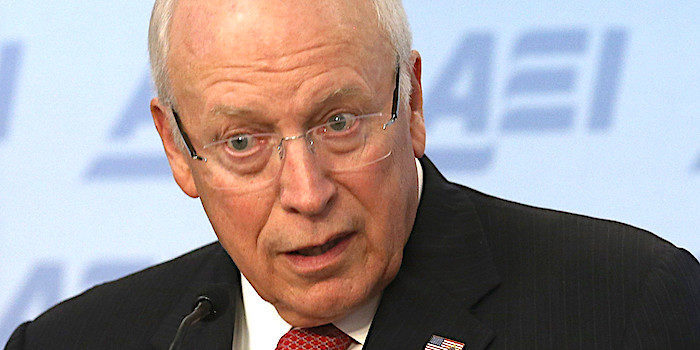
Cheney: Russian interference in election could be 'act of war'

Cheney
© The Huffington PostFormer Vice President Dick Cheney
Former Vice President Dick Cheney said Monday that Russia's attempts to interfere in the 2016 presidential election could be considered an "act of war" against the U.S.

"There's no question there was a very serious effort made by Mr. [Vladimir] Putin and his government, his organization, to interfere in major ways with our basic fundamental democratic processes," Cheney said Monday during a speech at the Economic Times' Global Business Summit 2017 in New Delhi. "In some quarters, that would be considered an act of war. I think it's a kind of conduct and activity we will see going forward. We know he's attempted it previously in other states in the Baltics," Cheney said, according to video of the remarks.

Some Democratic lawmakers charged last week that Russia's election meddling amounted to an act of war, and others have accused Moscow of "attacking" the United States through its hacking. "I actually think that their engagement was an act of war, an act of hybrid warfare, and I think that's why the American people should be concerned about it," Rep. Jackie Speier (D-Calif.) said at a House Intelligence Committee hearing on Russian election interference last Monday. Sen. John McCain (R-Ariz.) also said back in December that Russia's actions amounted to an act of war.

Still, experts have cautioned against making such accusations. The U.S. government does not currently have a definition of what actions in cyberspace would necessitate a military response.

Comment: All of which is a bogus bandwagon to disguise corruption in politics, deflect blame, find an excuse to start yet another war, feed the MIC...the delusions just keep rolling on and truth doesn't matter. They make up their own.


Boat

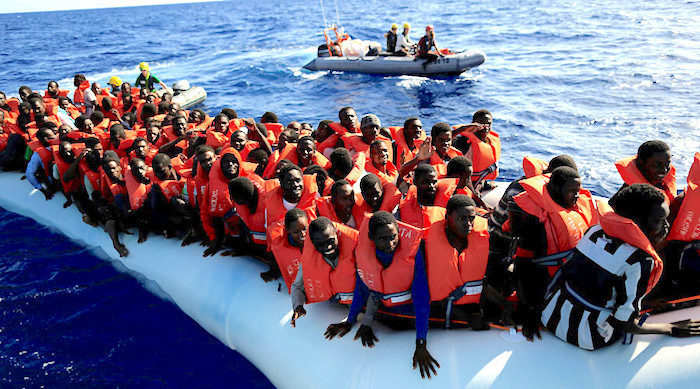
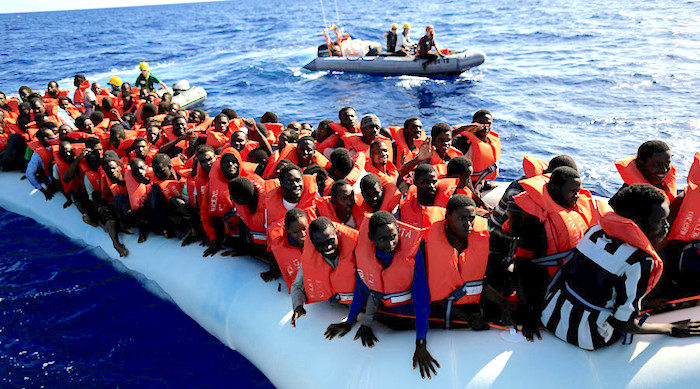
EU parliament chief: Estimated 30M Africans to arrive in EU next 10 years

African refugees
© Zohra Bensemra / ReutersVision of the future?
Protracted violence, civil wars and poverty may force up to 30 million Africans to come to Europe within the next 10 years, posing new security challenges to the continent, says the newly-appointed president of the European Parliament.

Europe must now tackle two greatest challenges, namely, terrorism and migration, with both phenomena being interconnected, Antonio Tajani, an Italian politician appointed president of the European Parliament in January, told Die Welt.

"The so-called Islamic State [IS, formerly ISIS/ISIL] seeks to embed terrorists with refugees," he said. "They explain them that it's now quite easy to carry out an attack in a European state using a knife or a car." Unless defeated militarily, IS "will do everything to confront Europe as their number one enemy," Tajani argued, adding, terrorists "are coming to the European Union via all routes," particularly through the Balkans.

However, even more significant challenges lie ahead, Tajani continued, listing increasing calamity in Africa as the primary cause for concern. "Africa finds itself in a dire situation - agriculture shrinks because of desertification, Nigeria and Niger are suffering from poverty, and Somalia is marred by chaos and civil war," Tajani stated. "If we fail to resolve the central problems of African nations, 10, 20 or even 30 million migrants will come to the European Union in the next 10 years."

To prevent this scenario from happening, Europe must pour billions worth of investments and "develop a long-term strategy," Tajani said. Otherwise, "Africa risks becoming a Chinese colony, but the Chinese need only natural resources, they're not interested in stability."


Comment: What goes around comes around - have to meddle, have to mitigate. Additionally, the EU is concerned with any upcoming Chinese presence in Africa, hence the new Marshall Plan and economic development proposals. Presumably the Marshall Plan for Africa is a version of the US' European Recovery Program from 1948.


Colosseum

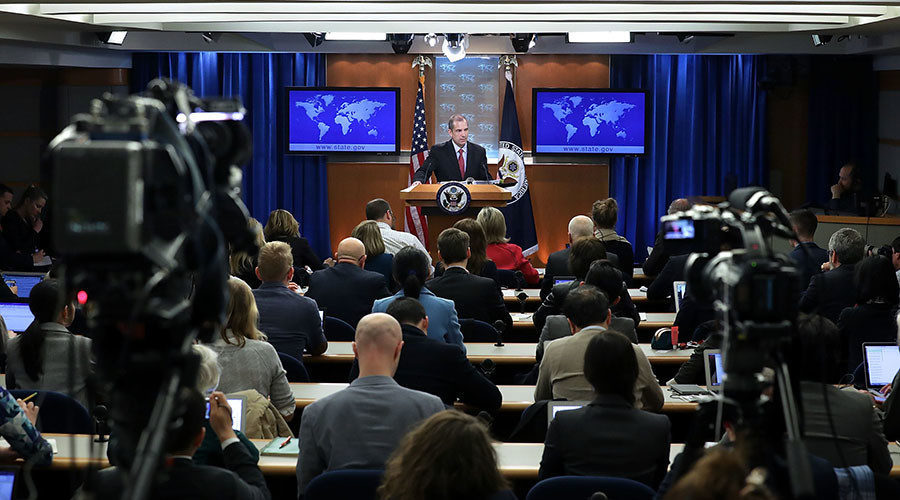
State Department suspends press briefings - journos frustrated with Tillerson style

State Department press conference
© Chip Somodevilla / Agence France-Press
The US Department of State is off the air again as it seeks a permanent spokesperson. Gone are the daily press briefings of the Obama era, leaving many reporters at Foggy Bottom frustrated by Rex Tillerson's corporate management style.

Tillerson, a former Exxon Mobile chief executive, took only one reporter along on his first trip to Asia earlier this month. During the first six weeks of the Trump administration, the State Department didn't hold a single on-camera press briefing, only restarting the practice on March 7.

Acting spokesman Mark Toner delivered on-camera briefings twice a week for two weeks, alternating them with on-the-record telephone briefings. Toner, a foreign service professional, is now being transferred to another post, according to the Wall Street Journal.

The State Department said it would not hold video briefings for at least two weeks, but would brief reporters intermittently on specific topics. Monday's background briefing was about Tillerson's upcoming trip to Turkey.

Ice Cube

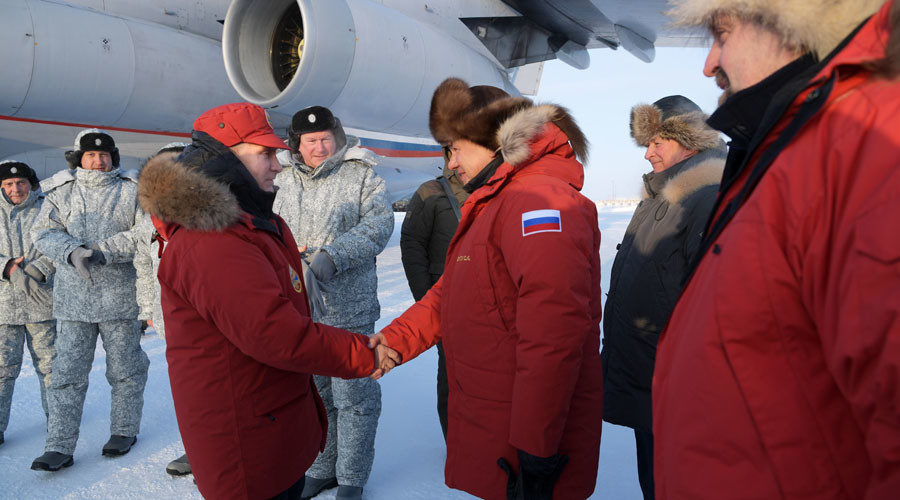
Russian President Vladimir Putin tours desolate northern archipelago amid international Arctic summit

Vladimir Putin and Sergei Shoigu
© Alexei Druzhinin / Sputnik
The Russian president is touring Franz Josef Land, a desolate archipelago in the Arctic Ocean, to inspect the environmental cleanup effort conducted there. A day later he is to take part in an international conference on Arctic development hosted by Russia.

Vladimir Putin landed on Wednesday on Alexandra Land, the westernmost island of the archipelago, lying some 1,000km north of mainland Russia near the Barents Sea. He is touring the desolate part of the country to inspect the progress in cleaning up waste left behind by Soviet expeditions and military deployments in the past.

Franz Josef Land was chosen for the cleanup in 2010 as a pilot project of a larger Russian effort to reverse environmental damage in the Arctic region. Estimates said there were some 90,000 tons of broken equipment, used supply containers, old fuel and other products of human presence scattered across the group's almost 200 islands.

Alexandra Land currently hosts a meteorological station, a small airfield and a military radar station. The Defense Ministry is investing into a larger installation on the island, which would include a larger and more technologically-advanced airfield, where fighter jets and tanker planes would be deployed.

The visit coincides with the opening of an international forum on Arctic development, which is taking place in Arkhangelsk. Putin is to arrive in the northern city to take part in the second day of the two-day event on Thursday. Over 2,400 delegates are taking part in the high-profile gathering, which is focusing on the prospects of developing the inhospitable region.

Comment: Russia plans to build 1st-ever civilian nuclear-powered submarine for Arctic prospecting
Russia has a project for a nuclear-propelled submarine, which would carry seismological equipment instead of missiles, an advanced research official said. The vessel would be used to explore the Arctic's mineral riches.

The project of the first-ever nuclear sub for civilian use was revealed by Viktor Litvinenko, head of a project group at the Advanced Research Fund, a state agency with close ties to the military.

"It would be a civilian nuclear submarine, but instead of missile launchers it would have tubes with a robotic submersible, which would conduct seismic prospecting, search for minerals," he told RIA Novosti on Wednesday.

The preliminary specifications of the vessel as voiced by Litvinenko are 135.5 meters long, 14.4 meters wide, 12.6 knots submerged speed and a test depth of up to 400 meters, roughly equivalent to Borey-class submarines. The submarine would have a crew of 40 and be capable of diving on missions lasting up to 90 days, he added.

The project is currently in its early design stage, the official said.

Advanced navies use nuclear submarines for long missions that require them to spend months submerged. It allows them to hide from enemy reconnaissance and ensure that a retaliation nuclear strike would be delivered in case of a global nuclear war, thus deterring such a development.

No civilian submarines use nuclear power plants, but Russia famously has a fleet of nuclear-propelled icebreakers, which it uses in the Arctic region. While requiring significant investment and technological expertise, such ships do not require regular refuel like traditional vessels, allowing long autonomous missions in the region, famous for its unpredictable weather.


Star of David

'Bible, not Google' gives Israel right to land, claims Israeli communications minister

Jewish men Israel
© Hazem Bader / AFP
Israel's communications minister says the Bible is enough to prove that his country has legitimate land claims, despite what Google or Wikipedia say. The remarks were made during an event supporting West Bank settlements.

"Defense is important and security is important but the most important thing is the moral claim of Israel and we are committed to living in our regional land, land that was given to us not by Google or Wikipedia but by the Bible," Tzachi Hanegbi said at the Washington event, titled 'Celebrate 50 years of Rejuvenation in Judea and Samaria.'

"...And this is the right, which we are going to demand our right forever and ever," Hanegbi continued, as quoted by Arutz Sheva.

Comment: See also: Deconstructing the Foundational Myths of Israel


Bad Guys

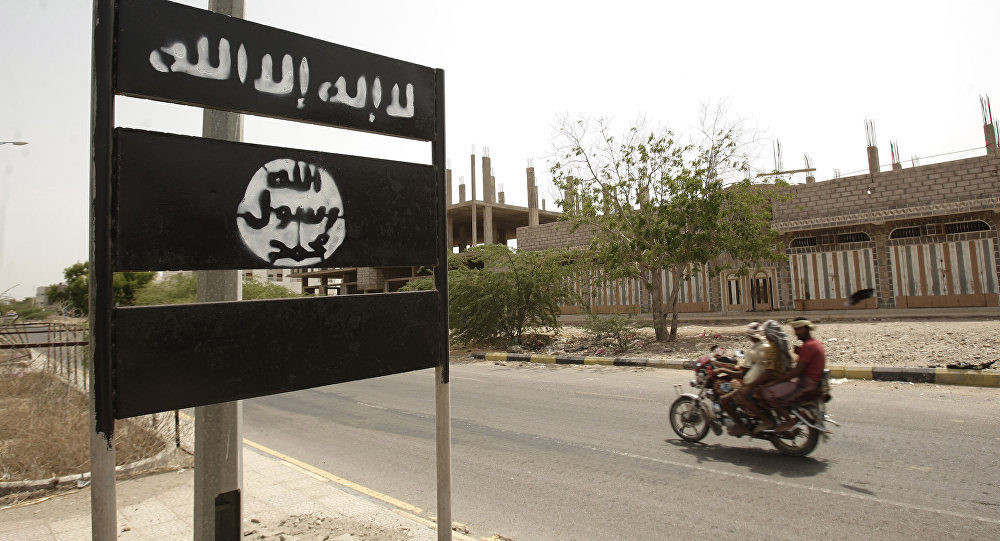
Al Qaeda's rebranding only serves the US' imperial agenda

al Qaeda ISIS terrorist
© AP Photo/ Hani Mohammed
The RAND Corporation's recent piece titled, "Al Qaeda in Syria Can Change Its Name, but Not Its Stripes," all but admits what was already suspected about designated terrorist groups operating in Syria - that they are undergoing a transition in an attempt by their state sponsors to bolster their legitimacy and spare them from liquidation amid the shifting tides on the battlefield.

The piece, written by Colin Clarke described by the RAND Corporation as a "political scientist at the RAND Corporation and an associate fellow at the International Center for Counter Terrorism," states:
Following recent infighting with other Syrian rebel groups in the northwestern part of the country, al Qaeda in Syria appears to have recognized the need to secure legitimacy and present itself to the civilian population it seeks to influence as an authentically Syrian entity.
However, this is not simply Al Qaeda's objective - this is the objective of the United States itself as well as the Persian Gulf states it funnels money and arms through, fueling Syria's destructive conflict since 2011.

Comment: Perhaps, with an increasingly official US military presence in Syria, it now behooves Western 'think tanks' to acknowledge al Qaeda as justification for further intervention.

Further reading: Syria: US intervention is 'violation of international law, an 'act of war'