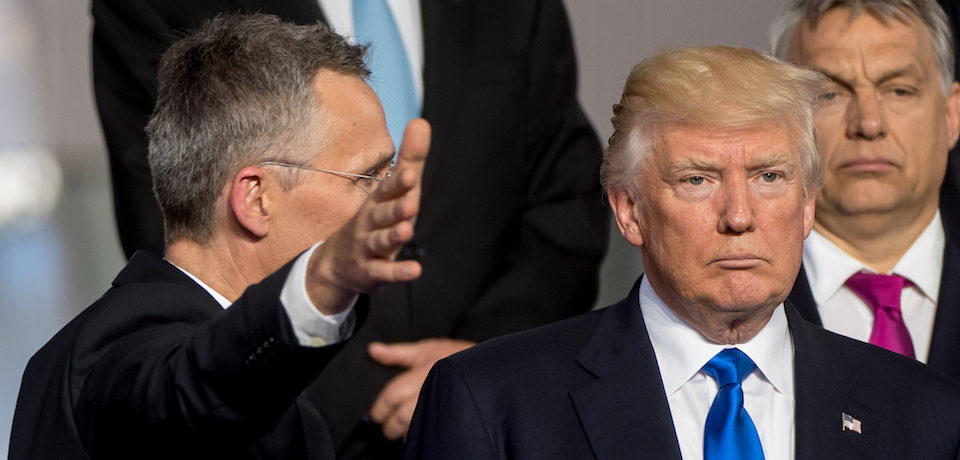
© DANNY GYS/AFP/Getty Images
There is a paradox that turns any normal idea about strategy on its head. In a business context, I call it the paradox of profit. Simply put, the surest path to losing money is for a company to be preoccupied with profits. The surest path to profit is to be preoccupied with benefiting society. By appealing to society's environmental concerns, Tesla now has the
highest market value of any American automaker. By attempting to sidestep those concerns, Volkswagen
lost $26 billion in market value in two days. A similar paradox applies to national interests. As President Donald Trump continues his
international tour, he would be wise to focus on shared interests with other nations in order to truly put "America first."
Engaging those with no natural interest in your success but with great ability to shape your opportunities or risks (those who I define as
shapeholders) begins with authentically aligning a purpose that benefits both you and them. Otherwise, there is little reason for others to give your concerns a second thought. Since the end of World War II, America's purpose has been underwriting global security, promoting open markets, and investing in development. As conflicts subsided, as trade expanded, and as newly prosperous nations became customers, both America and other nations benefited.
Abandoning America's purpose and reverting to narrowly defined national interests might appeal to many. Yet a nationalistic dalliance, even if only an interlude, could harm America's ability to advance its interests by undermining the trust and deference of other nations.




















Comment: For more analysis: Trump's anti-Iran coalition crumbling as Muslim allies balk