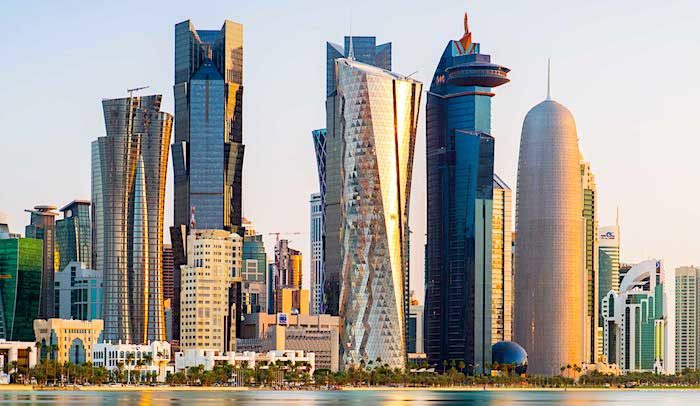
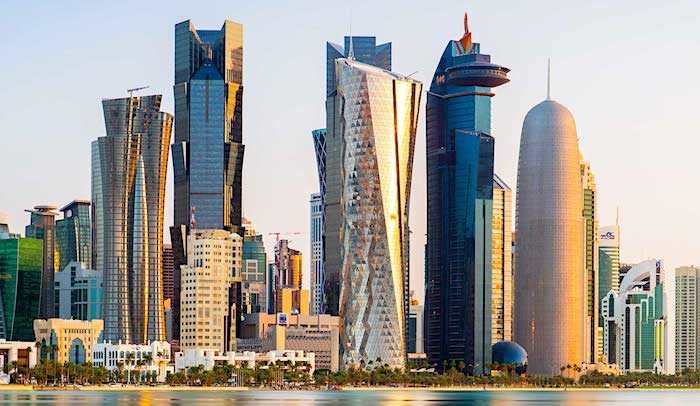
© Gulf Daily NewsDoha, Qatar
Bahrain announced early Monday that it is severing diplomatic relations with neighboring Qatar and cutting air and sea connections with Doha, accusing it of meddling in its internal affairs. Bahrain's state news agency said in a brief statement that Qatari citizens have 14 days to leave the country.
It accused Doha of supporting terrorism and meddling in Manama's internal affairs.
Comment: 'Pots calling the kettle black.' When the Arab coalition members turn on each other, the game is nearly won. Is there a Qatar-Iran relationship, and who would be disturbed by this? Whose hand is behind this turn of events, amping the situation? Cui bono.
According to RT:
Qatar has long faced criticism over its alleged support of Islamists, including the Sunni Islamist political group the Muslim Brotherhood, which has been outlawed by both Saudi Arabia and the United Arab Emirates (UAE).
Doha previously faced a backlash from Gulf countries led by Saudi Arabia for supporting former Egyptian President Mohammed Morsi, a Muslim Brotherhood member. Saudi Arabia, the UAE, and Bahrain recalled their ambassadors from Qatar over the situation in March 2014.
Those ambassadors returned to Qatar eight months later, after it forced some Brotherhood members to leave the country and quieted others.
However, the 2014 escalation was far less severe than the current rift, as it did not see a land and sea blockade, or the expulsion of Qatari citizens from its neighbors' territories.
Naturally, Qatar has
responded by saying the measures are "unjustified" and "based on assertions without foundation". Qatari diplomats have been given
48 hours to leave the nations in question. Turkey says it is
saddened by the move, calling for dialogue to continue. Russia and the U.S. have adopted a stance of
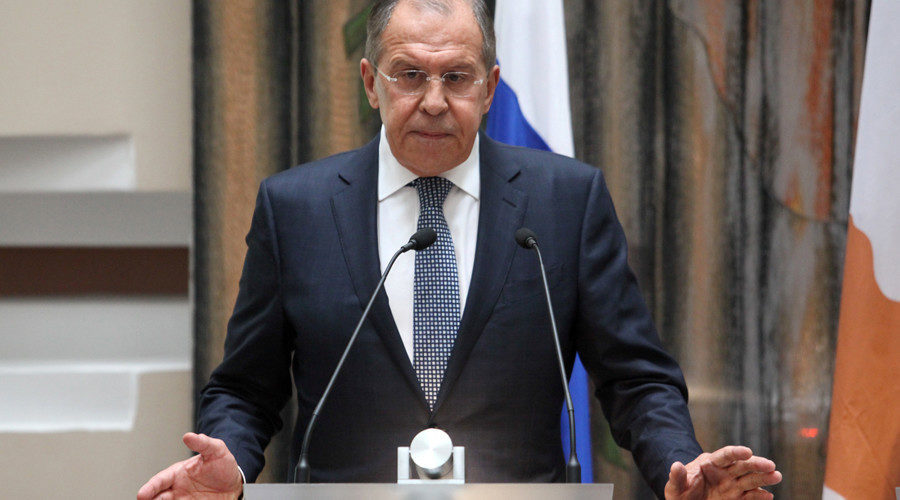
neutrality. Tillerson: "I do not expect that this will have any significant impact, if any impact at all, on the unified fight against terrorism in the region or globally ... "We certainly would encourage the parties to sit down together and address these differences". Lavrov: "We were never happy over the difficulties that arose in relations of other countries. We are interested in maintaining friendly relations with everyone, especially in the region where concentration of all efforts of fighting a joint threat, the threat of international terrorism, is a priority".
Thirrey Meyssan
writes: "In actual fact, this episode is only the tip of the iceberg: Qatar together with the United Kingdom is participating in an attempt to redistribute the cards in the Middle East, a move which could devastate all current alliances."
Oil prices saw a minor
see-saw in response, and Qataris are
stocking up on food as their only border is now closed and food prices are expected to soar due to increased transport costs.
Again, Iran responds
sensibly:
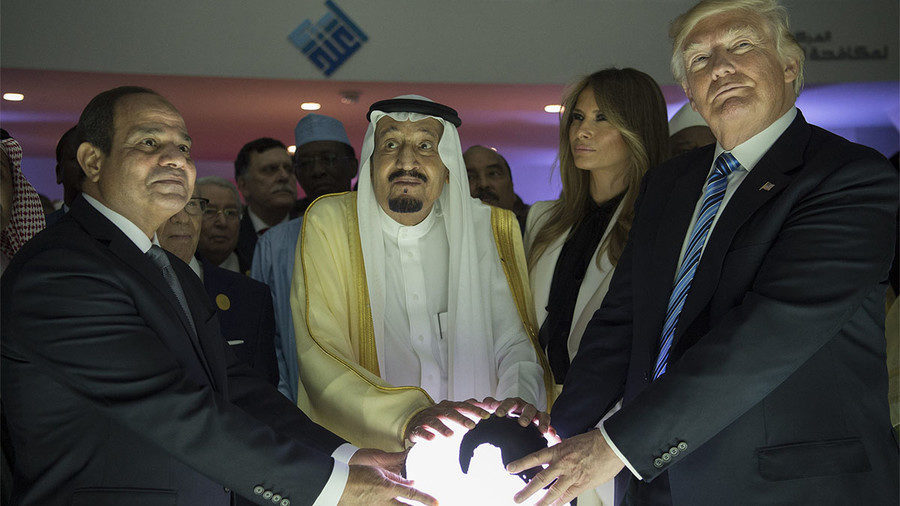
"What is happening is the preliminary result of the sword dance," Deputy Chief of Staff of Iranian President Hassan Rouhani Hamid Aboutalebi tweeted, referring to a greeting ceremony in Saudi Arabia, in which US President Donald Trump took part in a traditional sword dance.
The ongoing crisis indicates that the era of foreign superpower 'Big Brothers' shaping regional coalitions is over, as "political domination, security clannishness, occupation, and invasion is not going to bring about anything other than insecurity," Aboutalebi claimed.
"The era of sanctions is over too, and cutting diplomatic ties, closing borders, laying sieges on countries, and ejecting countries out of the selfsame coalition, etc. is not the way out of the crisis," PressTV quoted the official as saying.
Chairman of the Iranian Parliament's National Security and Foreign Policy Committee Alaeddin Boroujerdi also pinned the blame for the widening rift on Trump's visit.
"The first impression of the US President Donald Trump's visit to the region is the recent tension in the countries' relations," IRNA news agency quoted Boroujerdi as saying. Boroujerdi, along with other top officials, urged Arab nations to solve the dispute through dialogue and diplomacy themselves without the involvement of any outside powers.
"The Islamic Republic of Iran has always believed, however, that regional issues should be settled by regional countries themselves," Mehr news agency quoted the official as saying.
"To resolve regional disputes and the current dispute, they should adopt peaceful methods, transparent dialogue and diplomacy," Iranian Foreign Ministry spokesman Bahram Qasemi stressed, according to Reuters. "No country in the region will benefit from the heightened tension."
Update: Putin and Erdogan
spoke with each other today about the situation with Qatar, calling on all involved parties to engage in dialogue for compromise in the name of peace and stability. For its part, Qatar seems to realize it doesn't have many options, and has opted to
refrain from taking any measures that will "escalate tensions". Their foreign minister told Al Jazeera: "Qatar from its part will not undertake actions aimed at the escalation of the situation as it believes that such issues should be resolved by the brother states at the negotiating table." (
Sudan too is calling for involved parties to overcome their disagreements.) In addition to calling Putin, Erdogan also
called leaders of "several Muslim and Western countries" in a bid to resolve the issue.
The UAE is offering the
terms of surrender: Qatar must develop a "roadmap" and guarantees in order to reestablish "trust". Clear as glass!
Iran has offered to step up and
export food to cover at least some of the 50% of Qatar's market previously provided by Saudi Arabia.
Update (June 6): Qatar has turned to Kuwait for help mediating the current crisis. Kuwaiti emir al-Sabah urged restraint. He then held
talks with the Saudi king. Jordan for their part have
downgraded their own ties to Qatar and closed Al Jazeera's Amman offices. Damascus has yet to define their own
position.
Egyptian lawmaker Saad Gammal
told Sputnik that in order to regain trust, Qatar must "satisfy all the demands of the Arab states, the main one [being] to disclose all the wanted terrorists who are sheltered on its territory."









Comment: